Leave Your Minpaku Management to the Experts
Free Online ConsultationPreventing Noise and Neighbor Trouble Starts Before You Even Open
If you push noise and neighbor-relations planning to the back burner and open your minpaku anyway, you’ll end up reacting only after complaints start coming in—and by then, both the cost of handling the issue and the time needed to repair the relationship balloon several times over. Registering under the Private Lodging Business Act (the “new minpaku law”) or obtaining a license under the Hotel Business Act are administrative procedures you handle with the government. But building relationships with your neighbors is a procedure you handle with *people*—and no law can do that for you. In this article, we’ll share the real noise and trash issues Stay Buddy has encountered while managing actual properties, along with concrete steps for neighbor communication that you can start putting into practice before you even open.
Greeting the Neighbors Before Opening: Timing and What to Say
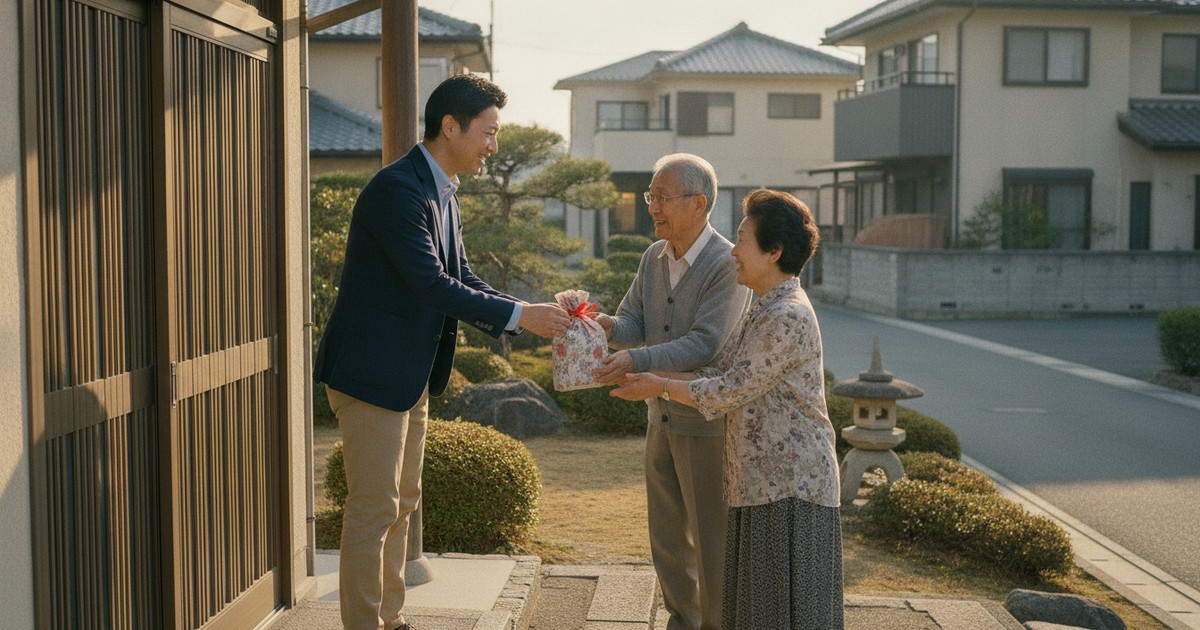
Based on real-world experience, the right time to greet your neighbors isn’t “after your license or registration is finalized”—it’s “once approval looks likely.” If you wait until the paperwork is done, construction crews and cleaning staff may already be coming and going, leaving neighbors anxious and confused about what’s happening, with no explanation in sight. In one property Stay Buddy took over as management agent, the previous owner had started operating without any neighbor greetings at all—and by day three, the building’s management association had already sent a written warning. After we took over, we personally greeted all six neighboring households, handed them a sheet with emergency contact information, and have maintained zero complaints for the following year.
When greeting neighbors, it’s most effective to stick to four key points: ① the operator’s name and contact information, ② what kind of guests will be staying (short-term tourists), ③ designated quiet hours at night (e.g., after 10 PM), and ④ a point of contact they can reach immediately if anything comes up. Rather than a lengthy explanation, simply handing over a single sheet of paper that says “Call this number if anything happens” does far more to put neighbors’ minds at ease.
Designing House Rules That Prevent Noise Problems at the Structural Level
How to Communicate Rules at Check-In
Simply listing house rules on your booking platform (Airbnb, Booking.com, etc.) isn’t enough. In practice, it helps to spell out specific behaviors in your check-in message—for example, “Please keep voices down even indoors after 10 PM” or “Please refrain from talking in the hallway or entrance area”—and to post the same guidance inside the property in Japanese, English, and Chinese. This reduces the gap in understanding between you and your guests. A vague phrase like “please be quiet” often doesn’t land with guests from different cultural backgrounds.
Rules for Late-Night Arrivals and Departures
Among noise complaints, some of the most common involve voices and door-slamming during late-night check-ins and check-outs. The Private Lodging Business Act requires operators to properly explain certain matters to guests (Article 11), but this only becomes effective when you translate it into concrete behavioral guidance—things like “Pass through the entrance one person at a time late at night” or “Lock the door slowly and quietly.” Installing a smart lock eliminates the need for someone to be on hand to exchange keys, but it can introduce a different problem: guests fumbling with the lock late at night and talking loudly out of confusion right at the front door. A practical solution is to pair the smart lock with a short instructional video and a clear operating manual provided before check-in.
Trash Issues: How to Communicate Collection Days and Sorting Rules, Plus Facility Setup
A System for Explaining Trash Rules to Guests
Trash disposal rules vary by municipality, and collection days, sorting categories, and designated disposal areas differ from property to property. Unlike a hotel, where guests can simply be told “leave it at the front desk,” minpaku guests are generally left with one of two options: taking out the trash themselves, or having cleaning staff handle it after checkout. At Stay Buddy, for stays of two nights or longer, we sometimes ask guests to take out the trash themselves—but in those cases, we keep a photo-illustrated guide on-site that spells things out clearly, such as “Burnable trash: Mondays and Thursdays, collection point is the gray bin on the right side of the building.” Text alone often fails to get the message across, so combining photos with a simple map tends to work best in practice.
Preventing Problems at the Trash Collection Area
Friction with neighbors most often arises when trash is put out on days other than the designated collection days. Depending on a building’s management regulations or local community rules, minpaku guests may even be restricted from taking out trash at all—so it’s essential to check with the management association or neighborhood association before you open. Setting up a temporary trash storage space within the property and having cleaning staff dispose of it on a regular schedule means guests never have to think about collection days at all, which significantly reduces the risk of complaints.
How You Respond After a Complaint Determines the Relationship Going Forward
When a complaint comes in from a neighbor, how quickly and how thoughtfully you respond shapes the relationship for everything that follows. Under Stay Buddy’s management service, whenever we receive a call from a neighbor, a staff member calls back the same day, and whenever possible, pays a direct visit within 24 hours. If you respond with “I’ll look into it and get back to you” and then let days go by, the neighbor’s next call may well go to the local government or the management association instead of you.
When addressing an issue with guests, it’s usually better to do so through a message rather than face-to-face, as this helps avoid emotional confrontation. Article 11 of the Private Lodging Business Act requires operators to explain to guests the need for consideration toward the surrounding community, and responding to complaints falls squarely within that obligation. Keeping a record of each complaint—what it was, when and how you responded, and what you communicated to the guest—also gives you documentation to fall back on if the authorities ever follow up.
Let Stay Buddy Support Your Noise and Neighbor-Relations Strategy
Stay Buddy Inc. is a property management company handling both minpaku under the Private Lodging Business Act and simple lodging facilities under the Hotel Business Act. We take full responsibility for neighbor relations, guest communication, cleaning coordination, and financial management—and by getting involved before you even open, we can work with you to build an operation designed from the ground up to avoid trouble in the first place.
Management fees vary depending on the property’s size, location, and occupancy rate, but in most cases fall somewhere between roughly 15% and 30% of revenue. We always walk you through a simulation before you sign anything, so you know exactly what to expect. Even if you’re only at the “I’d just like to talk it through” stage, we’re happy to offer a free consultation.
Whether you’re still planning to open or you’re already up and running and dealing with neighbor issues, start by telling us what’s going on. We’ll take a close look at your property’s situation and challenges, then offer concrete, field-tested solutions.
To request a free consultation, please get in touch through the contact form on the Stay Buddy website. A member of our team will respond within two business days.