Leave Your Vacation Rental Management to the Experts
Free Online ConsultationRunning a condominium short-term rental in Japan is one of the most common inquiries we receive from overseas owners — and, in practice, one of the hardest structures to make work. The problem is rarely the property itself. It is the building.
Why Most Condominiums Block Short-Term Rentals Before You Even Apply
The majority of Japanese condominiums — mansions, as they are locally known — are governed by a residents’ association (管理組合, kanri kumiai) operating under rules that frequently prohibit, or effectively prohibit, short-term letting. These rules exist independently of national law. Even if you obtain a valid minpaku notification under the Housing Accommodation Business Act (民泊新法, the Minpaku Law), the building’s management rules can override your ability to operate. We have seen owners receive their official notification number from the local municipality, invest in furnishings and photography, and then receive a cease-and-desist letter from the kanri kumiai before their first guest checks in.
Checking whether short-term letting is permitted in the management rules (管理規約) is non-negotiable due diligence. This requires reading the actual document in Japanese — not asking the selling agent, who has an incentive to close the sale. If the rules are silent on the matter, that silence is not permission; many associations have passed resolutions since 2018 specifically to close that gap.
The Regulatory Stack a Non-Resident Owner Actually Faces
Assuming the building permits it, the licensing question still branches in multiple directions.
Minpaku Law (180-day cap): A notification under the Housing Accommodation Business Act allows operation for up to 180 nights per calendar year. In practice, many municipalities impose additional local restrictions — Tokyo’s Shinjuku ward, for example, restricts operation to specific periods — which can reduce that ceiling further. At 180 days maximum, a condominium in a mid-range urban location will rarely exceed occupancy rates that justify the fit-out and ongoing costs, particularly after management fees.
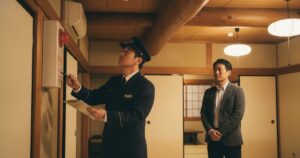
Ryokan licence under the Hotel Business Act (旅館業法): A full ryokan or hotel business licence removes the 180-day cap and is the route operators use when they need year-round income. However, obtaining one in a residential condominium is structurally difficult. The Fire Service Act (消防法) requirements — fire doors, emergency lighting, interconnected smoke detectors, sometimes sprinklers — are written for purpose-built accommodation, not apartment blocks. Meeting them in a standard condominium unit typically requires structural work the kanri kumiai will not approve.
Tokku minpaku (national strategic special zones): Some cities were granted special-zone status allowing short-term letting outside the Minpaku Law framework. Osaka was the most prominent example. As of 29 May 2026, Osaka City has permanently closed new applications for tokku minpaku; existing certified facilities may continue, but no new tokku minpaku can be started in Osaka. Anyone advising you that tokku is a route into Osaka for a new property is working from outdated information. For new operations in Osaka, the relevant frameworks are the Minpaku Law notification or a ryokan business licence.
What Condominiums and Short-Term Rentals in Japan Actually Cost to Operate
If you clear the building and licensing hurdles, the economics need to hold. Management agency fees (運営代行手数料) for short-term rental properties in Japan typically run in the range of 10–25% of gross revenue, depending on scope of involvement, property type, location, and which company you engage. A company handling only listing management and guest communication sits at the lower end; one providing on-site cleaning coordination, key management, 24-hour guest support and regulatory compliance reporting sits higher. As a non-resident owner who cannot visit, you need the fuller scope — and that changes the maths.
Layered on top: cleaning fees (which guests increasingly scrutinise on OTAs), platform commissions from Airbnb, Booking.com and others (typically 3–15% depending on the platform and model), and routine maintenance. A condominium unit that generates, say, ¥150,000 in a strong month can look meaningfully different after those deductions, before tax.
The Tax and Remittance Reality for Overseas Owners
Non-resident owners of Japanese property are subject to Japanese income tax on rental income sourced in Japan. Under Japan’s tax rules, if you do not appoint a Japanese tax representative (納税管理人), the platform or management company making payments to a non-resident is generally required to withhold tax at source — typically 20.42% under the Income Tax Act, covering both income tax and the reconstruction special surtax, though the applicable rate and treaty relief will depend on the owner’s country of residence and any applicable tax treaty with Japan.
You will also need to file a Japanese income tax return annually. This is not optional and not something a property management company handles as part of their standard service. You need a Japanese tax accountant (税理士). Budget for that separately.
Currency is a practical friction point. JPY payouts from management companies to overseas accounts incur transfer fees and exchange-rate exposure. If the yen is weak — as it has been for extended periods recently — your sterling, euro or dollar return on a nominally performing property can look materially worse than your occupancy figures suggest.
What We Actually Do When a Neighbour Complaint Arrives
This is the part that overseas ownership manuals rarely cover honestly. Under the Minpaku Law, operators are required to respond to complaints from neighbours and take action — not just log them. We had a situation at a property in a residential ward where a neighbour contacted the local ward office directly rather than us, alleging noise at around 23:00. The ward office contacted us the same week requesting a written response and evidence of our complaint-handling procedures.
Our immediate actions: phone the guest to confirm quiet hours, arrange for a staff member to conduct a physical check that evening, and document everything in writing within 24 hours. The guest had simply been watching television at normal volume — the walls in that building were thin and the neighbour already hostile to the operation. But “the guest was not actually loud” is not a sufficient regulatory response. We filed a written account of the steps taken, sent it to the ward office, and updated our internal records. If we had not responded promptly and in writing, the notification could have been suspended.
For an overseas owner managing this remotely, through a company they cannot visit, the critical question is: what is their documented process for complaint response, and how quickly can they evidence action to a municipality? Ask for it in writing before you sign a management contract.
Questions to Put to Any Management Company Before You Commit
Because you cannot walk the property, meet the cleaning team, or sit in on a regulatory inspection, your due diligence is entirely conducted through questions and document review. These are the ones that matter:
- Do you hold a minpaku notification or ryokan business licence for this property already, or will we need to apply? Who manages the application process and at whose cost?
- What is your written complaint-response procedure, and can you show me a real example of how you handled one?
- How do you handle Fire Service Act compliance checks — who is responsible, and what happens if a deficiency is identified during an inspection?
- How and when are proceeds remitted to overseas accounts, and do you issue documentation sufficient for Japanese tax filing?
- What is the breakdown of your management fee — what is included and what triggers additional charges?
- Have you operated in this specific building before, and does the kanri kumiai have an existing relationship with your company?
A company that cannot answer these specifically is not ready to operate on your behalf in a regulatory environment that responds to vague answers with licence suspensions.
Work With an Operator Who Has Skin in the Outcome
At Stay Buddy, we run properties — we are not a listing broker or a middleware platform. When a complaint arrives at a ward office, our name is on the response. When a Fire Service Act inspection is scheduled, we coordinate it. That accountability is the basis on which we take on properties, and it is the standard you should hold any operator to.
If you own or are considering a condominium in Japan and want an honest assessment of whether it can operate legally and profitably as a short-term rental, contact us directly. We will tell you what we find, including if the answer is that it cannot.
Leave Your Vacation Rental Management to the Experts
Free Online ConsultationShuhei Makigi
Representative Director, Stay Buddy Co., Ltd.
Registered Housing Accommodation Management Business — Ministry of Land, Infrastructure, Transport and Tourism No. F03862. Stay Buddy operates short-term rentals and licensed hotels across Japan, supporting overseas investors with compliant, high-performing properties.
Written by the Stay Buddy Japan team. This content was produced with AI assistance and reviewed for accuracy.