Leave Your Vacation Rental Management to the Experts
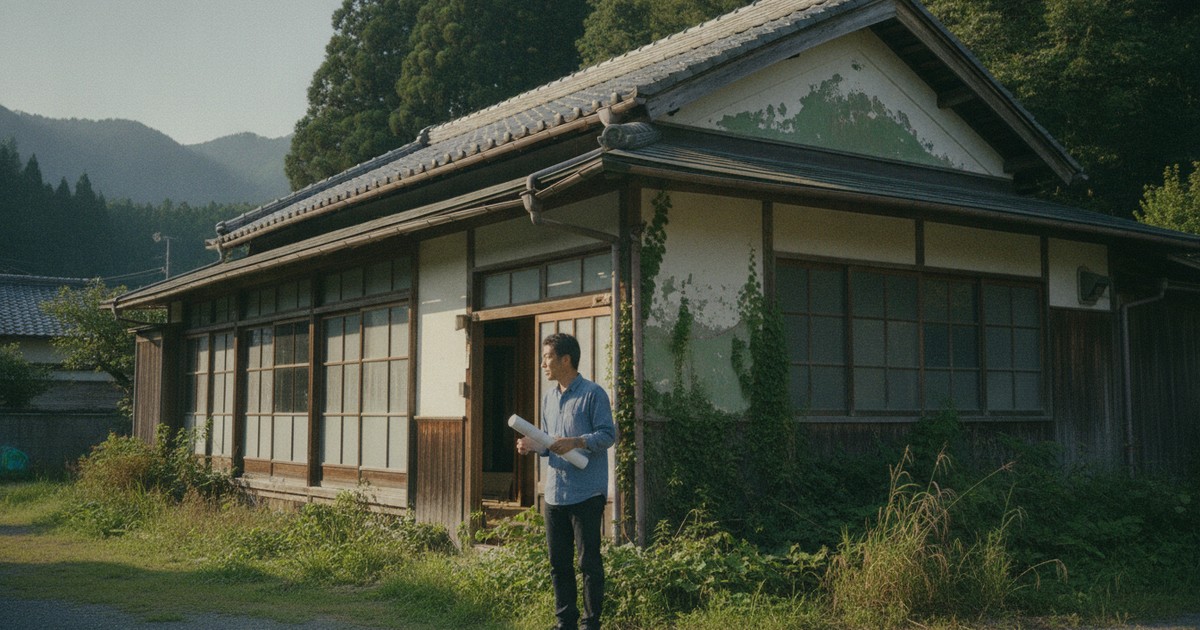
Free Online ConsultationJapan’s stock of akiya — vacant houses left empty through inheritance, migration or abandonment — has grown to roughly 9 million units according to the Ministry of Internal Affairs and Communications’ 2023 Housing and Land Survey. For overseas owners considering a rental in Japan, an akiya can look like an opportunity: low acquisition cost, rural character, authentic atmosphere. What it rarely looks like from the outside is the regulatory maze sitting between an empty property and a legal, income-generating rental. This article is about navigating that maze from the ground up, from an operator’s perspective.
The Two Legal Routes for an Akiya Vacant House Rental in Japan
There is no single licence labelled “short-term rental.” You are choosing between two distinct regimes, and the choice shapes everything — construction costs, annual operating days, who you can accept as guests, and what reporting you file.
The Housing Accommodation Business Act (Minpaku Law, 2018) allows short-term residential accommodation in non-hotel buildings, subject to a national cap of 180 nights per calendar year. Local municipalities can restrict this further — some Tokyo wards permit operation only on weekends; Kyoto enforces seasonal blackouts. Your akiya may sit in a zone where effective operating days fall to 60–80 per year, which fundamentally changes the revenue case. Notification is filed with the prefecture rather than granted as a licence, but the fire safety, sanitation and management obligations that attach to it are non-trivial.
The ryokan business licence under the Hotel Business Act removes the 180-day cap entirely and allows unlimited operating days, but it is a true licence — granted by the prefectural public health authority — and it requires the property to meet structural, fire safety and sanitation standards that are often more demanding than a residential building currently satisfies. For many akiya, the cost of bringing an older wooden structure up to those standards runs into the millions of yen before you receive a single booking.
A third route — the national strategic special zone (tokku minpaku) system — existed to allow unlimited-day operation in designated zones under relaxed conditions. As of 29 May 2026, Osaka City has permanently ended new applications for tokku minpaku. Existing certified facilities may continue, but anyone opening a new property in Osaka must use the Minpaku Law or pursue a ryokan licence. Other special zones may still accept applications; confirm the current status directly with the relevant municipal office, as these designations change.
What the Compliance Process Actually Involves
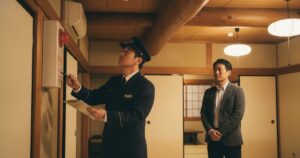
Running an akiya conversion for a client last year — a 1960s wooden farmhouse in Hyogo Prefecture — gave us a clear view of how the sequence plays out. The owner had assumed a Minpaku notification would take a few weeks. It took four months, and not because of bureaucratic delay: the property had no functioning smoke detectors, the staircase balustrade did not meet the height requirement under the Fire Service Act, and the local fire station requested an on-site inspection before sign-off. We coordinated three separate contractor visits, two of which the owner never knew about beyond our update emails — because they were in Canada and had no practical way to attend.
This is the operational reality for a non-resident. Every compliance step requires a trusted local representative with decision-making authority. For the fire inspection alone, we had to make a judgement call: a quoted reinforcement job came in over budget, and a second contractor proposed a technically compliant but less robust fix. We chose the higher-cost option because a fire safety dispute with a local authority — when you have a foreign owner and a remote management chain — is not a risk worth saving ¥80,000 on. The owner agreed when we explained the logic; they would not have known to ask.
Non-Resident Owners: Tax, Withholding and Remittance
If you live outside Japan and earn rental income from a Japanese property, Japanese tax law treats you as a non-resident for income tax purposes. Rental income is subject to Japanese income tax, and under the Income Tax Act, if you do not appoint a domestic tax agent (zeirishi or a qualified representative), the tenant or management company may be required to withhold 20.42% of gross rental payments before remitting them to you. This withholding obligation is frequently misunderstood — and when it is not handled correctly, it creates a tax liability that falls on the payer, not just the recipient.
You will also need to consider consumption tax (currently 10%) if your annual taxable turnover exceeds ¥10 million, though most individual akiya operators stay below this threshold. File annual returns through your appointed tax representative; this is not optional.
Currency and remittance add a further layer. Revenue collects in yen. Whether your management company pays out in yen or converts to your home currency, and at what rate and frequency, should be specified in your contract. Monthly remittances with a fixed conversion date are preferable to arrangements where the operator holds accumulated funds.
Choosing and Supervising a Management Company You Cannot Visit
Management fees for minpaku or hotel operations in Japan — the unei daikō tesūryō — typically run in the range of 10–25% of revenue, depending on the scope of involvement, property type, location and the company’s cost base. A rural akiya with high cleaning complexity and infrequent bookings will sit toward the higher end of that range; an urban property with high occupancy and standardised turnover will sit lower. Be cautious of any company quoting well below 10% without a clear explanation of what is excluded — cleaning costs, linen, consumables and maintenance coordination are often the variables that erode the headline fee advantage.
For an overseas owner, the management relationship is a trust relationship by necessity. You cannot drop in. What you can do is structure the relationship so you do not need to. Ask specifically:
- What is your process when a guest reports a maintenance issue at 11pm?
- How do you handle a neighbour complaint, and who makes the decision on whether to act immediately or escalate?
- What documentation do you provide after each guest stay — and in what language?
- How are cleaning vendor handovers managed, and what happens if a cleaner cancels on turnover day?
- Who holds the keys, and what is the key control protocol?
On that last point: neighbour relations are not a soft issue in Japan. The Minpaku Law explicitly requires operators to post contact information and respond to neighbour complaints. We have had to make 10pm calls to a local contact after a noise complaint on a property in a semi-rural area — the kind of call where you are weighing whether to interrupt the guests, issue a warning, or simply monitor. Getting that judgement wrong can result in the municipal office suspending your notification. An operator who cannot tell you their neighbour complaint procedure in specific terms is not yet ready to manage a property on your behalf.
Is the Akiya Financially Viable?
The honest answer is: sometimes, and only with a clear-eyed calculation upfront. Acquisition costs for akiya can be low — occasionally nominal — but renovation to meet either Minpaku or ryokan standards in a wooden structure built before modern building codes typically costs ¥3–10 million or more, depending on scope and location. Add licensing and compliance work, ongoing management fees, platform commissions (OTA platforms typically charge 3–15% of booking value), cleaning costs and tax obligations.
Revenue depends on location, property character and operating days permitted. A rural akiya with strong appeal — proximity to a national park, a distinctive aesthetic, an onsen — can command premium nightly rates and achieve meaningful occupancy even under the 180-day cap. A generic property in an area with no demand driver will not. The Japan Tourism Agency publishes occupancy and ADR data by region; use it as a cross-check against projections any management company offers you.
The properties we see succeed are the ones where the owner understood the full cost stack before committing, chose the right licensing route for the property’s character and location, and built an operational relationship with someone on the ground who can actually make decisions — not just report them.
Work With an Operator Who Runs the Property, Not Just Reports On It
At Stay Buddy, we manage the compliance, guest experience, vendor relationships and regulatory filings directly. For overseas owners of akiya and other Japanese properties, that means you receive transparent reporting, yen-denominated revenue statements and a direct line to the people actually on site — not a call centre layer. If you are assessing whether an akiya is worth pursuing, or you already own one and are trying to bring it into legal operation, we are happy to give you a ground-level view of what it will actually take.
Leave Your Vacation Rental Management to the Experts
Free Online ConsultationShuhei Makigi
Representative Director, Stay Buddy Co., Ltd.
Registered Housing Accommodation Management Business — Ministry of Land, Infrastructure, Transport and Tourism No. F03862. Stay Buddy operates short-term rentals and licensed hotels across Japan, supporting overseas investors with compliant, high-performing properties.
Written by the Stay Buddy Japan team. This content was produced with AI assistance and reviewed for accuracy.