Leave Your Vacation Rental Management to the Experts
Free Online ConsultationWhen a property owner outside Japan asks us to help them open a ryokan, the question they almost never think to ask is: which public health office — hokenjo — has jurisdiction over their building? That single administrative detail determines your application timeline, your inspection checklist, and, in practice, whether your ryokan licence under Japan’s Hotel Business Act (Ryokan Gyōhō) arrives in eight weeks or six months. Understanding the hokenjo’s role is not bureaucratic background noise; it is the operational core of any ryokan application in Japan.
What the Hokenjo Actually Does in a Ryokan Application
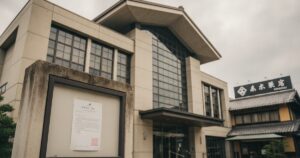
The hokenjo (保健所) is the prefectural or designated-city public health centre responsible for issuing ryokan business licences under the Hotel Business Act (Ryokan Gyōhō, last substantively amended in 2018). Unlike the minpaku notification route under the Housing Accommodation Business Act (Jūtaku Accommodation Gyōhō, commonly called the Minpaku Law), which is filed with the local municipality, a ryokan licence application goes directly to the hokenjo. The office inspects the physical premises against structural and sanitation standards set by the Act and by prefectural ordinances that vary meaningfully between, say, Kyoto and Hokkaido.
The hokenjo checks: minimum floor area per guest (the national baseline is set in ministerial ordinance, but prefectural rules often add their own requirements), washing and toilet facilities, ventilation and lighting standards, and reception arrangements. For non-resident owners especially, the reception requirement is the one that creates the most operational complexity — the Act requires that guests can be received, but how that is satisfied physically or remotely depends on which hokenjo you are dealing with.
The Hokenjo Ryokan Application Process: What the Timeline Looks Like from Japan
A standard submission includes the application form, floor plans drawn to scale, a building confirmation certificate (kenchiku kakunin sho), evidence of compliance with fire prevention measures under the Fire Service Act (Shōbōhō), and, where relevant, the building management association’s consent. After submission, the hokenjo schedules a physical inspection. This is where non-resident owners consistently underestimate the coordination requirement.
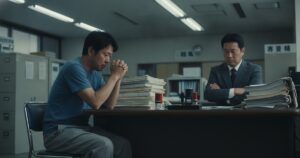
We had a situation in Kyoto where the hokenjo inspector arrived and found that the cleaning vendor — a local company we contract independently — had left a mop bucket in the corridor between the bathroom and the guest room during the pre-inspection clean. The inspector flagged it. Not as a licence-blocking issue, but it extended the visit by twenty minutes of verbal clarification about our cleaning and maintenance workflow. We now send our cleaning vendors a written protocol specifying that the property must be in guest-ready condition at least ninety minutes before any hokenjo visit, not just cleaned. That protocol came from that one inspection, and it is the kind of operational detail you do not get from reading the Act.
Application to licence approval typically takes anywhere from four to twelve weeks, depending on the hokenjo’s caseload and how complete your submission is on first filing. Incomplete applications — missing a floor plan dimension, a fire equipment certificate that does not match the current layout — restart the clock.
Why the Ryokan Licence Route Matters More Now for Non-Residents
If you are considering property in Osaka specifically, be aware that as of 29 May 2026, Osaka City has permanently ended new applications for the national strategic special zone minpaku (tokku minpaku). Existing certified facilities may continue, but no new tokku minpaku can be started in Osaka. For a non-resident looking at a new opening in Osaka, the practical routes are a standard minpaku notification under the Minpaku Law — which caps operating days at 180 per year — or a full ryokan licence under the Hotel Business Act, which carries no operating-day cap but requires meeting the hokenjo’s structural and operational standards.
The 180-day cap under the Minpaku Law is a real revenue constraint. A ryokan licence, by contrast, allows year-round operation. For properties in central Kyoto, Nara, or Osaka, where seasonal occupancy can swing considerably — our properties typically see occupancy rates in the range of 55–80% in peak cherry blossom and autumn colour periods, dropping to 30–50% in the quieter winter weeks, depending on location and property type — that uncapped operating window materially changes the revenue projection.
Non-Resident Tax and Financial Obligations You Cannot Delegate Away
Running a licensed ryokan as a non-resident owner in Japan creates obligations that your management company handles operationally but cannot absorb legally. Under Japan’s Income Tax Act, rental income earned in Japan by non-residents is subject to a 20.42% withholding tax at source when paid by a Japanese entity. If you receive payments through a Japanese management company, they are typically required to withhold and remit this on your behalf. You should confirm this explicitly with your operator — ask for documentation of the withholding remittance, not just a net payment into your overseas account.
Consumption tax (shōhizei) applies to accommodation sales if the operating entity’s taxable revenue exceeds the statutory threshold (currently ¥10 million in a base period, under the Consumption Tax Act). Depending on how the management structure is set up — whether you operate through a Japanese entity or directly as an individual — your obligations differ. This is an area where advice from a Japanese tax accountant (zeirishi) familiar with non-resident property income is not optional; it is the baseline.
On currency: JPY payouts to overseas accounts carry FX exposure and often bank transfer fees on both ends. Ask your management company how frequently they remit, in what currency, and what their cut-off dates are. These details are not in most management contracts by default.
Supervising a Management Company You Cannot Visit
For non-resident owners, the management relationship is where abstract trust either holds or fails. Our standard advice is to treat the management contract as a living document, not a one-time sign-off. Management fees in Japan’s short-term rental sector typically run in the range of 10–25% of revenue, depending on scope of involvement, property type, and what is actually included — cleaning coordination, guest communication, maintenance oversight, licence compliance. A company quoting at the lower end may be excluding services that then reappear as itemised charges. A company quoting at the higher end should be able to tell you exactly what operational tasks that covers.
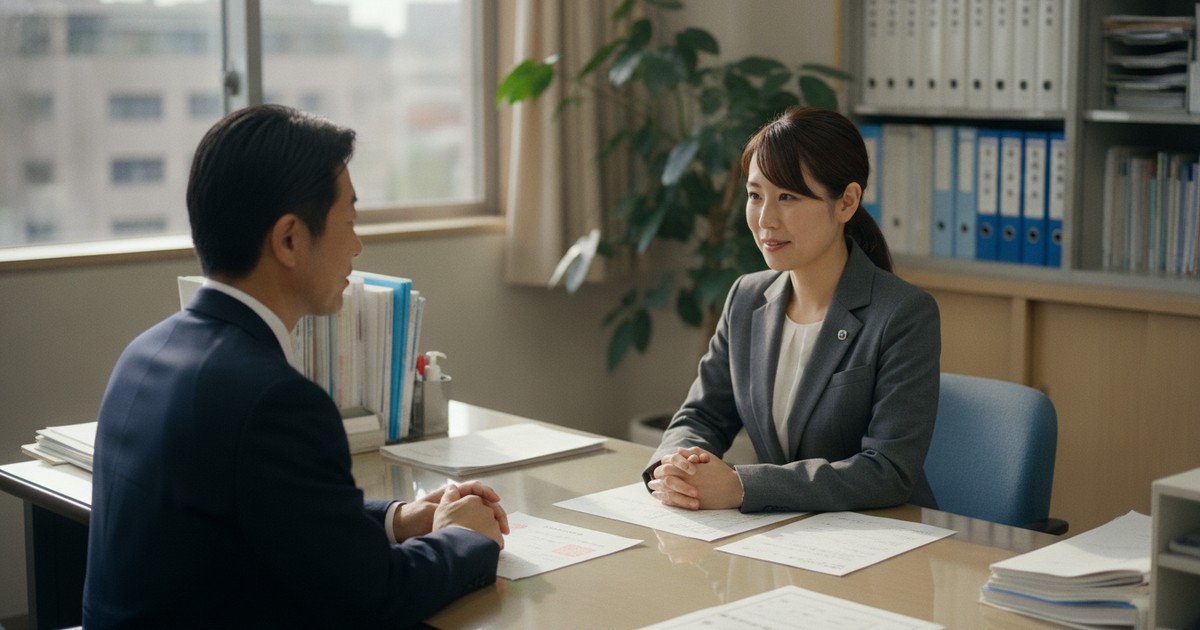
Specific questions worth putting in writing before you sign anything: Who attends hokenjo inspections on your behalf, and do they have prior experience with that specific office? How are neighbour complaints handled, and what is the documented escalation path? What is the protocol if a guest causes property damage above a set threshold? How is the monthly report structured, and does it include per-booking revenue, not just a net figure?
Remote oversight works when you have structured reporting, defined escalation thresholds, and a management company that treats the licence as their responsibility to maintain — because operationally, it is. The ryokan licence is issued in the operator’s name or the property owner’s name depending on structure, and any compliance failure at the hokenjo level is ultimately traced back to the licence holder.
Getting the Hokenjo Submission Right the First Time
The most consistent source of delay in ryokan applications we have handled is the floor plan. Hokenjo inspectors are checking specific measurements and room designations against ordinance requirements. A floor plan drawn by an architect for construction purposes is not the same as a floor plan formatted for a hokenjo submission. We prepare a separate document set for each application — same building, different purpose, different level of annotation. If you are working with a management company or licence agent, ask specifically who prepares the floor plans and whether they have had submissions accepted by the hokenjo in that specific prefecture without revision requests.
Pre-consultation (jizensodan) with the hokenjo before formal submission is available at most offices and, in our experience, saves more time than it costs. It surfaces non-obvious local requirements — a particular hokenjo in Kansai, for example, had a specific interpretation of the ventilation standard for rooms with en-suite bathrooms that was not in the written ordinance text. We learned that in pre-consultation, not at the inspection.
Working with Stay Buddy
We handle ryokan licence applications, hokenjo coordination, and ongoing operational management for non-resident owners across multiple prefectures. If you are looking at a property in Japan and want to understand the realistic licensing timeline, fee structure, and what remote ownership actually requires, contact us directly. We will tell you what we know, including what we do not yet know about your specific building and local hokenjo.
Leave Your Vacation Rental Management to the Experts
Free Online ConsultationShuhei Makigi
Representative Director, Stay Buddy Co., Ltd.
Registered Housing Accommodation Management Business — Ministry of Land, Infrastructure, Transport and Tourism No. F03862. Stay Buddy operates short-term rentals and licensed hotels across Japan, supporting overseas investors with compliant, high-performing properties.
Written by the Stay Buddy Japan team. This content was produced with AI assistance and reviewed for accuracy.