Leave Your Minpaku Management to the Experts
Free Online ConsultationFor owners considering minpaku (vacation rental) revenue in Chitose City, the first questions that come to mind are usually “how much can I earn?” and “what type of property is best suited for this?” Home to New Chitose Airport, Chitose City sees a steady flow of both domestic and international travelers throughout the year, giving the area a solid foundation for minpaku demand. This article organizes Chitose’s minpaku revenue potential using data, covering everything from revenue forecasts by property type to regulatory considerations and key points to watch when opening your business.
Understanding the overall market picture before starting a minpaku business makes it easier to decide on your initial investment and choose an operating style. Chitose City is a unique area that offers not only tourism demand but also business travel and layover/transit needs. Grasping the points where you can differentiate yourself from hotels—despite competing with them—is the shortest path to stable revenue.
Minpaku Demand and Revenue Potential in Chitose City: Area Overview Data
Chitose City is home to New Chitose Airport, Hokkaido’s gateway to the skies, which handles approximately 20 million passengers annually across domestic and international flights. Many of these travelers need accommodation near the airport, and it’s not uncommon for early-morning or late-night flight passengers, as well as transit travelers, to choose minpaku as an alternative to hotels. Additionally, demand is boosted by travelers using Chitose as a base for visiting nearby tourist spots such as Lake Shikotsu and Northern Horse Park.
As a general price guide, standard one-room units typically go for around 6,000–10,000 yen per night, while family-oriented properties of 2LDK or larger command roughly 12,000–18,000 yen per night. Demand peaks during the summer tourist season (July–August) and the winter ski season (December–February), during which nightly rates can sometimes be set 1.3 to 1.5 times higher than usual. On the other hand, spring and autumn tend to see lower occupancy, with average annual occupancy typically falling in the 45–60% range. Because of this, it’s important to factor in seasonal fluctuations when forecasting revenue.
Revenue Forecasts by Property Type: Comparing Condominiums, Detached Houses, and Traditional Japanese Houses
When operating a minpaku business in Chitose City, initial investment costs, occupancy rates, and average nightly rates vary significantly depending on the type of property. Simulating a revenue model tailored to the characteristics of the property you own or plan to acquire is essential for making a sound decision about opening your business. Below, we outline three representative property types along with estimated figures.
Condominiums (Owned Units or Converted Rentals)
One-room to 2LDK condominium units located near the airport or in central Chitose are the easiest property type to enter the market with. Initial investment, including furniture, appliances, and interior preparation, typically runs around 500,000–1,200,000 yen, and this can be reduced further if you convert an existing rental property. Assuming a nightly rate of 7,000 yen and 18 occupied nights per month, monthly revenue would be approximately 126,000 yen, with net income after platform fees, utilities, and cleaning costs typically landing around 70,000–85,000 yen. On an annual basis, this translates to expected earnings of roughly 840,000–1,020,000 yen. That said, operating a minpaku in a condominium requires careful attention to the building’s management association rules—properties where minpaku is prohibited cannot be used for this purpose at all.
Detached Houses
Detached houses make it easier to increase the number of rooms and guest capacity, enabling higher-priced operations targeting group travelers and families. For 3LDK to 4LDK properties, nightly rates of 15,000–20,000 yen are realistic, and with a capacity of 6 guests, this works out to a reasonable 2,500–3,300 yen per person, creating a sense of value. Initial investment, including interior renovation and furnishing, typically runs 1,500,000–3,000,000 yen, though this varies depending on the condition of the property. Based on 20 occupied nights per month at 16,000 yen per night, monthly revenue would be approximately 320,000 yen, with net income after expenses around 180,000–220,000 yen, translating to annual earnings of roughly 2,160,000–2,640,000 yen. Properties with available parking tend to score higher in satisfaction among families and groups, which also contributes to higher repeat booking rates.
Traditional Japanese Houses and Renovated Properties
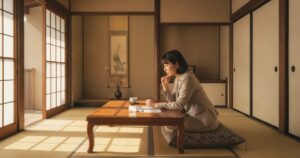
The outskirts of Chitose City and the area around Lake Shikotsu feature a scattering of traditional Japanese houses (kominka) and older detached homes. Renovating these properties to highlight authentic “Hokkaido character” is a highly effective differentiation strategy. This approach appeals strongly to inbound travelers and domestic tourists seeking experiential travel, allowing for premium nightly rates of 20,000–35,000 yen. However, initial investment can exceed 2,000,000–5,000,000 yen for renovation costs alone, so it’s important to carefully calculate the payback period. Depending on location, occupancy rates may remain relatively low at 30–50%, but because of the higher price point, monthly revenue can still reach 200,000–400,000 yen for some properties. A branding strategy that spreads word-of-mouth about the unique experiential value of a kominka property is key to improving occupancy over the long term.
Minpaku Regulations in Chitose City: Understanding the Three Frameworks and How to Approach Applications
Operating a minpaku business in Japan requires obtaining permission or filing notification under one of three main frameworks: the Private Lodging Business Act (the “Minpaku Law”), the Hotel Business Act (simple lodging category), or the Special Zone Minpaku system based on the National Strategic Special Zones Act. We recommend confirming directly with local authorities (Chitose City Hall or the Hokkaido Prefectural Government) which framework actually applies in Chitose City, as well as whether any additional local ordinance restrictions exist. The basic differences between each framework are as follows.
Under the Minpaku Law, annual operating days are capped at 180, and notification must be filed with the prefectural government. Depending on local ordinances, the permissible operating period or designated zones may be further restricted, so the specific scope of ordinance application in Chitose City needs to be assessed on a case-by-case basis. The Hotel Business Act (simple lodging category) has no cap on operating days, allowing for full-time operation, but requires obtaining a public health center permit and meeting facility standards (such as requirements for a front desk/reception area). The Special Zone Minpaku system applies only within designated zones, so it is essential to confirm with local authorities whether Chitose City falls within a designated zone. Regardless of which framework applies, fire safety equipment standards under the Fire Service Act (such as installing smoke detectors and fire extinguishers) are universally required.
Key Considerations When Opening: Permit Applications, Initial Costs, and Neighborhood Relations
When starting a minpaku business, the first step is to decide which framework you’ll operate under (the Minpaku Law or the Hotel Business Act) and identify the necessary application or notification procedures. Under the Minpaku Law, notification is filed with the prefectural governor; under the Hotel Business Act, applications go through the public health center. Required application documents include property floor plans, certified copies of land and building registration records, and fire code compliance certificates. It’s wise to allow 1–3 months for the entire process, from gathering documents to obtaining approval.
Initial costs vary by property type, but generally, interior preparation, furniture, appliances, bedding, and cleaning supplies run 300,000–1,500,000 yen, with an additional 100,000–300,000 yen if fire safety equipment upgrades are needed. Registering with platforms (such as Airbnb or Jalan) is free, but hiring a professional photographer typically costs around 30,000–80,000 yen. As for neighborhood relations, greeting nearby residents before opening and explaining your policies on trash disposal and noise consideration can help prevent future disputes. The Minpaku Law also includes an obligation to notify neighboring residents, so handling this sincerely lays the groundwork for stable operations after opening.
Risks to Prepare For During Operation and Strategies to Maintain Occupancy
One of the biggest risks in operating a minpaku business in Chitose City is seasonal fluctuation. While demand is high during the summer tourist season and the winter ski/snow festival season, April–May and October–November tend to be off-peak periods, with some properties seeing occupancy drop to the 20–30% range. During these periods, pricing strategies targeting business travelers and transit passengers (such as lowering rates to around 5,000–7,000 yen per night) or introducing long-stay discount plans can be effective. Dynamic pricing tools can also help automatically adjust rates based on demand.
To manage cancellation risk, a solid basic strategy is to set a “moderately strict” cancellation policy on your platform and to list your property on multiple platforms simultaneously to diversify booking opportunities. It’s also wise to prepare thorough house rules to explain expectations to guests in advance, helping prevent issues such as noise complaints, property damage, or unauthorized removal of items. Consider enrolling in the insurance programs offered by platforms, or taking out separate liability insurance, to cover potential damages. Since a decline in cleaning quality directly impacts review scores, ongoing training for cleaning staff and the use of quality-check checklists are also important practices for sustaining long-term occupancy.
Consult Stay Buddy for Opening and Maximizing Minpaku Revenue in Chitose City
Maximizing minpaku revenue in Chitose City requires simultaneously advancing pricing strategy, property preparation, and regulatory compliance—all tailored to the area’s unique demand characteristics. For owners opening a minpaku business for the first time in particular, navigating application procedures and building an operational structure can require significant time and effort. Stay Buddy Co., Ltd. provides minpaku management services throughout the Hokkaido region, offering end-to-end support from revenue assessments to opening assistance and day-to-day operational management.
We offer a free consultation service for owners who want to know how much their property could earn, or who feel unsure where to start given the complexity of the application process. Simply share your property information with us, and we can provide an estimated occupancy rate, a revenue simulation, and an overview of the necessary legal procedures. If you’re seriously considering opening a minpaku business in Chitose City or a nearby area, please feel free to reach out to us.
Our management service handles everything from reservation management, guest communication, and cleaning coordination to review management and price optimization—all on your behalf. This allows you to maintain stable operations without needing to be present on-site yourself, making our service popular among owners who live remotely or are considering minpaku as a side business. Start with a free consultation, and let’s explore the potential of minpaku revenue in Chitose City together.