For anyone considering launching an Airbnb business in Teine Ward, Sapporo, concrete information on “Sapporo Airbnb revenue” is central to making a sound decision. Teine Ward has a strong identity as a residential area even within Sapporo, giving it a demand structure quite different from the city’s better-known tourist districts. This article systematically organizes everything you need to evaluate an entry into the Airbnb market here—from area demand data and revenue projections by property type, to legal regulations and practical considerations for opening and running your business.
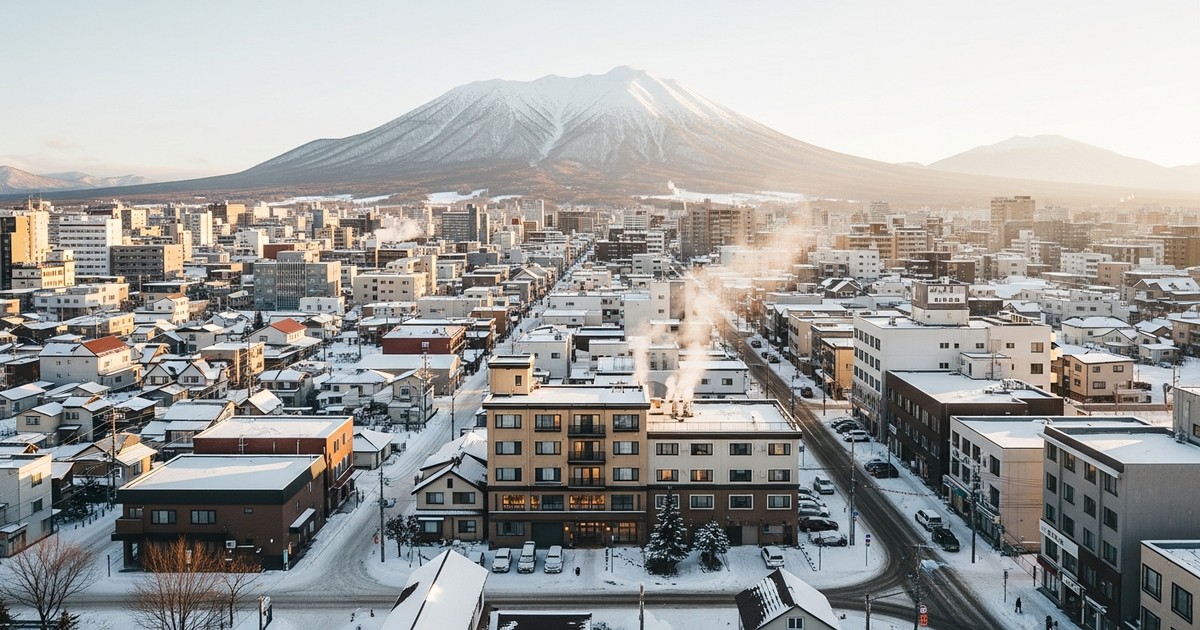
Teine Ward sits just about 15 minutes from Sapporo Station by JR train and serves as a base area for winter sports thanks to the Teine Mountain ski resort within its boundaries. At the same time, it remains a quiet residential district, which means that any Airbnb venture here requires a strategy tailored to the area’s specific character. We recommend carefully weighing both the revenue potential and the regulatory risks before deciding whether to move forward.
Airbnb Revenue Potential and Demand Data in Teine Ward, Sapporo
Any discussion of accommodation demand in Teine Ward must start with Teine Mountain ski resort. Typically from late November through early April, ski and snowboard visitors flood the area, and it’s not uncommon for hotels in central Sapporo to sell out completely during peak season. Teine Ward’s Airbnb properties play a meaningful role in absorbing this overflow demand. Properties within a 10–15 minute drive of the ski resort in particular are popular with families and groups, and nightly rates during the busy season (December–February) can reach around ¥15,000–25,000 per room.
In summer (June–September), by contrast, demand shifts away from tourists and toward business travelers and workation guests. Because Teine Ward is home to several large factories and logistics facilities, there is steady demand for extended stays from construction workers and business travelers. That said, maintaining high occupancy year-round is challenging, and off-season occupancy often falls to around 30–40%—a reality worth keeping in mind. A look at Airbnb and other major platforms shows fewer listed properties in the Teine area compared to Susukino or Chuo Ward, meaning that while competition is lighter, hosts who can differentiate themselves effectively stand a good chance of capturing bookings.
Revenue Projections by Property Type
When starting an Airbnb in Teine Ward, initial investment, occupancy rate, and average nightly rate vary significantly depending on the type of property. Below, we break down the revenue structure for three representative property types. Note that all figures below are illustrative estimates only and will vary based on a property’s location, condition, and management quality.
Condominiums/Apartments (Owned or Leased)
Running an Airbnb out of a sectioned condominium unit tends to keep initial costs manageable, but checking the building’s management bylaws is absolutely essential. If you lease a family-oriented condo unit in Teine Ward that’s 10–20 years old (2LDK, 50–65㎡), expect monthly rent in the range of ¥60,000–90,000. Including furniture and appliances, budget an initial investment of ¥500,000–800,000. A realistic occupancy target is 65–75% during peak season (December–March) and 35–45% in the off-season, averaging roughly 50–55% annually. At a nightly rate of ¥12,000–18,000, annual revenue would fall in the ¥1.3–2 million range. After deducting rent, utilities, cleaning fees, and platform fees (3–5% of revenue), net annual profit typically lands around ¥300,000–600,000.
The single biggest risk with condo-based Airbnbs is a management association vote banning short-term rentals. Since the Private Lodging Business Act took effect in 2018, many condominium associations have amended their bylaws to prohibit Airbnb operations, so it’s essential to check the management rules before acquiring or leasing a unit. For rental properties, you’ll also need written permission from the property owner authorizing short-term rental use.
Detached Houses
Offering an entire detached house in Teine Ward (3LDK–4LDK, 80–120㎡) as an Airbnb tends to appeal strongly to families and groups, making it easier to command higher nightly rates. Purchase costs vary by location but generally run ¥20–40 million, plus renovation costs of ¥1–3 million if needed. If leasing instead, expect monthly rent of around ¥100,000–150,000. Occupancy can reach 70–80% during ski season, with nightly rates set at ¥20,000–35,000. Annual revenue often falls in the ¥2.5–4 million range, and after expenses, net profit of ¥700,000–1.5 million is achievable for well-run properties.
A key strength of detached-house Airbnbs is the ability to offer multiple parking spaces. Since many guests drive to Teine Mountain ski resort, properties with 2–3 parking spots see noticeably higher booking rates. Adding value-added amenities like a BBQ area or wood-burning stove can also capture summer camping demand, helping to boost occupancy year-round.
Traditional and Older Homes (Kominka)
Teine Ward has a number of older wooden houses built during the Showa 40s–50s (roughly the 1960s–70s). Renovating such properties for Airbnb use tends to come with relatively low acquisition costs (¥5–15 million), but renovation costs can run ¥2–5 million or more, meaning total initial investment can end up comparable to purchasing and furnishing a newer detached house. Some hosts have achieved nightly rates of ¥25,000–40,000 by branding these properties around a “Showa retro” concept, but poor insulation and aging equipment can drive up winter heating costs substantially. Annual revenue potential varies widely depending on occupancy and renovation quality, with typical net profit ranging from ¥500,000–1 million after expenses, on gross revenue of ¥1.5–3 million.
One particularly important consideration for older homes is seismic standards. Buildings constructed under the old seismic code (pre-1981) may require seismic retrofitting before being used for lodging purposes. Investment in insulation and heating equipment to withstand Hokkaido’s harsh winters is also essential, both for guest comfort and to control utility costs. We strongly recommend running a thorough financial simulation—including a clear payback timeline—before committing to a renovation plan.
Overview of Regulations Governing Airbnb Operations
Three main legal frameworks govern short-term rental operations in Japan: the Private Lodging Business Act (Minpaku Shinpo), the Hotel Business Act, and the National Strategic Special Zone system for designated “special zone” rentals. The Private Lodging Business Act caps operations at 180 days per year but is relatively easy to launch even in residential areas, though it limits revenue potential. A license under the Hotel Business Act (as a simple lodging facility) has no cap on operating days, allowing year-round operation, but comes with stricter facility requirements around fire safety, ventilation, and natural lighting. The special zone system applies only to specifically designated areas—please check directly with local authorities to confirm whether Teine Ward falls under such a designation.
The City of Sapporo oversees registrations under the Private Lodging Business Act, and operations within residential-only zoning districts may be subject to additional restrictions under municipal ordinances. Because the applicable framework depends heavily on the specific area and zoning classification, we strongly recommend consulting directly with the relevant City of Sapporo departments (such as the public health center or building guidance division) before proceeding. Beyond legal requirements, condominium management bylaws and relationships with neighbors are also critical practical factors to consider.
Key Considerations and Initial Costs When Opening for Business
Under the Private Lodging Business Act, the main procedures involve registering as a private lodging business operator (with the prefectural governor), installing fire safety equipment as required by the Fire Service Act, and establishing a system for managing guest registries. If pursuing a simple lodging license under the Hotel Business Act, in addition to applying through the public health center, you’ll need to meet standards for room size (generally at least 33㎡ per room) and emergency exits and fire safety equipment. Approval timelines vary depending on the framework and property condition, but as a general guide, expect 1–2 months for Private Lodging Business Act registration and 3–6 months for a Hotel Business Act license.
As for initial costs (excluding property acquisition or lease costs), typical expenses include ¥300,000–800,000 for furniture, appliances, and bedding; ¥100,000–300,000 for fire safety equipment (smoke detectors, emergency lighting, fire extinguishers); and ¥50,000–100,000 for photography and platform registration. On the neighbor-relations front, greeting nearby residents before opening and providing a written contact address goes a long way toward preventing future disputes. This is especially important in a residential area like Teine Ward, where complaints about late-night noise or parking etiquette from guests can arise easily—having clear house rules in place, along with multilingual support (Japanese, English, Chinese, and Korean), before you open is a practical way to reduce this risk.
Operational Risks and Strategies for Maintaining Occupancy
The biggest operational risk for Airbnbs in Teine Ward is seasonal fluctuation. Demand tends to be relatively strong during ski season (December–March) and in summer (July–August), but bookings can drop off sharply during the off-seasons of April–June and October–November. To offset this, an increasing number of hosts are boosting occupancy with mid-term monthly stay plans or corporate contracts targeting construction workers. Offering early-bird discounts timed to the start of ski season, or adding ski/snowboard equipment rental arrangement services, are also effective ways to stand out from competing properties.
To manage cancellation risk, a basic best practice is to set your cancellation policy on Airbnb or other platforms to “Strict” or “Moderate,” minimizing revenue loss from last-minute cancellations. For check-in delays or cancellations caused by sudden heavy snowfall or transit disruptions during winter, having clear advance guidance for guests along with a flexible response policy will help protect your review scores. Equipment failures (such as heating breakdowns or hot water system malfunctions) are a serious concern during Hokkaido winters, so establishing a relationship with a local repair contractor in advance is essential to keeping your operation running smoothly. Even if you handle cleaning and management yourself, we strongly recommend setting up a separate support system for emergency response.
Considering an Airbnb Launch in Teine Ward? Talk to Stay Buddy
Stay Buddy Inc. is a specialist firm offering end-to-end support for launching and managing Airbnb and lodging businesses across Sapporo and the broader Hokkaido region. Entering the market in a residential district like Teine Ward involves navigating a wide range of considerations—from regulatory compliance and property selection to revenue simulations. Even if this is your first time, our free consultation service walks you through everything from an initial assessment of your situation to concrete, actionable advice.
If you’re wondering which regulatory framework best fits your situation, unsure whether your property will actually turn a profit, or looking for help handling the licensing application process, please don’t hesitate to reach out. After learning about your property and revenue goals, we’ll propose an optimal plan tailored to the specific characteristics of Teine Ward.
Ongoing management and continuous improvement after launch are what ultimately determine an Airbnb’s profitability. Stay Buddy also offers full operational management services—covering platform management, pricing strategy, guest communication, cleaning coordination, and issue resolution. Backed by our track record, we provide a system designed to minimize the owner’s workload while maximizing both occupancy and revenue. Feel free to reach out anytime via our free consultation form or by phone.