Leave Your Minpaku Management to Us
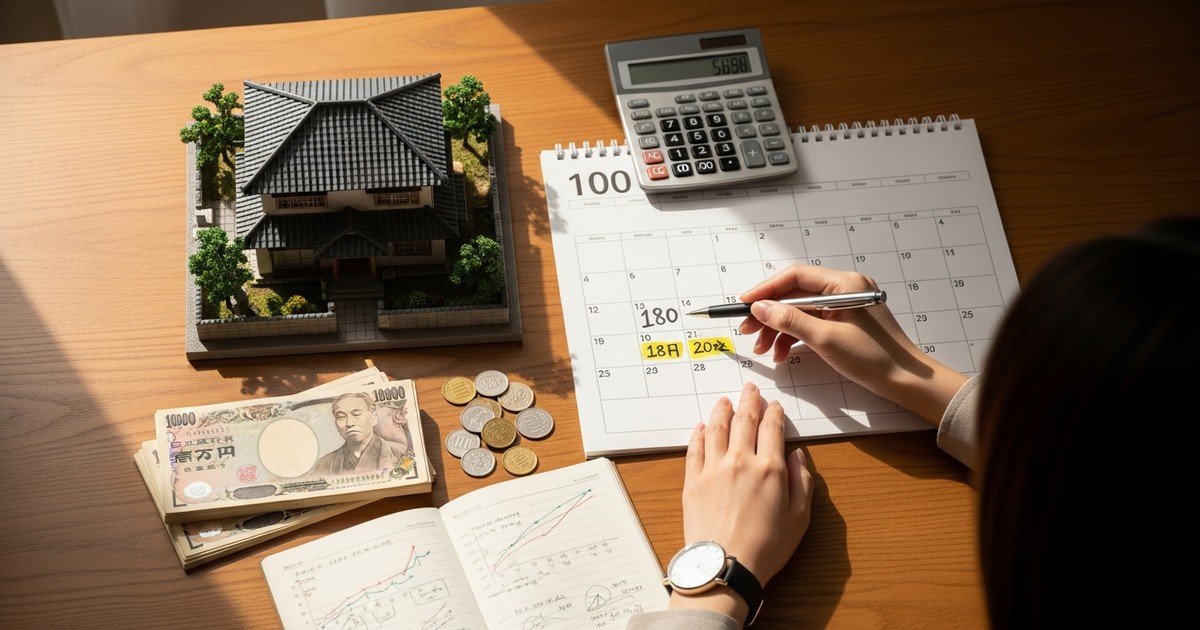
Free Online ConsultationSecuring stable revenue under minpaku’s 180-day restriction requires a reverse-calculation approach to revenue design that starts from that fixed cap on operating days. Under the Private Lodging Business Act (the “new minpaku law”), annual operating days are limited to a maximum of 180, and the success or failure of your business hinges on how high an occupancy rate and room rate you can achieve within that constraint.
While ordinary hotels and inns can operate 365 days a year, minpaku properties are limited to roughly half that number of operating days. This means you need to think along two axes simultaneously: a strategy for maximizing revenue per night, and a plan for how to make use of the remaining roughly 185 days. This article explains how to design annual revenue with minpaku’s 180-day restriction in mind, using concrete figures and examples.
Whether you’re about to start a minpaku business or you’re already operating one but struggling to grow revenue, we’ve organized here a set of practical, actionable ideas. By the time you finish reading, we hope you’ll see the 180-day constraint in a new strategic light.
Understanding How Minpaku’s 180-Day Restriction Affects Your Revenue Structure
Under the Private Lodging Business Act, registered lodgings can operate for a maximum of 180 days (nights) per year, running from April 1 to March 31 of the following year. Because this limit is counted on a per-night basis, a single stay of one night and two days—checking in at noon and checking out the following noon—counts as “one day.” This works out to an average of only about 15 operating days per month, meaning your sales opportunities are cut to less than half compared to a hotel operating 365 days a year.
The impact this restriction has on revenue is significant. Even if you achieve full occupancy across all 180 days at a rate of ¥10,000 per night, your annual revenue would still cap out at ¥1.8 million. After deducting cleaning fees, management fees, utility costs, consumable supplies, and platform commissions, your actual take-home amount shrinks further. In other words, if you approach the numbers with the same mindset as a typical real estate investment or standard lodging business, you’re likely to end up with results well below expectations. That’s precisely why it’s essential to build your revenue model around the 180-day cap from the very beginning.
Building an Annual Revenue Simulation with Concrete Numbers
Working Backward from Your Sales Target
The first step in revenue design is setting a target annual sales figure and then working backward to determine the required rate per night. For example, if you set an annual sales target of ¥3.6 million and expect an 80% occupancy rate across your 180 days (144 nights booked), you’d need an average rate of ¥25,000 per night. If you can push occupancy up to 90% (162 nights booked), the required average rate drops to about ¥22,200. By testing different combinations of occupancy rate and nightly rate against your goal in this way, you can identify a realistically achievable target.
Calculating Take-Home Profit After Expenses
You need to think not just in terms of sales, but in terms of operating profit after expenses are deducted. Here are the main expense categories and rough annual estimates: cleaning fees run ¥5,000–8,000 per turnover, which adds up to ¥720,000–1.15 million a year at 144 nights; platform commissions typically run about 3–15% of sales; consumables and amenities cost around ¥10,000–20,000 per month (¥120,000–240,000 annually); utilities and communications run ¥10,000–30,000 per month (¥120,000–360,000 annually); and if you use a management company, expect to pay 10–30% of sales, depending on the company and scope of services. Against ¥3.6 million in annual sales, total expenses even for self-managed operations typically run ¥1.2–1.8 million, leaving a take-home profit in the ballpark of ¥1.8–2.4 million as a general benchmark.
Practical Strategies for Boosting Occupancy
Concentrating Your 180 Operating Days During Peak Season
How you allocate your 180 days makes a huge difference to your bottom line. Rather than spreading operations evenly across the year at around 15 days per month, concentrating your operating days during periods of peak demand lets you raise both your average rate and your occupancy rate. For example, you might allocate more operating days to cherry blossom season (March–April), major holiday periods (Golden Week in May, Obon in August, and year-end/New Year), and autumn foliage season (October–November), while scaling back during the off-season. In some areas, peak-season rates can exceed ¥30,000 per night even on weekdays—far more profitable overall across your 180 days than charging ¥15,000 during the off-season.
Fine-Tuning Minimum Stay Requirements and Pricing
Setting a minimum stay of two nights or more during peak season lets you use your available operating days more efficiently while reducing the number of cleanings required. For instance, if you sell a two-night package, you only need one cleaning turnover while still using up two days of your operating allowance. If a single cleaning costs ¥8,000, this approach can save you hundreds of thousands of yen a year compared to cleaning after every single night. Dynamic pricing—offering discounts for last-minute bookings to fill vacancies while charging full price for advance reservations—is another effective tactic.
Concrete Tactics for Raising Your Nightly Rate
Differentiating Your Property and Defining Your Target Guest
Given the 180-day cap, a high-volume, low-margin strategy simply doesn’t work—it makes far more sense to focus on raising your per-night rate. To do this, you need to clearly define who you want staying at your property and then deliver the value that specific guest segment is looking for. If you’re targeting families, for example, a spacious living area, well-equipped kitchen, and in-unit washing machine become key differentiators. If you’re targeting inbound travelers, features that showcase Japanese culture—such as a tatami room, a hinoki cypress bath, or curated local experience recommendations—can be highly effective.
The Relationship Between Review Scores and Listing Rank
On platforms like Airbnb, review scores directly affect your listing’s search ranking and booking rate. Properties with a rating of 4.8 or higher tend to appear near the top of search results, which in turn makes it easier to secure bookings even at higher price points. Continuously improving on individual review categories—cleanliness, communication, check-in experience, and accuracy of listed amenities—and maintaining Superhost status form the foundation for raising your rates over time. Concrete steps such as sending a photo-illustrated check-in guide before arrival, or checking in with a message during the stay to ask if guests need anything, will steadily improve your review scores.
How to Monetize the Remaining ~185 Days
Converting to a Monthly Rental
Leaving the remaining roughly 185 days idle after hitting your 180-day operating cap represents a significant lost opportunity. One strong option is converting the property to a monthly rental (a short-term lease). This doesn’t require a lodging business license under the Hotel Business Act—it’s simply a standard lease agreement of 30 days or longer—and can generate rental income of ¥100,000–200,000 per month in some cases. There’s steady demand for this kind of arrangement from business travelers, people temporarily returning to Japan, and those needing temporary housing during a renovation.
Using Weekly Rentals or Renting the Space by the Hour
Depending on the area and the property’s characteristics, another option is a weekly rental (a short-term lease of seven days or more), or renting the space out by the hour as a rental venue. If you rent the space at ¥2,000–5,000 per hour and get 20 bookings a month, that translates into ¥40,000–100,000 in monthly income. Opening up uses beyond overnight lodging—such as photo shoots, workshops, or parties—can help boost your revenue across the full year. That said, changing the use of the space may require checking compliance with fire safety and building codes, so be sure to research this in advance.
Options If You Want to Exceed the 180-Day Limit
Obtaining a Hotel Business Act License for 365-Day Operation
The 180-day restriction applies specifically to registered lodgings under the Private Lodging Business Act (the “new minpaku law”). If you instead obtain a simple lodging license under the Hotel Business Act, you can operate 365 days a year. However, this license comes with stricter requirements than a registered lodging, including a mandatory front desk (with some relaxations depending on the municipality), restrictions on zoning, and fire safety equipment requirements. Many operators face additional upfront costs of ¥1–3 million to meet these requirements, so this option should only be pursued after a careful revenue simulation.
You Cannot Combine a Registered Lodging with a Simple Lodging License
A common misconception is that you can operate the same property as a registered lodging for 180 days and then switch it to a simple lodging license for the remainder of the year. In fact, you cannot apply both frameworks to the same property simultaneously—you must choose one or the other. If you determine that the 180-day restriction doesn’t fit your business plan, you’ll need to decide clearly between two paths: pursuing a Hotel Business Act license from the outset, or designing your operations to maximize revenue within the 180-day limit.
Pitfalls Easily Overlooked in Revenue Design
Additional Restrictions Imposed by Local Municipalities
On top of the national 180-day restriction under the Private Lodging Business Act, some municipalities impose their own additional limits on operating periods or specific days of the week. For instance, some municipalities prohibit weekday operation in residential-only zoning districts, while others restrict operations during specific periods. These local add-on regulations can reduce your actual operable days to around 100 or fewer, so it’s essential to check the local ordinances at your property’s location before filing your registration, and to base your simulation on the actual number of days you’ll be permitted to operate.
The Risk of Underestimating Your Payback Period on Initial Investment
Beyond the cost of acquiring or leasing the property itself, initial investment in a minpaku business includes furniture and appliances (¥300,000–800,000), fire safety equipment (¥100,000–500,000), and registration paperwork costs (¥150,000–300,000 if you hire a licensed administrative scrivener to handle it). Even if your annual take-home profit is ¥2 million, a ¥3 million initial investment means it will take a year and a half to recoup. Because of the 180-day limit, payback periods tend to run longer for minpaku properties than for lodging facilities that can operate 365 days a year, so it’s essential to factor this in at the financial planning stage.
For Minpaku Management Consultations, Contact Stay Buddy Inc.
Maximizing minpaku revenue under the 180-day restriction requires making a wide range of decisions—from selecting the right property, to designing your pricing structure, to allocating your operating days, to making the most of the off-season. For those managing a minpaku property for the first time in particular, it’s common to feel uncertain about the accuracy of your revenue simulations or whether you’re fully compliant with regulations.
Through our minpaku management service, Stay Buddy Inc. provides comprehensive support—from designing revenue strategies tailored to each property, to day-to-day guest communication, cleaning coordination, and review management. Drawing on our extensive operational track record, we can offer concrete advice on strategic questions too, such as which periods to concentrate your 180 operating days in and how best to monetize the remaining time.
If you’re wondering whether your property can genuinely turn a profit, or what pricing would be appropriate, please feel free to reach out to Stay Buddy Inc. We also offer a free revenue simulation based on your property’s details.