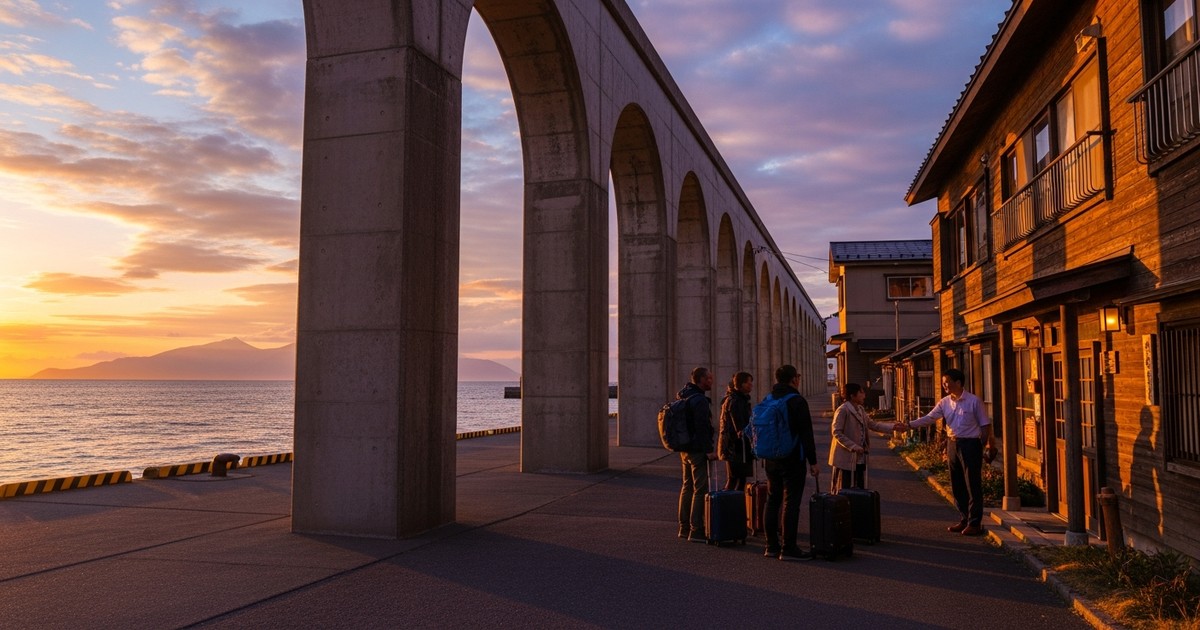
Can you actually turn a profit running a vacation rental in Wakkanai City? Plenty of owners and investors have asked themselves this very question. Located at the northernmost tip of Hokkaido, Wakkanai serves as a gateway to Rishiri and Rebun Islands, drawing tourists from both Japan and abroad. As inbound demand continues to recover, accommodation needs are climbing right along with it, putting Wakkanai’s vacation rental earning potential in the spotlight.
That said, Wakkanai sees a stark contrast between its peak tourist season and quieter months, which means owners need a solid strategy to maintain year-round occupancy. On top of that, opening a vacation rental requires a good grasp of legal regulations and permit applications, along with a number of other things you’ll want to sort out in advance. This article takes a close look at the realities of Wakkanai’s vacation rental market, breaking down revenue forecasts by property type and highlighting key considerations for anyone thinking about opening one.
For those considering entering this market, we’ll walk you through realistic figures and concrete steps to help you figure out where to start. Read on for the full picture.
Wakkanai City’s Vacation Rental Demand and the Area Factors That Shape It
Sitting at Hokkaido’s northernmost point, Wakkanai City is a tourism hub with a ferry terminal connecting to Rishiri and Rebun Islands. During the summer months (June to August), travelers from Japan and overseas flock to the area for its flowers and natural scenery, with Cape Soya and Wakkanai Park also ranking among the most popular sightseeing spots. Annual visitor numbers are estimated at roughly 800,000 to 1 million, and in recent years, inbound travelers—particularly from other parts of Asia—have made up a growing share of that total.
When it comes to accommodations, the number of hotel and ryokan rooms in Wakkanai is limited, which means bookings can get tight during peak tourist season. Average nightly rates vary by season but typically fall somewhere between 8,000 and 15,000 yen. Vacation rentals have real potential to absorb this excess demand, and whole-house rental properties that can comfortably accommodate family or group travel of two to four guests tend to have a competitive edge. Inbound travelers, in particular, often prefer longer stays, so capturing multi-night bookings can go a long way toward boosting overall occupancy rates.
Revenue Forecasts by Property Type for Wakkanai Vacation Rentals
Vacation rental revenue in Wakkanai City varies considerably depending on the type of property. Below, we’ve outlined simulations for three property types based on estimated initial investment, operating costs, and occupancy rates. Each figure represents an annual average that factors in both peak summer occupancy (June to August) and winter occupancy (December to February).
Keep in mind that the figures below are general estimates only—actual returns will depend on a property’s location, amenities, and management quality. Use these as a reference point when putting together your own financial plan before opening.
Condominium (Sectional Ownership) Units
For a 1LDK to 2LDK condo unit in Wakkanai City, initial investment—including purchase price or renovation costs—typically runs between 5 million and 9 million yen. Nightly rates are usually set between 8,000 and 12,000 yen, and a realistic annual average occupancy rate, factoring in the high-demand summer season and slower winter months, lands somewhere around 40–50%. Monthly revenue can reach 150,000–200,000 yen during peak season and drop to 30,000–70,000 yen during the off-season, bringing annual revenue to an estimated 1.2–1.8 million yen. After subtracting operating costs such as cleaning fees, platform commissions, and utilities, annual net profit typically falls in the 600,000–1,000,000 yen range.
With condo units, checking the management association’s bylaws is essential, as many buildings prohibit vacation rental use outright. Common-area disputes and noise complaints can also strain relationships with neighbors, so establishing clear house rules and maintaining respectful communication with the community are key to keeping revenue stable.
Detached Houses
Running a detached house in Wakkanai as a whole-house rental typically requires an initial investment of 7 million to 15 million yen, including property acquisition and renovation costs. Detached houses that can sleep three to five guests are especially popular with families and group travelers, and nightly rates are often set between 15,000 and 25,000 yen. Assuming an annual occupancy rate of 45–55%, annual revenue can reach approximately 2–3 million yen. After deducting operating costs (cleaning, insurance, facility maintenance, etc.), net annual profit typically falls in the 1–1.8 million yen range—potentially higher than what condo units tend to earn.
In Wakkanai, there’s no shortage of older vacant homes—including many registered with the local akiya (vacant house) bank—that can sometimes be acquired at relatively low cost. That said, older properties often come with insulation and equipment issues, so keep in mind that renovation costs can end up exceeding your initial estimates. Since winter heating systems (kerosene boilers, wood stoves, etc.) directly affect guest comfort, they’re well worth prioritizing when allocating your investment.
Traditional Japanese Farmhouses (Kominka)
Vacation rentals set up in traditional kominka farmhouses scattered throughout Wakkanai and the wider Soya region tend to score well with inbound travelers and domestic tourists seeking an experiential stay. While the properties themselves can often be acquired cheaply, renovation costs covering insulation, plumbing, and electrical work can run anywhere from 10 to 20 million yen, so it’s important to budget your initial investment carefully. On the upside, these properties stand out easily from the competition and can often command premium rates of 20,000 to 35,000 yen per night. Even with a conservative occupancy estimate of 40–50%, annual revenue can reach 2.5–3.5 million yen in some cases.
The biggest strength of a kominka property lies in its story and rarity. The experience of “staying in a traditional farmhouse at Japan’s northernmost tip” offers a kind of value that no other type of accommodation can replicate. That said, maintenance costs run high and repairs tend to come up more frequently, so it’s essential to build a careful mid- to long-term financial plan. Partnering with a property management service to ease the operational burden while pursuing profitability is also a practical option worth considering.
Legal Regulations for Opening a Vacation Rental in Wakkanai City
To operate a vacation rental legally, you’ll need to obtain a permit or submit a notification under one of three frameworks: the Private Lodging Business Act (Minpaku Shinpo), the Hotel Business Act (Ryokan Gyoho), or the National Strategic Special Zone system. The Private Lodging Business Act caps operations at 180 days per year, but it comes with the advantage of a relatively straightforward notification process for opening up shop. The Hotel Business Act (as a simple lodging facility) has no such 180-day cap and allows year-round operation, making it a good fit if maximizing occupancy is your priority. The Special Zone framework only applies within designated National Strategic Special Zones, so you’ll need to check directly with the local government to confirm whether Wakkanai City falls within a designated zone.
Whether Wakkanai City’s ordinances and local rules apply—and whether an application will be approved—needs to be assessed on a case-by-case basis. In particular, requirements tied to zoning designations (properties in exclusively residential zones may face restrictions even under the Private Lodging Business Act) and Building Standards Act provisions vary from property to property. We strongly recommend consulting with Wakkanai City’s relevant department or the local public health center before opening, to confirm which framework applies to your specific property. Operating without proper authorization is subject to administrative penalties, so be sure to secure the appropriate permit or complete the necessary notification before launching your business.
Key Considerations and Initial Costs to Keep in Mind When Opening
The general process for opening a vacation rental follows this sequence: property acquisition/renovation → legal procedures → equipment setup → platform registration. Under the Private Lodging Business Act, you’ll need to file a notification with the prefectural governor (or the mayor of a city that operates its own public health center), along with documents such as a fire code compliance certificate and building floor plans. Under the Hotel Business Act (as a simple lodging facility), you’ll need to apply for a permit through the local public health center, and your renovation will need to satisfy specific facility standards (natural lighting, ventilation, front desk setup, etc.). Since the process from application to approval can take anywhere from one to three months, it’s wise to build some flexibility into your opening timeline.
As for initial costs, excluding property acquisition, you can generally expect: 1–5 million yen for renovation and interior work, 300,000–800,000 yen for furniture, appliances, and bedding, 100,000–300,000 yen for fire safety equipment (automatic fire alarms, emergency lighting, etc.), and 50,000–150,000 yen for application fees and administrative scrivener costs. When it comes to managing relationships with neighbors, greeting and explaining your plans to residents before opening—along with posting a clearly visible sign with emergency contact information at the property—goes a long way toward establishing the kind of transparent operation that supports long-term stability. It’s also essential to spell out garbage disposal rules and late-night noise policies clearly in your house rules and make sure guests are aware of them.
Common Risks During Operation and How to Manage Them
The biggest risk facing vacation rental operators in Wakkanai City is seasonal fluctuation. It’s not unusual for occupancy rates to reach 80–90% during peak summer months (June to August), only to drop to as low as 10–20% during winter (December to February). To offset this seasonal gap, it helps to offer pricing plans geared toward business travelers or extended stays, and to explore partnerships tied to winter sports demand or aurora-viewing tours—essentially finding creative ways to drum up demand during the off-season. Using dynamic pricing tools to maximize rates during peak periods can also make a direct difference to your bottom line.
To manage cancellation risk, listing your property across multiple platforms—such as Airbnb and Booking.com—helps spread out bookings, while setting your cancellation policy to “Strict” or “Moderate” can minimize the revenue lost to last-minute cancellations. It’s also essential to carry vacation-rental-specific liability insurance to protect against guest-related incidents such as property damage, noise complaints, or misuse of the space. Setting up smart locks for check-in and check-out, along with a thorough guidebook, allows you to run operations smoothly even when you’re not on-site—an essential foundation for sustained, hands-off operation. Since cleaning quality has a direct impact on guest reviews, securing a reliable cleaning team is also key to long-term success.
Talk to Stay Buddy About Opening or Improving a Vacation Rental in Wakkanai
Stay Buddy Inc., a full-service vacation rental management company, supports owners throughout Hokkaido—including Wakkanai City—from the opening stage all the way through ongoing property management. Our mission is to create an environment where owners can focus on their main jobs and everyday lives, while we handle everything from revenue simulations and regulatory checks to platform registration, pricing strategy, and guest communication.
Whether you’re wondering “Can I actually turn a profit with a property in Wakkanai?”, unsure which licensing framework applies to your situation, or looking to hand off day-to-day operations after opening, feel free to reach out to us anytime. We also offer revenue forecast reports based on local market data, as well as help mapping out a roadmap toward opening.
Wakkanai’s vacation rental market still has plenty of room to grow, and there are already owners achieving stable returns through smart property selection and well-planned management strategies. Stay Buddy is here to share the kind of region-specific know-how that helps you capture inbound demand and navigate seasonal fluctuations with confidence.
Free consultations are available anytime through the inquiry form on Stay Buddy Inc.’s official website. Take the first step toward opening or improving a vacation rental in Wakkanai—and let Stay Buddy help you get there.