For owners considering starting a minpaku business in Ebetsu City, the top priorities are understanding “how much revenue can I realistically expect in Ebetsu City” and “which legal framework should I choose to open my business.” This article organizes Ebetsu City’s area characteristics and accommodation demand using data, presents revenue forecasts by property type—apartments, detached houses, and traditional kominka homes—and provides a comprehensive comparison of the Hotel Business Act, the Minpaku New Law, and Special Zone Minpaku systems.
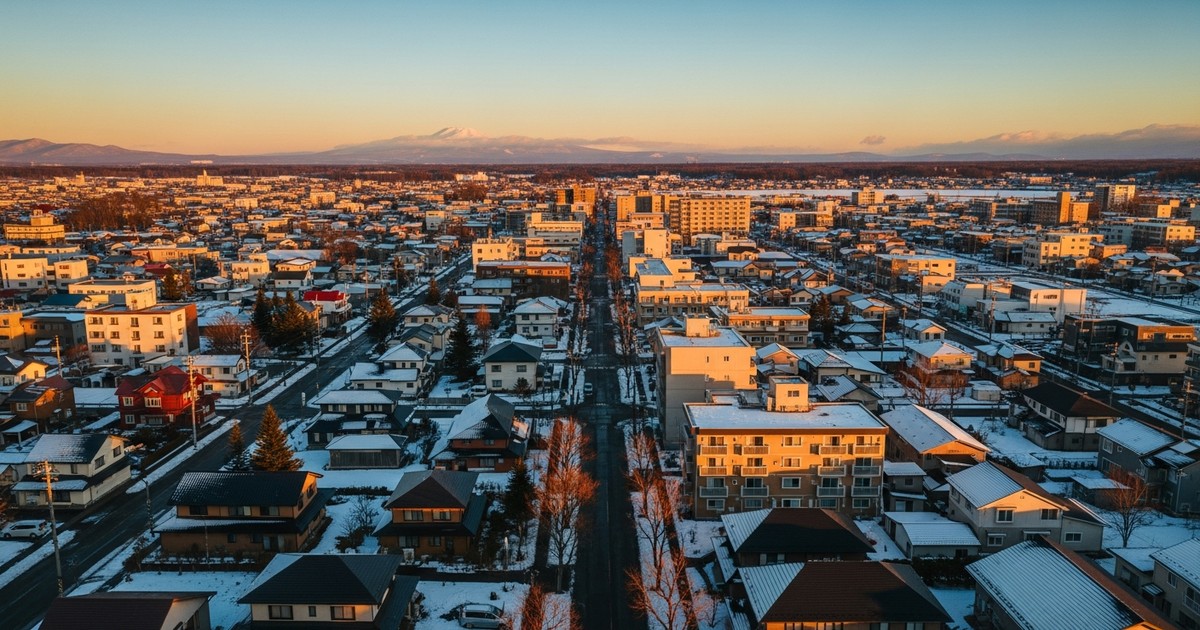
Ebetsu City sits right next to Sapporo yet boasts its own distinct tourism assets rooted in rich natural surroundings and a history tied to dairy farming and brick manufacturing. In recent years, the number of travelers visiting the wider Do-o region has been growing, and Ebetsu’s location makes it well-positioned to absorb overflow demand during peak seasons when Sapporo’s accommodations are fully booked. Whether owners can capitalize on this geographic advantage is a key factor that will determine minpaku profitability.
Ebetsu City’s Minpaku Revenue Potential and Area Demand Data
Ebetsu City has a population of roughly 110,000 and functions as a satellite city of Sapporo within Hokkaido. With access to Sapporo Station taking as little as about 20 minutes via the JR Hakodate Main Line, the city can capture demand from travelers who want to use Sapporo as a base for sightseeing while also enjoying a lusher, more natural environment for their stay. Notable attractions scattered throughout the area include Shinshinotsu Onsen, the Nopporo Primeval Forest (a Special Natural Monument), and hands-on experience facilities built around glass craft and brick manufacturing—all of which hold appeal for inbound travelers seeking nature, culture, and experiential activities.
Nightly room rates vary depending on the size and location of the minpaku property, but for properties near stations in the Nopporo and Oasa areas, a realistic range is around ¥6,000–10,000 per room per night. Inbound demand across Hokkaido overall continues to remain strong, and occupancy rates can reach 70–85% during peak seasons—particularly in summer (July–September) and winter (January–February, driven by ski demand). On the other hand, occupancy can drop to around 40–50% during the off-peak spring and autumn seasons, making an annual average occupancy rate of 55–65% a realistic benchmark.
Revenue Forecasts by Property Type
Minpaku profitability varies significantly depending on property type, as each type comes with different initial investment costs, renovation expenses, and operational difficulty. It’s essential to run revenue simulations based on the type of property you already own or can acquire. Below, we break down the three main property types in Ebetsu City along with concrete figures.
Minpaku Revenue for Apartments/Condominiums
Operating a single unit within a condominium or rental apartment building is characterized by relatively low initial investment, making it an accessible entry point. In Ebetsu’s Nopporo and Oasa areas, 1LDK to 2LDK units are the primary options available. Setting the nightly rate at ¥7,000 and annual occupancy at 60%, the calculation of 30 days × 60% × ¥7,000 × 12 months yields approximately ¥1.51 million in annual gross revenue. After deducting cleaning fees (¥3,000–5,000 per turnover), linen costs, OTA commissions (15–20% of sales), and utility costs, net annual profit typically lands around ¥800,000–1 million.
One important consideration: when operating minpaku in a condominium or rental apartment, you must confirm whether the management association’s bylaws or the lease agreement contain any prohibitive clauses. In most cases, registration under the Minpaku New Law (Private Lodging Business Act) will be required, and the annual cap of 180 operating days effectively becomes the ceiling on revenue. Initial investment for fixtures, furniture, and interior setup typically runs ¥300,000–600,000.
Minpaku Revenue for Detached Houses
Detached houses, with multiple bedrooms, can be operated as whole-house rentals, allowing owners to command higher rates from group and family travelers. For a 3–4LDK detached house in Ebetsu City, nightly rates can be set anywhere from ¥15,000–25,000, and even at a 50% annual occupancy rate, gross annual revenue works out to roughly ¥2.7–4.5 million. After deducting cleaning, maintenance, utilities, and OTA commissions, owners can potentially net around ¥1.5–2.5 million per year.
When opening a minpaku business in a detached house, many owners pursue the simple lodging (kan-i shukusho) permit under the Hotel Business Act, which removes the annual operating-day cap and allows for maximum occupancy. However, this route requires installing fire safety equipment (automatic fire alarms, emergency exit lighting, etc.) and undergoing facility inspection by the local health center, so initial costs—including interior work and equipment—typically range from ¥1–3 million. Consulting with the local municipal office in advance will clarify the specific requirements involved.
Minpaku Revenue for Kominka and Farmhouse Properties
Ebetsu City is an area with a strong agricultural base, and there is latent demand for experience-based minpaku that makes use of farmhouses or aged traditional kominka homes. Positioned as a farm-stay (noka minpaku / nohaku), these properties can command premium nightly rates of ¥25,000–40,000 or more when bundled with activities such as farming experiences, harvest experiences, or dairy farm tours. Since occupancy tends to concentrate around peak seasons, a realistic annual average occupancy rate is 40–50%, but the higher rates can offset this, pushing annual gross revenue into the ¥2–3 million range.
That said, kominka properties often require substantial renovation costs—including seismic reinforcement, insulation work, and plumbing/bathroom upgrades—that can bring initial costs to ¥3–8 million or more. Subsidies (such as the Farm Stay Promotion Program or the Rural Area Revitalization Grant) can help offset these costs in some cases, but application requirements and approval rates vary by fiscal year, so it’s necessary to check in advance with the local agricultural committee or municipal department in charge. Owners should plan for a payback period of 5–10 years and build a long-term business plan accordingly.
Differences Between the Hotel Business Act, Minpaku New Law, and Special Zone Minpaku
When opening a minpaku business in Ebetsu City, the legal framework you choose will significantly affect your allowable operating days, procedural complexity, and facility requirements. The three main systems are the Hotel Business Act (simple lodging), the Private Lodging Business Act (Minpaku New Law), and Special Zone Minpaku under the National Strategic Special Zones Act—though whether Ebetsu City is designated as an eligible area for Special Zone Minpaku should be confirmed directly with the municipality. Below is an overview of the basic differences between each system.
The Hotel Business Act (simple lodging permit) requires an application for permission from the local health center but places no cap on annual operating days, making it well-suited to owners aiming to maximize revenue on a full-scale basis. The Private Lodging Business Act (Minpaku New Law) operates on a registration system with the prefecture and requires operations to stay within 180 days per year. Since municipalities may impose additional restrictions on operating days or eligible zones through local ordinances, it’s necessary to confirm the specific scope of application with Ebetsu City or the relevant Hokkaido department. Special Zone Minpaku is limited to designated National Strategic Special Zones and comes with its own unique requirements, such as a minimum stay of two nights and three days; whether it applies must be assessed on a case-by-case basis.
Points to Watch When Opening and Estimated Initial Costs
The first step in opening a minpaku business is completing the permit or registration application appropriate to your chosen legal framework. For the Hotel Business Act (simple lodging), the typical process is: preliminary consultation with the local health center → facility inspection → obtaining the permit. This requires meeting requirements around fire safety equipment, ventilation, and lighting standards. The process from application to permit approval often takes 1–3 months, so it’s important to build your schedule backward from your intended opening date. Registration under the Private Lodging Business Act is completed through the prefecture’s online system, and once a registration number is issued, operations can begin.
Estimated initial costs vary depending on property type and chosen legal framework, but as a general guide: ¥300,000–600,000 for fixtures and interior setup for a Minpaku New Law registration on a single condo unit; ¥1–3 million including equipment work for a detached house under the Hotel Business Act; and ¥3 million or more in many cases for kominka renovations. As for measures to prevent friction with neighbors, explaining your plans and greeting nearby residents before opening can help prevent complaints related to noise, trash, and parking. For properties registered under the Minpaku New Law, there are also legal obligations to provide guests with certain explanations and to establish a complaint response contact point.
Operational Risks and Strategies to Maintain Occupancy
One of the biggest risks in minpaku operation is seasonal fluctuation. In the Ebetsu City and Hokkaido area, demand tends to concentrate in summer (July–September) and winter (January–February), while spring (March–May) and autumn (October–November) tend to be off-peak. To offset lower occupancy during these off-peak periods, effective strategies include offering monthly or weekly rental plans and capturing business demand such as workations or corporate training stays. Listing on multiple OTA platforms (Airbnb, Rakuten Travel, Jalan, etc.) simultaneously helps maximize exposure and increase booking opportunities.
To manage cancellation risk, it’s important to set a strict last-minute cancellation policy and factor cancellation fees into revenue projections as a buffer. For trouble response, owners should establish a 24-hour support system to handle issues such as lost keys, equipment malfunctions, and noise complaints from guests. If self-management proves difficult, working with a minpaku management company can allow you to outsource check-in support, cleaning, review management, and pricing optimization all at once—boosting occupancy while reducing your own workload.
Consult Stay Buddy for Opening a Minpaku Business in Ebetsu City
Stay Buddy Co., Ltd. is a specialist company providing minpaku management and business-launch support across Hokkaido and throughout Japan. For owners aiming to maximize minpaku revenue in Ebetsu City, we offer end-to-end support—from assessing your property’s potential and helping select the right legal framework, to assisting with permit and registration procedures and providing ongoing management support after opening. Our experienced staff are ready to respond individually to questions such as “I want to know how much I could earn with my property” or “I’m not sure whether the Hotel Business Act or the Minpaku New Law is right for me.”
Opening a minpaku business involves a wide range of tasks—understanding regulations, preparing the property, attracting guests, and handling day-to-day operations. First-time owners in particular often aren’t sure where to start, which is why Stay Buddy offers everything from a free initial consultation through to a concrete action plan. We can also help develop guest-acquisition strategies tailored to Ebetsu City’s local characteristics, along with support for optimizing OTA listing copy and arranging photography.
If you’re considering opening a minpaku business or improving revenue in Ebetsu City, we encourage you to take advantage of Stay Buddy’s free consultation. Regardless of the type or scale of property, we begin by simply hearing about your current situation—so feel free to reach out even if you haven’t yet decided on a property. We also provide free revenue simulations based on market trends specific to the Ebetsu City area, allowing you to evaluate the feasibility of opening a business using concrete numbers.