Sapporo’s Nishi Ward is an area with diverse demand spanning tourism, business, and academia, making it a region attracting attention for its potential to generate stable minpaku (vacation rental) revenue in Sapporo. Understanding average nightly rates and occupancy trends before selecting a property is the first step toward maximizing your returns.
This article organizes minpaku demand data for Nishi Ward and presents revenue projections for three property types: condominiums, detached houses, and traditional Japanese-style homes (kominka). We’ll also comprehensively cover legal considerations, the steps to opening your business, and risk management during operation—so if you’re considering starting a minpaku business in Nishi Ward, this guide is for you.
Minpaku Demand Data and Area Overview for Sapporo’s Nishi Ward
Sapporo’s Nishi Ward encompasses distinctive neighborhoods such as Maruyama, Miyanosawa, and Kotoni, offering strong potential for both tourism and business demand. The Maruyama area is home to Hokkaido Jingu Shrine and Maruyama Zoo, drawing domestic and international tourists year-round. The Kotoni and Miyanosawa areas, thanks to their convenient access, also see a certain level of demand from business travelers and long-term stays. Since the Tozai subway line runs through Nishi Ward, access to downtown Sapporo and New Chitose Airport is excellent, making it an appealing choice as a place to stay.
Regarding typical nightly rates, minpaku properties in Nishi Ward generally range from ¥6,000 to ¥12,000 per night. For larger properties designed for family or group use by inbound tourists, rates of ¥15,000 or more per night are achievable. Overall accommodation demand in Sapporo tends to concentrate during the winter ski season (December–February) and the summer tourism season (July–September), with peak-season occupancy reaching 70–85%. In contrast, occupancy during the off-peak periods of March–April and around November can drop to as low as 30–50%. While Nishi Ward is subject to these seasonal fluctuations, its high level of everyday convenience allows it to maintain reasonably steady occupancy even during slower periods.
Revenue Projections by Property Type: Condominiums, Detached Houses, and Kominka
When starting a minpaku business in Nishi Ward, the choice of property type significantly affects your initial investment, expected revenue, and operational workload. Below, we break down concrete figures for each of the three property types to illustrate potential revenue.
As a baseline for these revenue calculations, we use the 180-day annual operating limit set under the Private Lodging Business Act (the “minpaku law”). Properties licensed under the Hotel Business Act are not subject to this restriction, but since the application requirements differ, you’ll need to make a decision based on your property’s specific circumstances.
Revenue Projections for Condominium-Type Minpaku
Operating a minpaku in a 1LDK to 2LDK condominium in Nishi Ward is appealing due to its relatively low initial investment. For a sublease-model property with monthly rent of ¥80,000–¥120,000, initial costs—including renovation, furniture, appliances, and application fees—typically run about ¥500,000 to ¥1,000,000. Assuming a nightly rate of ¥8,000 and an average annual occupancy rate of 55% (based on 180 days), annual revenue comes to roughly ¥790,000 (¥8,000 × 180 days × 55%). After deducting expenses such as management fees, cleaning costs, platform commissions (15–20%), and consumables, a realistic annual net profit falls in the range of ¥200,000 to ¥350,000.
However, condominium-based minpaku is often restricted by building management association bylaws, making it essential to review these regulations in advance. If the bylaws prohibit minpaku operations, you won’t be able to open your business at all, so be sure to confirm this before purchasing or signing a lease on the property. Additionally, in units within multi-unit buildings, managing noise for neighboring and upstairs/downstairs units is key to successful operation.
Revenue Projections for Detached House-Type Minpaku
Detached houses are well-suited to group stays and allow for higher nightly rates. If you purchase a used 3LDK to 4LDK detached house in Nishi Ward and convert it into a minpaku, expect property acquisition costs of roughly ¥20 million to ¥35 million, plus renovation costs of ¥2 million to ¥5 million and furniture/appliance/equipment costs of ¥500,000 to ¥1 million. Assuming a nightly rate of ¥15,000 and an average annual occupancy rate of 50%, annual revenue comes to approximately ¥1.35 million (¥15,000 × 180 days × 50%). Running costs—including property tax, insurance, cleaning, and maintenance—typically total ¥500,000 to ¥700,000 per year, leaving an estimated annual net profit of ¥650,000 to ¥850,000.
For detached houses, building good relationships with neighbors is especially important. Providing clear, upfront explanations regarding trash disposal rules, late-night noise, and parking arrangements can significantly reduce the risk of complaints. Properties with gardens also tend to receive higher guest ratings, which can lead to repeat bookings and improved reviews.
Revenue Projections for Kominka (Traditional House)-Type Minpaku
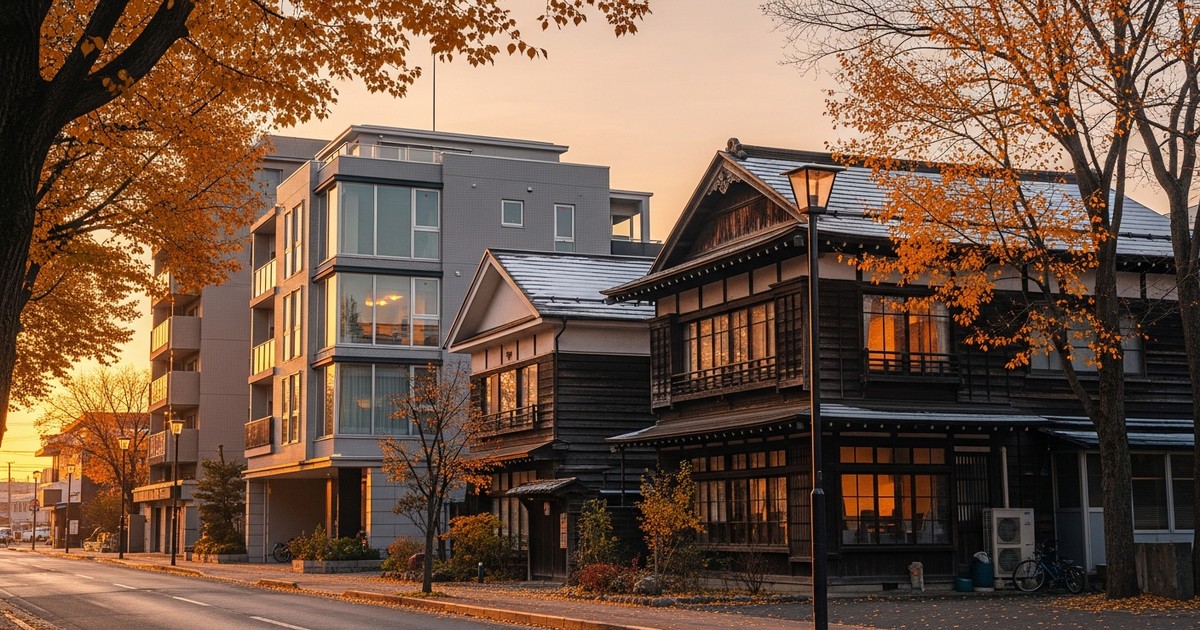
Nishi Ward still has a number of older wooden houses, and renovated kominka-style minpaku can command premium rates thanks to their rarity and the unique experience they offer. Nightly rates of ¥20,000–¥30,000 are achievable in some cases, capturing demand from group and family travel. On the other hand, initial costs are the highest of the three property types—seismic retrofitting, insulation work, and interior renovation can require an investment of ¥3 million to ¥8 million or more. Assuming an average annual occupancy rate of 40% (accounting for larger off-season dips) and a nightly rate of ¥25,000, annual revenue comes to approximately ¥1.8 million (¥25,000 × 180 days × 40%). After expenses, expected annual net profit falls in the ¥800,000 to ¥1.2 million range—though keep in mind that the payback period for renovation costs will be longer.
Because the character of the building itself serves as a differentiating factor, kominka properties tend to earn strong reviews when carefully branded on platforms like Airbnb. That said, aging facilities carry a higher risk of breakdowns, so you should budget roughly ¥200,000 to ¥300,000 annually for maintenance of plumbing and heating systems.
Differences in Legal Regulations and Their Application in Nishi Ward
When starting a minpaku business, there are primarily two legal frameworks to consider: the Private Lodging Business Act (“minpaku law”) and the Hotel Business Act. The minpaku law imposes an annual operating limit of 180 days but features relatively simple notification procedures. On the other hand, “simple lodging business” licensing under the Hotel Business Act has no annual operating day limit, making it suitable for those aiming for stable, year-round occupancy—but it comes with stricter screening, including facility standards, fire safety compliance, and front desk requirements. Note that the National Strategic Special Zone minpaku system (based on the National Strategic Special Zones Act) varies in its details, including which areas it applies to, depending on the municipality, so please check directly with the relevant department at the City of Sapporo or Nishi Ward office.
The City of Sapporo has established ordinances based on the minpaku law, which may impose restrictions on operations in residential-only zones and require prior notification to neighboring residents. However, since the specific scope and content of these restrictions must be judged on a case-by-case basis, we strongly recommend consulting individually with the relevant City of Sapporo department before opening your business. Organizing information on the property’s zoning designation, building use classification, and management association bylaws beforehand will help you get the information you need more smoothly.
Key Considerations and Estimated Initial Costs When Opening a Minpaku in Nishi Ward
The first step in opening your business is confirming the zoning designation where the property is located. In residential-only zones (such as Category I and II Low-Rise Exclusive Residential Districts), minpaku operations may be restricted. Next, check whether a change of building use is required under the Building Standards Act, and carry out any necessary work to meet fire safety equipment standards (automatic fire alarms, fire extinguishers, emergency lighting, etc.). Fire safety equipment work typically costs around ¥150,000 to ¥400,000, depending on the size of the property.
Regarding application and notification fees, there is no fee for filing the minpaku law notification itself, but it’s wise to budget roughly ¥30,000 to ¥80,000 if you plan to hire an administrative scrivener (gyoseishoshi) to handle the paperwork on your behalf. Applications for licensing under the Hotel Business Act must be submitted to the prefectural government and public health center, and given the number of review items involved, engaging a professional can bring total costs to around ¥100,000 to ¥200,000. As for neighbor relations, be sure to greet nearby residents, distribute written notices, and set up a complaint contact point before opening. In particularly dense residential areas, you may even be asked to hold a resident briefing session.
Common Risks During Operation and Strategies for Sustained Occupancy
One of the most significant risks affecting minpaku operations in Nishi Ward is seasonal fluctuation. While demand concentrates during the winter ski season and summer tourist season, occupancy tends to dip during the shoulder seasons of early spring and autumn. During these periods, flexibly lowering prices while offering long-stay plans and multi-night discounts is an effective way to boost occupancy. Offering weekday-only plans geared toward business travelers can also help capture demand outside the peak tourist seasons.
To manage cancellation risk, setting a moderate-to-strict cancellation policy and recommending travel insurance to guests are effective measures. For handling guest issues, the basics include clearly presenting house rules in multiple languages and establishing a proper identity verification process at check-in. Maintaining a 24-hour contact point for equipment breakdowns also helps preserve guest satisfaction. Using a property management service is one option that lets you outsource these day-to-day tasks, reducing the burden on owners themselves.
Talk to Stay Buddy About Generating Minpaku Revenue in Sapporo’s Nishi Ward
Stay Buddy Inc., a vacation rental management company, provides end-to-end support for minpaku businesses in the Sapporo area—from launch through ongoing operations. We offer revenue simulations tailored to each property type, support for legal procedures, and handle everything from platform registration and reservation management to cleaning arrangements—minimizing the workload for owners while maximizing revenue.
In an area with distinct local characteristics like Nishi Ward, know-how in managing seasonal fluctuations and neighbor relations is directly tied to revenue stability. Stay Buddy also develops pricing strategies based on area-specific demand data, creating an environment where even first-time minpaku owners can open their business with confidence.
We currently offer free consultations and can propose individualized plans tailored to your property’s condition and opening timeline. Feel free to reach out even if you’re just at the stage of wanting to see a revenue simulation. Let’s take the first step toward generating minpaku revenue in Nishi Ward together with Stay Buddy.