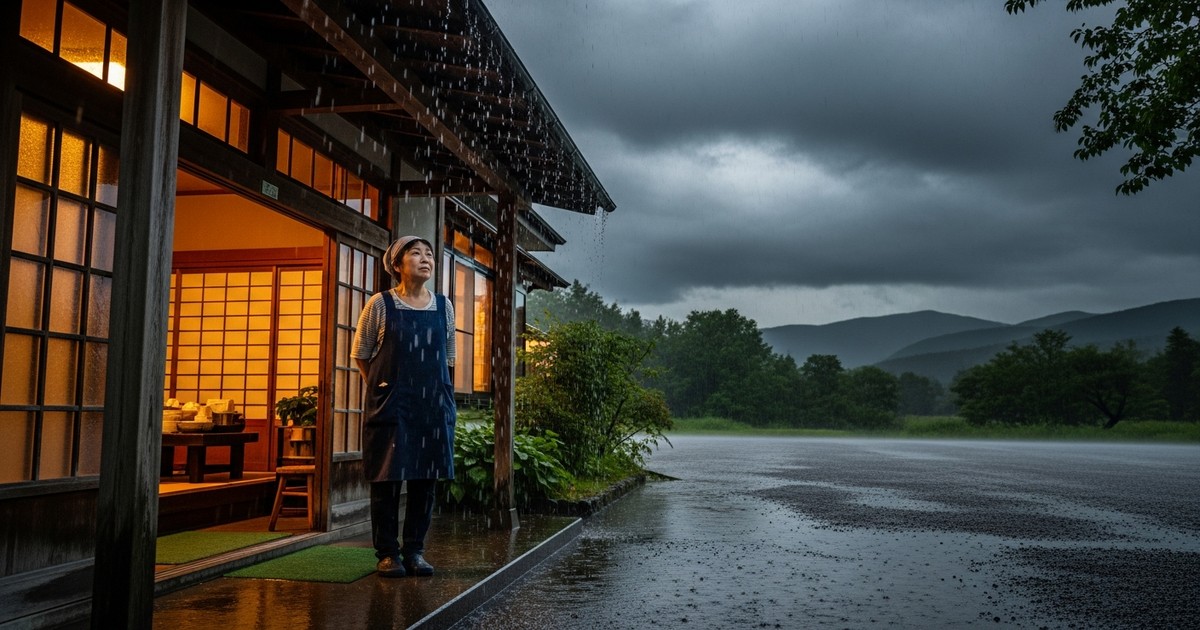
When running a minpaku (private lodging) or ryokan business in Hokkaido, damage risks during typhoon and heavy rain season are an unavoidable challenge. Neglecting proper insurance coverage for your minpaku business can leave you facing losses in the millions of yen from a single natural disaster. In recent years, Hokkaido has seen an increasing number of major typhoon landfalls and record-breaking heavy rainfall, and the old assumption that “typhoons don’t hit Hokkaido” is now firmly a thing of the past.
In fact, in 2016, three typhoons made landfall in Hokkaido, causing damage to more than 6,000 buildings across the prefecture, including homes and lodging facilities. The damage sustained by accommodation businesses has ranged widely—from flooding caused by river overflow, to roof damage from strong winds, to structural collapse from landslides. This article provides a detailed explanation of the specific typhoon and heavy rain season risks that minpaku and ryokan owners in Hokkaido need to know, along with insurance strategies to minimize potential losses.
What Minpaku Owners Need to Know About Insurance Preparedness and Hokkaido’s Unique Natural Disaster Risks
Rising Typhoon Landfalls and Heavy Rain Damage in Hokkaido
Hokkaido was once considered a region rarely hit directly by typhoons, but according to Japan Meteorological Agency data, the frequency of typhoons approaching or making landfall in Hokkaido has clearly increased since 2016. In August 2016, Typhoons No. 7, No. 11, and No. 9 struck Hokkaido in quick succession, causing severe flooding centered on the Tokachi and Kamikawa regions. The damage was not limited to farmland—residential areas and accommodation facilities in tourist areas also suffered significant harm.
Beyond typhoons, localized torrential rain from linear rain bands and sudden downpours has also been on the rise. In 2023, some areas in the Ishikari and Sorachi regions recorded the highest rainfall totals ever observed, and the risk of both river flooding and inland flooding has increased across Hokkaido as a whole. Many minpaku facilities are converted from ordinary residential homes, and depending on their location, a fair number fall within designated flood-risk zones.
Specific Examples of Damage to Minpaku and Ryokan Facilities
Damage to accommodation facilities from typhoons and heavy rain generally falls into three categories: building damage, equipment damage, and lost business revenue. Common examples of building damage include roofing material scattered by strong winds (repair costs of ¥500,000–¥2,000,000), floor and wall damage from flooding (repair costs of ¥1,000,000–¥5,000,000), and foundation damage from mud and debris intrusion (repair costs of ¥2,000,000–¥10,000,000 or more).
Equipment damage includes flood-related failures of air conditioner outdoor units and water heaters (replacement costs of ¥150,000–¥400,000 per unit), and water damage to furniture, appliances, and bedding (¥500,000–¥1,500,000 per property). An often-overlooked category is lost business revenue. If bookings must be suspended during repairs, a property charging ¥15,000 per night that is forced to close for two months could lose approximately ¥540,000 in revenue, even calculated at a 60% occupancy rate. Covering these losses entirely out of pocket represents a heavy burden for individual owners.
Types of Insurance and Coverage Needed for Minpaku and Ryokan Businesses
The Basics of Fire Insurance and Wind/Flood Damage Riders
Fire insurance is the most fundamental form of natural disaster protection for minpaku facilities. Despite the name, most fire insurance policies include coverage for wind damage, flood damage, and snow damage as part of their natural disaster protection. However, one important point to note is that flood damage coverage is often offered as an optional add-on rather than a standard feature. Some owners in Hokkaido, prioritizing snow-damage coverage, choose to opt out of flood coverage—but given the recent rise in heavy rain risk, including flood coverage should now be considered essential.
The conditions for flood coverage payouts vary by insurer, but generally require either “flooding above floor level, or flooding exceeding 45cm above ground level” or “damage amounting to at least 30% of the replacement value.” As a rough guide, for a wooden detached minpaku property valued at ¥20,000,000, fire insurance including flood coverage typically costs around ¥50,000–¥100,000 per year. Premiums vary depending on the building’s structure and the risk level of its location as indicated on hazard maps.
The Importance of Facility Liability Insurance
One type of coverage often overlooked during typhoons and heavy rain is facility liability insurance. This insurance covers damages to guests or third parties resulting from inadequate facility management—for example, if a signboard is blown off during a typhoon and injures a passerby, or if a drainage system defect causes flooding damage to a neighboring building.
Given the nature of the lodging business, accidents affecting guests’ life or safety can result in damages reaching tens of millions of yen. Premiums for facility liability insurance vary depending on annual revenue and facility size, but small minpaku properties can typically obtain coverage for around ¥10,000–¥30,000 per year. Standard coverage often includes ¥100 million for personal injury liability and around ¥10 million for property damage liability, making this a highly cost-effective form of insurance.
Contents Insurance and Comprehensive Property Insurance
Minpaku facilities are typically furnished with a large number of movable assets, including furniture, appliances, bedding, and tableware. In the event of flooding, most of these items become unusable all at once. Adding contents coverage to your fire insurance policy, or taking out a separate comprehensive property insurance policy, allows you to cover these types of losses.
For a whole-house minpaku property, the replacement value of a full set of furnishings and contents typically runs ¥1,500,000–¥3,000,000. Premiums for contents insurance with ¥3,000,000 in coverage generally cost around ¥5,000–¥15,000 per year. Since insurance claims require an inventory list along with purchase receipts, it’s a practical best practice to create a detailed contents inventory at the time of opening and keep it on file along with photographs.
Specific Measures Owners Should Take Before Typhoon and Heavy Rain Season
Checking Hazard Maps and Selecting Properties Carefully
Municipalities across Hokkaido publish hazard maps that show designated flood zones, landslide warning areas, and tsunami inundation zones. In Sapporo, for example, a flood hazard map has been prepared based on projected overflow of the Toyohira River, showing areas in parts of Toyohira, Chuo, and Shiroishi wards where flooding could reach depths of 3 meters or more.
Whenever acquiring or leasing a new minpaku property, be sure to check the hazard map for flood risk. It’s still possible to operate a property located within a designated flood zone, but flood coverage becomes essential in such cases, and premiums tend to run higher. For properties in higher-risk areas, it’s important to factor the annual cost of insurance into your business plan before making an investment decision. On the other hand, choosing a property on higher ground with lower flood risk can reduce insurance premiums by as much as ¥20,000–¥30,000 per year.
Pre-Season Building and Equipment Inspections and Disaster Preparedness
Every year before the heavy rain season begins in June and July, be sure to inspect your building and equipment. Key items to check include loose or peeling roofing materials, clogged or damaged gutters, cracks or deteriorating sealant on exterior walls, clogged drains and drainpipes, and cracks in the foundation. Hiring a professional to conduct these inspections typically costs around ¥20,000–¥50,000 per visit.
For properties at risk of flooding, useful preparations include stockpiling sandbags and flood barriers (roughly 10 per property, costing ¥5,000–¥10,000), raising air conditioner outdoor units off the ground (¥10,000–¥30,000 per unit), and establishing a system for moving valuables and appliances from the first floor to upper floors when needed. Compared to the potential cost of disaster damage, these preventive investments are minimal—and they also serve as evidence of proper management diligence when filing insurance claims.
Guest Response Manuals and Emergency Contact Systems
If guests are staying at your property when a typhoon approaches or a heavy rain warning is issued, you as the owner bear responsibility for ensuring their safety. It’s essential to prepare a manual covering evacuation locations and routes, emergency contact lists, and safety procedures within the facility, and to keep a copy on hand at each property. Preparing multilingual versions (English, Chinese, Korean) ensures the manual is useful for inbound guests as well.
Additionally, working with your property management or operations company to establish a clear emergency response flow in advance—who does what, and when—can help prevent damage from escalating. There have been real cases where prompt guest evacuation and flood mitigation measures taken as a typhoon approached successfully minimized damage. Whether such emergency measures were in place is also a factor insurers consider when reviewing claims, as evidence that the owner fulfilled their “duty to prevent escalating damage.”
Practical Points to Know When Filing an Insurance Claim
Documenting and Preserving Evidence Immediately After Damage Occurs
If your facility suffers damage from a natural disaster, preserving evidence immediately afterward is critical to ensuring you receive your insurance payout. Specifically, you should photograph and video all damaged areas from multiple angles, record water level marks while they’re still visible in the case of flooding, and compile a list of damaged furnishings along with their purchase prices.
While it’s understandable to want to begin cleanup and repairs right away, altering the site’s condition before the insurance company’s on-site inspection can result in reduced payouts or even denial of your claim. Be sure to contact your insurance company first (most insurers operate 24-hour claims hotlines) and follow their instructions before beginning any restoration work. The period between when damage occurs and when the insurance payout is received is typically one to three months.
Watch Out for Exclusions and Cases Not Covered
Flood coverage under fire insurance policies comes with certain exclusions, and not all water damage is covered. Common exclusions include roof leaks caused by age-related deterioration (where the building’s aging is the underlying cause), tsunami damage caused by earthquakes (which falls under earthquake insurance), and damage that was intentionally caused or worsened through gross negligence.
One point that deserves particular attention is flooding caused by poorly maintained drainage systems. If a drainpipe becomes clogged due to neglected cleaning and inspection, resulting in flooding, insurers may reduce the payout on the grounds of a “breach of maintenance obligations.” Performing drainpipe cleaning once or twice a year (at a cost of ¥10,000–¥20,000 per session) and keeping records of this maintenance serves as a safeguard when filing insurance claims.
For Risk Management in Your Minpaku Operations, Consult Stay Buddy Inc.
When running a minpaku or ryokan business in Hokkaido, preparing for typhoon and heavy rain season is essential to protecting your revenue. However, handling everything on your own—from selecting insurance to disaster preparedness to emergency guest response—can be genuinely difficult for many individual owners.
Stay Buddy Inc., a minpaku property management company, offers consulting services that include risk assessment starting from before you even acquire a property. We provide advice on property selection based on hazard maps, recommendations for appropriate insurance plans, and support in creating emergency response manuals—offering comprehensive support to help protect your assets and revenue.
If you’d like to ensure thorough preparation against natural disaster risks while achieving stable minpaku operations, please feel free to contact Stay Buddy Inc. Our experienced staff will propose the optimal management plan tailored to your specific situation.