For owners looking to maximize their minpaku (short-term rental) revenue in Kitahiroshima City, understanding local demand trends, running revenue simulations by property type, and grasping the legal considerations are essential steps before opening for business. Since ES CON FIELD HOKKAIDO—the home stadium of the Hokkaido Consadole Sapporo and Hokkaido Nippon-Ham Fighters—opened, Kitahiroshima City has seen a sharp rise in accommodation demand from sports fans, boosting its potential as a minpaku market. This article covers everything from the real state of minpaku demand in Kitahiroshima City to revenue forecasts for apartments, houses, and traditional Japanese homes (kominka), an overview of the relevant regulations, and key points to keep in mind when opening and operating a property—all backed by concrete figures.
When starting a minpaku business, it’s crucial to understand both sides of the equation together: the revenue potential (“how much can I earn?”) and the regulatory requirements (“what do I need to do?”). Below, we’ve organized information specific to the Kitahiroshima City area, so whether you’re still considering purchasing or converting a property, or you already own a vacant one, we hope you’ll find this useful.
Minpaku Demand Data and Area Overview in Kitahiroshima City: The Market Factors Driving Revenue
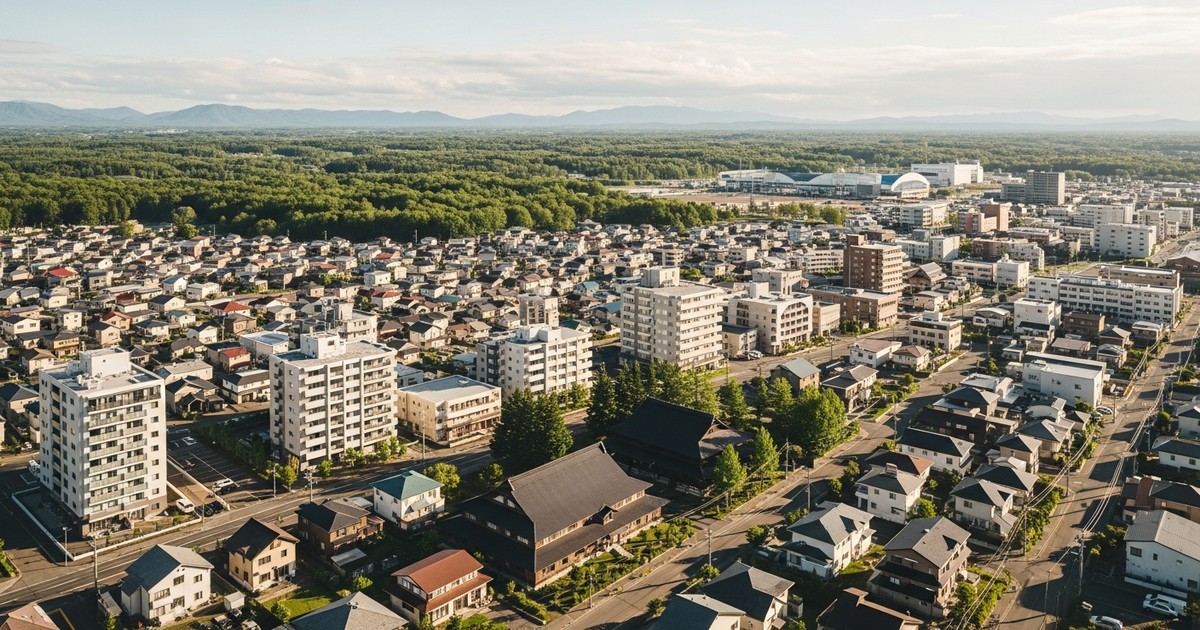
Kitahiroshima City is a city of roughly 60,000 residents located just southeast of Sapporo, with excellent access—only about 20 minutes by car from New Chitose Airport. Since ES CON FIELD HOKKAIDO opened, annual visitor numbers have consistently exceeded one million, and it’s not uncommon for existing hotels in the surrounding area to be fully booked on game days. Because the supply of hotels and traditional inns is limited, minpaku properties have naturally stepped in to fill that gap, and high occupancy rates can be expected especially during the peak season from late March through October.
Nightly rates can spike to between ¥15,000 and over ¥30,000 on game days, while even in the off-season, properties can leverage their easy access to Sapporo to command rates of around ¥6,000 to ¥10,000 per night. The area also has numerous golf courses and nature parks scattered throughout, meaning demand from sports and leisure travelers remains solid year-round. On the inbound tourism front, operators report a growing number of inquiries for minpaku properties offering English and Chinese language support, reflecting the broader increase in foreign visitors to Hokkaido as a whole.
Revenue Forecasts by Property Type: Simulations for Apartments, Houses, and Traditional Homes
When opening a minpaku business in Kitahiroshima City, the initial investment, occupancy rate, and average nightly rate all vary significantly depending on the type of property. Below, we present revenue projections with concrete figures for three property types. Please note these are only general guidelines—actual results will vary based on location, facilities, and management style.
As you review each property type, consider which one matches your situation and weigh the balance between profitability and upfront investment.
Apartments (Owned Units or Rental Conversion)
When converting a condominium unit within Kitahiroshima City or near the station into a minpaku property, 1LDK to 2LDK layouts tend to align best with demand. A realistic occupancy rate is around 60–75% during peak season and 40–50% in the off-season, averaging roughly 55% annually. Assuming an average nightly rate of ¥8,000, monthly revenue would come to about ¥136,000 (¥8,000 × approximately 17 occupied nights per month), translating to roughly ¥1.6 million annually.
Initial investment for furniture, appliances, bedding, and amenities typically runs between ¥500,000 and ¥800,000. However, many condominium buildings have management association bylaws that prohibit minpaku operations, so it’s essential to check these regulations beforehand. Even for properties where the bylaws allow it, explaining your plans to neighbors and implementing noise countermeasures will be key to sustaining operations.
Detached Houses (Standalone Homes or Vacant Property Conversion)
Since detached houses can be rented out to guests as an entire unit, they tend to attract strong demand from groups and families, allowing for higher nightly rates. For a 3LDK to 4LDK house, rates of ¥20,000 to ¥35,000 per night are achievable on game days and during holiday periods. Assuming an annual occupancy rate of 50% and an average nightly rate of ¥15,000, annual revenue would come to approximately ¥2.75 million (¥15,000 × 183 nights).
Initial investment, including renovation and equipment setup, typically runs between ¥1 million and ¥2 million, though costs can rise further depending on the property’s condition. On the other hand, detached houses with multiple parking spaces hold a competitive edge in an area like Kitahiroshima City. Additionally, if the owner resides nearby, the property is more likely to qualify under the Private Lodging Business Act (the “minpaku new law”), which offers a comparatively lower barrier to entry.
Traditional Japanese Homes (Kominka Renovation)
Some areas near Kitahiroshima City retain their rural landscape, and minpaku properties created by renovating traditional kominka homes tend to be highly rated by guests seeking an authentic “Hokkaido living experience.” Kominka minpaku properties stand out easily from the competition and can command premium rates of ¥20,000 to ¥40,000 per night, though renovation costs generally run from ¥2 million to ¥5 million or more. Occupancy rates of 40–60% are achievable depending on branding efforts, though it’s wise to expect a slower start of around 20–30% during the launch period.
As a sample annual revenue calculation, assuming an average nightly rate of ¥25,000 and a 50% occupancy rate (approximately 180 nights per year), theoretical annual revenue comes to around ¥4.5 million. That said, you should plan for a payback period of at least 3 to 5 years to recoup your initial investment. Kominka properties often require seismic reinforcement, insulation upgrades, and plumbing renovations, making collaboration with an architect or design firm essential. Since this approach generates ripple benefits for the local community beyond just revenue, it’s worth researching municipal subsidies for vacant home utilization, which can help offset initial costs.
Differences in Minpaku Regulations and Key Considerations in Kitahiroshima City
When opening a minpaku business, there are two main legal frameworks to choose from: the Private Lodging Business Act (the “minpaku new law”) and the Hotel Business Act (ryokan gyo-ho). The minpaku new law caps annual operating days at 180, but in exchange, its permit requirements are less strict than those of the Hotel Business Act, making it easier to convert ordinary homes or vacant properties for use. Registering as a “simple lodging facility” (kan’i shukusho) under the Hotel Business Act allows for 365 days of operation per year, but requires meeting zoning restrictions and facility standards (such as lighting, ventilation, and fire prevention), which can significantly increase renovation costs depending on the building’s structure.
For specific details on how local ordinances apply in Kitahiroshima City, whether minpaku is permitted in particular districts, and the documentation required for applications, please contact Kitahiroshima City Hall directly. Depending on the zoning classification (such as Category 1 Low-Rise Exclusive Residential Districts), permits under the Hotel Business Act may not be granted, so each case needs to be evaluated individually. Additionally, notifications under the Private Lodging Business Act must be submitted to the Governor of Hokkaido, so we recommend confirming the appropriate jurisdiction and the latest procedural information in advance. Note that there is also a special zone minpaku system available through National Strategic Special Zones, but you’ll need to check with the municipal government to confirm whether this applies to Kitahiroshima City.
Key Considerations When Opening: Permits, Initial Costs, and Managing Neighbor Relations
The process of opening a minpaku business generally breaks down into three major stages: “legal procedures,” “property preparation,” and “platform registration.” For legal procedures, if you’re operating under the minpaku new law, you’ll need to file a Private Lodging Business notification with Hokkaido Prefecture. The application requires floor plans of the residence, a map of the surrounding area, and information about the property manager, and the review process typically takes one to two months. Under the Hotel Business Act, you’ll need to apply through the local health center (hokenjo), which also involves building code confirmation and fire safety equipment inspections. Deciding which framework to pursue early on and consulting with the relevant authority as soon as possible is the best way to avoid delays in opening.
Initial costs vary depending on property type, but while the notification fee itself under the minpaku new law is only a few thousand yen, equipment costs for furniture, appliances, Wi-Fi, security cameras, fire extinguishers, and similar items typically run ¥500,000 to ¥1 million, and operational setup costs—such as contracting a cleaning service and installing a key box—generally add another ¥50,000 to ¥150,000. As for neighbor relations, greeting nearby residents before opening and distributing a document with emergency contact information can go a long way toward preventing disputes. It’s also important to clearly state check-in/check-out rules and nighttime noise restrictions in your house rules, and to publish these on platforms like Airbnb as well.
Managing Operational Risks and Practical Strategies for Maintaining Occupancy
The biggest risk facing minpaku operators in Kitahiroshima City is seasonal fluctuation. While high occupancy can be expected during baseball season (March to October), demand tends to dip during the winter months (November to February). To help fill this seasonal gap, it’s effective to actively promote information about nearby ski resorts to attract skiing and snowboarding guests, or to offer weekly and monthly discount plans aimed at business travelers to Sapporo and long-term stay guests. If winter occupancy falls below 20–30%, monthly revenue could drop to as low as ¥50,000–¥80,000, so it’s wise to build your annual cash flow plan with this scenario in mind.
To manage cancellation risk, setting your booking platform’s cancellation policy to “strict” can help prevent sudden revenue losses. We also strongly recommend enrolling in liability insurance designed for private lodging operators to protect against guest-related issues such as property damage, neighbor complaints, or unauthorized additional guests. Annual premiums typically run between ¥20,000 and ¥50,000—a relatively small investment compared to the potential cost of handling a serious incident on your own. Listing your property across multiple platforms (Airbnb, Rakuten STAY, Jalan, and others) while maintaining strong review ratings will help keep bookings steady. Improving photo quality and adjusting prices seasonally (dynamic pricing) are also direct levers for boosting occupancy.
Consult Stay Buddy for Minpaku Openings and Revenue Growth in Kitahiroshima City
Stay Buddy Inc., a minpaku property management company, has a proven track record of helping optimize revenue for minpaku properties throughout the Hokkaido region. Our specialist team offers comprehensive support at every stage—from analyzing demand trends and competing properties in Kitahiroshima City, to assisting with legal procedures, to handling day-to-day cleaning, guest communication, and review management. If you have a property but aren’t sure where to start, or you want to get into minpaku as a side business but don’t have the time to manage it yourself, our management service is the ideal solution.
In your first free consultation, we’ll provide a revenue simulation for your property and advice on whether the minpaku new law or the Hotel Business Act is the better fit for your situation—all at no cost. We can also share examples of our track record opening properties in Kitahiroshima City, along with concrete monthly revenue reports, so you can make informed, data-driven decisions.
Even if you’re just at the “I’d like to hear more” stage, we welcome your inquiry. Simply share basic details about your property, such as its address and floor plan, and one of our representatives will quickly get back to you with a revenue estimate. The minpaku market in Kitahiroshima City is currently in a growth phase, and there are significant advantages to getting in early. We’d love to hear from you—please feel free to reach out to Stay Buddy today.
You can reach us through the inquiry form on the Stay Buddy Inc. official website, or by phone. Let’s take the first step together toward turning your minpaku revenue goals in Kitahiroshima City into reality.