For anyone considering an Airbnb business in Sapporo’s Kita Ward, understanding the area’s realities through the lens of “Sapporo Airbnb revenue” is the first step toward making a sound investment decision. Unlike the famous tourist hubs of Chuo Ward and Susukino, Kita Ward has its own distinct area characteristics, backed by a unique demand base centered on Hokkaido University and its subway lines. To achieve stable revenue, it’s essential to accurately understand this area’s specific guest-attraction structure and associated risks.
This article provides a systematic breakdown covering everything from demand data for Airbnb in Kita Ward, revenue simulations by property type, an overview of relevant regulations, key considerations when starting a business, and the risks involved in ongoing operations. This content will be useful not only for those considering opening a property but also for current operators looking to improve their returns.
Airbnb Demand in Sapporo’s Kita Ward and the Area Characteristics That Shape Revenue
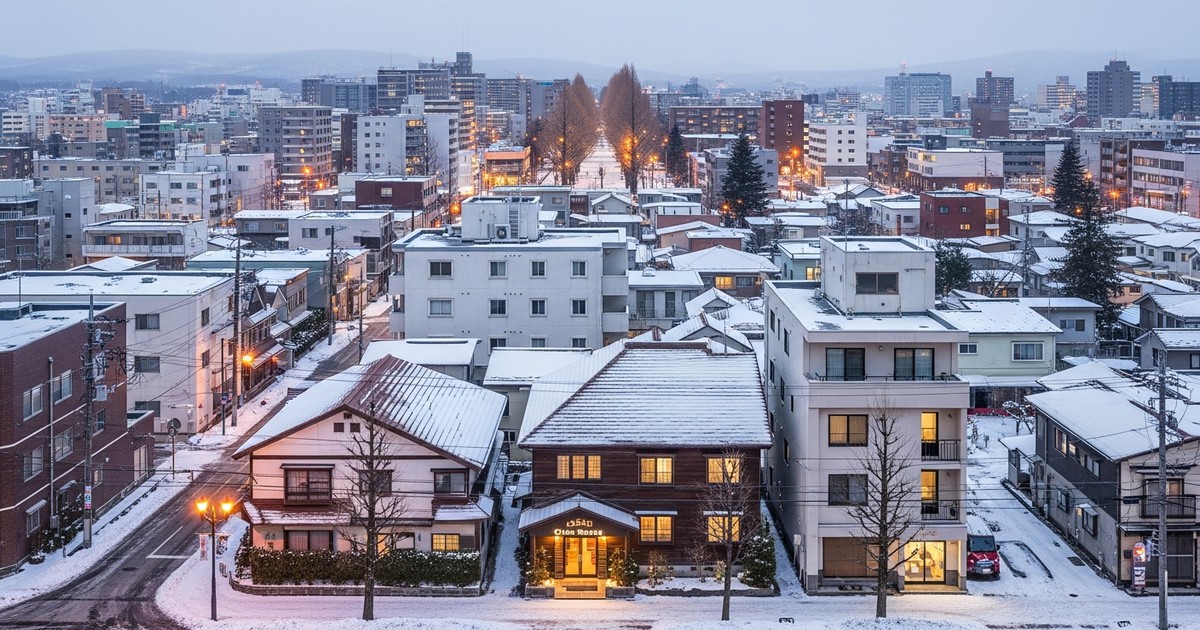
Sapporo’s Kita Ward is the city’s largest administrative district, with a population of approximately 290,000. It’s known for excellent access via the Nanboku and Toho subway lines, putting it just a few minutes from JR Sapporo Station. The area is home to a concentration of academic and research institutions centered around Hokkaido University, ensuring a steady stream of visitors from Japan and abroad throughout the year. Unlike Chuo Ward, where tourists are concentrated, Kita Ward’s accommodation demand is largely driven by academic visitors and long-term business travelers and researchers.
In terms of tourism resources, the area offers convenient access to Hokkaido University’s campus (famous for its ginkgo tree avenue, botanical garden, and museum), the Hokkaido Museum of Modern Art, and Maruyama Park. Regarding inbound demand, Hokkaido as a whole welcomes several million foreign tourists annually, and Kita Ward’s Airbnb properties serve as part of the accommodation infrastructure supporting this influx. While nightly rates vary by area, a common benchmark in Kita Ward is around 5,000–10,000 yen per room per night. However, during Hokkaido University’s festival season, graduation and entrance ceremonies, and the Sapporo Snow Festival, rates can be set well above this average.
Revenue Simulation by Property Type
When opening an Airbnb in Kita Ward, expected occupancy rates, average guest spend, and initial investment costs vary significantly depending on the type of property. Below, we break down the revenue structure for three representative property types. Please note that the following figures are general guidelines only, and actual results will vary depending on location, facilities, and management approach.
When choosing a property type, whether you own or rent the property also directly affects your revenue potential. If using a rental property, obtaining the landlord’s permission is a prerequisite, and confirming the terms of subletting is essential. With an owned property, fixed costs can be kept lower, but properly managing initial renovation investment becomes the key to profitability.
Condominiums (Sectional Ownership / Rental)
1LDK to 2LDK condominiums within a 10-minute walk of a subway station in Kita Ward are the most liquid property type for Airbnb use. Expected annual average occupancy is around 40–55%, which can rise to 60–70% during peak seasons (the Snow Festival, university events, and summer tourism). The average nightly rate is typically 6,000–9,000 yen, with realistic monthly revenue of around 100,000–200,000 yen. Annual revenue can be expected in the range of 1.2–2 million yen, though rent, utilities, cleaning fees, and platform commissions (roughly 15–20%) must be deducted from this. Initial investment for furniture, appliances, and amenities typically runs 300,000–600,000 yen.
The biggest advantage of condominium-based Airbnb is low entry costs and ease of management. On the other hand, many condominium management associations have bylaws prohibiting Airbnb use, so it’s essential to check these regulations before opening. The risk of neighbor disputes is also relatively high, making smart-lock check-in systems and noise countermeasures directly relevant to sustaining revenue.
Detached Houses
Detached houses in Kita Ward are well-suited to operations targeting families and long-term stay guests. With a 3LDK or larger layout, nightly rates of 12,000–20,000 yen are achievable, capturing demand from group and family travel. Expected occupancy is somewhat lower than condominiums, at 35–50%, but the higher rate per night means monthly revenue of around 150,000–250,000 yen is achievable. Annual revenue in the range of 1.8–2.5 million yen is a reasonable projection.
Initial investment varies significantly depending on the property’s condition, but it’s safest to budget for 800,000–1,500,000 yen for minimal renovation and furniture procurement. Operating from an owned property helps keep fixed costs down, but Hokkaido-specific running costs—such as snow removal and garden upkeep—will apply. Properties with available parking space offer an added competitive advantage in attracting winter tourists.
Traditional Japanese Houses / Whole-Building Rentals
Using older traditional houses or whole standalone buildings in Kita Ward is well-suited to a premium strategy built around a distinctive atmosphere. Whole-building rentals tend to appeal to guests who value privacy, allowing for premium nightly rates of 30,000–50,000 yen. However, occupancy tends to be lower, at 20–35%, resulting in a revenue model based on high rates combined with lower occupancy. Annual revenue in the range of 2–3 million yen represents a reasonable upper estimate, though this depends heavily on the property’s appeal and ability to attract guests.
The biggest challenge is the scale of initial investment. If seismic reinforcement, insulation work, or plumbing renovations are needed, investment costs can reach 3–6 million yen or more. It’s important to carefully calculate the payback period and consider whether subsidy programs might help offset costs. In many cases, a hotel business license (ryokan gyoho) will be required, making regulatory confirmation a prerequisite before proceeding with the opening.
Overview of Regulations Related to Opening an Airbnb
Two main regulatory frameworks apply when opening an Airbnb: the “Private Lodging Business Act” (Minpaku Shinpo) and the “Hotel Business Act” (Ryokan Gyoho). The Private Lodging Business Act limits operations to 180 days per year but allows for a relatively simple notification process to start operating. The Hotel Business Act has no limit on operating days, allowing year-round operation, but requires clearing stricter facility, sanitation, and fire safety standards. Note that some areas have special zone Airbnb systems (tokku minpaku) in place, which may apply relaxed provisions of the Hotel Business Act.
Because the interpretation and application of these systems can change, and because which framework applies—and in which zoning areas applications are possible—varies in Sapporo’s Kita Ward, please be sure to confirm directly with the relevant Sapporo City department or a qualified professional. Depending on the zoning designation (such as low-rise residential exclusive zones), hotel business permits may not be granted, so a case-by-case assessment is necessary for each property. Confirming these details alongside management association rules or rental contract terms can help prevent trouble down the road.
Key Considerations and Estimated Initial Costs When Opening
The permit application process begins with confirming the property’s zoning designation and use classification under the Building Standards Act. Next, fire safety equipment requirements (smoke detectors, fire extinguishers, emergency lighting, etc.) must be confirmed and the necessary equipment installed. Under the Private Lodging Business Act, notification must be filed with the prefectural government; under the Hotel Business Act, a permit application must be submitted to the municipal government. Since the process from application to permit approval can take anywhere from several weeks to several months, it’s important to plan your schedule by working backward from your intended opening date.
As for estimated initial costs: fire safety equipment installation typically runs 50,000–200,000 yen, furniture, appliances, and bedding procurement costs 300,000–800,000 yen, and application agency fees (if hiring a licensed administrative scrivener, gyoseishoshi) run around 50,000–150,000 yen. You should also budget 30,000–50,000 yen for initial stock of cleaning supplies and amenities. In Kita Ward, additional costs for winter freeze prevention and snow removal apply, so we recommend adding 100,000–200,000 yen to your annual maintenance budget. Greeting neighbors in advance is also an effective way to prevent disputes before opening. Preparing guest rule explanation materials in multiple languages—Japanese, English, Chinese, and others—can significantly reduce the risk of complaints.
Common Risks During Operation and How to Address Them
One of the biggest risks in operating an Airbnb in Kita Ward is seasonal fluctuation. Hokkaido’s tourism demand tends to concentrate in summer (July–August) and winter (around the February Snow Festival), with spring and fall typically representing off-seasons. If occupancy stays below 20% for several consecutive months, there’s a risk of falling into a deficit, so setting up medium- to long-term monthly stay plans during the off-season is an effective way to support occupancy. Factoring university-related demand (entrance and graduation seasons, academic conference periods) into your pricing calendar can also help stabilize revenue.
To minimize cancellation-related losses, setting the platform’s cancellation policy to “moderate” or “strict” is recommended. To prepare for guest-related issues (noise complaints, improper garbage disposal, equipment damage, etc.), having a well-prepared house manual and a security deposit policy in place is essential. Additionally, since bookings may need to be restricted as you approach the 180-day annual limit under the Private Lodging Business Act, developing a habit of monitoring your operating days on a monthly basis is essential for maintaining continuous operation. If you’re unable to provide 24-hour emergency response (for issues like water leaks or lockouts), using a property management service is a practical solution.
Free Consultations and Inquiries with Stay Buddy
If you’re considering opening or improving the returns on an Airbnb property in Sapporo’s Kita Ward and aren’t sure where to start—or want to estimate how much your property could earn—please reach out to Stay Buddy Inc., a property management service specializing in Airbnb operations. We offer free revenue simulations tailored to your property’s location, type, and current situation, providing consistent support from the pre-opening stage all the way through to full operational management.
Stay Buddy provides comprehensive support covering everything from permit application assistance to listing creation, reservation management, cleaning arrangements, and guest support. We also develop guest-attraction strategies tailored to the specific characteristics of Kita Ward, drawing on accumulated expertise to maintain stable occupancy rates even in Hokkaido’s highly seasonal market.
Whether you’re struggling with revenue that isn’t growing as expected, feeling burdened by complaints or trouble with guests, or simply want expert advice to prepare for upcoming regulatory changes, we’re happy to help at any stage. Please feel free to reach out through Stay Buddy’s free consultation channel. Our specialist staff will listen carefully to your situation and propose the operating plan best suited to the Kita Ward market.