Leave Your Minpaku Management to the Experts
Free Online ConsultationMoving forward with a property without understanding the difference between a Simple Lodging License and the Minpaku Law (Private Lodging Business Act) can lead to redoing your permit application, risking a business suspension, and overhauling your revenue projections from scratch. The right path forward depends entirely on your property and the occupancy rate you’re aiming for. Drawing on Stay Buddy’s hands-on experience—from securing permits to day-to-day operations—this article breaks down how each system works, what it costs, and how it affects your bottom line.
Simple Lodging vs. Minpaku Law: Understanding the Core Differences
Operating as a Simple Lodging facility under the Ryokan Business Act requires obtaining a business license under Article 3 of the Act—and once licensed, there’s no cap on how many days a year you can operate. Registration under the Private Lodging Business Act (the “Minpaku Law”), on the other hand, limits you to 180 days of operation per year. This single difference is what drives the biggest gap in revenue potential between the two.
There’s also a fundamental procedural distinction: Simple Lodging requires a “license,” while Minpaku registration is a “notification.” Because the Ryokan Business Act is license-based, each local government independently reviews compliance with the Building Standards Act, the Fire Service Act, and the City Planning Act. The Minpaku Law, by contrast, is notification-based and generally handled at the prefectural level—but many municipalities layer on their own ordinances restricting zones or operating days, so it’s a mistake to assume “notification-based” means “easy.”
Permit Costs and Timelines
Ryokan Business Act (Simple Lodging)
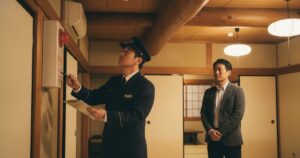
Application fees vary by municipality, but typically fall somewhere between 10,000 and 50,000 yen. On top of that, you’ll need to budget for fire safety equipment required under the Fire Service Act—things like automatic fire alarms, emergency exit lights, and fire extinguishers. Costs here vary widely depending on the property’s age, structure, and size: some properties need only minor adjustments costing a few tens of thousands of yen, while others require renovations running into the hundreds of thousands or even over a million yen. Review timelines also vary by municipality and how busy they are, as well as the condition of the property. Even in a smooth case, expect 1 to 3 months; if the authorities request multiple rounds of corrections, it can stretch closer to six months.
Private Lodging Business Act (Minpaku Law)
Registration is done through the Japan Tourism Agency’s Minpaku portal (minpaku.go.jp), and there’s no application fee. That said, safety measures mandated under the Fire Service Act and the enforcement regulations of the Minpaku Law are not optional—you’ll need to install either an automatic fire alarm or residential fire detectors, along with emergency lighting and clear evacuation routes. These requirements are less demanding than under the Ryokan Business Act, but they’re far from free. As for timing, once your notification is accepted, authorities are required to respond within 60 days—though this can extend if corrections are requested.
The Real Revenue Impact of the 180-Day Cap
The Minpaku Law’s 180-day ceiling means that, in simple terms, you can only operate about 49% of the year. And when local ordinances add further restrictions on top of that, your actual operable days shrink even more. Tokyo’s Ota Ward and Kyoto City, for example, impose zone- and period-based restrictions through local ordinances—in some locations, the realistic number of operating days drops to just a few dozen per year.
In one case Stay Buddy managed, a property that was initially moving forward under Minpaku Law registration turned out to face such tight restrictions—both from local ordinances and nearby zoning limitations—that it would only be able to operate fewer than 90 days a year. At that point, we sat down with the owner and decided to switch course toward obtaining a Simple Lodging license under the Ryokan Business Act instead. Yes, that meant additional costs for fire safety upgrades—but the dramatic increase in annual operating days meant the permit costs were projected to pay for themselves within a year.
Which Option Delivers Better Returns? Key Comparison Points
| Comparison Point | Ryokan Business Act (Simple Lodging) | Private Lodging Business Act (Minpaku Law) |
|---|---|---|
| Operating Day Limit | None (can operate 365 days/year) | Capped at 180 days/year (local ordinances may restrict further) |
| Application Type | License under Article 3 of the Ryokan Business Act | Notification under the Minpaku Law |
| Initial Costs | Medium to high (including facility upgrades) | Low to medium (safety equipment costs still apply) |
| Review Strictness | High (separate reviews for construction, fire safety, and sanitation) | Medium (notification-based, but subject to local ordinance review) |
| Revenue Ceiling from Operating Limits | None | Yes (day limits cap your revenue potential) |
In high-demand locations—tourist areas, properties near train stations, or areas with steady inbound demand—building a Ryokan Business Act operation that runs year-round removes the revenue ceiling entirely. On the other hand, if you’re looking to make use of a vacant rental property or run things as a side business, the lower upfront costs and lighter procedural burden of Minpaku Law registration are often the more practical choice.
What to Check Before Applying for Either Option
Check Zoning and Local Ordinances
As a general rule, a Simple Lodging license under the Ryokan Business Act won’t be granted unless the property sits in a zone where hotel and inn operations are permitted (under the use restrictions in Appended Table 2 of the Building Standards Act). Minpaku Law registration can also be restricted in exclusively residential zones under local ordinances. Before moving forward with either path, you need to check both the zoning classification of the property and the relevant local ordinances—both the Minpaku ordinance and the Ryokan Business Act enforcement ordinance.
Check the Building’s Management Bylaws (For Condominiums)
In condominiums and other divided-ownership buildings, the management bylaws may prohibit minpaku or lodging-business operations outright. Ministry of Land, Infrastructure, Transport and Tourism guidelines affirm that such bylaw restrictions are legally valid—meaning that even if you proceed with an application on a property where the bylaws prohibit it, the management association can block you before you ever get your license or notification approved. Be sure to check all three documents: the property registry, the management bylaws, and the detailed usage rules.
Free Consultation with Stay Buddy: From Choosing the Right Permit to Full Operational Support
As a full-service minpaku and lodging-business management company, Stay Buddy handles everything from helping you choose between a license and a notification, to assisting with the application itself, to cleaning, check-ins, guest communication, and revenue management. Most of our clients come to us right at the stage of “we’re not sure whether to go with Simple Lodging or Minpaku Law”—and we help them land on the most realistic option based on their property’s location, structure, and how hands-on the owner wants to be.
We also handle the hurdles that come up constantly in the field—responding to correction requests during the permit process, coordinating fire safety equipment installations, and more—drawing on our track record of past cases. If you’re stuck because your application hit a snag with a correction request from the authorities, we’re happy to help with that too.
Our management fees vary depending on the size of the property, occupancy levels, and scope of services involved—but we start every relationship with a free consultation to understand your property’s situation, followed by a clear breakdown of costs and a revenue simulation. Feel free to reach out through our contact form or by phone anytime.