Leave Your Minpaku Management to the Experts
100% Free Online ConsultationSwitching From Minpaku to a Hotel Business License (Simple Lodging): Costs, Timeline, and Procedures in Practice
More and more property owners are exploring the move from minpaku to a hotel business license. Whether it’s because they want to operate beyond the 180-day annual cap imposed by the Minpaku Act (the Private Lodging Business Act), or because a building’s management rules or local ordinances have made running a minpaku increasingly impractical, we’re seeing a growing number of owners at Stay Buddy pursue “simple lodging” (*kan’i shukusho*) permits under the Hotel Business Act. Drawing on our hands-on experience, here’s a practical breakdown of the real costs, timelines, and procedures involved.
The Fundamental Differences Between Minpaku (Private Lodging Business Act) and Simple Lodging Under the Hotel Business Act
The Private Lodging Business Act, enacted in 2018, operates on a notification-based system capped at 180 operating days per year. Simple lodging under the Hotel Business Act, by contrast, requires a license—but has no cap on operating days. That distinction has a direct impact on occupancy rates and revenue potential.
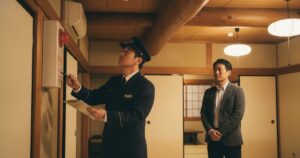
Another often-overlooked difference lies in the level of fire safety compliance required. Once a property is licensed under the Hotel Business Act, its designated use officially becomes “lodging facility,” which triggers stricter fire safety equipment standards than those applied to residential use. Requirements for automatic fire alarms, emergency exit lighting, and fire extinguisher placement all change—and the cost of meeting these new standards makes up a significant portion of the overall conversion cost.
The Real Costs of Making the Switch
Fire Safety Equipment Upgrades
Applying for a license under the Hotel Business Act requires prior consultation with the fire department and confirmation that your property meets fire code requirements. Costs vary widely depending on total floor area and existing equipment, but in projects we’ve handled, installing or expanding automatic fire alarm systems alone has ranged from a few hundred thousand yen to around one million yen. If additional emergency exit lighting or a reconfiguration of fire compartments is required, costs can climb even higher.
Change of Building Use and Building Confirmation Under the Building Standards Act
When a property’s designated use shifts from “residential” to “lodging facility,” a formal change-of-use procedure under the Building Standards Act may be required. For buildings with total floor area exceeding 200㎡, a building confirmation application is mandatory. This involves fees for hiring an architectural firm as well as confirmation application fees (typically in the tens of thousands of yen, depending on the municipality and scale of the project)—both of which can also affect your overall timeline.
License Application Fees and Administrative Scrivener (Gyoseishoshi) Fees
License application fees under the Hotel Business Act vary by municipality, but for simple lodging permits, they typically fall somewhere in the range of roughly ¥18,000–¥20,000-plus (since these fees are set by each local government’s fee ordinance, always confirm the exact amount with your local public health center). If you hire an administrative scrivener (gyoseishoshi) to handle the paperwork, expect additional fees starting around ¥100,000, potentially more depending on how complex the application is.
Facility and Equipment Upgrades
Under the Hotel Business Act, inspectors also evaluate your management system and key-handling procedures—essentially, the equivalent of front-desk operations. This can mean additional costs to bring smart locks or remote management systems into compliance, or to install new systems altogether. Depending on the property’s size and condition, total equipment and facility costs exceeding ¥500,000 are not unusual.
The Procedural Flow and a Realistic Timeline
The general application process unfolds in this order: ① Preliminary consultation with the fire department → ② Preliminary consultation with the public health center → ③ Confirmation of building-related requirements (determining whether a change of use is needed) → ④ Renovation work → ⑤ Fire safety inspection → ⑥ Formal application to the public health center → ⑦ Issuance of the license.
Even when things go smoothly, it’s realistic to expect the process from initial consultation to license issuance to take around 3 to 6 months. If the fire department raises numerous issues, or if the scale of the property triggers a formal building confirmation requirement, the timeline can stretch out by several more months. Since you cannot legally operate under the Hotel Business Act until the license is granted, it’s essential to plan your revenue expectations with this gap in mind.
A Real Case Where Things Got Stuck: Conflicting Requirements from the Fire Department and Public Health Center
In one project we managed on behalf of a client, the public health center’s preliminary consultation gave the green light, stating “this floor plan is fine as is.” However, during the fire department’s on-site inspection, we were told their interpretation of fire compartmentalization was different, and additional construction work was required. Government departments operate independently of one another—approval from one does not guarantee approval from the other. We ended up running consultations with both departments in parallel, bringing in the architect each time a new issue surfaced to work through it together. In the end, the project took over two months longer than originally planned.
Based on that experience, we now always recommend starting preliminary consultations with the fire department, public health center, and building regulation authority all at once, as early as possible, rather than working through them one at a time. Tackling these approvals sequentially carries a much higher risk of costly rework later in the process.
How Operating Costs and Revenue Structure Change After the Switch
Once you obtain a hotel business license, you’re free to operate year-round, which opens up pricing strategies not just for peak season but for the off-season as well. At the same time, operational requirements increase—regular facility hygiene management and reporting obligations to the public health center, for example. You’ll also need to establish a management and cleaning structure suited to hotel business operations, separate from any minpaku management company you may have used previously. Reorganizing your operational workflow around the switch—including transitioning cleaning staff and adjusting shift schedules—is a cost factor that shouldn’t be underestimated.
About Free Consultations with Stay Buddy Inc.
Stay Buddy provides end-to-end support for owners switching from minpaku (under the Private Lodging Business Act) to a simple lodging license under the Hotel Business Act—from assistance with the license application through to full operational management once the license is granted. Drawing on our hands-on field experience, we accompany clients to preliminary consultations with fire departments, public health centers, and building authorities, and coordinate closely with administrative scriveners and architectural firms as needed.
The costs and timeline for making this switch vary significantly depending on your property’s specific situation. Feel free to reach out even if you’re just starting to wonder, “How much would this cost for my property?” or “Where do I even begin?” After seeing your property firsthand, we’ll walk you through a realistic timeline and cost estimate.
Your first consultation is completely free and available either online or in person. Whether you’re already running a minpaku or are just starting to consider getting licensed, feel free to reach out—we’ll begin simply by listening to where things stand for you.