If you’re considering running a minpaku (private lodging) business in Asahikawa, chances are you’re searching for information under keywords like “Asahikawa minpaku revenue.” As Hokkaido’s second-largest city, Asahikawa attracts a steady flow of domestic and international tourists, yet detailed information about the minpaku market’s characteristics and profitability remains limited. This article offers a comprehensive breakdown—from demand data in Asahikawa to revenue forecasts by property type and key considerations when starting your business.
Asahikawa boasts a rich variety of tourism assets, headlined by Asahiyama Zoo, along with Daisetsuzan National Park, ski resorts, and its famous ramen culture. Accurately understanding how this tourism demand connects to minpaku opportunities is essential for achieving stable occupancy after launch. Since expected returns vary significantly depending on property type and location, it’s crucial to build a realistic plan grounded in solid data.
As part of our area and market analysis series, this article walks through the real state of minpaku demand in Asahikawa, revenue simulations by property type, relevant regulations, the steps to opening a business, and operational risks. Whether you’re just starting to explore the idea or ready to move forward, we hope this provides practical insight for your decision-making.
Minpaku Demand Data and Area Overview in Asahikawa
Located in Hokkaido’s inland region, Asahikawa welcomes visitors year-round. Asahiyama Zoo alone draws roughly one million visitors annually, making it one of Hokkaido’s top attractions—and during peak periods, international tourists can account for 10–20% of total visitors. The city also serves as a gateway to Mount Asahidake and the Furano area during ski season, keeping winter demand at a solid level as well.
In terms of lodging demand trends, Asahikawa sees two major peak seasons: the sightseeing season from spring through autumn, and ski season from December to March. Occupancy rates at existing hotels and ryokan in the city can exceed 80–90% during peak periods, and securing accommodation can become difficult during holiday stretches. This supply-demand gap creates an opening for minpaku operators. Standard nightly rates for single and twin rooms typically range from ¥7,000 to ¥15,000, and minpaku properties can target this price range as well, depending on location and amenities.
For international travelers, Asahikawa is widely recognized as the “gateway to the Do-hoku (northern Hokkaido) region,” typically reached via Sapporo. Families and small groups tend to favor whole-property minpaku rentals, and more guests are seeking an authentic “Hokkaido living experience” that hotels can’t easily provide. Properties with good access between Asahikawa Station and Asahiyama Zoo tend to attract especially strong demand.
Revenue Forecasts by Property Type for Minpaku in Asahikawa
When operating a minpaku in Asahikawa, initial investment, expected occupancy rate, and average nightly rate vary considerably depending on the type of property. Below, we outline revenue projections for three representative property types using concrete figures.
These revenue calculations are based on the 180-day annual operating cap set under the Minpaku Shinpo (Private Lodging Business Act). Actual occupancy will fluctuate depending on season and operational approach, so please treat these figures as general reference points only.
Apartments (Sectional Ownership / Rental Conversion)
Converting a single apartment unit in Asahikawa into a minpaku is appealing largely because it keeps initial costs manageable. Typical targets are 1LDK to 2LDK units within a 10–15 minute walk of Asahikawa Station, with monthly rents in the ¥60,000–90,000 range. Renovation costs for minpaku use (furniture, appliances, bedding) generally run around ¥500,000–1,000,000 as a standard initial investment.
Assuming an occupancy rate of 50–65% based on the 180-day cap (90–117 actual operating days) and a nightly rate of ¥8,000–12,000, annual revenue typically falls between roughly ¥720,000 and ¥1,400,000. After deducting rent, utilities, cleaning costs, and platform fees (approximately 3–15% of revenue), net take-home profit often lands around ¥200,000–500,000 per year. Note that operating a minpaku in a condominium requires confirming the building management association’s regulations in advance—without their approval, the business cannot proceed.
Detached Houses (Whole-Property Rental)
Renting out an entire detached house in Asahikawa is a popular option among families and larger groups. With 3LDK or more floor space, setting a nightly rate of ¥15,000–25,000 is realistic. Beyond the purchase or rental cost of the property, expect to invest around ¥1,500,000–3,000,000 in renovations to bring the space up to minpaku standards.
Assuming an occupancy rate of 55–70% within the 180-day cap, that translates to 99–126 actual operating days. At a nightly rate of ¥20,000, annual revenue comes to roughly ¥1,980,000–2,520,000. Even after subtracting management costs (cleaning, supplies, reserve funds for repairs, etc.)—typically 30–40% of revenue—annual profit can still land around ¥1,000,000–1,500,000. Properties located near Asahiyama Zoo or Asahikawa Station tend to see even stronger occupancy, boosting overall profitability.
Traditional Homes (Kominka) and Renovation Projects
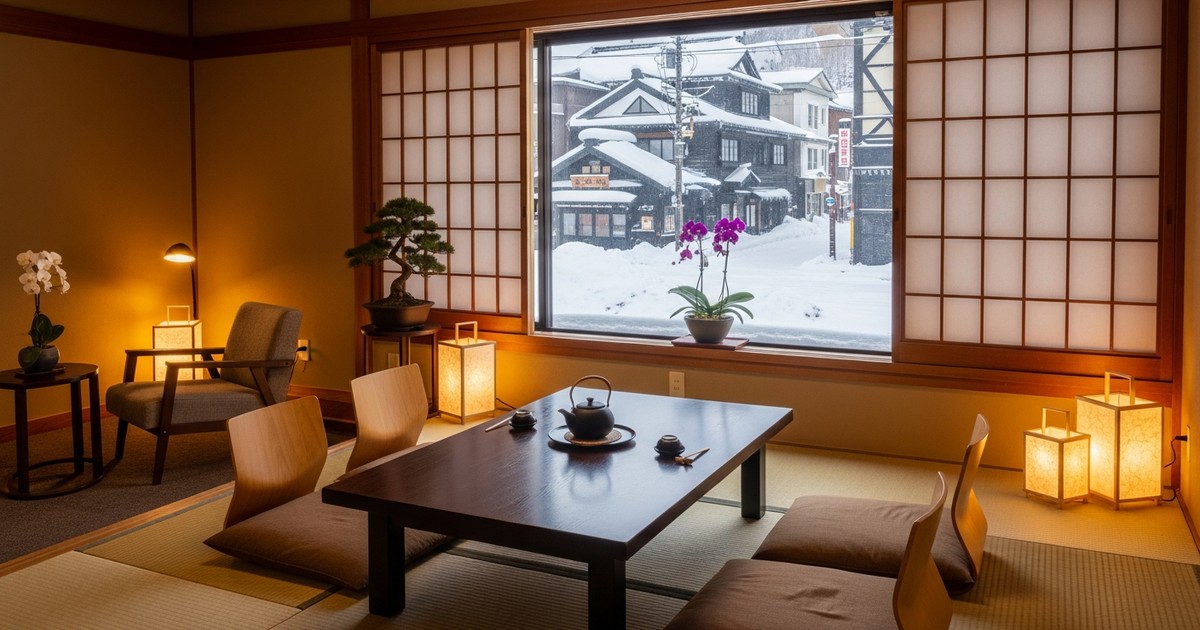
Asahikawa and its surrounding areas have a fair number of vacant traditional homes (kominka) and aging houses. Renovating these into minpaku properties can require construction costs exceeding ¥5,000,000, depending on the building’s condition. However, by combining distinctive interior design with authentic Hokkaido scenery, these properties can command premium rates as differentiated, experience-driven minpaku offerings.
Nightly rates of ¥30,000–50,000 (assuming whole-property rental for multiple guests) are achievable, and even at an occupancy rate of 45–60%, annual revenue can reach ¥1,500,000–2,000,000 or more. That said, financial planning should account for the possibility that it may take several years to recoup the initial investment. Many kominka projects also require obtaining a license under the Hotel Business Act, so it’s important to factor in the cost of fire safety equipment and sanitation upgrades when estimating total expenses. Rural areas and locations close to nature near Asahikawa can be especially appealing to international travelers seeking experience-based tourism.
Overview of Regulations for Opening a Minpaku in Asahikawa
Three main legal frameworks apply to opening a minpaku business: the Minpaku Shinpo (Private Lodging Business Act), the Hotel Business Act (simple lodging category), and the National Strategic Special Zone minpaku system. Which framework applies in Asahikawa—and whether any additional municipal ordinances apply—should always be confirmed directly with the relevant Asahikawa city department. Interpretation and application of these regulations can vary case by case, so the information here should be treated as a general overview only.
The Minpaku Shinpo has the lowest barrier to entry, allowing operation with a simple notification to the prefectural government, provided annual operation stays within 180 days. Obtaining a simple lodging license under the Hotel Business Act, on the other hand, allows year-round operation (365 days) but requires meeting facility standards for fire safety and sanitation. While this path involves higher upfront costs and more complex procedures, many owners choose it to maximize long-term revenue. As for the National Strategic Special Zone minpaku system, it’s essential to confirm with the municipality whether Asahikawa falls within a designated special zone area. Regardless of which framework you choose, factors such as zoning regulations, fire safety law, and consideration for neighboring residents all come into play—so consulting with a specialist alongside your planning process is strongly recommended.
Key Considerations and Initial Costs When Opening a Minpaku in Asahikawa
The general path to opening a minpaku includes: selecting a property, confirming legal requirements, applying for the necessary permit or notification, preparing the facility, and registering on booking platforms. For notifications under the Minpaku Shinpo, you’ll need to file with the Governor of Hokkaido and complete registration as a private lodging business operator before you can begin operations. Since processing can take anywhere from a few weeks to about a month, it’s wise to build your schedule backward from your target opening date.
Initial costs vary by property type, but common baseline expenses include ¥300,000–1,000,000 for furniture, appliances, and bedding; ¥50,000–150,000 for IoT equipment such as smart locks; and ¥30,000–100,000 for fire safety equipment (residential smoke alarms, fire extinguishers, etc.). Advance outreach to neighbors and building management associations is also essential—repairing relationships after complaints or trouble arise is far harder than preventing them in the first place. Before opening, introduce yourself to nearby residents, share contact information, and clearly communicate guest etiquette through signage and house rules. Since Asahikawa experiences heavy snow and icy conditions in winter, your preparation plan should also include snow removal at the entrance and proper heating equipment.
Anticipated Risks and Countermeasures When Operating a Minpaku in Asahikawa
One of the biggest risks in operating a minpaku in Asahikawa is seasonal fluctuation. Demand rises sharply during the sightseeing season (May–October) and ski season (December–March), but the shoulder months of April and November tend to be slow, sometimes dropping occupancy into the 20–30% range. To smooth out this variation, more owners are introducing long-stay or monthly rate plans. Using dynamic pricing to raise rates during peak periods is also an effective strategy for boosting annual revenue.
To manage cancellation risk, setting your platform’s cancellation policy to “Strict” or “Moderate” helps minimize losses from last-minute cancellations. Common guest-related issues include noise complaints, improper garbage sorting, and property damage. A practical way to prevent these problems is sending house rules in Japanese, English, and Chinese before check-in, and confirming that guests have reviewed and understood them. For long-term stable occupancy, ongoing tasks like regular linen changes, facility inspections, and review management are also essential to maintaining a clean, well-kept property. If managing all of this becomes overwhelming, working with a minpaku management service is worth considering.
Talk to Stay Buddy About Opening or Improving Revenue for Your Asahikawa Minpaku
If you’re considering opening a minpaku in Asahikawa or looking to improve your existing property’s revenue, feel free to reach out to Stay Buddy Inc., a full-service minpaku management provider. Stay Buddy offers comprehensive support across every stage of minpaku operation—from property selection assistance and help with notifications and permit applications, to facility setup advice, guest communication, and cleaning management once you’re up and running. We can also offer concrete, experience-based recommendations tailored to the unique challenges of running a minpaku in a regional city like Asahikawa, including strategies for handling seasonal demand.
For those starting a minpaku for the first time, navigating regulations, calculating initial costs, and running revenue simulations can feel overwhelming. Stay Buddy offers free consultations—simply share your current property details and budget expectations, and we’ll provide advice tailored to the realities of the Asahikawa market. We’re happy to hear from you even if you’re still at an early stage, such as “I’m not sure which property type suits me” or “I can’t decide between the Minpaku Shinpo and the Hotel Business Act.”
Maximizing minpaku revenue in Asahikawa comes down to maintaining stable occupancy at the right price points during periods of strong demand. Stay Buddy handles guest communication, review management, and troubleshooting on your behalf, freeing you up to focus on your main work and daily life. Please don’t hesitate to reach out through our contact form or by phone—we’re here to help you take the next step toward opening your minpaku in Asahikawa.