For owners considering monetizing a minpaku property in Atsubetsu Ward, Sapporo, the first things you’ll want to know are “how much can I actually earn?” and “which property types work best here?” This article covers everything you need for maximizing Sapporo minpaku revenue—from area-specific demand data, to revenue simulations by property type, an overview of regulations, and the key checkpoints to review before opening.
Atsubetsu Ward sits in the eastern part of Sapporo and is drawing attention as a redevelopment area centered around Shin-Sapporo Station. With strong access to New Chitose Airport, it’s an area that can expect steady lodging demand from both business and tourism travelers. That said, its concentration of tourist attractions differs from areas like Chuo Ward or Susukino, so understanding the specific nature of demand here is essential to building a strategy that actually delivers returns.
This article is written for owners and investors seriously considering opening a minpaku in Atsubetsu Ward. Rather than abstract theory, it focuses on concrete numbers and practical steps you can use for real operational decisions.
Demand Data and Area Overview in Atsubetsu Ward: The Foundation for Sapporo Minpaku Revenue
Atsubetsu Ward is one of Sapporo’s administrative wards, home to roughly 120,000 residents, and offers strong everyday convenience thanks to the concentration of commercial, medical, and educational facilities around Shin-Sapporo Station. With the JR Chitose Line and the Tozai subway line intersecting here, the area is about 20–25 minutes from New Chitose Airport and within roughly 15 minutes of central Sapporo—an accessibility factor that underpins steady lodging demand. While it doesn’t have as many direct tourist attractions as Chuo Ward, it’s increasingly chosen as a stopover point before or after airport use, or as a hub for travelers heading to eastern or northern Hokkaido.
Because there’s relatively little competition from hotels given the area’s characteristics, typical minpaku rates run around ¥6,000–¥10,000 per night. Occupancy tends to reach 60–75% during peak periods (July–August and the December–February ski season), while dropping to around 30–45% during off-peak months (March–April and October–November). A realistic estimate for average annual occupancy is around 45–55%. As a tourism draw, Nopporo Forest Park (home to the Hokkaido Centennial Memorial Tower and the Hokkaido Museum) is nearby and can be leveraged to attract families and older travelers interested in nature experiences.
Minpaku Revenue Forecasts by Property Type
When opening a minpaku in Atsubetsu Ward, the property type you choose largely determines the structure of your revenue. Below, we break down initial investment, average nightly rates, occupancy, and estimated annual revenue for three property types: apartments/condos, detached houses, and traditional older houses (kominka). These are reference figures only and will vary depending on location, building age, and facility condition.
Apartments/Condos (Studio to 2LDK)
This is the most common property type available in Atsubetsu Ward. For a studio or 1LDK within a 10-minute walk of Shin-Sapporo Station, initial investment (renovation, furniture/appliances, supplies) typically runs ¥800,000–¥1,500,000. Assuming a nightly rate of ¥6,500–¥8,500 and an average annual occupancy of 50%, monthly revenue comes to roughly ¥90,000–¥130,000, or about ¥1,080,000–¥1,560,000 per year. After deducting rent, utilities, cleaning costs, and platform fees (15–20% of revenue), a realistic net profit lands around ¥400,000–¥700,000 per year. If the owner handles management and cleaning personally, costs can be reduced further; using a management service typically adds 10–30% of revenue as a cost, depending on the company and scope of services.
Detached Houses (2LDK to 4LDK)
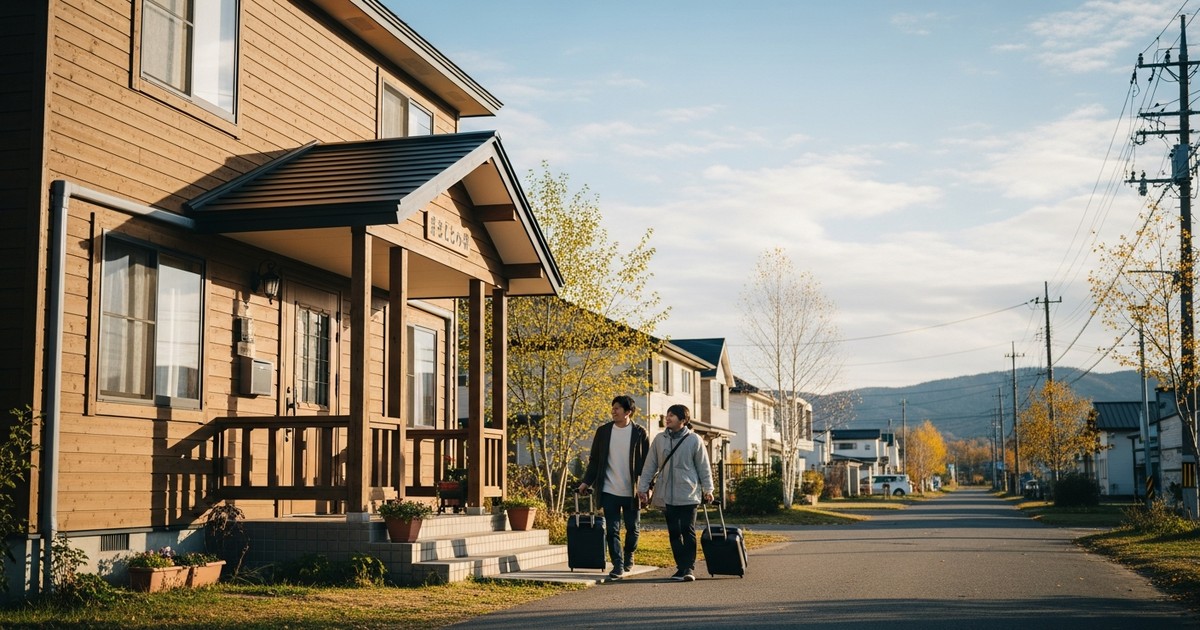
Detached houses tend to attract group and family demand and can command a higher per-unit rate. Converting a roughly 3LDK detached house in Atsubetsu Ward into a minpaku typically requires an initial investment of ¥2,000,000–¥4,000,000 (including equipment upgrades, exterior improvements, and accessibility features). With a nightly rate of ¥15,000–¥25,000 (assuming 4–6 guests) and 45% annual occupancy, estimated annual revenue comes to ¥2,450,000–¥4,100,000. However, fixed costs (property tax, maintenance) are also higher for detached houses, so net profit tends to range more widely, from around ¥800,000 to ¥1,500,000 per year. Differentiation strategies—such as highlighting proximity to Nopporo Forest Park—can directly boost occupancy.
Kominka / Older Houses (30+ Years Old, Renovation Type)
Near the border between Atsubetsu Ward and Ebetsu City, there are still wooden houses 30–40+ years old that can be considered for renovation into minpaku properties. Initial investment, including property acquisition, often reaches ¥5,000,000–¥10,000,000 or more, with a payback period of 5–8 years typically expected. On the other hand, marketing the property as “an authentic stay in an old Hokkaido house” can justify premium pricing aimed at inbound travelers and social media exposure, with some examples charging ¥20,000–¥35,000 per night. Even at an annual occupancy of around 40%, estimated annual revenue comes to ¥2,900,000–¥5,100,000, and clear differentiation can be a strong draw. That said, renovation costs for earthquake resistance and fire safety equipment can add up quickly, so a thorough building inspection beforehand is essential.
Regulatory Overview and Points to Watch in Atsubetsu Ward
Minpaku operations broadly fall under one of three frameworks: the Private Lodging Business Act (the “Minpaku Law”), the Hotel Business Act (simple lodging category), or the National Strategic Special Zone minpaku system. The Minpaku Law caps annual operating days at 180, which can be a revenue constraint for owners aiming to maximize occupancy. Simple lodging under the Hotel Business Act has no cap on operating days, but the facility standards (ventilation, natural lighting, front desk requirements, etc.) are stricter, which tends to increase initial costs. The special zone minpaku system is only available in areas designated as National Strategic Special Zones, so please confirm eligible areas and conditions directly with your local government.
Under Sapporo City ordinances, minpaku operations may be restricted in residential-only zoning areas. Since permitted zoning and conditions can vary even within Atsubetsu Ward, the first step is confirming which zoning category your property falls under via Sapporo City’s urban planning information or a direct inquiry to the relevant office. For condo/apartment properties, management association bylaws often prohibit minpaku use, so confirming with the management association in advance is essential. Since legal determinations vary case by case, we strongly recommend consulting with a specialist or the relevant government office.
Key Considerations and Initial Cost Estimates When Opening
Opening a minpaku requires filing a notification under the Private Lodging Business Act (or obtaining a license under the Hotel Business Act). Notification under the Minpaku Law must be submitted to the prefectural governor (in Sapporo’s case, the mayor), and requires application documents, floor plans, confirmation of fire safety equipment, and posting of required signage. Processing typically takes a few weeks to about a month from submission to acceptance, so it’s important to plan your schedule backward from your target opening date. License applications under the Hotel Business Act tend to involve an even longer review period, so allow ample lead time for preparation.
As a rough guide, total initial costs run around ¥1,500,000–¥2,500,000 for an apartment/condo (including deposit, key money, renovation, furniture/appliances, fire safety equipment, and application fees), and around ¥3,000,000–¥6,000,000 for a detached house. For neighborhood relations, greeting nearby residents, posting contact information, and clearly explaining trash disposal rules all help prevent disputes and form the foundation for stable long-term operation. This is especially important in multi-unit buildings, where consideration for neighboring units and coordination with the management company are essential. Fire safety equipment requirements (fire alarms, extinguishers, emergency lighting) vary depending on the building’s structure and floor area, so consult with the local fire department early in your preparation process.
Risks During Operation and Strategies for Sustained Occupancy
The biggest risk in operating a minpaku in Atsubetsu Ward is seasonal fluctuation. Demand concentrates in summer (July–August) and the winter season (December–February), while occupancy drops significantly in spring and fall. To offset revenue declines during slow seasons, combining mid-to-long-stay plans (discounts for stays of 7+ nights) with weekly rate plans aimed at business travelers can help boost overall occupancy. Providing content tied to the Hokkaido Museum and Nopporo Forest Park—such as guide maps and information on local experiences—can also make your listing more appealing to tourism-focused guests.
To manage cancellation risk, listing simultaneously across multiple platforms (Airbnb, Booking.com, etc.) and setting a strict cancellation policy are effective measures. To prepare for guest-related issues (noise, trash, damage to fixtures), it’s important to establish identity verification before check-in, document your house rules clearly, and set up an emergency contact system before operations begin. Securing reliable cleaning staff is a major challenge for long-term operation, and signing on with a trustworthy cleaning company early on is directly tied to maintaining strong guest reviews.
Maximize Your Minpaku Revenue in Atsubetsu Ward with a Free Consultation from Stay Buddy
Stay Buddy Inc., a minpaku management company, provides end-to-end support for property owners across Sapporo and the wider Hokkaido region—from pre-opening preparation to day-to-day operations and revenue maximization. We offer free consultations to owners who currently own property in Atsubetsu Ward, as well as those considering acquiring property in the area, and can provide revenue simulations tailored to your property’s specific characteristics.
We provide advice grounded in real operational experience to answer concrete questions like “How much could I actually earn with my property?”, “Which operating model is right for me?”, and “How should I proceed with the permit application process?” We support owners at every stage—from those considering minpaku for the first time to those already operating and looking to improve profitability.
We also offer a full management plan that covers everything based on the specific market characteristics of Atsubetsu Ward—pricing strategy, guest acquisition, cleaning management, and guest communication. Stay Buddy builds the systems that let owners maintain stable revenue while staying focused on their main business or daily life.
Please feel free to reach out through our free consultation form. Simply share your property’s address, type, and current status, and one of our dedicated consultants will provide personalized recommendations. Take the first step toward minpaku success in Atsubetsu Ward together with Stay Buddy.