If you’re considering opening a minpaku (short-term rental) in Sapporo’s Minami Ward, you’re probably most curious about how much revenue you can realistically expect, along with the extent of seasonal fluctuations and risks involved. Minami Ward boasts rich natural surroundings and tourism resources, while also having its own unique demand characteristics compared to other areas of Sapporo.
This article provides a systematic breakdown covering demand data for Minami Ward, revenue forecasts by property type, an overview of relevant regulations, key considerations when opening a property, and the risks involved in ongoing operations. We’ve organized the essential information you need before opening, so please read through to the end.
Area Overview and Minpaku Demand Data for Sapporo’s Minami Ward
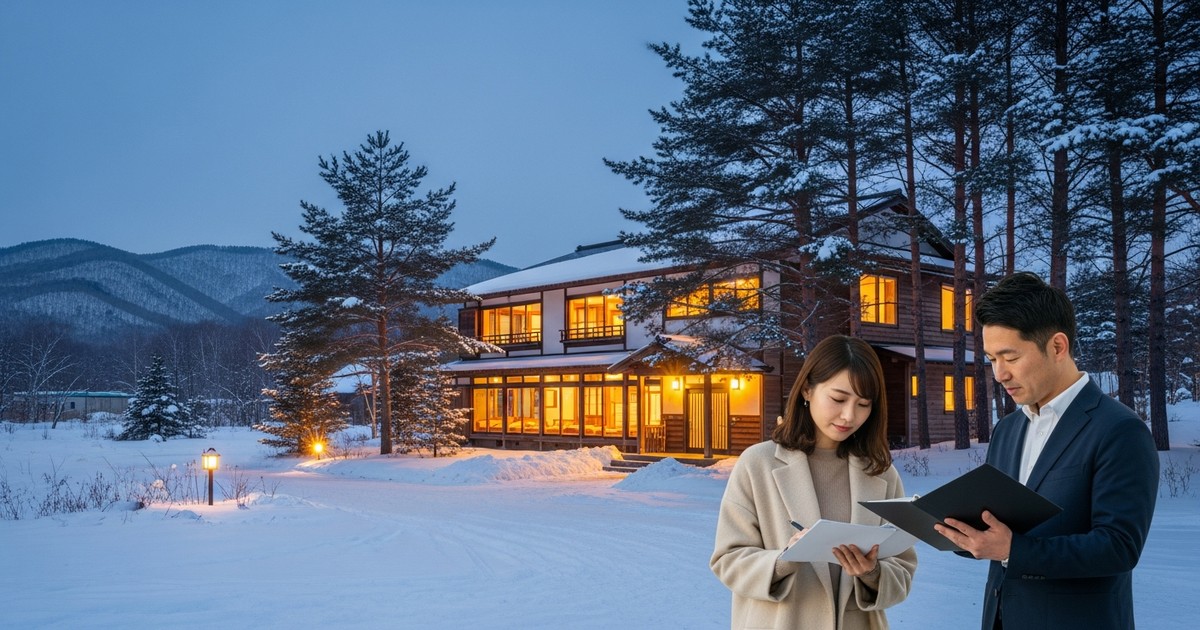
Sapporo’s Minami Ward is the largest ward by area within the city, home to the Jozankei Onsen hot spring and natural landscapes designated as a quasi-national park. Jozankei Onsen attracts domestic and international tourists year-round, with demand particularly concentrated during the autumn foliage season (September–October) and the winter months (December–March), when visitors come for the snow scenery and hot springs. The area also functions as a gateway to ski resorts, generating a steady stream of winter sports-related accommodation demand.
In terms of typical nightly rates, minpaku properties in Minami Ward generally charge between ¥8,000 and ¥18,000 per night. Properties closer to the Jozankei area or with good access to hot spring facilities tend to command higher rates, while properties in residential neighborhoods farther from tourist attractions typically see lower rates and occupancy that fluctuates more heavily with the seasons—making location selection a major factor in overall profitability. On the inbound demand side, visitors from Taiwan, Hong Kong, Thailand, and other parts of Asia show strong interest in the Jozankei area, so properties offering English and Chinese language support can gain a competitive edge.
Revenue Forecasts by Property Type (Apartments, Detached Houses, Traditional Japanese Homes)
Minpaku revenue in Minami Ward varies significantly by property type, depending on initial investment, occupancy rate, and average nightly rate. Below, we outline revenue estimates for three representative property types, complete with specific figures. Please note that these figures are for reference only—actual revenue will vary based on location, facilities, and management approach.
Apartments (Sectional Ownership / Rental Properties)
Apartment-style minpaku properties in Minami Ward are characterized by relatively low initial investment. Including furniture, appliances, and bedding, initial costs typically run around ¥500,000 to ¥1,000,000. Nightly rates average ¥8,000–¥12,000, with occupancy rates during peak seasons (December–March and July–August) reaching 65–75%, and occupancy dropping to 30–45% during off-peak months (May–June and November)—reflecting significant seasonal variation. Assuming an average annual occupancy rate of 50%, a 2LDK unit could generate approximately ¥1.2 million to ¥1.6 million in annual revenue. Note, however, that apartment minpaku operations require careful confirmation of building management regulations—the property’s rules must explicitly permit minpaku use.
Detached Houses
Detached houses are well-suited to families and group travelers, allowing hosts to set higher nightly rates. In Minami Ward, detached houses can command ¥12,000–¥20,000 per night, with properties near the Jozankei area or natural surroundings able to maintain rates closer to the upper end of this range. Initial investment typically runs ¥1,000,000–¥2,500,000 (including renovations, furniture, and equipment), though costs may run higher depending on the property’s condition. Assuming an average annual occupancy rate of 55%, estimated annual revenue falls in the range of ¥1.8 million to ¥2.8 million. Detached houses with parking available are especially popular with ski-season group travelers, helping boost occupancy during the winter months.
Traditional Japanese Homes and Renovated Properties
Minami Ward also has a scattering of older farmhouses and traditional Japanese-style homes. Minpaku properties created by renovating these traditional houses lend themselves well to “experience-based stay” branding—a strong differentiator. Initial investment often runs ¥2,000,000–¥5,000,000 or more, meaning a longer payback period, but this comes with the benefit of standing out from competitors. Nightly rates can be set high, in the range of ¥15,000–¥25,000, and these properties tend to attract loyal repeat guests. Annual occupancy rates vary widely, from 40–60%, but with high nightly rates combined with repeat guest acquisition, annual revenue in the range of ¥2 million to ¥3.5 million is well within reach. That said, traditional homes often require additional costs to meet earthquake resistance standards and install fire safety equipment, making a thorough building inspection essential before proceeding.
Regulatory Overview: Differences Between the Minpaku Act, the Hotel Business Act, and Special Zone Minpaku
Opening a minpaku property involves navigating three main regulatory frameworks: the “Private Lodging Business Act” (commonly known as the Minpaku Act), the “Hotel Business Act” (simple lodging category), and “Special Zone Minpaku” under the National Strategic Special Zones Act. The Minpaku Act caps annual operating days at 180 and operates on a notification-based system, making it relatively accessible for newcomers. The simple lodging category under the Hotel Business Act has no cap on operating days, making it easier to maximize revenue, but it comes with stricter facility requirements, such as minimum room size and the need for a front desk. Special Zone Minpaku is available only in specifically designated regions.
Which framework applies to a given property in Sapporo’s Minami Ward depends on factors such as whether the area is designated for minpaku use, whether an application is even possible, and the specific scope of local ordinances—all of which must be assessed on a case-by-case basis according to the property’s location and zoning designation. In particular, additional local ordinance restrictions (such as further limits on operating days or restrictions in residential-only zones) should be confirmed directly with the relevant municipal department. Getting accurate information before opening is key to avoiding trouble down the line.
Key Considerations When Opening: Permit Applications, Initial Costs, and Neighbor Relations
The first step in opening a minpaku business is choosing your regulatory framework and completing the necessary permits or notifications. For notifications under the Minpaku Act, processing by Hokkaido authorities—from document submission to acceptance—can take approximately 30 to 60 days. For the Hotel Business Act (simple lodging) route, you’ll need to apply for a permit through the Sapporo City Health Center, which also involves confirming any required change of building use and installation of fire safety equipment (such as automatic fire alarms and emergency exit lights). Incomplete application documents or failure to meet facility standards will result in a correction request, so it’s worth considering support from a specialist (such as an administrative scrivener or minpaku consultant).
As for initial cost estimates, in addition to equipment investment based on property type (¥500,000–¥5,000,000), you’ll also need to budget for application fees and administrative scrivener costs (roughly ¥50,000–¥150,000), fire safety equipment installation (roughly ¥100,000–¥400,000), and insurance (roughly ¥30,000–¥80,000 per year). As for neighbor relations, a practical way to reduce the risk of complaints down the line is to greet nearby residents before opening and distribute flyers with your contact information. Be sure to also post clear guidance on trash disposal rules and provide guests with instructions to prevent late-night noise.
Operational Risks: Seasonal Fluctuations, Cancellations, and Trouble Response
One of the biggest risks in running a minpaku business in Sapporo’s Minami Ward is seasonal fluctuation. While demand rises during winter (December–March) and summer (July–August), early spring (April–May) and early winter (November) tend to be off-peak periods, with occupancy rates dropping sharply. It’s not uncommon for occupancy during off-peak months to fall below 20%, resulting in months where revenue is nearly zero. To stabilize income, it’s effective to raise nightly rates during peak season to offset off-season losses—a strategy known as “dynamic pricing.” We recommend actively using the automatic price adjustment features offered by platforms like Airbnb and Jalan.
To manage cancellation risk, the basic approach is to set your cancellation policy on booking platforms to “Strict” or “Moderate,” minimizing revenue loss from last-minute cancellations. As for guest-related issues (noise, property damage, trash disputes), sending guests the house rules via message before check-in and getting a confirmation reply back can make it much easier to handle disputes later on. To protect against damage, we strongly recommend enrolling not only in host protection insurance (offered by each platform) but also in dedicated minpaku liability insurance. Maintaining strong guest reviews is essential for sustained bookings, and consistent cleaning quality is the single most important factor supporting long-term revenue.
Maximize Your Sapporo Minpaku Revenue—Talk to Stay Buddy
Stay Buddy Co., Ltd. specializes in minpaku management services across Hokkaido, including Sapporo. We provide comprehensive, one-stop support covering every phase of your business—from revenue simulations and permit application assistance to cleaning, guest communication, and pricing strategy, both before opening and throughout ongoing operations. We’re happy to provide individualized consultations for questions like “I want to start a minpaku business in Minami Ward but am unsure which regulatory framework to choose” or “I’d like a concrete revenue forecast.”
In an area with significant seasonal fluctuation like Sapporo’s Minami Ward, it’s essential to design an operational strategy that both maximizes peak-season revenue and manages costs effectively during off-peak periods. Stay Buddy specializes in data-driven operational improvements, including pricing strategies built on local area demand data and proposals for boosting occupancy during the off-season. We also offer management services to handle challenges that are difficult to manage on your own, such as late-night guest inquiries and emergency issue resolution.
We’re currently offering free consultations to anyone considering opening a minpaku business. Simply share your property’s address and floor plan with us, and we’ll put together a preliminary revenue simulation along with a tailored recommendation for the best way to get started. We also welcome inquiries from those still in the early stages of exploring their options—please feel free to reach out to us anytime.