Leave Your Vacation Rental Management to Us
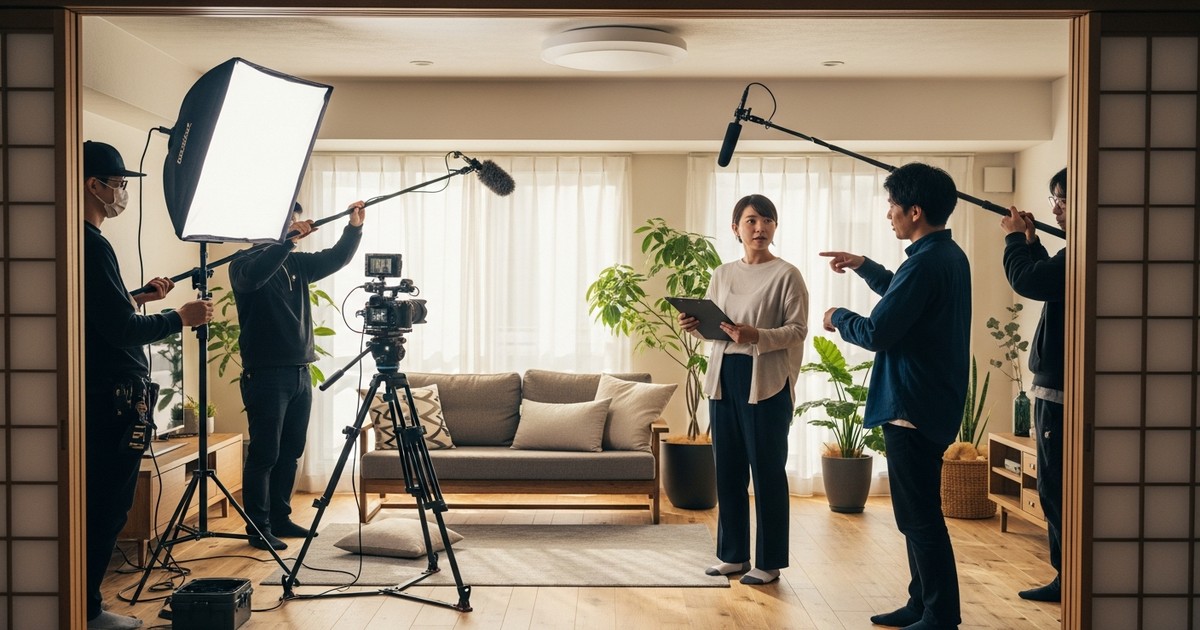
Free Online ConsultationMore and more vacation rental properties are being used as filming and location shoot sites. From movies, TV dramas, and commercials to YouTube videos and photo shoots, using minpaku properties for filming has drawn attention as a revenue stream beyond overnight stays—and it’s not unusual for a single shoot to generate as much revenue as several nights of accommodation. However, filming brings different risks and procedures than regular guest stays, so it’s essential to arm yourself with the right knowledge beforehand.
This article covers what vacation rental owners need to know when accepting filming and location shoot requests—legal requirements, pricing, contract essentials, and how to prevent trouble—supported by concrete figures and real examples. It’s a practical guide for anyone interested in offering their property for filming but unsure where to start.
Why Filming Use of Vacation Rentals Is Gaining Attention—and How Profitable It Can Be
Demand for video content has surged in recent years. With the spread of streaming platforms, the number of projects needing filming locations has grown year after year—not just dramas and films, but web commercials, YouTube content, and corporate promotional videos. Vacation rentals have become a popular choice because they offer a “lived-in, authentic space” that traditional studios simply can’t replicate.
The revenue potential is significant. Even a property that typically rents for ¥15,000–¥30,000 per night can command a usage fee of ¥50,000–¥150,000 per day when booked for filming. Large-scale commercial shoots can exceed ¥200,000 per day, meaning just two or three filming bookings a month can bring in revenue on par with overnight stays. That said, earning this revenue reliably requires getting your legal footing right and building a proper operational framework first.
Legal Differences Between Filming Use and Overnight Stays
How the Private Lodging Business Act (Minpaku Law) Applies
If you accept filming requests at a property registered under the Private Lodging Business Act, a daytime-only shoot that doesn’t involve overnight stays doesn’t technically count as “providing lodging services.” In this case, it’s treated as an hourly space rental. On the other hand, if the film crew stays overnight, it’s counted as regular lodging business and factors into the annual 180-day operating limit. Since the classification depends on whether an overnight stay is involved, it’s important to clarify the type of usage in advance.
Checking Zoning and Fire Safety Regulations
Filming often involves bringing in large lighting equipment or generators, so you need to be mindful of electrical capacity and fire safety regulations. A typical vacation rental has an electrical contract of around 30A–60A, but video lighting equipment can consume 500W–2,000W per unit—running several at once risks tripping the breaker. It’s practical to inform the film crew of your property’s electrical capacity beforehand and ask them to bring portable power sources if needed. Additionally, if the shoot involves smoke machines or open flames, prior notification to the fire department may be required.
Notifying Neighbors and Obtaining Permissions
If you’re operating a vacation rental in a condo or apartment unit, the building’s management association rules may prohibit filming use. Even in detached houses, a large crew coming and going or equipment vehicles parked nearby can lead to disputes with neighbors. In one past case, a crew of more than 10 people began unloading equipment at 6 a.m., which prompted complaints and led the owner to stop accepting filming bookings altogether. Checking your management rules and giving advance notice to neighbors when necessary are both essential steps.
Pricing and Contract Essentials for Filming Use
How to Structure Your Pricing
Filming rates typically fall into two categories: hourly rental and full-day rental. For hourly rates, ¥5,000–¥15,000 per hour is standard, and many owners set a minimum booking of 3–4 hours. For full-day rentals (8–12 hours), expect ¥50,000–¥150,000 as a rough guide, though this varies significantly based on the property’s size, interior quality, and location. Distinctive spaces—like designer properties or traditional Japanese-style old houses—can command 1.5–2 times the standard rate.
Overtime fees are typically set at 1.2–1.5 times the base hourly rate. Shoots frequently run behind schedule, so overtime happens often—without a clear policy in place, it can easily lead to disputes later. You should also consider adding a 30–50% surcharge on the base rate for late-night or early-morning use (10 p.m. to 8 a.m.).
Key Clauses to Include in Your Contract
If you accept a filming booking based on a verbal agreement alone, it becomes very difficult to seek compensation if the property is damaged or soiled. At minimum, put the following in writing: the date/time and a summary of the shoot content, the maximum number of people allowed, load-in/load-out times, the obligation and scope for restoring the property to its original condition, a cancellation policy (e.g., free up to 7 days before, 50% up to 3 days before, 100% for the day before or later), a cap on damages, and the deposit amount and its refund conditions.
A deposit of ¥20,000–¥100,000 is common, scaled to the size of the shoot. For large commercial productions involving furniture rearrangement, some owners set deposits above ¥100,000. Requiring a deposit also encourages the film crew to treat the property with care, making it an effective deterrent against damage.
Common Problems with Filming Use—and How to Prevent Them
Damage and Soiling of the Property
On film sets, it’s common for things like thumbtacks or tape on the walls, scratches from moving furniture, or spilled food and drinks to happen. In one owner’s case, a cooking shoot splattered oil on the kitchen wall, resulting in an additional ¥30,000 cleaning charge. To protect against this, it’s important to require photos before and after the shoot (with timestamps) and to clearly define the standard for restoring the property to its original condition. An increasing number of owners now require protective sheeting on walls and floors as a condition of booking.
Noise and Neighbor Complaints
While some scenes require silence for audio recording, equipment load-in/load-out and crew conversations can carry to neighboring homes. For properties in residential areas, it’s effective to restrict load-in/load-out times to 9 a.m.–6 p.m. and to explicitly prohibit loud talking outdoors in the contract. At one property that had previously received complaints, the owner introduced a rule requiring a courtesy visit and schedule notification to 3–5 neighboring homes the day before filming—and complaints dropped to zero afterward.
Risks Related to the Content Being Filmed
If your property is used to shoot adult content or material linked to antisocial activity, it can seriously damage your reputation and the property’s standing. Require full disclosure of the shoot’s content in the contract, and include a clause explicitly prohibiting use for adult, violent, or illegal content. Setting a penalty clause—such as 3–5 times the usage fee for violations—serves as a strong deterrent.
How to Attract Filming Bookings
Registering with Location-Matching Services
Most production companies and creators searching for filming locations use location-search platforms. Popular services in Japan include “Rokenavi,” “Space Market,” and “SHOOOT,” where listing your property’s photos, floor plan, amenities, and pricing can bring in bookings. Space Market charges a commission of around 30% of revenue, but compared to the cost of marketing on your own, it’s an efficient option in the early stages. Since the quality of your listing photos heavily influences the number of inquiries you receive, it’s worth hiring a professional photographer to capture wide-angle shots that convey the sense of space.
Leveraging Social Media and a Portfolio
Regularly posting interior photos of your property on Instagram with hashtags like “filming studio,” “location shoot,” or “house studio” increases the chances of catching the eye of production professionals. If your property has a track record of past shoots, showcasing finished video work or photo screenshots (with permission) as a portfolio significantly boosts credibility. In fact, one owner who built a page highlighting past filming projects saw inquiries jump from 3 per month to 10 per month.
Insurance and Tax Considerations
Reviewing Your Insurance Coverage
Standard vacation rental insurance typically covers damage caused by overnight guests, but filming use may fall outside that coverage. If you plan to regularly accept filming bookings, consider adding a facility liability rider or taking out insurance designed for rental spaces. Annual premiums vary depending on the property but typically add ¥10,000–¥50,000. It’s also wise to require the film crew to carry their own insurance in case their equipment damages your property’s fixtures.
Tax Treatment of Filming Revenue
Revenue from filming use should be recorded separately from your lodging revenue. While lodging income is treated as income from the private lodging business, filming revenue is generally treated as “real estate income” or “miscellaneous income.” If your annual filming revenue exceeds ¥200,000, you’ll need to file a tax return. Deductible expenses can include cleaning costs, consumable supply replenishment, platform commissions, and insurance premiums. Consulting with a tax accountant and keeping clear, separate records of revenue and expenses for lodging versus filming use will reduce your risk in the event of a tax audit.
Considering Filming Use for Your Vacation Rental? Talk to Stay Buddy Inc.
Using your vacation rental for filming and location shoots offers a great revenue opportunity, but it requires a different set of know-how than running overnight stays—legal groundwork, contract drafting, pricing, and neighbor relations, to name a few. Handling all of this alone can be a heavy burden for individual owners, and overlooked details can easily turn into problems.
Stay Buddy Inc. draws on our extensive track record in vacation rental management to help owners maximize revenue, including through filming use. We offer concrete, tailored support—from contract templates and pricing advice to building the operational framework needed to accept filming bookings.
If you want to build a diversified revenue model that doesn’t rely solely on overnight stays, or if you’re interested in offering your property for filming but aren’t sure where to begin, please feel free to reach out to Stay Buddy Inc. Our specialists will propose the optimal plan based on your property’s unique characteristics.