Leave Your Vacation Rental Management to Us
Completely Free Online ConsultationThe Idea of Renting Out Your Property for Other Uses During the Off-Season
If you run a vacation rental, dealing with lower occupancy during the off-season is an unavoidable challenge. Rather than letting a property sit empty during periods of low booking demand, more and more owners are boosting their revenue by renting the space out as a photo studio or workspace. In fact, it’s not uncommon for owners to earn an extra ¥50,000 to ¥150,000 a month by turning off-season vacancies into multi-purpose spaces.
In this article, we’ll walk through concrete examples of converting vacation rental properties into photo studios and workspaces, along with the key points to keep in mind when doing so. Building a revenue stream beyond overnight stays can be the key to achieving stable, year-round management.
The Benefits of Renting Out Your Space During the Off-Season
Turn Zero-Occupancy Periods Into Income
The off-season for vacation rentals varies by area, but it typically concentrates around January–February, the rainy season, and the lulls between long holiday weekends. It’s not unusual for occupancy to dip below 30% during these stretches, leaving owners paying rent and management fees with nothing coming in to offset them. Renting the space out as a photo studio or workspace is an effective way to turn this “dead time” directly into revenue.
For example, if you offer the space for hourly rental at ¥2,000–5,000 per hour, even just four hours of use three times a week can generate around ¥100,000 a month. That’s enough to cover most of your fixed costs even in a month with zero bookings—directly stabilizing your annual bottom line.
Your Property’s Appeal Becomes a New Customer Acquisition Channel
Vacation rental properties are often thoughtfully designed and decorated to begin with, which makes them well-suited to uses like photography and co-working. For photographers looking for a beautifully designed space, or freelancers who want to work in a non-ordinary environment, a vacation rental offers a unique appeal that standard rental spaces simply can’t match.
There’s also a reported secondary benefit: when rental space users post photos on social media, it can end up promoting the property for overnight stays as well. One owner saw bookings increase by five per month after a photographer who had used the property as a studio posted about it on social media. Expanding your property’s use cases can also help raise awareness of the property itself.
Case Studies: Renting Out as a Photo Studio
Use for Cosplay and Portrait Photography
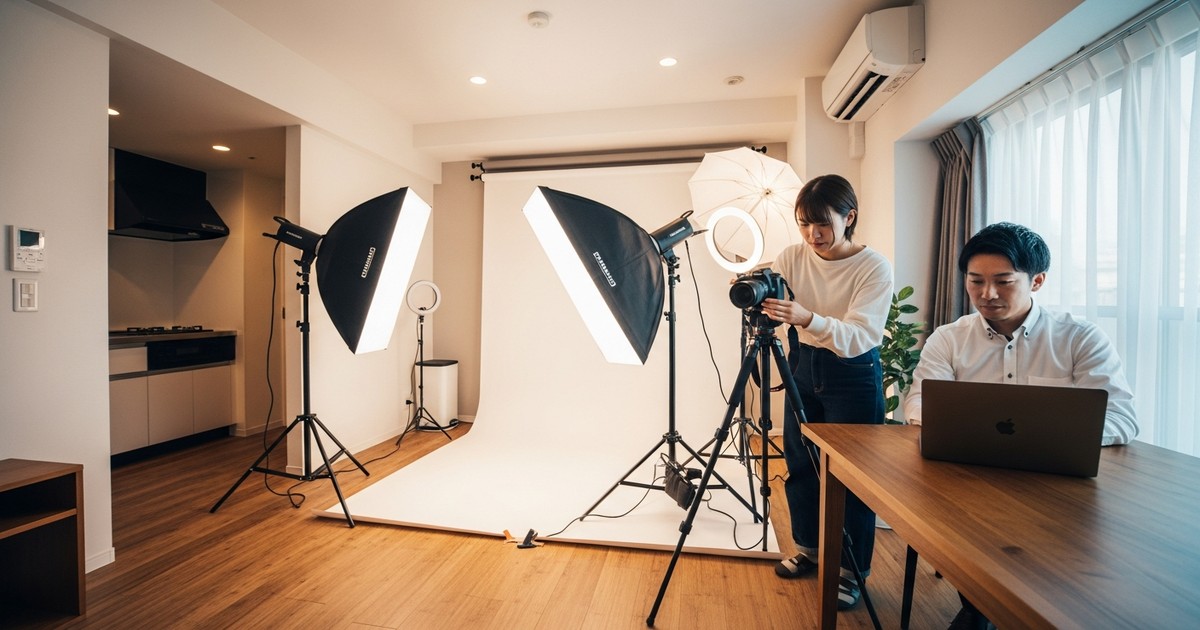
Among vacation rentals, properties with Japanese-style rooms or vintage-inspired interiors tend to see strong demand for cosplay and portrait photography. Some owners list their properties as “photography permitted” on platforms like SPACEMARKET or InstaBase, charging ¥3,000–6,000 per hour. Weekend bookings in particular tend to fill up fast, with some owners earning ¥40,000–80,000 a month from weekend bookings alone.
One notable advantage of photography rentals over overnight stays is that they don’t require linen changes or amenity restocking, keeping operating costs low. Cleaning is often quick as well, with per-visit cleaning costs running as low as ¥1,000–2,000. That said, there’s a risk of damage to walls and floors from strobes and other large equipment being brought in, so it’s important to clearly state in your terms of use that protective covering is required and to specify liability terms for any damage.
Use for Product and Video Shoots
Demand from e-commerce businesses and YouTubers for product and video shoots is also on the rise. Properties with simple white walls and large windows letting in natural light are especially popular as product photography studios. One urban apartment-style vacation rental secured 15 bookings a month for product shoots during weekday off-peak periods, generating an extra ¥120,000 in monthly revenue.
Video shoots require some consideration for noise. For properties in apartment buildings, it’s essential to check the building’s management rules, notify neighbors in advance, and set restrictions on shooting hours (for example, limiting shoots to between 10am and 6pm). Detached houses face fewer restrictions and can offer more flexibility, making them better suited to photography and video use.
Case Studies: Renting Out as a Workspace
Hourly Rentals for Freelancers and Remote Workers
With the rise of remote work, more people are looking for places to work outside their home or a café. To rent out a vacation rental as a workspace, the basic requirements are simple: Wi-Fi, power outlets, and a desk and chair. Common pricing runs ¥1,000–2,000 per hour, or ¥5,000–8,000 for a full-day package.
One property—a one-bedroom vacation rental within a five-minute walk of the station—was rented out as a weekday-only workspace, generating around ¥100,000 a month across 20 days of use. The owner added a monitor and whiteboard to differentiate the space as a “workspace that doubles as a meeting room,” which was a key driver of its high utilization. The initial investment—one monitor and one whiteboard—came to about ¥20,000 in total.
Use for Corporate Off-Site Meetings and Training
Vacation rentals with spacious living and dining areas are also being used as venues for corporate off-site meetings and team-building training. Demand from companies is growing for meetings held in relaxed spaces distinct from a typical conference room, which are seen as boosting creativity. Common pricing ranges from ¥15,000–30,000 for a half-day, and ¥30,000–50,000 for a full day.
One owner created a corporate plan available only during the off-season, securing two to three training bookings a month. By adding optional services such as catering arrangements and projector rentals, the owner raised the average spend per booking, achieving an average of ¥40,000 in revenue per session. Corporate use also tends to have a high repeat rate, with some companies reported to book quarterly once they’ve used the space once.
Practical Points to Consider When Starting Out
Choosing a Platform and Listing Tips
For attracting customers for photo studio or workspace use, dedicated rental space platforms such as SPACEMARKET, InstaBase, and shouin are effective. These services typically offer free listings with a commission (around 10%–30% of sales, varying by company and scope of service) charged only when a booking is made, allowing you to get started without any upfront cost.
When creating your listing, it’s important to use different photos for different use cases. For photo studio listings, use wide-angle shots that show off the whole space; for workspace listings, feature photos highlighting the desk area and Wi-Fi speed information. One owner who hired a professional photographer to reshoot their listing photos saw bookings increase by 1.5 times. Photography typically costs ¥10,000–30,000, but it’s an investment that pays for itself many times over.
Setting Up Insurance and Terms of Use
Since these uses come with different risks than overnight stays, reviewing your insurance and terms of use is essential. Photography use carries a risk of equipment-related property damage, while workspace use raises concerns around information leaks. It’s practical to take out facility liability insurance, choosing a plan that provides coverage for an annual premium of around ¥10,000–30,000.
Your terms of use should clearly specify available hours, prohibited items, noise restrictions, the scope of liability for damages, and your cancellation policy. For photography use in particular, listing specific prohibitions—such as “no open flames,” “no smoke machines,” and “no tape on walls”—can significantly reduce the likelihood of trouble. Some platforms provide templates you can use as a starting point, which is an efficient way to get your terms in place quickly.
Managing the Switch Between Overnight Stays and Rental Space Use
If you’re running overnight stays and rental space bookings side by side, calendar management becomes the key to smooth operations. Double bookings—accepting a rental space reservation on a day when a guest is already staying overnight—must be avoided at all costs, as they can seriously damage your reputation. Manage everything centrally using Google Calendar or a dedicated booking management tool, and build a system that instantly syncs updates across both your accommodation site and rental space site.
A common and practical pattern is to use the property exclusively for overnight stays during peak seasons (March–May, July–October, and the year-end/New Year period), and to offer it as a rental space during the off-season. Some owners switch entirely on a monthly basis, while others split by day of the week (workspace on weekdays, overnight stays on weekends). The best approach depends on your property’s location and demand patterns, so flexible planning is key.
Revenue Simulation
Let’s look at some concrete numbers to see the potential impact. Take a one-bedroom property in an urban area with ¥100,000 monthly rent, and compare income over a three-month off-season period. Assuming overnight-only bookings with 25% off-season occupancy and an average nightly rate of ¥8,000, monthly accommodation revenue comes to around ¥60,000. After deducting cleaning and supply costs, monthly take-home profit falls to just ¥30,000–40,000—below the rent itself.
Now consider combining overnight stays with rental space use. On weekdays with no overnight bookings, renting the space as a workspace for 12 days a month at ¥5,000/day brings in ¥60,000; renting it as a photo studio on weekends for 4 days a month at ¥12,000/day brings in ¥48,000—for a combined total of ¥108,000. Even after deducting a 25% platform commission, about ¥80,000 remains, which, combined with accommodation revenue, is more than enough to cover rent. Over the full three-month period, this represents an income improvement of ¥120,000–150,000 compared to overnight stays alone.
For Diversified Vacation Rental Management, Talk to Stay Buddy Inc.
The right approach to off-season challenges varies depending on each property’s location, layout, and target guests. Converting a space into a photo studio or workspace is an effective strategy, but there are many practical details to get right—from setting up terms of use, to managing platform operations, to coordinating the switch with overnight stays.
Stay Buddy Inc. draws on extensive experience in vacation rental management to propose diversified revenue strategies that don’t rely on overnight stays alone. From addressing off-season vacancies to maximizing revenue during peak periods, we provide comprehensive, one-stop support to help your property reach its full potential.
If you’re looking to improve your off-season revenue, or you’re interested in combining rental space use with your operations but aren’t sure where to start, please feel free to reach out to Stay Buddy Inc. We’ll take the time to understand your property’s situation and propose the optimal plan along with a concrete revenue simulation.