For those considering minpaku (short-term rental) investment in Hokkaido, converting a vacant house into a rental property is an appealing option. As one of Japan’s most renowned tourist destinations—welcoming over 50 million domestic and international visitors annually—Hokkaido appears to offer stable accommodation demand. However, purchasing a vacant house as a minpaku investment property carries unique risks that differ from those of typical real estate investments.
Even when a property price looks attractive at just a few million yen, it’s not uncommon for renovation and maintenance costs to end up far exceeding expectations. Additionally, Hokkaido’s distinctive climate conditions and seasonal demand fluctuations can significantly affect your revenue projections.
This article takes a detailed look at the specific risks you may face when purchasing a vacant house in Hokkaido for use as a minpaku property, along with practical countermeasures for each. Let’s walk through the key points you need to know beforehand to avoid making a costly investment mistake.
Market Characteristics to Understand Before Investing in Minpaku in Hokkaido
Hokkaido’s tourism market is concentrated in areas such as Sapporo, Otaru, Hakodate, Niseko, and Furano. According to statistics from the Hokkaido Tourism Organization, roughly 30% of annual overnight visitors arrive during the summer months (July–August), while winter demand (December–February) is heavily skewed toward ski resort areas like Niseko. In other words, if you choose the wrong area, your year-round occupancy rate could stay stuck at around 30–40%, putting your property at risk of running a loss.
The Hokkaido minpaku market also faces competition not only from hotels and ryokan, but from a large number of small and mid-sized accommodations such as pensions and guesthouses. In Sapporo alone, minpaku registrations now exceed 1,000, driving fierce price competition. Before purchasing a property, be sure to research the number of competing facilities in your target area, average nightly rates, and seasonal occupancy data. Using a minpaku data analysis tool like AirDNA can help you obtain concrete figures on average occupancy rates and revenue forecasts by area.
Property-Specific Risks When Purchasing a Vacant House
Building Deterioration and Rising Renovation Costs
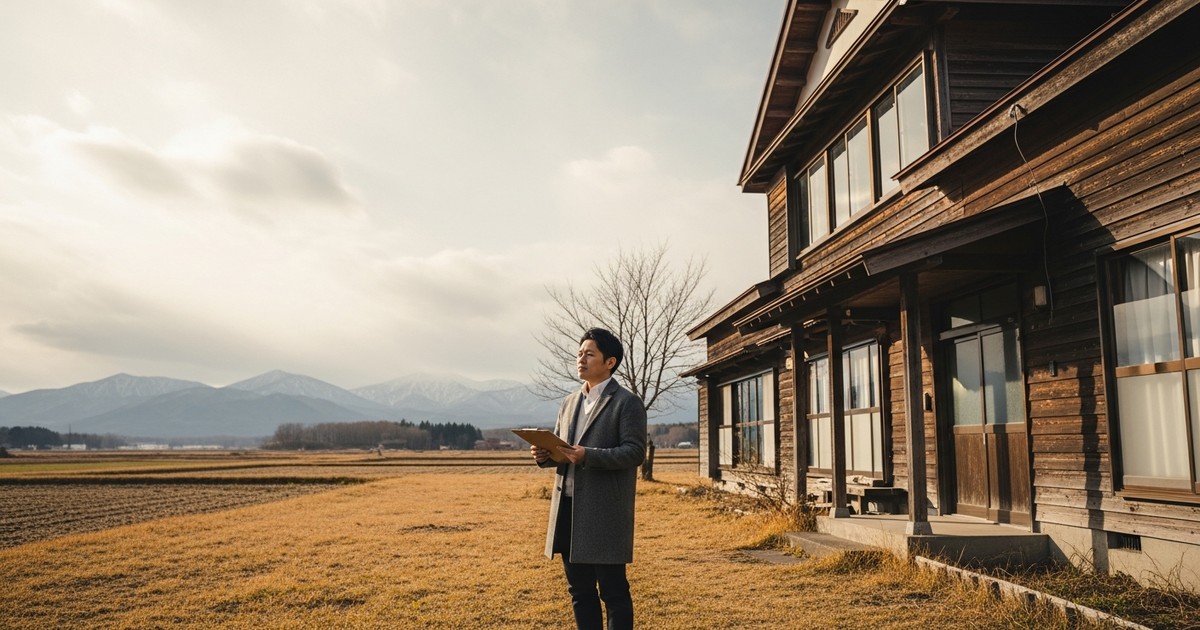
Many vacant houses in Hokkaido are wooden structures over 30 years old, sometimes listed at bargain prices of 1–5 million yen. However, properties left unoccupied for extended periods frequently show progressive damage—roof damage from snow, deteriorated insulation, burst water pipes from freezing, and termite infestation are all common. To operate legally as a minpaku, you’ll also need to install fire alarms and secure evacuation routes as required under the Fire Service Act, and these renovation costs alone can reach 5–15 million yen.
As a countermeasure, always have a home inspection conducted before purchasing. It typically costs 50,000–150,000 yen, but it lets you identify hidden damage in advance. Based on the inspection results, obtain renovation cost estimates from multiple contractors, then calculate your yield using the total investment amount—property price plus renovation costs combined. Rather than relying on the surface yield, use this as your benchmark: aim for a real yield (including renovation costs) of at least 8%.
Road Access Requirements and Zoning Restrictions
Some vacant houses fail to meet the road access requirements set out under the Building Standards Act, making them “non-rebuildable properties.” Such properties cannot undergo major renovation or reconstruction, meaning their future asset value could drop to nearly zero. In addition, depending on the zoning designation, some areas may not allow you to obtain a business license under the Hotel Business Act at all.
Specifically, before purchasing, check the zoning designation with the local municipality where the property is located, and confirm whether registration under the Private Lodging Business Act (the minpaku law) is possible, or whether you can obtain a simple lodging business license under the Hotel Business Act. Sapporo City, for example, imposes its own restrictions on minpaku operations in exclusively residential zones, and in some cases properties can only operate on weekends. Since such regulations directly affect your revenue plan, it’s essential not to skip prior confirmation with the legal affairs bureau or municipal government office.
Operational Risks from Hokkaido’s Unique Climate
Winter Maintenance Costs
In some areas of Hokkaido, winter temperatures can drop below -20°C, pushing monthly heating costs to 30,000–80,000 yen. On top of that, to prevent water pipes from freezing, heating often needs to keep running even when the property is unoccupied, creating fixed running costs even during low-occupancy months. Some properties also require 20,000–50,000 yen per month for roof and parking lot snow removal.
To reduce these costs, it’s worthwhile to choose a property with strong insulation performance, or to carry out insulation renovations after purchase. Installing double-pane windows typically costs 50,000–100,000 yen per window, while exterior wall insulation work runs about 1–3 million yen. Installing a remotely controllable smart heating system also lets you manage room temperature to align with guest check-in times, cutting unnecessary heating costs by 20–30%.
Occupancy Rate Imbalances Due to Seasonal Fluctuations
As mentioned earlier, tourism demand in Hokkaido fluctuates significantly by season. In Niseko, winter occupancy can reach 80–90%, while spring and autumn occupancy can fall below 30%. Conversely, Furano and Biei see demand concentrated during the summer lavender season, with winters remaining quiet. Unless your average annual occupancy rate reaches 50–60%, turning a profit becomes difficult.
One effective countermeasure is to consider shifting to workation demand or monthly rental contracts during the off-season. While the per-night rate drops, securing long-term guests can help raise your overall occupancy rate. In fact, one minpaku property in Sapporo improved its annual occupancy rate from 45% to 68% by introducing monthly rental contracts during the winter months.
Risks Related to Regulations and Licensing
The 180-Day Annual Operating Limit Under the Private Lodging Business Act
If you operate a minpaku under registration with the Private Lodging Business Act (the minpaku law), annual operating days are capped at 180. This means you can only operate for about 49% of the year. Even assuming a nightly rate of 10,000 yen and a 70% occupancy rate, annual revenue would come to only around 1.26 million yen—and after deducting management fees and utility costs, your profit margin would be razor-thin.
One way around this limitation is to obtain a simple lodging business license under the Hotel Business Act. Simple lodging facilities have no annual operating day cap and can operate 365 days a year. However, the requirements are stricter—you may need front desk facilities (though some municipalities offer exemptions) and stricter fire safety equipment, which can mean an additional 500,000–2,000,000 yen in equipment investment. If you want to shorten your investment payback period, we recommend selecting a property with the goal of obtaining a simple lodging license from the outset.
Additional Restrictions Under Local Ordinances
Municipalities within Hokkaido may impose their own ordinances that further restrict minpaku operations. Sapporo City, for instance, limits the operating period for minpaku in exclusively residential zones, and in some cases the effective number of operating days per year is as low as around 60. Some municipalities also require prior explanation to and consent from neighboring residents.
To avoid this risk, it’s essential to thoroughly check the minpaku-related ordinances of the municipality where the property is located before purchasing. You can inquire directly with the municipality’s tourism division or public health center, or ask a certified administrative scrivener (gyoseishoshi) to research the ordinances on your behalf. This research typically costs 30,000–50,000 yen—an extremely low-cost risk countermeasure compared to the losses you’d face if you discovered after purchase that you couldn’t operate the property at all.
Pitfalls in Revenue Simulations
The Gap Between Surface Yield and Real Yield
Yields listed on real estate portal sites are, in most cases, “surface yields.” For example, a property priced at 3 million yen with an expected annual rental income of 600,000 yen might be advertised with a surface yield of 20%. But once you factor in 5 million yen in renovation costs, your total investment rises to 8 million yen, and your real yield drops to just 7.5%. Deduct management fees (10–30% of revenue, depending on the company and scope of services), utility costs, insurance premiums, and property tax, and your take-home yield typically falls to around 3–5%.
Your revenue simulation should, at minimum, include the following items: property purchase price, renovation costs, furniture and appliance purchase costs (300,000–800,000 yen), fire safety equipment installation costs, registration fees and real estate acquisition tax, annual management fees, utility costs (2–3 times higher in winter than in summer), cleaning fees (3,000–8,000 yen per visit), consumable supplies, Wi-Fi and other communication costs, fire insurance premiums, and property tax. After factoring in all of these, run the numbers conservatively at a 40–50% occupancy rate and verify whether the property would still turn a profit.
Lack of an Exit Strategy
One thing that’s easy to overlook when purchasing a vacant house is the exit strategy. In rural parts of Hokkaido, real estate liquidity is extremely low, and it’s common for owners to be unable to find a buyer even when they want to sell. In areas experiencing population decline in particular, there’s a high likelihood that asset values will continue falling further over the next 5 to 10 years.
Beyond an outright sale, it’s important to consider other exit strategies in advance—such as converting the property to a long-term rental, transferring the business to a corporate entity, or re-registering it with a municipal vacant house bank. It’s also wise, at the time of purchase, to assess the land and building values separately, and to plan for a worst-case scenario in which you demolish the building and sell only the land. Demolition costs for a two-story wooden house typically run 1.5–3 million yen. By making a comprehensive investment decision that accounts for these costs as well, you can reduce the risk of finding yourself unable to move at the exit stage.
The Risks of Remote Management and Building an Operational System
Many investors in Hokkaido minpaku properties live outside the prefecture. Managing a minpaku remotely comes with its own set of challenges: delayed guest responses, difficulty responding quickly to equipment issues, and challenges maintaining consistent cleaning quality. Since guest reviews directly affect occupancy rates, gaps in your management system translate directly into lost revenue.
Partnering with a local property management company is a practical solution to this challenge. Outsourcing to a management company typically involves a fee of 10–30% of revenue (depending on the company and scope of services), but in return you can outsource guest communication, cleaning arrangements, equipment maintenance, and review management all at once. When choosing a management company, be sure to check their track record of managing properties in the same area, average occupancy rates, review ratings, and emergency response systems. It’s also worth asking to see reviews and performance data from existing property owners before signing a contract.
For Minpaku Management Consultations, Turn to Stay Buddy Inc.
Purchasing a vacant house in Hokkaido as a minpaku investment property requires expertise across a wide range of areas—from property selection and regulatory checks to renovation work and building an operational structure. Overlooking even one of these can cause your projected revenue plan to fall apart.
Stay Buddy Inc., a minpaku management company, offers one-stop support covering everything from profitability analysis to full operational management for your minpaku investment. We provide property selection advice based on area-specific demand data, support with obtaining licenses and permits, and comprehensive assistance with guest acquisition and guest communication once operations begin.
Successfully investing in minpaku in Hokkaido requires a partner who truly understands the local market. We welcome inquiries even before you’ve purchased a property, so please feel free to reach out to Stay Buddy Inc. at any stage of your planning.