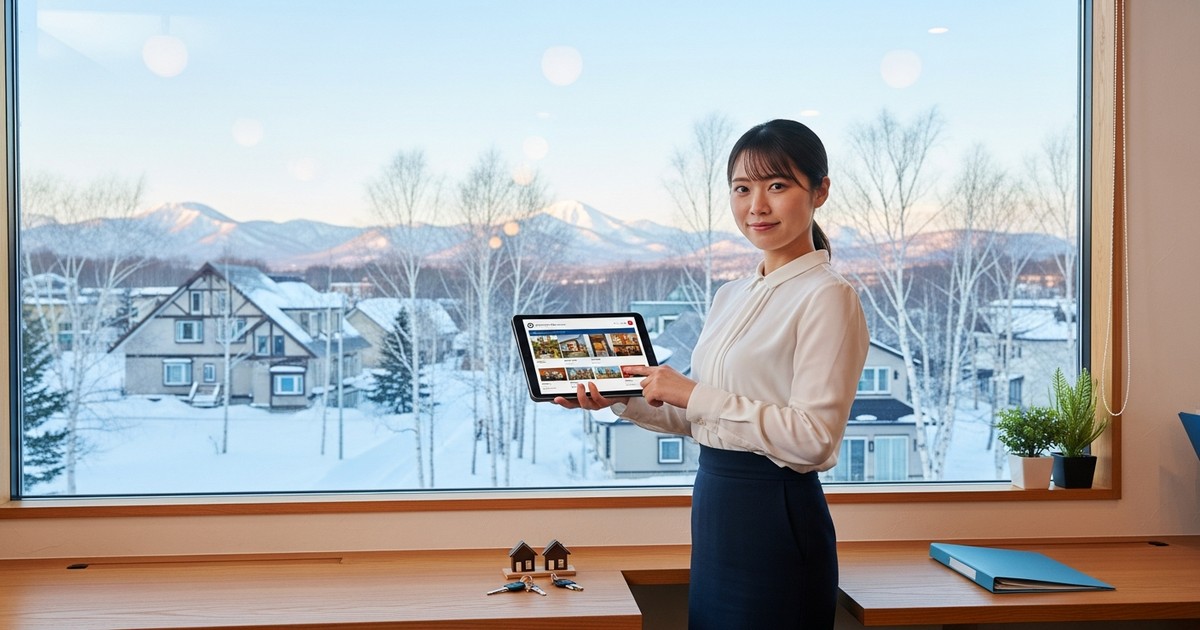
Challenges Faced by Owners Running Multiple Minpaku Properties
When you operate multiple minpaku properties in Hokkaido, an endless stream of tasks piles up—arranging cleaning, handling guest inquiries, adjusting pricing, managing reviews—far more than any one person can realistically keep on top of. Hokkaido presents a particular challenge because of its sheer size, with properties often scattered across areas like Sapporo, Otaru, Niseko, Furano, and Hakodate. There’s simply a physical limit to how much an owner can manage alone. Outsourcing to a management company can dramatically lighten the workload, but if you hire a different company for each property, you end up with multiple points of contact—which can actually drive up management costs rather than reduce them.
In this article, we’ll walk through the key points Hokkaido-based owners with multiple minpaku properties should know when choosing a management company that can handle everything under one roof, along with realistic cost expectations and specific service details. We’ll cover decision-making criteria suited to different stages of growth—whether you have just 2–3 properties or have scaled up to 10 or more.
Why Property Management Support Is Essential for Minpaku in Hokkaido
The Challenge of Properties Spread Across a Vast Area
Hokkaido covers roughly 83,000 square kilometers—more than four times the combined area of Japan’s four Shikoku prefectures. Even if you’re running multiple properties within Sapporo alone, getting from Chuo Ward to Minami Ward can take over 30 minutes by car. For owners who also have properties in Niseko or Furano, the drive from Sapporo can take two to three hours each way, making it simply impractical to head out in person every time cleaning or troubleshooting is needed. The greater the distance between properties, the more essential it becomes to have a management company capable of handling on-site matters for you.
Winter adds another layer of difficulty, as heavy snowfall can extend travel times by 1.5 to 2 times the usual duration. Hokkaido-specific issues—like parking lots becoming unusable due to delayed snow removal, or water heaters freezing and breaking down—crop up frequently. Without a management company that has a local presence, quick response to these kinds of problems is very difficult to achieve.
Multilingual Guest Support and 24-Hour Coverage
Hokkaido sees strong inbound demand, and an increasing share of international visitors are choosing minpaku accommodations for their stays. According to the Japan Tourism Agency’s accommodation statistics, overnight stays by foreign visitors in Hokkaido now exceed 9 million per year, making guest support in English, Chinese, and Korean essentially a requirement. It’s simply unsustainable for an individual owner to keep fielding late-night check-in questions and equipment troubleshooting requests in multiple languages—both in terms of stamina and language ability.
Outsourcing to a management company gives you access to 24-hour call centers and chat support, which boosts guest satisfaction and directly improves review scores. Airbnb’s Superhost criteria include a response rate of 90% or higher and a rating of 4.8 or above—benchmarks that are much easier to hit with a professional support system in place.
The Complexity of Regulatory Compliance and Filing Management
Under Japan’s Private Lodging Business Act (the “minpaku law”), operations are capped at 180 days per year, and some municipalities impose even stricter ordinances. In Sapporo, for instance, operating periods are restricted in residential-only zones, which means filing documents and tracking operating days must be handled accurately for each individual property. If you’re running five properties, that means managing five separate sets of filings and reports—and even a single filing error can trigger administrative guidance from local authorities.
When you entrust unified management to a single company, they can track filing status and operating days across all your properties in one place, substantially reducing the risk of regulatory violations. Choosing a company that also handles routine reporting to authorities and fire safety inspection schedules frees owners from constant worry about compliance.
How to Choose a Management Company That Can Handle Multiple Properties Under One Roof
Check the Breadth of Their Service Area and Number of Locations
A management company with multiple bases within Hokkaido can respond quickly even when your properties are spread across different areas. For example, a company headquartered in Sapporo with partner locations in Niseko and Hakodate can dispatch cleaning staff and emergency response teams from each region. Before signing a contract, always check the “coverage area list” to confirm that all of your property locations are included.
If a company operates from just a single base, you risk extra travel fees for distant properties and slower response times. If you have five or more properties spanning three or more areas, choosing a management company with at least two operational bases is a realistic baseline for stable operations.
Unified Management Systems and Reporting Structure
The biggest advantage of managing multiple properties under one roof is being able to view revenue, occupancy, and expenses for all of them on a single dashboard. If you’re receiving reports through separate spreadsheets or emails for each property, it takes far too long to get a clear overview—delaying important investment decisions. Whether a company offers a management dashboard that displays real-time booking status, revenue, and review ratings across all properties in one view is a crucial factor when choosing who to work with.
Be sure to check what’s included in monthly reports, too. A company that reports not just total revenue but also property-level ADR (Average Daily Rate), occupancy (OCC), and RevPAR (Revenue Per Available Room) gives you the data you need to decide where to focus your investment. It’s also worth confirming, before signing, how often you’ll receive reports—monthly or weekly.
Fee Structures and the Benefits of Scale
Minpaku management fees generally fall into two categories: “revenue-share (commission-based)” and “fixed-fee.” Revenue-share models typically run 15–25% of sales, offering the advantage of sharing off-season risk with the management company. Fixed-fee models generally cost around ¥30,000–¥80,000 per property per month; since costs don’t change even when revenue rises during peak season, this structure favors properties with high occupancy.
Many management companies offer volume discounts when you consolidate multiple properties under one contract. For example, a company might charge a 20% commission for a single property but negotiate down to 17% for a bundled contract covering five or more. If you’re running five properties each earning ¥3 million annually, even a 3-point reduction in commission rate translates to ¥450,000 in annual savings. Always confirm whether multi-property discounts are available and under what conditions before signing a contract.
Concrete Benefits of Unified Management
Optimizing Occupancy Across Properties
When a single management company oversees multiple properties, it becomes possible to “cross-sell”—redirecting overflow guests from a fully booked property to another one in your portfolio. For instance, if your Niseko property is fully booked, the company can offer guests an alternative property nearby in Kutchan or Rankoshi. This kind of coordination has been reported to boost overall portfolio occupancy by 5 to 10 percentage points in some cases.
Another major advantage is being able to coordinate pricing across properties. If you own two properties in the same area, you could set one at a premium price point to target higher-end guests while keeping the other more affordable to maximize booking volume—a strategic differentiation that’s far easier to execute smoothly when a single company manages both.
More Efficient Cleaning and Maintenance
Entrusting multiple properties to the same management company allows cleaning staff shifts to be flexibly coordinated across properties. If Property A checks out at 11 AM and Property B at noon, the same staff member can move from A to B in sequence, reducing labor costs. Compared to arranging cleaning services separately for each property, this typically saves ¥500–¥1,000 per cleaning session. With 60 total cleanings per month across all properties, that adds up to an annual savings of ¥360,000–¥720,000.
Maintenance tasks—like replacing air conditioner filters or restocking linens—can also be scheduled and managed together, reducing the chance of anything slipping through the cracks. In Hokkaido, pre-winter boiler inspections and freeze prevention measures are essential; having one company coordinate contractors across all properties is far more efficient, both in scheduling and cost, than arranging each one separately.
Guest Reviews and Brand Consistency
When running multiple properties, service quality can easily become inconsistent from one to the next. If Property A has well-stocked amenities while Property B offers only the bare minimum, that discrepancy shows up in reviews and can hurt your overall reputation as an owner. A management company handling unified operations can apply consistent service standards across all properties—amenity types, cleaning checklists, welcome message templates, and more—ensuring guests get a comparable experience no matter which property they stay in.
Maintaining a review rating of 4.7 or higher across all properties helps you rank higher in Airbnb’s search algorithm, driving further bookings. Since a strong reputation for one property builds trust in the others, this creates a positive cycle that lifts revenue performance across your entire portfolio.
Points to Watch When Working with a Management Company
Confirming Contract Terms and Cancellation Conditions
Unified management contracts typically require a minimum term of six months to a year. Some contracts impose a penalty fee equivalent to two to three months of the monthly service fee if you cancel early. In case you need to sell a property or change your operating strategy down the line, always confirm the notice period required for cancellation (usually one to three months) and whether any penalty fees apply, before signing.
This becomes especially important when you’re contracting multiple properties under a single agreement, since you may eventually want to cancel just one property while keeping the rest. If the contract requires all properties to be bundled together, canceling one could risk triggering cancellation of the entire agreement. Whether partial cancellation on a per-property basis is possible is an important point to clarify before signing.
Clarifying Liability and Compensation Terms
It’s important to clearly establish how far a management company’s responsibility extends in the event of property damage caused by guests or disputes with neighbors. Questions like whether the company will cover damage to fixtures caused by cleaning staff negligence, or whether guest-caused property damage will be handled through Airbnb’s host guarantee program, need clear answers upfront. Signing a contract with vague liability terms is a recipe for disputes over who pays when something goes wrong.
Also check what kind of liability insurance the company carries. Knowing whether the company holds facility liability insurance, and what the coverage limit is, lets you estimate your financial exposure in a worst-case scenario ahead of time. A company carrying coverage of at least ¥10 million per incident offers a reasonable degree of peace of mind.
Get in Touch with Stay Buddy Inc.
Stay Buddy Inc., a minpaku management company, offers unified management for multiple properties across Hokkaido and throughout Japan. From revenue management and guest support to cleaning coordination and regulatory compliance, we handle every aspect of operations as a one-stop service, minimizing the burden on property owners.
We offer flexible pricing plans tailored to the number and location of your properties, and volume discounts are available for owners consolidating multiple properties under a single contract. After hearing about your current operations and challenges, we’ll propose the management structure best suited to your needs.
If you’re an owner thinking, “I have too many properties to manage on my own,” “working with multiple separate management companies has become inefficient,” or “I want stable, remote management for my Hokkaido properties,” we’d love to hear from you—please don’t hesitate to reach out to Stay Buddy Inc.
Your first consultation is completely free. Just share your property details and current operational situation with us, and we’ll provide a concrete improvement plan along with a cost simulation. Feel free to contact us by phone or through our web form to get started.