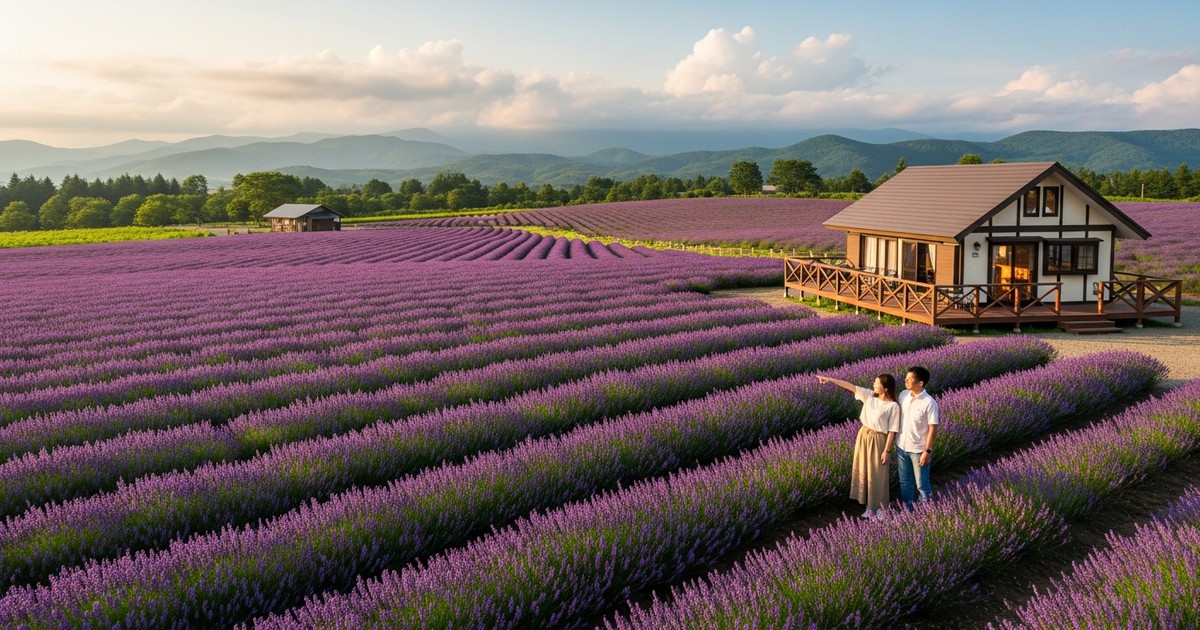
Furano is an area that draws large numbers of domestic and international tourists every summer, thanks to its sweeping fields of blooming lavender. This seasonal drawing power represents a major business opportunity for vacation rental owners. But what does occupancy actually look like when running a vacation rental in Furano? Without understanding not just the peak summer season but also year-round profitability, there’s a real risk of making the wrong investment decision.
In this article, we’ll unpack the structure of accommodation demand during Furano’s lavender season, laying out concrete occupancy figures and the realities of seasonal fluctuation. We’ll also cover practical know-how for boosting occupancy rates, along with operational considerations unique to Furano.
Whether you’re looking to start a vacation rental business in Furano or you’re already operating one and want to improve profitability, this article is packed with information to help you make informed decisions—so please read on to the end.
The Big Picture: Occupancy Rates for Vacation Rentals in Furano
The single biggest characteristic of vacation rental occupancy in the Furano area is the extreme swing between seasons. While the average occupancy rate for vacation rentals across Hokkaido as a whole generally sits around 40–50% year-round, in Furano it’s not uncommon for occupancy to climb to nearly 80–95% during the July–August peak, only to fall to the 20–30% range during the winter months of November through March. This wide swing is the single most important thing to understand when operating a vacation rental in Furano.
Looking at the annual average, occupancy rates for vacation rentals in the Furano area tend to settle around 45–55%. However, this figure is just an average, and it varies significantly depending on a property’s location, pricing, and promotional strategy. Properties within a 10-minute drive of major attractions like Farm Tomita or Lavender East can see occupancy rates 10–20 points higher than properties more than 30 minutes away, even during the same summer period.
Why Accommodation Demand Concentrates During the Summer Lavender Season
Visitor Numbers and Stay Patterns at the Lavender Fields
Furano’s lavender typically reaches peak bloom from late June through early August, with mid-July marking the height of the season. Farm Tomita alone draws roughly one million visitors annually, and the vast majority arrive within this roughly six-week window. While day-trip bus tours remain common, the number of independent travelers has been rising in recent years, and one- to two-night stays are increasingly becoming the norm. This shift toward overnight stays is a tailwind for vacation rentals.
Inbound tourists in particular tend to stay longer on average, and it’s now common for visitors to spend 2–3 nights touring the Furano/Biei area. Travelers from Taiwan, Hong Kong, Thailand, and other parts of Asia often build itineraries that include not just the lavender fields but also spots like Blue Pond and Patchwork Road, which creates strong demand for multi-night stays based in Furano.
Limited Hotel and Ryokan Supply Drives Demand Toward Vacation Rentals
Furano is a small town with a population of around 20,000, and its total number of accommodation rooms is far from abundant. While there are some large and mid-sized properties, such as Shin-Furano Prince Hotel and Furano Natulux Hotel, these tend to sell out early during peak season—July weekends are often fully booked two to three months in advance. This ceiling on hotel supply is what pushes accommodation demand toward vacation rentals.
In fact, on platforms like Airbnb, average nightly rates in the Furano area during July can reach ¥15,000–¥25,000 per unit. That’s roughly double the winter average of ¥8,000–¥12,000 per night. This gap between supply and demand is what makes high-rate operation possible during the summer months.
How to Think About Off-Season Occupancy
Autumn (September–October) Demand and the Fall Foliage Season
After the lavender season ends, there’s a moderate level of demand tied to autumn foliage from September through October. The fall colors on the Tokachidake mountain range begin in mid-September, and in the lower-elevation Furano area, the foliage can be enjoyed through mid-October. Occupancy during this period typically runs 40–55%—not as strong as summer, but still capable of generating solid revenue. Nightly rates tend to drop from summer levels to around ¥10,000–¥15,000.
That said, the overall number of tourists during foliage season is much smaller than in summer, and weekday occupancy can fall below 30%. Offering multi-night discounts or workcation-oriented plans can help narrow the gap between weekend and weekday occupancy.
Winter (November–March) Ski Demand and Its Challenges
Furano is home to Furano Ski Resort, which attracts skiers from Japan and abroad in search of quality powder snow. However, compared to better-known destinations like Niseko or Asahikawa’s Kamui Ski Links, Furano’s name recognition falls short, and winter occupancy for vacation rentals often stays in the 25–35% range. Occupancy spikes temporarily during the year-end/New Year holidays (late December through early January) and during Chinese New Year in February, but outside of these windows, weekdays tend to be a struggle.
Winter operations also come with rising running costs—snow removal and heating expenses can’t be overlooked. Heating oil alone can cost ¥30,000–¥50,000 per month, making winter a period where low occupancy and high costs can hit at the same time. For this reason, some owners choose to either shut down entirely during winter or switch to monthly (long-term) rentals instead.
Spring (April–Early June) Shoulder Season
The period from snowmelt in April through early June is the toughest time of year for attracting visitors to Furano. The lavender hasn’t bloomed yet, and ski season has already ended, so the number of tourism-driven visitors drops sharply. Occupancy during this period can fall to as low as 15–25%, making it the period requiring the most caution when calculating annual returns.
That said, some owners try to capture niche demand during this period by promoting Furano’s agricultural experiences or seasonal produce like asparagus. However, this alone is unlikely to dramatically improve occupancy, and a realistic annual business plan should assume that low earnings during this period will be offset by high earnings in summer.
Concrete Strategies to Boost Vacation Rental Occupancy in Furano
Appropriate Pricing and Dynamic Pricing
To maximize revenue from a vacation rental in Furano, adjusting prices in line with seasonal demand is essential. Specifically, it’s standard practice to prepare at least four pricing tiers: aggressive pricing during the July–August peak (¥20,000–¥30,000 per night), mid-range pricing in September–October (¥10,000–¥15,000), demand-focused pricing in winter (¥8,000–¥10,000), and further discounted rates during the spring shoulder season (¥6,000–¥8,000).
Airbnb and Booking.com both offer built-in dynamic pricing tools, but in an area like Furano with such extreme seasonal swings, it’s important not to leave everything to the algorithm—manual fine-tuning matters. Around the July holiday period in particular, checking nearby hotel pricing trends and setting your rate 10–20% below hotel prices can help drive booking volume.
Optimizing Listings for Inbound Guests
The share of inbound tourists in Furano’s summer demand has been growing year after year, and offering listings in English, Traditional Chinese, and Thai directly translates into higher occupancy. Including specific distance information in your property description—such as “X minutes by car to Farm Tomita” or “X minutes on foot to the nearest convenience store”—can meaningfully boost booking conversion rates among overseas guests.
Since travel around Furano generally assumes a rental car, whether or not free parking is available has a major impact on booking rates. Properties that can offer two parking spaces tend to be favored by group travelers and families, and this often translates into repeat summer bookings. When it comes to photography, including the parking area and surrounding countryside scenery in your exterior shots can also help improve click-through rates.
Differentiating Through Experience-Based Offerings
Rather than positioning your property as just a place to sleep, adding uniquely Furano experiences can help you stand out from other accommodations. For example, arranging melon-picking experiences with a partner farm, introducing a lavender distillation workshop, or offering guidance on early-morning hot air balloon tours—packaging accommodation together with experiences can raise both guest spend and satisfaction.
On Airbnb, hosts who provide strong local information tend to score well in reviews. Preparing a guest guide with a map of local restaurants and tips like the best time to visit the lavender fields to avoid crowds (early morning around 6 a.m. is recommended) can help you maintain a review rating of 4.8 or above, which in turn improves your ranking in platform search results.
Things to Watch Out for When Operating a Vacation Rental in Furano
The 180-Day Annual Cap Under the Private Lodging Business Act
If you file a notification under Japan’s Private Lodging Business Act (the “Minpaku Law”), your annual operating days are capped at a maximum of 180. In an area like Furano, where demand is heavily concentrated in summer, this 180-day cap may not pose much of a constraint—but if you also want to capture winter ski demand, it requires careful planning. This calls for a strategic decision about how to run the roughly 60 days of July and August at full capacity while deciding how to allocate the remaining 120 days across the rest of the year.
Obtaining a simple lodging business license under the Hotel Business Act removes the 180-day cap, but it can increase your initial investment by roughly ¥1–3 million due to requirements like fire safety equipment installation and structural compliance. It’s worth running a full-year revenue simulation to determine which licensing approach makes more sense before committing.
Winter Management Costs and Risk Mitigation
Located inland in Hokkaido, Furano can see winter lows drop below minus 20°C. Winter-specific management tasks—such as operating anti-freeze valves to prevent frozen pipes during vacancies, clearing snow from roofs and parking areas, and running minimal heating—shouldn’t be overlooked. For remote owners, failing to secure a local property manager can lead to burst-pipe repair costs running into the hundreds of thousands of yen.
Heating costs typically run ¥200,000–¥400,000 in total from October through April. If you can’t expect enough winter revenue to cover this fixed cost, closing entirely from November through March—draining the water lines and switching to a minimal electricity contract—can reduce annual running costs by roughly ¥150,000–¥200,000.
A Revenue Simulation for Vacation Rental Viability in Furano
Let’s look at the numbers to get a concrete sense of how viable a Furano vacation rental business can be. Assuming a whole-house rental (sleeping 6) with an average summer (July–August) occupancy rate of 85% and an average nightly rate of ¥20,000, revenue over those two months comes to roughly ¥1.05 million. For autumn (September–October), assuming 45% occupancy and a ¥12,000 nightly rate, revenue is about ¥330,000. For winter (December–February), at 30% occupancy and a ¥10,000 rate, that’s about ¥270,000. And for the remaining months, at 25% occupancy and an ¥8,000 rate, that’s about ¥290,000.
Total annual revenue comes to roughly ¥1.94 million. Subtracting cleaning costs (about ¥250,000/year), platform fees (about ¥60,000), utilities (about ¥350,000), consumables (about ¥100,000), and property taxes/insurance (about ¥150,000), annual net income lands at roughly ¥1 million. Factoring in the cost of acquiring and renovating the property, actual yield will vary widely depending on purchase price, but for a used property acquired for ¥5 million or less, recouping the investment within around five years is a realistic possibility.
For Vacation Rental Management, Consult Stay Buddy Inc.
Success in running a vacation rental in the Furano area hinges on making the most of the strong summer demand while minimizing the revenue dip during the off-season. Appropriate pricing, multilingual support, and season-specific business strategy are all areas where individual owners can find the workload overwhelming to manage alone.
Stay Buddy Inc. is a specialist in vacation rental management, offering end-to-end support that covers everything from property setup and listing creation to guest communication, cleaning coordination, and revenue optimization. We excel at proposing strategies tailored to the demand characteristics of each area, and we’ve built up extensive know-how operating in tourist destinations with significant seasonal fluctuation.
If you’re considering starting a vacation rental business in Furano, or you’re already operating one and looking to improve occupancy and revenue, please feel free to reach out to Stay Buddy Inc. We’ll propose an optimal management plan tailored to your property’s characteristics and your goals as an owner.
You can get in touch through the Stay Buddy Inc. official website. Your first consultation is completely free of charge.