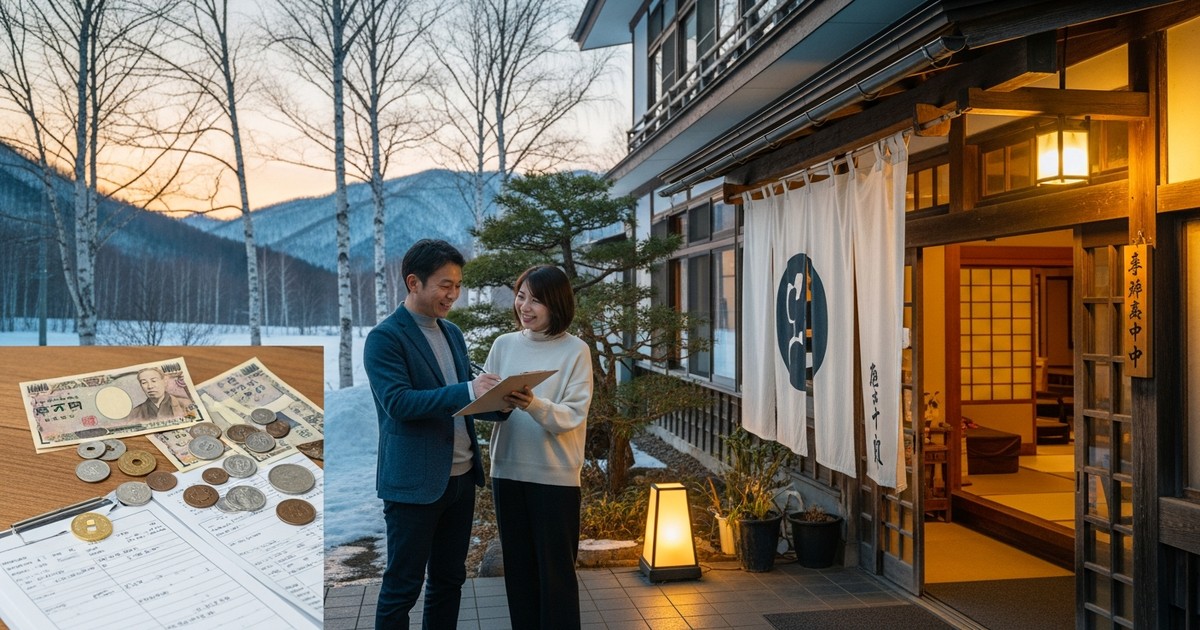
Starting a Minpaku or Ryokan Business in Hokkaido? Subsidies Are Essential
When opening and operating a minpaku (vacation rental) business in Hokkaido, whether or not you can tap into available subsidies and grants can make a major difference to your profitability. Setting up a lodging facility often requires an initial investment running into the millions of yen—covering property acquisition, interior renovation, and equipment installation—and it’s rarely easy to cover this entirely out of pocket. While Hokkaido enjoys strong domestic and international tourism demand, it also faces unique challenges such as high winter heating costs and the difficulty of attracting guests across its vast geography, making precise financial planning critical to business success.
This article provides a comprehensive overview of the subsidies and grants available to those running minpaku or ryokan businesses in Hokkaido. We cover everything from national programs to Hokkaido’s own support schemes and municipal-level grants, along with application requirements and typical subsidy amounts. This guide is useful not only for those considering opening a property, but also for existing operators planning equipment upgrades or renovations.
Please note that subsidy and grant budgets and application periods change every fiscal year, so be sure to check the latest official guidelines before applying. Use this article as a guide to understanding the overall landscape and key points for making the most of these programs.
Benefits and Basics of Using Subsidies for Minpaku in Hokkaido
Subsidies and grants are both non-repayable funds, but they differ slightly in nature. Subsidies (hojokin) are typically competitive, awarded through a screening process after an open call for applications, where the quality of your business plan matters greatly. Grants (joseikin), on the other hand, are generally paid out to anyone who meets the eligibility criteria, and are common in employment-related programs. In either case, funds are usually disbursed on a reimbursement basis—meaning you must first pay expenses out of pocket, with the subsidy amount transferred to you afterward.
The benefits of using subsidies for a minpaku or ryokan business in Hokkaido go beyond simply reducing the initial financial burden. The very process of preparing a business plan for an application helps sharpen the accuracy of your revenue projections and surfaces potential business risks. Furthermore, a track record of successful subsidy applications can work in your favor when seeking bank financing, making a combined strategy of subsidies and loans an effective approach to fundraising.
National Subsidy Programs Available for Minpaku and Lodging Businesses
Business Restructuring Subsidy (Jigyo Saikochiku Hojokin)
This large-scale subsidy, administered by the Small and Medium Enterprise Agency, targets small and medium-sized businesses and sole proprietors pursuing new business fields or transforming their business model. This could apply to cases such as transitioning from an existing business into the lodging industry, or renovating vacant real estate into a minpaku facility. The maximum subsidy amount varies depending on the number of employees and application category, but under the Growth Category it can reach up to 70 million yen, with a subsidy rate of one-half for SMEs and two-thirds for micro-businesses. Adoption rates vary by application round but generally hover around 30-50%.
Applications require confirmation from a certified management innovation support organization, meaning you’ll need to work with a tax accountant or SME management consultant to prepare your business plan. For lodging business applications, key review points include clearly defining your target customer base, differentiating from nearby competitors, and providing well-supported estimates of occupancy rates and pricing.
Subsidy for Small Business Sustainability (Shoukibo Jigyousha Jizokuka Hojokin)
This program targets small businesses with 20 or fewer employees in the lodging industry, subsidizing expenses related to market expansion. The standard maximum subsidy is 500,000 yen, rising to as much as 2 million yen under special categories, with a subsidy rate of two-thirds. For minpaku businesses, eligible expenses include listing fees for booking platforms, multilingual website development costs, and signage or brochure production.
The application bar is relatively low, and applicants can proceed with support from their local Chamber of Commerce and Industry, making this an accessible program even for newly opened businesses. Chambers of Commerce across Hokkaido have accumulated experience supporting lodging business applications, so consulting with your local office early can improve your chances of approval.
IT Introduction Subsidy (IT Donyu Hojokin)
This subsidy supports digital transformation in the lodging industry, covering the cost of introducing IT tools such as property management systems (PMS), smart locks, self-check-in systems, and accounting software. Under the standard category, the maximum subsidy is 4.5 million yen, with a subsidy rate of one-half. Since building an unattended check-in system can greatly improve operational efficiency for minpaku operators, this subsidy pairs particularly well with the industry’s needs.
Applications require working with a registered IT introduction support provider, and you’ll need to select from among the registered IT tools. It’s important to confirm in advance whether the tool you want to use is already registered. Multiple tools can be bundled into a single application, making this an efficient option to use when setting up a complete system at the time of opening.
Monozukuri Subsidy (Service High Value-Added Category)
Though often associated with manufacturing, this subsidy also covers service industries. It can be used for innovative service development or capital investment, with a maximum subsidy ranging from 7.5 million to 12.5 million yen (depending on company size) and a subsidy rate of one-half. This is well suited to properties offering high-value-added services, such as a minpaku featuring a private sauna or incorporating glamping elements.
Since “innovativeness” is a key evaluation criterion, applicants need to clearly explain how their service differs from existing lodging facilities in the area. Business plans that tie into local resources—such as accommodation packages linked to outdoor activities that showcase Hokkaido’s natural environment—tend to be viewed favorably.
Hokkaido’s Own Subsidy and Support Programs
Lodging Facility Support from the Hokkaido Tourism Organization
The Hokkaido Tourism Organization occasionally runs subsidy programs aimed at improving the guest reception environment at lodging facilities across the prefecture. Eligible expenses often include multilingual support, Wi-Fi infrastructure, barrier-free renovations, and infectious disease prevention equipment, with subsidy amounts typically ranging from several hundred thousand to around 1 million yen. As this program is tied to Hokkaido’s broader tourism policy of capturing inbound demand, initiatives that strengthen the reception environment for foreign visitors tend to be highly regarded.
Application periods are announced irregularly, so it’s recommended to check the Hokkaido Tourism Organization’s website periodically or sign up for their email newsletter to stay informed. Since application windows can sometimes be short, preparing the necessary documents in advance is key to a successful application.
Hokkaido’s Loan and Subsidy Programs for SMEs
Hokkaido offers a low-interest loan program called the SME General Development Fund, which is available to a wide range of industries, including lodging. While this is a loan rather than a subsidy, it offers more favorable interest terms than typical private financing. Loan limits vary by program, but in some cases equipment financing loans can reach several tens of millions of yen.
Hokkaido also has its own grant programs aimed at revitalizing depopulated areas and remote islands, which sometimes offer support for opening lodging facilities in regions experiencing population decline. If you’re considering starting a minpaku business outside of well-known tourist areas like Niseko, Furano, or Shiretoko, it may be worth contacting your local regional promotion bureau to check for programs available in the context of regional revitalization.
Municipal-Level Subsidies and Grants
Sapporo City’s Business Startup Support Subsidies
Sapporo City offers a startup support subsidy for SMEs, which may be available to those newly launching a lodging business within the city. The maximum subsidy amount typically ranges from 500,000 to 1 million yen, covering eligible expenses such as store renovation, equipment, and advertising costs. In many cases, receiving a startup consultation at the Sapporo Industrial Promotion Center is a requirement for application, so it’s advisable to visit early in the process.
As Hokkaido’s largest hub for accommodation demand, Sapporo offers potential for both business and leisure travelers. However, given the level of competition, business plans submitted for subsidy applications need to demonstrate a specific location strategy and clearly defined target market.
Tourism-Related Support in the Niseko/Kutchan Area
The world-renowned Niseko ski resort area has robust local tourism promotion initiatives. Consultation services are available for new construction or renovation of lodging facilities, and in some cases, property tax reductions or startup support funds may apply. Niseko Town is also considering preferential programs for environmentally conscious lodging facilities, so applications that combine renewable energy equipment installation may have an advantage.
That said, land and property prices in this area have risen sharply, and subsidies alone often cannot cover the full initial investment. A comprehensive funding plan that includes loan programs and potential investor partnerships is necessary.
Vacant Home Renovation Subsidies in Depopulated and Rural Areas
Many municipalities across Hokkaido operate vacant home banks, offering renovation subsidies ranging from roughly 500,000 to 3 million yen. These can potentially be used to convert vacant homes into minpaku properties. For example, some municipalities in the Kamikawa and Tokachi regions offer subsidies covering two-thirds of renovation costs (up to a maximum of 2 million yen) for migrants utilizing vacant homes.
Rural minpaku and farm stays are popular as a uniquely Hokkaido style of experiential lodging, and combining these with the Ministry of Agriculture, Forestry and Fisheries’ Rural Area Revitalization Grant can provide access to even larger funding support. Under the Nouhaku (agricultural tourism) promotion program, some businesses have received subsidies of up to 5 million yen through applications made via regional councils.
Using Employment-Related Grants for Minpaku Operations
Career Advancement Grant (Career Up Joseikin)
If you convert part-time or temporary staff—such as cleaning or front desk personnel—into full-time employees, you can receive up to 800,000 yen per person. As a minpaku business grows and expands to managing multiple properties, personnel costs become a significant burden, making this grant highly valuable. Applications require submitting a career advancement plan in advance, and you must notify the Labor Bureau before making the conversion.
Since Hokkaido experiences significant seasonal fluctuations in tourism demand, this grant can be useful when planning to transition from seasonal employment during peak periods to year-round employment. If you can build an operating model that combines the winter ski season with the summer outdoor and cool-climate travel season to achieve year-round occupancy, you can achieve both stable employment and access to this grant.
Human Resources Development Support Grant
This grant subsidizes a portion of training costs and wages paid during training when employees undergo vocational training. For minpaku operations, eligible training could include hospitality manners training, multilingual customer service training, and safety management training. The expense subsidy rate is up to 75% for SMEs, with wage subsidies of roughly 960 yen per hour per employee.
Particularly for operators looking to strengthen their inbound tourism capabilities, applying this grant toward English or Chinese language customer service training can simultaneously improve service quality and reduce costs. As Hokkaido attracts many visitors from across Asia, multilingual capability directly impacts guest reviews and reputation.
Practical Tips for a Successful Subsidy Application
Key Elements of a Strong Business Plan
Subsidy screenings place the greatest emphasis on the feasibility and profitability of your business. For a minpaku business plan, you should clearly define your target customer (inbound tourists, business travelers, long-term stays, etc.), provide well-supported estimates of expected occupancy rates (backed by data from nearby facilities or booking platform market analysis), and present a five-year revenue and expense plan with concrete figures. In Hokkaido’s case, including a month-by-month occupancy simulation that accounts for seasonal fluctuations adds credibility.
For example, for a one-room minpaku property in Sapporo, you might present specific figures such as an average annual occupancy rate of 65%, an average nightly rate of 8,000 yen, and monthly revenue of approximately 160,000 yen, backed by supporting data. Plans are viewed more favorably when they present a realistic scenario—setting a conservative occupancy rate for the first year of operation, with projected growth in year two and beyond as reviews accumulate.
Managing Your Application Schedule
Subsidy application windows are typically short, lasting only one to two months, and preparing the necessary documents takes considerable time. Required documents vary depending on the program, but commonly requested items include a business plan, cost estimates, copies of tax returns, and a certified copy of company registration—these should be prepared in advance wherever possible. In particular, since estimates often need to be obtained from multiple vendors, it’s realistic to allow two to three weeks for this step alone.
Creating an annual subsidy calendar that lists the application periods for major programs can help you avoid missing opportunities. Generally speaking, national subsidy programs tend to open for applications between April and June, while Hokkaido’s own programs and municipal-level programs often open applications in April-May at the start of the fiscal year, or in the fall following the passage of a supplementary budget.
Using Professional Support and Typical Application Costs
If you hire an SME management consultant or administrative scrivener (gyoseishoshi) to handle your subsidy application, typical costs run from 30,000 to 100,000 yen as a retainer fee, plus a success fee of 10-15% of the awarded subsidy amount. For example, if you’re awarded 5 million yen through the Business Restructuring Subsidy, the success fee would typically run from 500,000 to 750,000 yen. While this comes at a cost, it significantly improves your chances of approval, so we strongly recommend working with a professional if you’re applying for the first time.
Hokkaido is also home to support organizations experienced in subsidy applications for the lodging industry. The Yorozu Support Center (Hokkaido) offers free business consultations and application review assistance, so it’s a reasonable first step to consult there before deciding whether to hire a paid professional.
For Support Maximizing Subsidies in Your Minpaku Business, Consult Stay Buddy Inc.
If you’re looking to start a minpaku business in Hokkaido, or if you’re already operating one and considering equipment upgrades or service improvements using subsidies, we encourage you to consult Stay Buddy Inc., a specialist in minpaku property management. Stay Buddy offers comprehensive support from property selection and business setup procedures through to full operational management, and we can also provide advice on building the business plans needed for subsidy applications.
Winning subsidy approval requires a realistic operating plan and concrete revenue projections. Drawing on the operational know-how and performance data Stay Buddy has accumulated, we can help you build a business plan that stands up to scrutiny during the review process. We support numbers-based planning, including analysis of a property’s revenue potential, setting appropriate nightly rates, and estimating operating costs.
Hokkaido is a region rich in tourism resources with significant growth potential for the minpaku business. However, it also comes with region-specific operational challenges, such as managing seasonal fluctuations and snow removal and heating costs. By combining an operational design tailored to these local conditions with financial support from subsidies, it’s possible to build a stable revenue foundation.
Please feel free to contact Stay Buddy Inc. at any time. After learning about your current situation and goals, we’ll propose the optimal subsidy strategy and operational plan for your needs.