For anyone running a minpaku or ryokan business in Hokkaido, one of the scariest issues during winter is equipment freezing. Without the right knowledge to respond to freezing problems at your property, you risk everything from flooded rooms caused by burst pipes to broken water heaters and even compensation claims from guests. Repair costs from freezing damage have been reported to exceed ¥300,000 to ¥1,000,000 per incident in some cases, making this a make-or-break issue for owners.
In Hokkaido, outdoor temperatures often stay below minus 10°C for extended periods, and the risk is especially high at minpaku properties that are frequently left unattended. Every year, cases occur where the heating is left off for just a few days, causing water pipes to freeze and burst—only for a large volume of water to gush out once things thaw, damaging the entire building.
This article provides a practical, detailed guide for Hokkaido minpaku and ryokan owners covering exactly what to do when freezing trouble actually happens, preventive measures to stop it before it starts, and how to choose the right insurance to protect yourself just in case.
Emergency Response When Freezing Trouble Occurs at Your Minpaku
When freezing damage occurs, the most important thing is your initial response to minimize the damage. The longer it takes to discover the problem, the higher the repair costs climb, and the greater the losses from guest compensation and cancelled bookings. Here, we walk through the specific steps you should take the moment you discover freezing damage.
Shut Off the Main Valve to Prevent Damage from Spreading
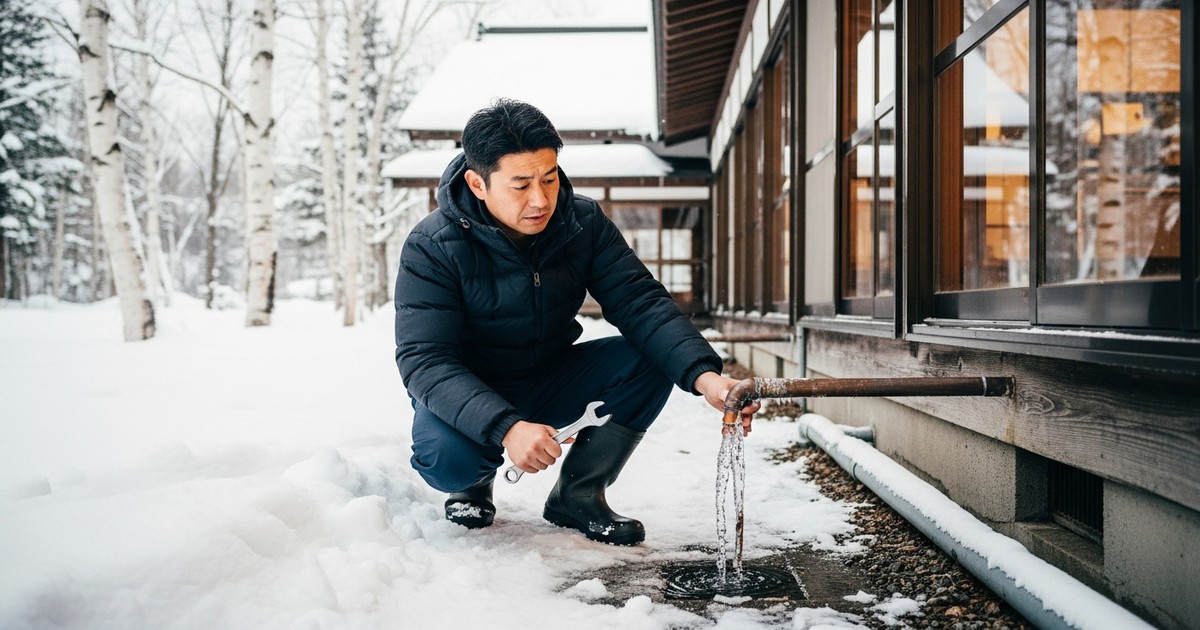
If you suspect a burst pipe due to freezing, first shut off the building’s main water valve. In Hokkaido homes, the drain valve is typically located near the entrance or underground. If you wait for a natural thaw without closing the main valve, water will burst out all at once from the break point, flooding the space under the floor and inside walls—pushing damage costs up by hundreds of thousands of yen. Even if you’re managing the property remotely, it’s essential to have a system in place—whether through a management company or a nearby contact—that allows the main valve to be shut off within 30 minutes.
Identifying the Frozen Section and Emergency Thawing
After shutting off the main valve, identify where the freezing occurred. Common trouble spots include faucets that produce no water when turned on, and pipes exposed along exterior walls or under the floor. Once you’ve located the spot, wrap it in a towel and slowly pour lukewarm water (around 40°C) over it, or use a hair dryer on warm setting to thaw it gradually. Never pour boiling water directly onto pipes, as the sudden temperature change can cause them to crack. If thawing doesn’t resolve the issue, or if the pipe has already burst, call a plumbing repair company right away. In Hokkaido, emergency call-out fees typically run ¥15,000–¥30,000, and burst pipe repairs including labor generally cost ¥50,000–¥200,000.
Guest Communication and Booking Adjustments
If freezing trouble affects a guest currently staying at your property, how quickly and sincerely you respond will shape your review scores. If water is expected to be unavailable for more than two hours, the realistic approach is to arrange alternative accommodation or offer a full refund. On Airbnb, guests can request refunds when there’s “a significant issue with the quality of their stay,” so proactively offering a solution before the guest asks helps prevent the situation from escalating. For any bookings scheduled before restoration is complete, block your calendar early if the situation is uncertain, and handle the situation according to your cancellation policy.
Common Freezing Spots and Causes at Hokkaido Minpaku Properties
Understanding how to respond is important, but knowing where freezing is most likely to occur in the first place is the real key to prevention. Minpaku properties in Hokkaido face unique cold-climate risks that differ from those in mainland Japan.
Exposed Water Pipes and Supply Lines
Water supply pipes that pass through exterior walls, or pipes under the floor or in the ceiling space with insufficient insulation, carry the highest risk of freezing. This is especially true for properties over 20 years old, where deteriorated insulation may leave pipes exposed. Once outdoor temperatures drop below minus 4°C, freezing risk rises sharply, and below minus 10°C, even insulated pipes can freeze. If the property remains unoccupied for more than 24 hours without draining the water system, the likelihood of freezing becomes extremely high.
Water Heaters and Boilers
The internal piping and connection points of water heaters and boilers are also prone to freezing. Most modern water heaters have a built-in anti-freeze heater, but this stops working if the unit is unplugged. There have been real cases where cleaning staff unplugged the unit to save electricity. Depending on the model, replacing a frozen-damaged water heater typically costs between ¥150,000 and ¥400,000.
Toilets and Washlets
One often-overlooked risk is toilet freezing. When water inside the toilet bowl or a washlet unit freezes, it can crack the porcelain or damage the washlet’s internal components. Replacing a toilet bowl, including installation, typically costs ¥50,000–¥150,000, while replacing a washlet unit runs ¥30,000–¥80,000. If staff forget to drain the water after a guest checks out, there’s a real risk of freezing during the vacancy period before the next booking.
Preventive Measures to Stop Freezing Before It Happens
When you factor in repair costs and lost bookings, preventing freezing before it happens is far more cost-effective than dealing with it afterward. Here are concrete preventive measures every Hokkaido minpaku operator should put into practice.
Thoroughly Draining the Water System
In Hokkaido, the process known as “mizunuki” or “mizuotoshi” (draining the water system) is standard practice during winter. This involves shutting off the main valve and then opening each faucet to completely drain the water from the pipes. At minpaku properties, it’s effective to make this a required task for cleaning staff and formalize it with a checklist. The draining process itself only takes 10–15 minutes, but if inexperienced staff skip the step, it leads directly to freezing accidents. Include a photo-illustrated guide to the draining procedure in your cleaning manual, and establish an operational rule to confirm it’s been completed every time during winter months.
Minimum Heating Temperature Settings and Remote Monitoring
One option is to never fully turn off the heating even when the property is unoccupied, keeping the indoor temperature at 10°C or above. However, since kerosene or gas heating costs run ¥1,000–¥2,000 per day, expenses can add up during long vacancy periods. In recent years, more owners have started installing IoT temperature sensors that send a smartphone notification when the room temperature drops below a set threshold. Sensor units typically cost ¥5,000–¥15,000, which is a worthwhile investment compared to the hundreds of thousands of yen in potential freezing damage.
Strengthening Pipe Insulation
For older properties, rewrapping pipes with new insulation can be highly effective. Installing insulated tubing or anti-freeze heating tape (electric heat cable) typically costs ¥5,000–¥20,000 per location. Even if roughly 10 locations throughout the building need treatment, an investment of around ¥100,000–¥200,000 can significantly reduce freezing risk. Pipes running through exterior walls and under floors should be prioritized for this treatment.
Types of Insurance for Freezing Trouble and How to Choose One
Even with preventive measures in place, there’s still a chance that an unexpected cold snap or equipment deterioration could cause a freezing incident. That’s why having insurance to cover the damage is so important. Several types of insurance apply to minpaku and ryokan businesses, and it’s essential to understand the coverage details before choosing one.
Water Damage and Burst Pipe Coverage Under Fire Insurance
Standard fire insurance policies often include coverage for “water damage” and “bursting/explosion,” which can apply to water pipe bursts caused by freezing and the resulting water damage. However, for properties used as minpaku or ryokan businesses, standard residential fire insurance may not cover such incidents. Be sure to declare the property as “commercial use” or “accommodation facility use” with your insurer and confirm that your policy reflects this correctly. Coverage amounts are typically based on the building’s replacement value, and annual premiums for a single wooden building generally run ¥30,000–¥80,000.
Facility Liability Insurance
If a freezing incident soaks a guest’s belongings, or causes water damage to a tenant or residence below your property, you’ll need facility liability insurance. This type of insurance covers compensation and legal costs when inadequate facility management causes damage to a third party. Plans offering ¥100 million in coverage typically cost just ¥10,000–¥30,000 per year, making this a relatively affordable but essential insurance for minpaku operators. There have been real cases where freezing-related water leaks caused ¥5 million in damage to a shop on a lower floor, so operating without this coverage carries significant risk.
Minpaku-Specific and Comprehensive Insurance Packages
In recent years, insurance products designed specifically for minpaku operations have also become available. These packages bundle fire insurance, facility liability insurance, and household contents coverage, designed to handle equipment troubles of all kinds, including freezing damage. Annual premiums typically range from ¥50,000–¥150,000, depending on the property’s size and location. A key point when choosing insurance is that coverage can differ depending on whether freezing is classified as a “natural disaster” or an “equipment failure.” Before signing a contract, be sure to check the exclusion clauses in the policy terms, and confirm whether operator negligence—such as failing to drain the water system—would void the coverage.
The Insurance Claims Process When Freezing Trouble Occurs
Even with insurance in place, mishandling the claims process can mean you don’t receive coverage. When it comes to filing a claim for freezing damage, keeping thorough records and contacting your insurer quickly are the keys to success.
Documenting the Damage and Taking Photos
As soon as you discover freezing damage, take as many photos and videos of the affected areas as possible. Record everything—burst pipes, flooded rooms, damaged furniture and appliances. Insurance assessors require “objective documentation of the scope and extent of the damage,” so insufficient photographic evidence can result in a reduced payout. Always keep repair quotes and receipts, and be sure to document the pre-repair condition before beginning any restoration work.
Contacting Your Insurer and Submitting Documentation
Notify your insurance company as soon as possible after the damage occurs. Many insurers require notification “within 30 days of the incident,” and missing this deadline can result in your claim being denied outright. When you contact them, be prepared to share the date and time of the incident, the location, the likely cause, and an overview of the damage. Afterward, you’ll need to fill out the incident report form sent by the insurer and submit it along with photos, repair quotes, and a report from your repair contractor. The review process usually takes two weeks to a month, and once approved, the insurance payout will be transferred to your designated bank account.
Struggling with Freezing Prevention at Your Minpaku? Talk to Stay Buddy Inc.
Running a minpaku or ryokan business in Hokkaido means that preparing for freezing risk is a critical factor in protecting your revenue. But building out proper water-draining procedures, training cleaning staff, installing IoT sensors, and selecting and managing the right insurance is a heavy burden to handle alone as an owner.
At Stay Buddy Inc., our property management team understands the unique risks of cold-climate regions and provides comprehensive support—from equipment management to emergency response and insurance procedures. We can design on-the-ground operations at a practical level, including building winter cleaning protocols with proper water-draining procedures and setting up emergency response systems for freezing incidents.
Rather than worrying about sudden expenses and cancelled bookings caused by freezing trouble, you can operate with peace of mind through the winter season by entrusting your property to professional management. If you’re managing a minpaku property in Hokkaido, feel free to reach out to Stay Buddy Inc. for a consultation.