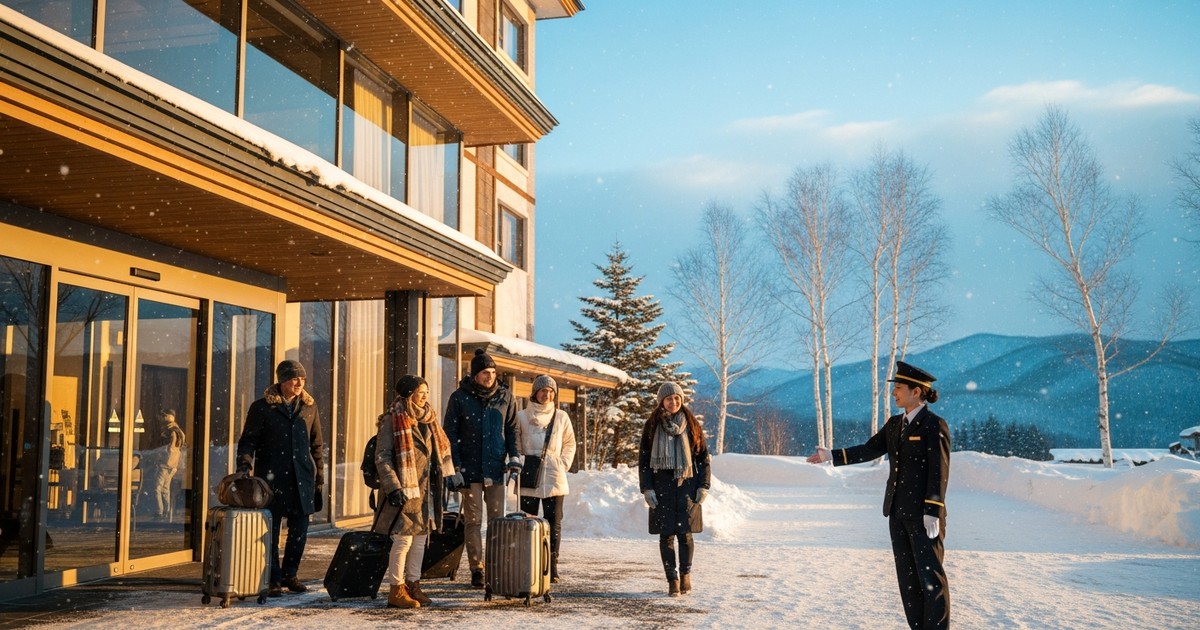
Inbound accommodation demand in Hokkaido has continued its upward trajectory since 2024, with further growth expected through 2026. The total number of overnight stays by foreign visitors across Hokkaido has now surpassed 10 million per year, and in major areas such as Sapporo, Niseko, and Furano, occupancy rates exceeding 90% during peak periods are no longer unusual. This article breaks down the latest trends in inbound accommodation demand in Hokkaido by country of origin and by area, offering concrete insights for accommodation operators and vacation rental owners.
Hokkaido’s appeal to overseas travelers lies in its distinct four seasons, world-class powder snow, and rich food culture—from fresh seafood to ramen. Travelers from Asian markets in particular show a high repeat-visitor rate, and demand is increasingly spreading beyond Sapporo and Hakodate into the eastern and northern parts of the island. Understanding these shifting demand patterns is directly tied to maximizing revenue for accommodation businesses.
Below, we walk through a data-driven overview of market size, traveler characteristics by country, differences in accommodation demand by area, and practical points for running vacation rentals and lodging facilities.
The Big Picture: Inbound Accommodation Demand and Market Size in Hokkaido
According to the Japan Tourism Agency’s Accommodation Survey, the total number of overnight stays by foreign visitors in Hokkaido fell sharply during the pandemic from roughly 8.93 million in 2019, but rebounded to about 8.7 million by 2023, and is estimated to have reached approximately 9.8 million in 2024—surpassing 2019 levels. Projections for 2026 point to more than 11 million overnight stays, which would mean inbound visitors account for roughly 30% of Hokkaido’s total overnight stays.
Average spending per stay has also risen notably. Foreign travelers in Hokkaido spend an average of roughly ¥18,000–¥22,000 per night on accommodation, compared to around ¥12,000 for domestic travelers—more than 1.5 times higher. In Niseko in particular, demand for condominium-style accommodations priced above ¥50,000 per night is strong, reflecting a mature high-end market. Combined with the growth in visitor numbers, this rise in spending per stay has pushed Hokkaido’s overall accommodation industry revenue to an estimated ¥300 billion annually.
Traveler Characteristics and Accommodation Trends by Country
Travelers from South Korea
South Korean travelers make up the largest share of foreign visitors to Hokkaido, accounting for roughly 25–28% of the total. Thanks to an extensive network of LCC routes, New Chitose Airport now sees more than 100 direct flights per week from South Korea. Average stays are relatively short at 3–4 nights, with a strong preference for business hotels and capsule hotels in central Sapporo. Nightly rates typically fall in the ¥8,000–¥12,000 range, reflecting a value-conscious traveler segment.
Most South Korean travelers are FIT (independent) tourists, with the majority in their 20s and 30s planning trips based on social media research. Beyond the winter ski season, South Korean visitors are also increasingly visible during the summer lavender season in Furano and Biei.
Travelers from Taiwan and Hong Kong
Travelers from Taiwan and Hong Kong together account for about 20% of the total. Their average stay runs 4–5 nights, and rental-car road trips are a popular travel style. A common route starts in Sapporo and extends to Otaru, Noboribetsu Onsen, Lake Toya, and Furano, with a one-night stay in each destination.
This segment shows strong demand for traditional ryokan and pension-style accommodations, favoring price points of ¥15,000–¥25,000 per night. Repeat visitor rates are exceptionally high, and second-time (or later) visitors increasingly venture into eastern Hokkaido, including Kushiro and Shiretoko.
Travelers from Mainland China
Travelers from mainland China are split between group tours and independent travel, together accounting for roughly 15–18% of the total. Group tourists tend to favor large hotels and resort facilities, while independent travelers show a clear preference for vacation rentals and serviced apartments—creating a two-tier market. Average nightly spending is around ¥15,000–¥20,000.
Notably, group sizes are often large: three-generation family trips or groups of friends of 4–6 people increasingly book entire vacation rental houses. To meet this demand, 3-bedroom-plus vacation rental properties in Sapporo and Otaru maintain high occupancy rates.
Travelers from Western Countries and Australia
Travelers from Western countries and Australia represent about 15% of the total, but they spend the most per night of any segment. Australian travelers in particular concentrate heavily in Niseko, where luxury condominiums priced at ¥50,000–¥150,000 per night are often fully booked months in advance during the December–March ski season. Average stays run 7–10 nights, and total accommodation spending for a single trip commonly reaches ¥300,000–¥1,000,000.
In summer, an increasing number of travelers visit for trekking and cycling, with adventure tourism in the Daisetsuzan mountain range and the Shiretoko area creating fresh demand. These travelers expect basic infrastructure such as reliable Wi-Fi, English-language support, and cashless payment options.
Travelers from Southeast Asia (Thailand, Singapore, Malaysia, etc.)
Southeast Asian travelers account for about 8–10% of the total and represent the fastest-growing segment in recent years. Thai travelers often visit in winter to experience snow, while visitors from Singapore and Malaysia increasingly come in summer for golf and gourmet food. Average stays run 4–6 nights, with mid-range pricing of ¥12,000–¥18,000 per night being the norm.
Accommodations that can cater to Muslim travelers—offering halal food and prayer space information, for example—hold a strong competitive advantage. Data shows that Muslim-friendly certified hotels in Sapporo achieve occupancy rates more than 10 percentage points higher than uncertified properties.
Accommodation Demand and Characteristics by Area in Hokkaido
Sapporo Area
As Hokkaido’s largest city, Sapporo serves as the gateway for roughly 40% of all inbound overnight stays. In the Susukino and Odori areas, hotel occupancy averages 80–85% annually, exceeding 95% during peak periods such as the February Snow Festival and the July–August summer season. Average daily rates (ADR) run ¥15,000–¥25,000 during peak season and remain steady at ¥10,000–¥13,000 even during off-peak periods.
Sapporo also boasts the largest vacation rental market in Hokkaido, with roughly 3,500 listings on Airbnb and an average annual occupancy rate of 65–70%. Properties within walking distance of subway stations in Chuo and Kita wards are especially popular, with many 2-bedroom-plus units reportedly generating stable monthly revenue of ¥300,000–¥500,000.
Niseko and Kutchan Area
Known worldwide as a premier ski resort destination, Niseko commands the highest winter room rates in all of Hokkaido. Condominium-style accommodations typically run ¥30,000–¥150,000 per night, and units priced above ¥200,000 during peak periods sell out the same day they’re listed. The proportion of foreign guests reaches 70–80% in winter, dominated by Australian and Western travelers.
On the other hand, summer occupancy often lingers at just 30–40%, making year-round revenue stability a challenge. In recent years, the expansion of summer activities such as rafting and golf has gradually improved this picture, with some properties now pushing green-season occupancy above 50%.
Hakodate Area
Hakodate, with its famous night views, morning market, and Goryokaku Fort, is especially popular among travelers from Taiwan and South Korea. The opening of the Hokkaido Shinkansen has also increased the number of visitors touring in from the Tohoku region, and annual foreign overnight stays now total roughly 800,000. In the Yunokawa Onsen area, hot spring ryokan with meals included are in high demand, with typical pricing of ¥20,000–¥35,000 per night including breakfast and dinner.
While Hakodate’s vacation rental market is smaller than Sapporo’s, renovated historic buildings in the Motomachi district have earned strong reviews, with some properties achieving occupancy rates above 60% at price points of ¥15,000–¥25,000 per night.
Furano and Biei Area
Known for its lavender fields and rolling hills, the Furano and Biei area is a heavily seasonal market, with demand concentrated in summer (June–August). Occupancy rates during this period reach 85–95%, and bookings for pensions and whole-house rentals are often fully booked three months in advance. Travelers from Taiwan, Hong Kong, and South Korea dominate this market, typically touring by rental car.
In winter, properties around the Furano ski resort see business from skiers, but the Biei area falls into a slow season—making year-round revenue planning essential. In recent years, the winter illumination of Biei’s “Blue Pond” has generated buzz, and winter accommodation demand has been gradually rising as a result.
Eastern Hokkaido Area (Kushiro, Shiretoko, Obihiro)
Eastern Hokkaido enjoys strong support from repeat visitors and nature-focused travelers, making it the area with the greatest growth potential going forward. Shiretoko, a UNESCO World Natural Heritage site, draws particularly strong interest from Western travelers. The Kushiro Marsh and Ainu cultural experiences around Lake Akan also offer unique appeal.
Accommodation supply here remains limited, and facilities capable of offering foreign-language support are especially scarce. This gap, however, represents significant room for new entrants—some vacation rental properties in Kushiro are already reporting monthly revenues of ¥200,000–¥350,000. Growth in international charter flights to Memanbetsu and Kushiro airports is likely to further boost accommodation demand in the years ahead.
Key Points for Operating Inbound Accommodation Facilities Toward 2026
Multilingual Support and Digital Infrastructure
Supporting at least four languages—English, Chinese (Simplified and Traditional), and Korean—is now a baseline requirement. Introducing self-check-in systems enables 24-hour guest service while keeping labor costs down. Providing multilingual in-room guides and local sightseeing information via tablet devices directly boosts guest satisfaction and review scores; some operators report Airbnb review averages improving by 0.2–0.3 points as a result.
Cashless payment support is also essential. In addition to credit cards, offering multiple payment methods such as Alipay, WeChat Pay, and transit IC cards significantly improves convenience, particularly for travelers from mainland China.
Seasonal Pricing Strategy and Targeting
Because Hokkaido’s accommodation demand fluctuates dramatically by season, dynamic pricing is key to maximizing revenue. An effective strategy is to set prices at 1.5–2 times the standard rate during peak periods (winter ski season, summer sightseeing season, Snow Festival period), while offering discounts or long-stay plans during off-peak months (April–May, October–November) to maintain occupancy.
Shifting target markets by season is equally important. Properties that optimize their OTA listings and advertising targeting seasonally—winter ski packages aimed at Australian and Western travelers, gourmet and hot-spring plans for South Korean and Taiwanese travelers in spring and autumn, and cool-summer getaway plans for Southeast Asian travelers in summer—are able to maintain occupancy rates above 70% throughout the year.
Differentiation and Experiential Value
Properties that go beyond simply offering “a place to sleep” and instead deliver a locally distinctive experience are achieving both higher ratings and higher rates. Successful examples include vacation rentals in Sapporo that provide Genghis Khan (jingisukan) grill sets for an in-room dining experience, and condominiums in Niseko that partner with local food delivery services.
Investment in interior design also pays off. Wa-modern (Japanese-modern) interior themes are especially well-received by Western travelers, and there are cases where a renovation investment of ¥2–4 million was recouped within 1.5–2 years.
Contact Stay Buddy Inc. for Vacation Rental Management Support
The growth of inbound accommodation demand in Hokkaido represents a major revenue opportunity for vacation rental owners. However, running a successful operation requires managing a wide range of tasks—multilingual guest support, seasonal pricing, OTA management, cleaning coordination, and guest communication, to name a few. Handling all of this alone is far from easy.
Stay Buddy Inc. is a professional vacation rental management company offering one-stop support from property planning through to operations and guest acquisition. We bring extensive, revenue-driving expertise in multilingual guest service, dynamic pricing for revenue maximization, and cleaning quality control.
If you’re considering starting a vacation rental business in Hokkaido, or if you’re already operating one and want to improve occupancy and revenue, please feel free to reach out to Stay Buddy Inc. We’ll propose the optimal management plan based on concrete revenue simulations and market analysis.