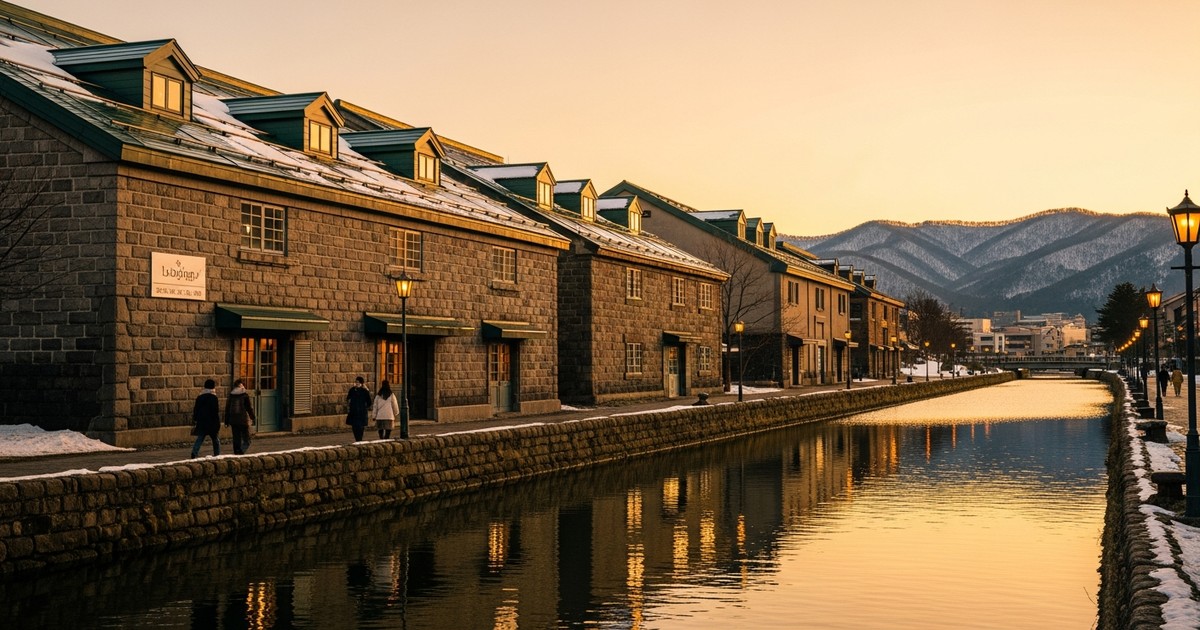
Known for its canal-lined streets and historic architecture, Otaru is one of Hokkaido’s premier tourist destinations, drawing more than 8 million visitors annually. In recent years, the city has seen a sharp rise in the number of simple lodging establishments opening up, largely driven by growing inbound demand. With international visitor arrivals to Japan reaching roughly 31.88 million in 2019 and now recovering steadily from the pandemic downturn, regional tourist destinations like Otaru are seeing a steady increase in foreign guests as well.
Simple lodging (kan’i shukusho) refers to a category of accommodation licensed under Japan’s Hotel Business Act, most commonly operated as guesthouses or minpaku-style properties. Compared to hotels and traditional ryokan, the barriers to entry are lower, and the format works particularly well with renovated older buildings—making it a natural fit for Otaru’s abundant historic architecture and a key driver behind the current surge.
This article breaks down the specific factors behind the rapid growth of simple lodging in Otaru and offers practical strategies for effectively capturing inbound demand. Whether you’re considering entering the Otaru lodging market or already operating a property there, we hope you’ll find plenty of useful insights here.
Why Simple Lodging Is Surging in Otaru Alongside Inbound Demand
The Trend Toward Regional Dispersion Among Foreign Tourists
Inbound demand once concentrated heavily on the “Golden Route” of Tokyo, Osaka, and Kyoto. But now that repeat visitors make up more than 60% of foreign travelers to Japan, more and more are venturing into regional cities. Hokkaido is especially popular among travelers from across Asia, with New Chitose Airport offering numerous direct international routes from Taiwan, South Korea, China, Thailand, and beyond. From New Chitose, Otaru is easily reached in about 90 minutes via the JR Rapid Airport train and JR Hakodate Line, making it an attractive destination not just for day trips from Sapporo but for overnight, stay-focused tourism as well.
According to Hokkaido District Transport Bureau statistics, total foreign visitor-nights across Hokkaido reached roughly 9 million at their peak. With hotel occupancy rates in and around Sapporo consistently sitting in the 80–90% range, demand is naturally spilling over toward Otaru and Yoichi. Simple lodging facilities have become the natural outlet for this overflow.
Otaru’s Historic Architecture and Renovation Demand
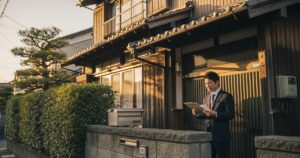
Otaru retains a wealth of stone warehouses and wooden merchant buildings dating from the Meiji era through the early Showa period—remnants of the city’s former status as an economic hub of Hokkaido. Many of these buildings now sit vacant due to population decline and the relocation of commercial businesses, with Otaru’s vacancy rate reportedly exceeding the national average of roughly 13.6%. Converting these idle properties into simple lodging facilities has emerged as a practical way to put them back to use.
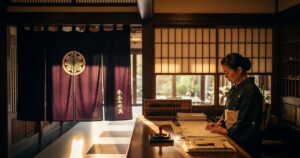
Guesthouses converted from stone warehouses and whole-building rentals renovated from century-old merchant houses are earning strong praise from foreign travelers as authentic “only-in-Japan” experiences. OTA (online travel agency) reviews frequently mention the atmosphere and historical value of these buildings, and there are reported cases of whole-building rentals priced at ¥15,000–25,000 per night maintaining high occupancy rates.
Licensing Requirements for Simple Lodging Under the Hotel Business Act
Simple lodging operations require a license under the Hotel Business Act, but the facility requirements are considerably more relaxed than those for hotels or ryokan. A property can qualify for licensing as long as guest room floor space totals at least 33 square meters, and some municipalities allow alternative arrangements in place of a mandatory 24-hour front desk. In Otaru, the process involves an initial consultation with the local health center before submitting an application, and licenses tend to be granted relatively smoothly once fire safety and building code requirements are met.
Properties registered under the Private Lodging Business Act (the “minpaku law”) are capped at 180 operating days per year, but obtaining a simple lodging license allows operation 365 days a year. This distinction has a direct impact on annual revenue: assuming an average nightly rate of ¥12,000 and a 70% occupancy rate, a 180-day minpaku operation would generate roughly ¥1.51 million per year, compared to approximately ¥3.07 million for a 365-day simple lodging operation—nearly double the revenue. This economic advantage is a major reason more operators in Otaru are choosing to pursue full simple lodging licensing.
Strategies for Capturing Inbound Demand
Multilingual OTA Listings and Pricing Strategy
Bookings from foreign travelers overwhelmingly come through international OTAs like Booking.com, Agoda, and Airbnb. While these platforms offer built-in multilingual display features, carefully writing your property description and house rules in at least four languages—English, Chinese (both Simplified and Traditional), and Korean—has been shown to boost booking conversion rates by an average of 20–30%. In Otaru’s case, given the high proportion of visitors from Taiwan and Hong Kong, Traditional Chinese support should be treated as a top priority.
On the pricing side, dynamic pricing during major events like the Otaru Snow Light Path Festival (February) and the Otaru Chikko Matsuri (July) can support rates 1.3 to 1.5 times the standard price. During slower months like November and April, early-bird discounts and multi-night rate reductions are effective for maintaining occupancy. Managing these seasonal fluctuations well is essential to achieving an average annual occupancy rate above 70%.
Offering Uniquely Otaru Experiential Content
Offering experiences that go beyond simply “a place to sleep” is a highly effective way to differentiate your property. Otaru boasts a wealth of activities popular with foreign visitors, including glass art workshops, music box making, sushi-rolling experiences, and canal cruises. Partnering with local businesses to offer guest-exclusive discounts or priority bookings adds meaningful value to your property.
One Sapporo-area guesthouse that packaged its stays with a nearby sake brewery tour saw no drop in bookings even after raising rates by ¥2,000—resulting in roughly a 15% increase in average revenue per guest. In Otaru, candidates for similar partnerships include the Tanaka Sake Brewery tour and glassmaking experiences at Kitaichi Glass. Promoting these kinds of offerings on your OTA listing and social media channels can meaningfully boost bookings.
Leveraging Social Media and Reviews for Marketing
Instagram, RED (Xiaohongshu), and TripAdvisor all carry significant influence when it comes to attracting inbound guests. The night views and snowy scenery along Otaru Canal are especially popular photo subjects among foreign travelers, and regularly showcasing the area’s charm through your property’s own social accounts can directly boost awareness. In fact, the Instagram hashtag “#otaru” already has more than 500,000 posts, reflecting the strong brand power the Otaru name already carries.
For review generation, handing guests a thank-you card with a QR code at checkout is an effective way to encourage them to leave feedback. On Booking.com, properties with a review score above 8.5 tend to rank higher in search results, and once a property surpasses 50 reviews, booking conversion rates typically improve significantly. Attentive, personalized service for every guest builds the foundation for sustained bookings over the long term.
Practical Considerations for Operating a Simple Lodging Facility
Legal Compliance and Managing Neighbor Relations
Operating a simple lodging facility requires compliance not only with the Hotel Business Act but also with fire safety regulations, building codes, and Otaru’s own municipal ordinances. Because Otaru’s historic buildings are often located within densely populated residential areas, meeting fire safety equipment standards (automatic fire alarms, emergency lighting, fire extinguishers, etc.) precisely is a prerequisite for obtaining a license. Fire safety installation costs vary by property size, but for a typical whole-building rental, budgeting roughly ¥500,000–1,500,000 is a reasonable estimate.
Building good relationships with neighbors is another important practical consideration. Multilingual signage for garbage disposal rules, clearly enforced house rules around nighttime noise, and visibly posted emergency contact information all help prevent problems before they arise. Some municipalities recommend briefing neighbors before opening, so it’s worth confirming local expectations during your initial consultation with the Otaru health center.
Multilingual Support and Self-Check-In Systems
How well you support multiple languages has a major impact on the quality of the guest experience for foreign visitors. At minimum, in-house guides, Wi-Fi connection instructions, maps of nearby restaurants, and emergency procedures should be available in English, Chinese, and Korean. Providing these as a digital guidebook (PDF) sent by email in advance, or making them accessible via a tablet in the room, significantly reduces the burden of handling guest inquiries.
Adopting a self-check-in system is also an effective way to streamline operations. A system combining a smart lock with a check-in tablet can typically be installed for ¥100,000–200,000 upfront, with monthly fees of around ¥5,000–10,000. For identity verification, you’ll need to choose a method that satisfies Hotel Business Act requirements—such as collecting passport information online or conducting a face-to-face video call verification.
Revenue Simulation and Thinking About Investment Payback
Here’s a sample revenue model for operating a whole-building simple lodging facility in Otaru. Acquiring an older property typically costs ¥5,000,000–8,000,000, with renovation costs of ¥3,000,000–6,000,000 and an additional ¥1,000,000–2,000,000 for fire safety equipment, furnishings, and licensing fees—bringing total initial investment to roughly ¥9,000,000–16,000,000. Assuming an average nightly rate of ¥15,000 and an annual occupancy rate of 65%, annual revenue would come to approximately ¥3.56 million.
Subtracting operating expenses—OTA commissions at 15% (roughly ¥530,000), monthly cleaning costs of ¥40,000 (¥480,000 annually), utilities and communications (¥300,000 annually), consumable supplies (¥150,000 annually), and property tax and insurance (¥200,000 annually)—leaves an annual operating profit of about ¥1.9 million. Assuming an initial investment of ¥12 million, the payback period would be roughly 6.3 years. Improving occupancy rates or nightly pricing can shorten this timeline further, and expanding to multiple properties can also unlock economies of scale.
Considering Simple Lodging in Otaru? Talk to Stay Buddy Inc.
If you’re interested in launching a simple lodging business in Otaru and tapping into inbound demand, but feel overwhelmed by everything involved—legal procedures, property selection, multilingual support, OTA management, and more—you’re not alone. Stay Buddy Inc., a full-service minpaku management company, offers end-to-end support from initial setup through day-to-day operations.</p Stay Buddy provides one-stop support covering everything a lodging business needs: revenue simulations for your property, assistance obtaining your Hotel Business Act license, OTA listing optimization, multilingual guest support, cleaning coordination, and review management. When operating in a regional city like Otaru, having advice grounded in local knowledge is often the key to profitability.
Whether you’re just starting to wonder “Would simple lodging even work for my property?” or you’re ready to hand off inbound guest management to professionals, we’d love to hear from you. As a partner dedicated to helping your Otaru lodging business succeed, please don’t hesitate to reach out to Stay Buddy Inc.