The Big Picture: What It Costs to Convert a Vacant House in Hokkaido into a Simple Lodging Facility
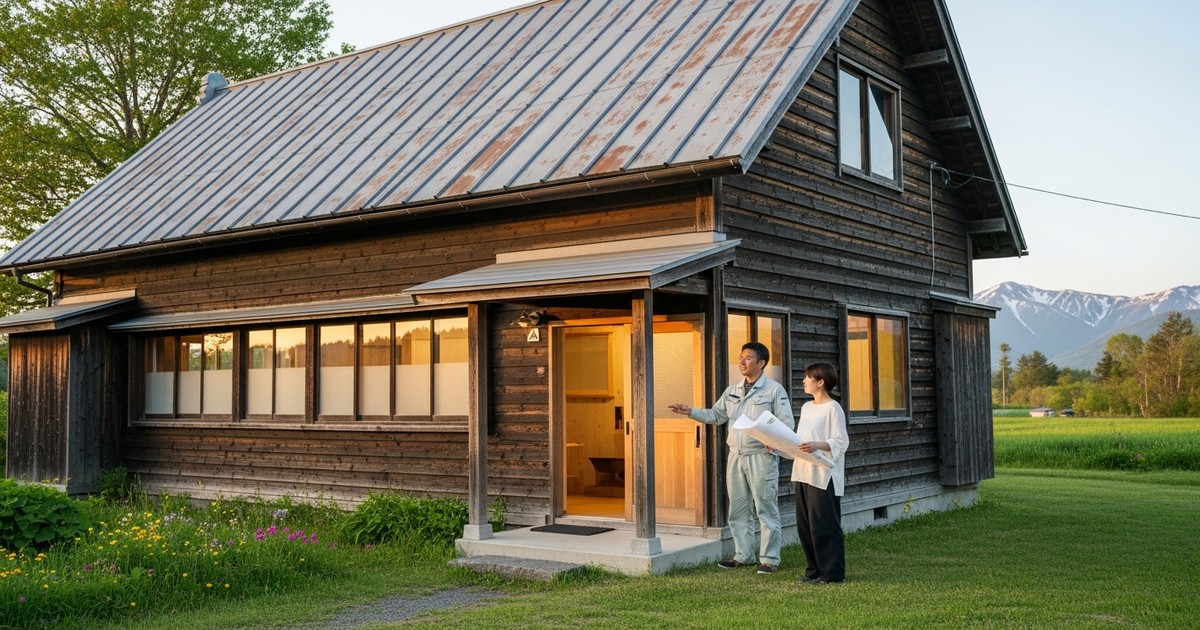
An increasing number of vacant houses and traditional kominka homes scattered across Hokkaido are being repurposed as simple lodging facilities (kan’i shukusho). The cost of converting a vacant house into simple lodging varies widely depending on the property’s condition and scale, but as a general benchmark, you can expect to spend somewhere between 5 million and 20 million yen. This figure covers renovation work, installation of fire safety equipment, and various application fees.
Hokkaido boasts abundant tourism resources, with areas like Niseko, Furano, Hakodate, and Otaru drawing travelers from Japan and abroad. At the same time, population decline has led to a rise in vacant homes across the region—according to the Ministry of Internal Affairs and Communications’ Housing and Land Survey, Hokkaido’s vacancy rate stands at approximately 15%. Converting vacant houses into simple lodging facilities offers a sensible way to bridge this gap between supply and demand.
That said, opening a simple lodging facility requires obtaining a license under the Hotel Business Act, along with compliance with the Building Standards Act, the Fire Service Act, and various municipal ordinances. This article walks through the costs and procedures involved—from acquiring the property to securing licensing and launching operations—with concrete figures at every step.
Property Acquisition Costs and What Makes Hokkaido Unique
Purchase Price Ranges for Vacant Houses and Kominka
In rural areas of Hokkaido, it’s not uncommon to acquire a vacant house for anywhere from a few hundred thousand yen up to around 3 million yen. Akiya banks (vacant house databases) operated by local municipalities sometimes list properties offered for free or priced below their assessed fixed asset value. For example, in the depopulated areas of Shiribeshi and Kamikawa, several properties can be found for under 1 million yen. In contrast, areas with high tourism demand—such as around Niseko or the outskirts of Sapporo—typically see properties priced between 5 million and 15 million yen.
Beyond the purchase price itself, buyers should budget for real estate acquisition tax, registration and license tax, judicial scrivener fees, and brokerage commissions. As a rule of thumb, these additional costs run about 7–10% of the property price. For a 1-million-yen property, that’s roughly 100,000 yen; for a 10-million-yen property, expect around 700,000 to 1 million yen.
Initial Costs When Starting with a Rental Property
Another option is to lease rather than purchase a property. In rural Hokkaido, it’s possible to rent a kominka for around 20,000–50,000 yen per month, with initial costs—including deposit and key money—kept to roughly 100,000–300,000 yen. However, using a rental property as simple lodging requires the landlord’s consent, and it’s essential to put in writing beforehand who covers renovation costs and how the property should be restored upon vacating.
While leasing dramatically reduces upfront investment, it does carry risks around move-out obligations and uncertain lease renewals. If you’re aiming for long-term operation in a tourist area, purchasing often proves more cost-effective overall, so it’s worth running a 10-year revenue simulation before deciding.
Breakdown of Renovation Costs
Structural Reinforcement and Insulation Work
Most kominka in Hokkaido are wooden structures over 40 years old, and the majority don’t meet current seismic standards. Seismic reinforcement work typically costs between 1.5 million and 5 million yen, depending on scale. Given Hokkaido’s harsh winters, insulation upgrades are also essential—replacing insulation in walls, floors, and ceilings, plus installing double-pane windows, generally runs 2 million to 4 million yen.
Structural reinforcement and insulation work tend to be the most expensive line items in any full renovation. That said, if the property is in relatively good condition, partial reinforcement may suffice—which is why a pre-purchase building inspection (typically costing 50,000–100,000 yen) is so valuable for accurately estimating costs.
Plumbing and Fixture Upgrades
To operate as a simple lodging facility, bathrooms, toilets, sinks, and kitchens must meet hygiene standards. Typical costs include 300,000–800,000 yen for installing or upgrading Western-style toilets, 500,000–1.2 million yen for a unit bath installation, and 400,000–1 million yen for kitchen renovations. If the water supply and drainage pipes are aging, a full pipe replacement may be necessary, adding another 1–2 million yen.
In Hokkaido, freeze protection is non-negotiable during winter—this means installing heating tape on water pipes and drain-down valves. Budget an additional 200,000–500,000 yen for this freeze-prevention equipment. Even for properties using self-check-in, having this infrastructure fully in place—so guests never need instructions on draining pipes—goes a long way toward preventing problems.
Interior Design Work
Creating a comfortable guest space while preserving the character of a kominka typically requires 1 million to 4 million yen in interior work. Common projects include refinishing hardwood floors, re-plastering walls, and exposing ceiling beams for design effect. Costs vary depending on the number of rooms and guest capacity, but a rough benchmark is 500,000–1 million yen per room.
The unique character of a kominka is a powerful differentiator. Rather than gutting the building for a full-scale renovation, working with existing pillars and beams for a partial remodel often achieves a more compelling atmosphere at lower cost. In fact, kominka lodgings in Hokkaido that earn high ratings on OTAs (online travel agencies) tend to be those that preserve a distinctly Japanese aesthetic in their renovations.
Fire Safety Equipment and Legal Compliance Costs
Installing Fire Safety Equipment
Simple lodging facilities are classified under the Fire Service Act as “ryokan, hotels, and lodging houses,” which means automatic fire alarms, exit signs, and fire extinguishers are legally required. For a small facility with a total floor area under 300 square meters, installing an automatic fire alarm system typically costs 500,000–1.2 million yen. Exit signs run 20,000–50,000 yen per unit, totaling roughly 100,000–300,000 yen depending on how many are needed. Fire extinguishers cost around 5,000–10,000 yen each.
Fire safety equipment must be designed and installed by a licensed fire equipment contractor. Consulting with your local fire department before beginning work—to confirm exactly what equipment and how much of it you’ll need—can help you avoid unnecessary expenses. Since your hotel business license won’t be issued until fire department filings and inspections are complete, this should be one of the very first items you tackle on your timeline.
Change-of-Use Procedures Under the Building Standards Act
Converting a residential property into simple lodging may require a formal “change of use” under the Building Standards Act. Following a 2019 revision to the law, buildings of 200 square meters or less no longer require a building confirmation application for change of use—though compliance with fire prevention and evacuation regulations is still mandatory. For buildings exceeding 200 square meters, a confirmation application is required, with design firm fees typically running 300,000–800,000 yen.
Most kominka in Hokkaido are single-story structures of 100–150 square meters, so many fall under the threshold that exempts them from the confirmation application. That said, being exempt from the application doesn’t exempt you from the underlying obligation to comply with the Building Standards Act—you’ll still need to ensure proper evacuation routes and interior finish restrictions (use of fire-resistant materials). Violations can result in a business suspension, so having a professional review your plans is strongly recommended.
Procedures and Costs for Obtaining a Simple Lodging Business License
Pre-Application Consultation and Application with the Public Health Center
Simple lodging licenses are issued by the prefectural governor (or the mayor, in cities that operate their own public health centers) under the Hotel Business Act. In Hokkaido, this means applying to the city itself in cities with their own health centers—Sapporo, Asahikawa, Hakodate, Otaru, and others—while applications in other areas go through the health and environment departments of Hokkaido’s regional promotion bureaus. Application fees vary by municipality but generally range from 22,000 to 33,000 yen.
A pre-application consultation is effectively mandatory. Bringing your building plans in for review—to confirm the structure and facilities meet required standards—helps you avoid having to revise and resubmit your application later. Under the Hotel Business Act, simple lodging guest rooms must have a total floor area of at least 33 square meters, among other requirements. The process from initial consultation to license issuance typically takes one to three months.
Required Documents and the Inspection Process
The main documents needed for your application include the business license application form, facility drawings (floor plans and elevations), a summary of structural and equipment specifications, a fire safety compliance certificate, a water quality test report (if using well water), and the applicant’s certificate of residence. Corporate applicants also need to submit a certificate of registered matters and articles of incorporation. If you hire a gyoseishoshi (administrative scrivener) to prepare these documents, expect fees of 150,000–300,000 yen.
Once your documents are accepted, a public health center inspector will conduct an on-site inspection. This covers details such as lighting and ventilation in guest rooms, room dimensions, the number and sanitary condition of toilets and sinks, and how bedding is managed. If the inspection is passed, your business license is issued and you’re cleared to open. If it isn’t, you’ll need to make improvements before a re-inspection—which typically doesn’t carry any additional fee.
Initial Investment and Furnishing Costs for Launching Operations
Sourcing Furniture, Appliances, and Bedding
The furnishings needed to run a lodging facility are a cost you can’t overlook. For a whole-house rental, you’ll need a full set of household appliances and furniture: beds or futon sets (20,000–50,000 yen per set), tables and chairs, a TV, air conditioning (increasingly necessary even in Hokkaido during summer), a refrigerator, microwave, washing machine, and hair dryer. For a whole-house rental accommodating 4–6 guests, the combined cost of furniture, appliances, and bedding typically runs 800,000–2 million yen.
One way to cut costs is to buy secondhand furniture or shop at reuse stores. Hokkaido has large recycle shops throughout the region, where you can often find appliances in good condition for less than half the price of new. Choosing antique furniture that complements a kominka’s atmosphere is another way to keep costs down while adding character to your property.
Booking Systems, OTA Listings, and Wi-Fi Setup
Listing on OTAs like Booking.com, Airbnb, and Rakuten Travel is essential for attracting guests. Most OTAs are free to list on and instead operate on a commission model, charging roughly 12–18% of the booking value only when a reservation is confirmed. If you outsource building your own booking site, expect to pay 100,000–300,000 yen, while a property management system (PMS) typically costs 3,000–10,000 yen per month.
A reliable Wi-Fi setup is also a must. Since mobile signal can be unstable in rural parts of Hokkaido, installing fiber-optic internet is recommended. Installation typically costs 20,000–40,000 yen, with monthly fees around 4,000–6,000 yen. In areas popular with international travelers, the quality of your internet connection directly affects online reviews, making this a high-return investment.
Reducing Costs with Hokkaido’s Subsidies and Support Programs
Municipal Subsidies for Vacant House Utilization
Many municipalities across Hokkaido offer subsidy programs to encourage the reuse of vacant homes. Examples include programs that cover half of renovation costs (up to a cap of 1–3 million yen) and programs that partially subsidize the cost of acquiring a vacant property. Many of these programs require that the property be registered with the municipality’s own akiya bank as a condition of eligibility.
Subsidy budgets are limited, and it’s not unusual for applications to close partway through the fiscal year. Consulting with your municipality’s point of contact early in your planning process—and timing your renovation schedule to align with subsidy availability—is key to significantly reducing costs. Combining subsidies with your own capital and financing can shrink your initial investment by several million yen.
Financing Through the Japan Finance Corporation
If financing from private banks proves difficult, the Japan Finance Corporation’s “New Business Startup Loan” and “Sanitation Business Loan” programs are worth considering. The Sanitation Business Loan includes hotel businesses among its eligible industries, offering financing of up to 72 million yen under the general lending category (for promotional business loans). Interest rates are fixed and relatively low, typically in the 1–2% range.
Applying for financing requires submitting a business plan, with concrete figures for projected occupancy rate, average room rate, annual revenue, and expenses. Since simple lodging facilities in Hokkaido typically see a large gap between peak seasons (summer and ski season) and off-peak periods, a realistic plan that accounts for seasonal fluctuation is key to getting approved.
Cost Summary and a Sample Case Study
Let’s bring together everything covered above into a sample case: converting a 50-year-old kominka (with 120 square meters of total floor area) in rural Hokkaido into a simple lodging facility. Property acquisition: 2 million yen. Structural reinforcement and insulation: 5 million yen. Plumbing renovations: 2 million yen. Interior work: 2 million yen. Fire safety equipment: 1 million yen. Administrative procedures: 300,000 yen. Furniture, appliances, and fixtures: 1.5 million yen. Booking system and Wi-Fi setup: 200,000 yen. All told, the total comes to roughly 14 million yen.
In a well-located property near a tourist destination, charging 20,000–40,000 yen per night and achieving a 50% annual occupancy rate would generate annual revenue of roughly 3.65–7.3 million yen. Subtracting running costs—utilities, cleaning, OTA commissions, maintenance, and so on—leaves a realistic payback period of around 5–8 years. That said, results vary considerably based on location and operational quality, so the precision of your pre-launch market research and financial planning will make or break your success.
Considering Converting a Vacant House into Simple Lodging? Talk to Stay Buddy Co., Ltd.
Converting a vacant house or kominka into a simple lodging facility involves specialized knowledge across a wide range of areas—property selection, design, construction, licensing, and day-to-day operations. Stay Buddy Co., Ltd. is a specialist company handling vacation rental and simple lodging management, providing one-stop support from the earliest planning stages through daily operations.
From handling the administrative procedures needed to secure your license, to building revenue simulations, optimizing OTA listings, arranging cleaning services, and managing guest communications, Stay Buddy’s strength lies in maximizing your returns while minimizing the burden on you as the owner. We support properties across Japan, including Hokkaido, so owners living far from their property can rest assured their business is in capable hands.
If you’re interested in opening a simple lodging facility by repurposing a vacant house, please don’t hesitate to reach out to Stay Buddy Co., Ltd. We’ll propose the optimal plan tailored to your property’s condition and your budget.