The Basic Structure of Earning Revenue from a Vacation Rental in Furano
To maximize revenue from a vacation rental in Furano, it’s essential to accurately understand the gap between summer and winter demand and to build a year-round income and expense plan. Furano is one of the rare four-season destinations in Hokkaido, combining winter ski resort demand with summer demand from visitors seeking lavender fields and nature experiences. However, occupancy rates and average nightly rates differ significantly by season, and misjudging these differences can lead to major mistakes in investment decisions.
This article presents a revenue simulation based on a vacation rental in the Furano area that has already obtained a ryokan business license (simple lodging permit), showing concrete figures for both summer and winter revenue models and simulating annual income and expenses. We’ll break down the cost structure from property acquisition through operations, providing a comprehensive overview of the information needed to make sound investment decisions.
Please note that the figures in this article represent a model case for a typical vacation rental in the Furano area (3LDK to 4LDK, accommodating roughly 6 to 10 guests), and actual results will vary depending on the property’s location, quality, and management approach.
Seasonal Revenue Fluctuations for Vacation Rentals in Furano
Winter (December–March) Revenue Potential
In winter, inbound demand driven by Furano Ski Resort is by far the biggest revenue driver. Ski visitors from Australia, Southeast Asia, and Western countries in particular tend to stay for extended periods, with stays of 5 to 7 nights per group being fairly common. During winter peak periods (New Year’s, Lunar New Year, and February holiday weekends), some properties command nightly rates of ¥40,000 to ¥80,000.
Depending on location and marketing efforts, occupancy over the four winter months can realistically reach 70–85%. Assuming an average nightly rate of ¥50,000 and 75% occupancy, winter alone could generate roughly ¥4.5–4.6 million in revenue. However, you must always factor in winter-specific operating costs, such as snow removal (¥50,000–¥100,000 per month) and heating costs (¥30,000–¥60,000 per month).
Summer (June–September) Revenue Potential
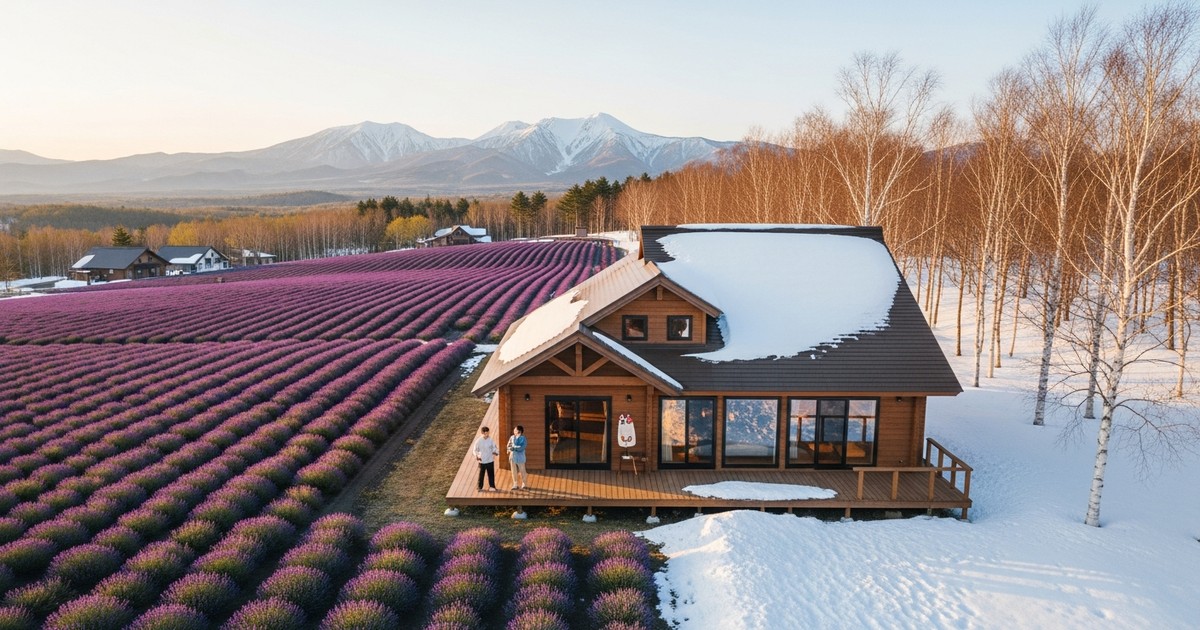
In summer, Furano attracts both domestic and international tourists drawn to the lavender fields (around Farm Tomita), the rolling hills of Biei, and outdoor activities such as rafting, hot-air ballooning, and cycling. Summer in Furano is one of the most popular seasons in all of Hokkaido, and during the lavender season in July and August, accommodations can become extremely hard to book.
Nightly rates in summer are somewhat lower than in winter, typically ranging from ¥25,000 to ¥50,000. With occupancy around 60–75%, revenue over the four summer months generally falls between roughly ¥1.8–3 million. While both nightly rates and occupancy tend to be slightly lower than in winter, the absence of heating and snow removal costs means profit margins can end up fairly comparable.
The Reality of the Off-Season (April–May, October–November)
Spring and autumn are periods when tourism demand in the Furano area drops sharply. April and May come right after the ski season ends, during the lingering, less scenic snowmelt period, while October and November see a brief bump from autumn foliage that doesn’t last long. Occupancy during this period falls to roughly 20–40%, with nightly rates settling around ¥15,000 to ¥30,000.
Even with an optimistic estimate, revenue over these four off-season months typically comes to only ¥600,000–¥1.2 million. How effectively you can boost performance during this period is a critical factor shaping your annual bottom line—strategies like offering long-stay plans, tapping into workation demand, and strategically using this window for cleaning and maintenance are all worth considering.
A Concrete Annual Income and Expense Simulation
Revenue Model (Annual Total)
Based on the seasonal figures above, here’s an annual revenue model for a 3LDK vacation rental accommodating 8 guests. Winter (4 months): an average nightly rate of ¥45,000 × 75% occupancy yields roughly ¥4.05 million. Summer (4 months): an average nightly rate of ¥30,000 × 65% occupancy yields roughly ¥2.34 million. Off-season (4 months): an average nightly rate of ¥20,000 × 30% occupancy yields roughly ¥720,000. The annual total comes to approximately ¥7.11 million.
This is essentially a median-case simulation. A high-end property with brand appeal comparable to Niseko could exceed ¥10 million annually, while a property with a less favorable location or lower-grade facilities might stay in the ¥4 million range. Given this wide range, it’s important to build your plan around conservative estimates.
Breakdown of Operating Costs
Even excluding mortgage payments, annual operating costs add up to a substantial amount. Here’s a rough breakdown of the main line items and their approximate annual costs. Cleaning fees run ¥8,000–¥15,000 per turnover; assuming 80–100 checkouts per year, this totals ¥800,000–¥1.5 million annually. Utilities, including winter heating, run ¥600,000–¥1 million per year. Internet/communications (Wi-Fi, etc.) costs ¥60,000–¥100,000 per year. Consumables and amenities run ¥150,000–¥250,000 per year. Fire and liability insurance costs ¥100,000–¥200,000 per year. Property tax runs ¥150,000–¥300,000 per year.
If you outsource management to a property management company, commission fees of 10–30% of revenue (depending on the company and scope of services) will also apply. For an annual revenue of ¥7.11 million with a 20% management fee, that adds roughly ¥1.42 million. Snow removal contractor fees add another ¥200,000–¥400,000 per year. Adding all of this together, annual operating costs come to roughly ¥3.5–5 million, leaving net income in the range of ¥2–3.6 million.
Property Acquisition Costs and Payback Period
In the Furano area, vacation rental properties typically run ¥15–35 million for a used standalone house and ¥40–80 million for new construction. Including renovation costs, even a used property will generally require total investment of ¥20–45 million. Initial setup costs for furniture, appliances, and interior design typically run an additional ¥2–5 million.
If annual net income is ¥2.5 million against a total investment of ¥30 million, the simple payback period comes to 12 years. However, factoring in property value appreciation (land prices in the Furano area have been trending upward in recent years) and tax savings from depreciation, the effective payback period could shrink to around 8–10 years. Conversely, if occupancy comes in lower than projected, payback could take 15 years or more—making it essential to run simulations under multiple scenarios.
Key Variables That Determine Revenue
Location and Access to the Ski Resort
Properties within a 5-minute drive of Furano Ski Resort can see winter occupancy rates 15–20 percentage points higher than those 15 minutes or more away. Inbound ski visitors tend to prioritize convenient access above almost everything else, and properties within walking distance or along shuttle bus routes fill up noticeably faster.
In summer, on the other hand, proximity to the ski resort matters less—guests tend to value a quiet, nature-surrounded setting and good access to Farm Tomita and the Biei area instead. In short, if you want to maximize winter-focused revenue, prioritize proximity to the ski resort; if you want balanced, year-round earnings, a more central location may be the better choice.
Facilities and Services for Inbound Guests
Catering to inbound guests is essential for commanding premium rates at a vacation rental in Furano. This means offering things like an English-language self-check-in system, a multilingual house manual, high-speed Wi-Fi, a washer-dryer, a ski/gear drying room (winter), and BBQ facilities (summer). These investments typically cost ¥500,000–¥1.5 million but can boost nightly rates by ¥5,000–¥10,000.
Listing on multiple OTAs (online travel agencies) such as Airbnb, Booking.com, and Vrbo, along with active review management across platforms, has a major impact on occupancy. Maintaining a review score of 4.8 or higher gives you an edge in search algorithms, driving more organic bookings. A common strategy is to keep prices low early on to build up reviews, then gradually raise rates once your rating has stabilized.
The Impact of Ryokan Business Licensing and Regulations
Operating a vacation rental in Furano City requires a simple lodging permit under the Ryokan Business Act (Hotel Business Act). Obtaining this license involves changing the building’s designated use (if necessary), installing fire safety equipment, and applying through the local health center, with total costs typically running ¥300,000–¥1 million. Expect the approval process to take 1–3 months—a period during which no revenue is generated.
Additionally, in municipalities across Hokkaido, including Furano, properties operating under a notification filed pursuant to the Private Lodging Business Act (the “minpaku” law) are limited to 180 operating days per year. If you’re aiming for high, year-round occupancy, obtaining a ryokan business license is essential—and this decision has a direct impact on your revenue plan. With a ryokan license, you can operate 365 days a year, roughly doubling your annual revenue potential compared to the minpaku route.
Risk Factors and Countermeasures
Natural Disaster and Climate Risks
Risks specific to Hokkaido include building damage from heavy snowfall, burst frozen water pipes, and cancellations due to blizzards. Repairing a burst frozen pipe can cost ¥50,000–¥200,000 per incident, making the installation of freeze-prevention heating cables (¥100,000–¥300,000) a must-have initial investment. Heating system failures can also force a complete shutdown during winter, so having backup heating equipment and a reliable relationship with a local repair contractor who can respond quickly is essential.
On the insurance side, we recommend carrying facility liability insurance in addition to standard fire insurance. Annual premiums typically range from ¥50,000 to ¥150,000 depending on property size, and this coverage offers strong cost-effectiveness as protection against guest injuries or property damage claims.
Rising Competition and Price Pressure
In recent years, the supply of vacation rentals and condominium-style accommodations in the Furano area has been increasing. As land prices in Niseko have soared, some investors have shifted their focus to Furano, and this trend of new entrants is likely to continue. Increased supply puts downward pressure on both occupancy rates and nightly rates, making differentiation strategies essential.
Concrete differentiation strategies include adding a sauna (installation cost: ¥1–3 million), allowing pets (which raises cleaning costs but can support a rate increase of ¥10,000–¥20,000), and installing a private open-air bath (installation cost: ¥1.5–4 million). While these require additional upfront investment, they help create clear separation from competing properties, making it easier to sustain both occupancy and nightly rates over time.
Considering Vacation Rental Management in Furano? Talk to Stay Buddy Inc.
Investing in a vacation rental in Furano involves significant seasonal swings, complex requirements for serving inbound guests, and winter-specific operational challenges—areas that can be a heavy burden for an owner to manage alone. Maximizing revenue depends heavily on partnering with an operations team that truly understands the characteristics of the local market.
Stay Buddy Inc., a vacation rental management company, offers end-to-end support for everything vacation rental owners need—from advice on property selection and support obtaining a ryokan business license, to OTA listing setup and pricing strategy, to cleaning and guest support. We provide know-how for maximizing revenue based on the supply-and-demand dynamics specific to the Furano area, including seasonal pricing strategies and promotional planning.
If you’re thinking, “I own a property but don’t know how to run it,” “I’m considering an investment but I’m not confident in my income projections,” or “I want to outsource my current operations to make them more efficient,” please feel free to reach out to Stay Buddy Inc. We’re happy to put together a detailed income and expense simulation or assess the revenue potential of your specific property.