Leave your minpaku management to us
Completely Free Online ConsultationUnderstanding the Differences Between “Hotel/Ryokan Business,” “Simple Lodging Business,” and “Boarding House Business” Under the Hotel Business Act
When starting a lodging business in Hokkaido, obtaining a license under the Hotel Business Act is a strong alternative to filing a notification under the Private Lodging Business Act. The Hotel Business Act currently defines three categories: hotel/ryokan business, simple lodging business, and boarding house business. Each category has significantly different requirements regarding minimum room count, floor area, and facility standards. Choosing the right operating category to match your business objectives and the structure of your property is the first step toward maximizing profitability. This article explains the differences between each operating category, incorporating the latest regulatory framework, including the integration of ryokan and hotel operations following the 2018 legal amendment.
Definition and Characteristics of Hotel/Ryokan Business
Hotel/ryokan business refers to lodging operations that provide facilities and charge accommodation fees to guests, excluding simple lodging business and boarding house business. This category previously distinguished between ryokan operations and hotel operations, but the two have since been merged. This category applies to general hotels and ryokan regardless of whether they feature Western-style or Japanese-style construction.
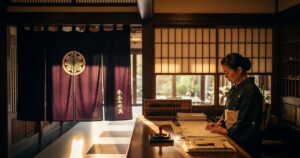
Regarding facility requirements, an application can be filed with as little as one guest room. In the past, hotel operations required a minimum of 10 rooms and ryokan operations required at least 5 rooms, but these standards have since been relaxed. That said, each guest room must generally have a floor area of at least 9 square meters (requirements differ when beds are installed). Additionally, there is an obligation to install a front desk or reception area, though some local governments permit alternatives such as video-call-based ICT reception. This category is well suited to businesses aiming to project a sense of luxury and offer full-fledged hospitality services.
Why Simple Lodging Business Is Popular for Minpaku Investment
Simple lodging business refers to operations that accommodate guests in facilities with shared communal structures. Capsule hotels, mountain huts, and many minpaku properties operate under this category’s license. For owners with whole-property rentals who want to avoid the 180-day cap imposed by the Private Lodging Business Act and operate 365 days a year, this is the most realistic option.
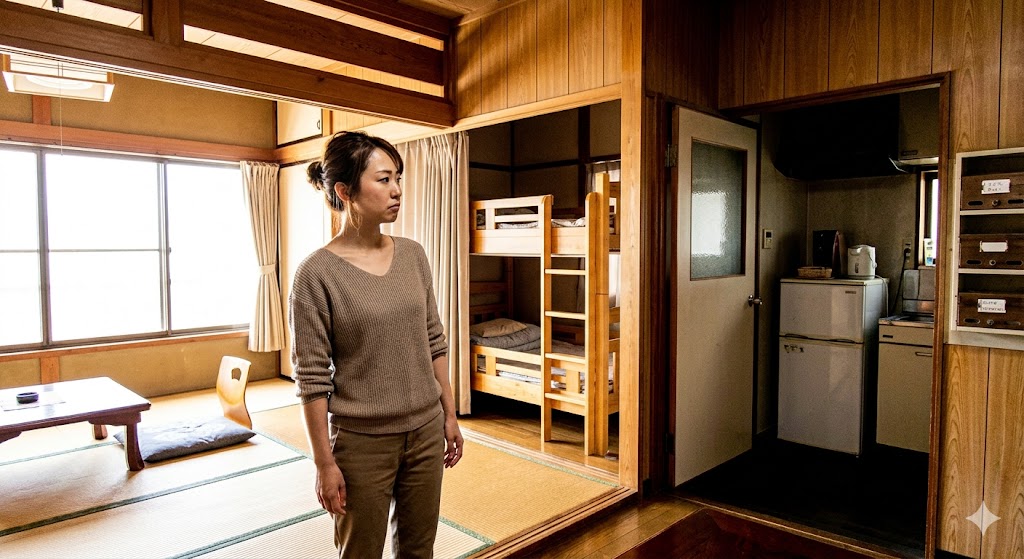
The total guest room area must be at least 33 square meters, but if fewer than 10 guests will stay at once, a floor area calculated at 3.3 square meters per person is sufficient. Compared to hotel/ryokan business, this category features more flexible structural and facility standards. For example, the front desk requirement is often relaxed under local ordinances, making this category well suited for converting small residential properties into lodging businesses. In Hokkaido as well, many whole-house rental villas in resort areas such as Niseko and Furano operate under this simple lodging business license.
The Unique Nature of Boarding House Business and How It Differs from Other Categories
Boarding house business refers to operations that accommodate guests for periods of one month or longer—essentially what is known as a “boarding house.” While general hotels and simple lodgings are premised on daily-unit stays, boarding house business is a licensing category built around medium- to long-term stays.
This format is closer to student dormitories or corporate employee housing and often includes meal service, but there is currently little advantage to choosing this category for inbound tourism-oriented lodging businesses. The key difference from standard rental property management is that the contract takes the form of a lodging agreement rather than a general lease agreement that carries tenant rights—but when targeting tourists, simple lodging business is the conventional choice.
Comparison with General Rental and Sales Market Conditions
Comparing the lodging business to general rental and sales market conditions in Hokkaido—particularly within Sapporo—reveals the unique profit structure that the accommodation business offers.
Real estate prices in central Sapporo are currently on an upward trend, and yields on investment condominiums are declining. When operating as a standard rental, gross yields commonly compress to somewhere between 4% and 6%. General rental income provides long-term stability once a tenant is secured, but since rent levels are tied to local income standards, dramatic revenue growth is unlikely.
By contrast, a lodging business operating 365 days a year under a Hotel Business Act (simple lodging) license can set nightly rates in line with global tourism demand. During peak seasons, per-night rates can surge dramatically, offering the potential for real yields exceeding 10%. That said, central areas of Sapporo such as Chuo Ward and Kita Ward already have an oversupply of accommodation facilities, and properties that fail to differentiate themselves risk falling occupancy rates—potentially dropping below what general rental income would provide. Location and operational quality are scrutinized far more rigorously in the lodging business than in standard rental operations.
Concrete Marketing Strategies for Operating a Licensed Lodging Business
When obtaining a Hotel Business Act license to operate 365 days a year, a meticulous marketing strategy is essential to leverage this advantage fully.
Target Setting and OTA Utilization
Your target should be narrowed to large groups seeking experiences that take advantage of Hokkaido’s vast landscape, or affluent inbound travelers. Each OTA’s algorithm is heavily influenced by photo quality, response speed to guests, and review ratings. For whole-house rental properties in particular, visually conveying experiential value not found in hotels—such as family gatherings in the living room or cooking scenes in the kitchen—is key to boosting booking conversion rates.
Seasonal Pricing Strategy
Tourism demand in Hokkaido exhibits extremely strong seasonality. During the Sapporo Snow Festival and ski season in winter, and the cool-summer season, you should maximize dynamic pricing to raise rates several times above the normal level. Meanwhile, during off-peak months such as November and April, offering long-stay discounts and plans targeted at digital nomads—leveraging the flexible stay-length settings unique to a Hotel Business Act license—can help boost occupancy rates.
Building Repeat Guests and Promoting Direct Bookings
Over-reliance on OTAs increases the burden of commission fees, so it’s important to build a system that encourages guests who have stayed with you to follow your social media accounts and book directly through your official website. Given Hokkaido’s unique appeal, satisfied guests are highly likely to return within a few years, making customer database building directly linked to long-term profitability improvements.
The Potential and Challenges of the Lodging Business in Hokkaido
With the expansion of international flights at New Chitose Airport and the future extension of the Hokkaido Shinkansen on the horizon, broad-based tourism demand in Hokkaido is expected to remain robust going forward. Universal tourism resources such as rich nature, high-quality snow, and food culture will not lose their appeal even years from now.
However, rising operating costs present a significant challenge, including soaring utility costs during winter, snow removal expenses, and increasing cleaning costs driven by labor shortages. Even after obtaining a simple lodging business license and putting the necessary hardware in place, if the software side—operational management—is neglected, recovering the high initial investment becomes difficult. Particularly in highly competitive areas like central Sapporo, adopting a professional management structure as a genuine hospitality business—rather than simply renting out a house—is an absolute requirement for staying competitive.
Once you obtain a license under a particular operating category, changing it later may require reapplication and renovation. It’s important to carefully select the category with the highest revenue efficiency, taking into account both the property’s characteristics and the owner’s exit strategy.
Leave Your Hokkaido Minpaku Launch and Management to Us
For property owners considering a lodging business in Sapporo and other areas of Hokkaido: Stay Buddy Co., Ltd. can handle every step of your launch—from obtaining a Hotel Business Act license, to property planning and construction designed to maximize revenue, to meticulous day-to-day management on your behalf.
We are a team of professionals deeply versed in Hokkaido’s climate, regulatory environment, and tourism market trends. In addition to clearing the fire safety and building requirements necessary for obtaining a simple lodging license, we provide high-level cleaning management that turns guests into loyal fans, along with data-driven, strategic guest acquisition operations. From large whole-house rental properties to cozy facilities built from existing homes, we promise the optimal solution to maximize the value of your asset.
Leave your Hokkaido minpaku launch and management—whether in Sapporo or elsewhere—to us. We will handle all the complex legal procedures and operational hassles on your behalf, so that you, the owner, can enjoy stable revenue and the satisfaction of building your assets. Please feel free to reach out to Stay Buddy Co., Ltd. for an initial consultation. Our specialist staff will carefully propose the optimal management plan tailored to your specific needs. We look forward to hearing from you.