Leave Your Minpaku Management to the Experts
Free Online ConsultationA Classic Case of Failure in Converting to a Simple Lodging: Why You Should Never Casually Buy a Property with Inadequate Road Access
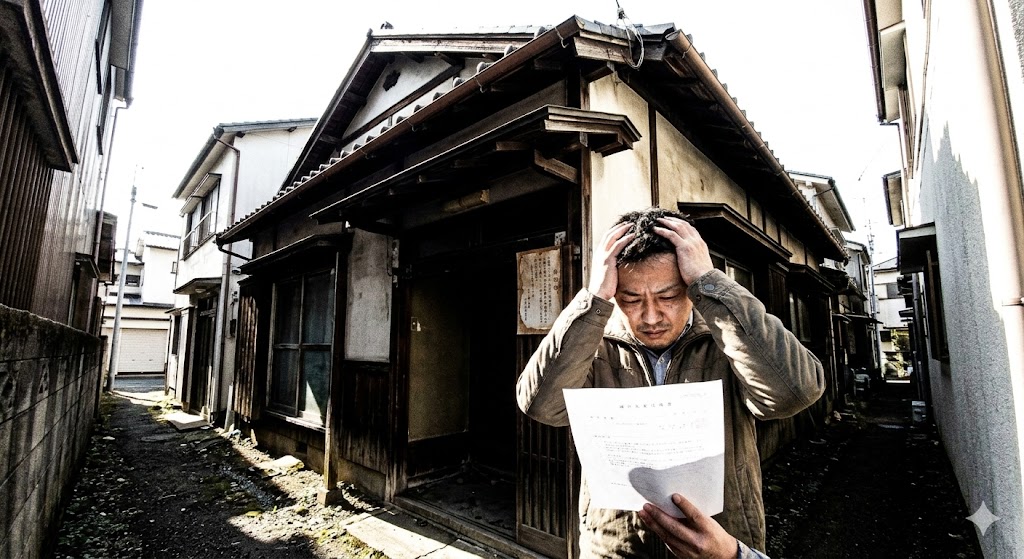
“There’s a charming old traditional house near the station, listed well below market value. If I renovate it into a simple lodging for inbound tourists, I should be able to keep the initial investment low and land a high yield!”
If you’re currently drawing up a plan like this and about to submit a letter of intent to purchase, stop right now. There’s an extremely high chance that this property is legally barred from ever operating as a simple lodging.
Let’s get straight to the conclusion of this article.
No matter how great the location or how excellent the condition of the building, a property with inadequate road access—one that fails to meet the “road access obligation” set forth in the Building Standards Act (frontage of at least 2 meters on a road at least 4 meters wide)—cannot, in principle, undergo a “change of use” to become a simple lodging under the Hotel Business Act. If you casually purchase such a property without knowing about this legal wall, you risk a fatal failure: your lodging business license will never be approved, and tens of millions of yen in investment capital will be permanently frozen.
In this article, we’ll thoroughly explain the trap of “properties with inadequate road access” that investors often fall into, the absolute rules of the Building Standards Act that block conversion into a simple lodging, and the essential countermeasures needed to avoid irreversible failure.
Why Do “Properties with Inadequate Road Access” Attract Investors?
Browsing real estate portal sites, you’ll sometimes come across detached houses or row houses labeled with notes like “cannot be rebuilt” or “inadequate road access.” Why do these properties appear so attractive to investors looking to start a lodging business?
The Illusion of Overwhelmingly Low Prices and High Yields
The main reason is the “overwhelmingly low acquisition price.” Properties with inadequate road access can’t be rebuilt from scratch, so they’re avoided by typical homebuyers. On top of that, since their collateral value is low and it’s difficult to secure a residential mortgage for them, it’s not uncommon for these properties to be sold off at half of market value or even less.
Because the initial investment (property acquisition cost) can be kept extremely low, spreadsheet-based income simulations often spit out astonishing figures like “gross yield exceeding 20%.” This magic number is what clouds investors’ judgment.
The Dangerous Assumption That “Hidden Gem, Old Traditional Houses” Appeal to Inbound Tourists
Another factor that fuels this risk is the assumption that the location itself—”an old row house tucked away down a narrow alley”—will appeal to foreign tourists.
The concept of “a deep, authentic Japanese experience down a back alley just off the main street” certainly does resonate with inbound demand. But “having a great concept” and “being legally able to operate as a hotel” are entirely separate matters. Confusing the two is the first step toward failure.
The Building Standards Act Wall Standing in the Way of “Change of Use” to a Simple Lodging
So why can’t properties with inadequate road access be converted into simple lodgings (hotels/inns)? At the root of this lies a strict law designed to protect human life.
The Absolute Rule That Protects Lives: The “Road Access Obligation”
Article 43 of the Building Standards Act establishes a road access obligation stating that “a building’s lot must have at least 2 meters of frontage on a road that is at least 4 meters wide.”
The purpose of this rule is clear: to ensure that fire trucks and ambulances can smoothly reach right in front of a property in the event of a fire, earthquake, or other disaster, and that occupants can safely and quickly evacuate to the road. Flag-shaped lots tucked deep within alleys, or properties that can only be reached via a narrow passage rather than directly onto a public road, are considered to fail this “minimum standard for protecting human life.”
When Converting to a “Special-Use Building,” Current Regulations Bare Their Teeth
Many people think, “I know I can’t build new, but since I’m just renovating and using the existing old building as is, there shouldn’t be a problem.” This is actually the biggest pitfall.
When operating a typical detached house as a “simple lodging” under the Hotel Business Act, a legal procedure called a **”change of use”** is required to formally reclassify the building’s purpose from “residence” to “hotel/inn.”
Because hotels and simple lodgings are used by an unspecified number of people who stay overnight, they’re classified as “special-use buildings” under the Building Standards Act and are subject to far stricter safety standards than ordinary homes.
When you submit a change-of-use application to the local government, the building is required to comply with the current, strict Building Standards Act. Even if a house was built legally (or was tacitly permitted) in the past, the moment you attempt to change its use to a simple lodging, it undergoes a rigorous check against the current “road access obligation.” If the road access is found to be insufficient at this point, the building is branded as “non-compliant with current law,” and the change of use is absolutely denied. As a result, the hotel business license will not be granted either.
The Grim Fate of Owners Who Bought a Property with Inadequate Road Access
What reality awaits those who, unaware of this legal wall, signed a purchase contract simply because “the yield was high”?
Hotel Business License Denied, Investment Capital Frozen
It’s often only after having an architect draw up interior plans and going to the local health center or building guidance division for a preliminary consultation that owners are hit with the fact: “change of use is not possible.”
Not only is the money spent on renovation design wasted, but the entire lodging business plan collapses completely. The cash flow projections that were supposed to generate a high yield fall apart, leaving nothing behind but “an old house that can’t be turned into a hotel”—with a massive sum of purchase capital now frozen in place.
Unable to Secure a Mortgage or Loan, and Resale (Exit) Becomes Difficult Too
Even if you think, “Fine, if the lodging business isn’t possible, I’ll just resell it quickly and recover my money,” it’s not that simple.
As mentioned earlier, properties with inadequate road access that can’t be rebuilt have significantly low collateral value from financial institutions’ perspective, making it difficult to secure typical financing. This means you’ll need to find a cash buyer—but very few investors are eager to purchase “a property that can’t be rebuilt and can’t be turned into a hotel.”
In the end, the only remaining options are to cut your losses by discounting the price even further than what you originally paid, or to eke out a modest income by renting it out cheaply as a residential rental property.
Essential Actions to Take “Before Purchasing a Property” to Avoid Failure
To prevent this kind of irreversible failure, you need to implement thorough protective measures during the property search stage.
Conduct Thorough “Legal Compliance Due Diligence” Before Signing a Contract
Before putting your seal on a real estate purchase contract, always conduct a “legal compliance survey” to determine whether the property can clear the legal requirements for a lodging business.
Real estate agents are “professionals at selling houses,” not “professionals at obtaining hotel business licenses.” Don’t take their word at face value when they say, “I think you can probably turn this into a simple lodging.”
Bring in “Expert Eyes”—Architects and Administrative Scriveners
Once you’ve found a promising property, show the floor plans and cadastral maps to a licensed architect experienced in designing and applying for lodging facilities, or to an administrative scrivener (gyoseishoshi) specializing in hotel business licenses, and hold a preliminary consultation.
“Is a change of use possible for this property?” “Does it meet the road access obligation?” “Can it satisfy fire safety equipment requirements?” The correct procedure for business investment is to have experts identify these legal risks, obtain solid confirmation (documented feedback from a preliminary consultation with local authorities), and only then submit your letter of intent to purchase.
[A Possible Remedy] What If You Still Want to Run a Lodging Business on a Property with Inadequate Road Access?
So, if you’ve already purchased a property with inadequate road access, or you’re absolutely determined to run an inbound tourism business on that particular property, is it truly impossible? Actually, there is one legal loophole available.
Use the “Minpaku New Law” (Private Lodging Business Act) Instead of the Hotel Business Act
The most realistic and strategic remedy is to give up on converting to a simple lodging and instead take advantage of the **”Private Lodging Business Act” (the so-called “Minpaku New Law”)**.
The Minpaku New Law is a system that allows you to legally run a lodging business while still treating the building as a “residence,” without ever having to change its use to the special-use category of “hotel/inn.” Since a change of use isn’t required, you can bypass the road access obligation review under the Building Standards Act altogether.
Although there is a restriction limiting annual operation to 180 days, you can still turn a problematic property with inadequate road access into a highly profitable asset through a hybrid operation—renting it out at a premium rate as minpaku during peak seasons, and as a monthly rental (via a fixed-term lease) during the off-season.
Conclusion: In Real Estate Investment, “Ignorance” Is the Greatest Cost
In the simple lodging business, no amount of grit, willpower, or great design can ever overcome a legal wall.
- Properties that don’t meet the road access obligation (4m road width, 2m frontage) cannot, in principle, be converted into simple lodgings.
- This is because current, strict regulations apply the moment a building’s use is changed to a “special-use building.”
- Buying carelessly risks freezing your capital indefinitely. Always have experts conduct a legal compliance survey before signing a contract.
In real estate investment, ignorance is the greatest cost of all. Before jumping at an attractive yield or a bargain price, having the knowledge to calmly judge whether a property can truly realize your business model is the first step toward becoming a true entrepreneur.
For Safe Lodging Business Investment Free of Legal Risk, Trust Stay Buddy
“I want a professional to investigate whether the property I’m considering can be converted into a simple lodging.”
“I’ve already bought a property with inadequate road access, but I want to make it legally profitable using the Minpaku New Law.”
“I want to leave everything—from property search to legal procedures, renovation, and post-launch operations—in one trusted pair of hands.”
Leave these critical decisions and their execution entirely to us.
We at Stay Buddy Inc. are a team of professionals specializing in lodging business consulting and property management.
We know the gaps in the law and the true value of real estate inside and out.
- Meticulous legal compliance surveys and risk assessments conducted before contract signing, carried out by our partner licensed architects and administrative scriveners
- Development of business plans and schemes to legally revive “problematic properties” for which a change of use isn’t possible
- Direction of safe equipment installation in strict compliance with fire safety regulations
- A comprehensive management system combining monthly rental operations to offset the 180-day limit, and full-service property management to maximize revenue
Before you risk losing tens of millions of yen, consult with true professionals first.
Stay Buddy turns “impossible” into “possible,” serving as the ultimate business partner to maximize your property’s value and business revenue. Feel free to reach out right now for a free property assessment and business consultation.