Leave your minpaku management to us
100% Free Online ConsultationIf a Ryokan Business License Won’t Work, There’s the Minpaku Act. The Insider Trick for Turning a “Problem Property” with Road Access Issues into a Legal Vacation Rental
“I picked up this charming old house near the station for a great price—let’s turn it into an inbound-focused vacation rental!”
Fired up with this idea, you consult an architect or an administrative scrivener—only to be handed the cruel verdict: “This property doesn’t meet road access requirements, so you can’t get a ryokan business license.” Your plan grinds to a halt. In real estate investment, this scenario is far from rare.
Properties that cannot be rebuilt—so-called “non-conforming lots” with inadequate road access—are notoriously difficult to finance through banks and are among the most commonly shunned “problem properties” on the market.
But it’s too early to give up. Let’s cut to the conclusion of this article right away.
Even an old house with road access issues—one that can’t obtain a ryokan business license (such as a simple lodging permit) due to Building Standards Act restrictions—can still be legally revived and operated as accommodation by leveraging the Private Lodging Business Act (commonly known as the “Minpaku Act”). By flipping the legal mechanism that allows you to operate without a “change of use,” you can transform a bargain-priced property into a high-yield income asset while it remains classified as a residence. This is precisely the kind of insider real estate strategy that only a select few know about.
In this article, we’ll break down exactly why properties with road access issues can’t be turned into hotels, how the Minpaku Act provides a breakthrough, and the concrete hybrid strategies that let you overcome the operating-day cap to maximize profitability.
Why Can’t Properties with Road Access Issues Get a Ryokan Business License?
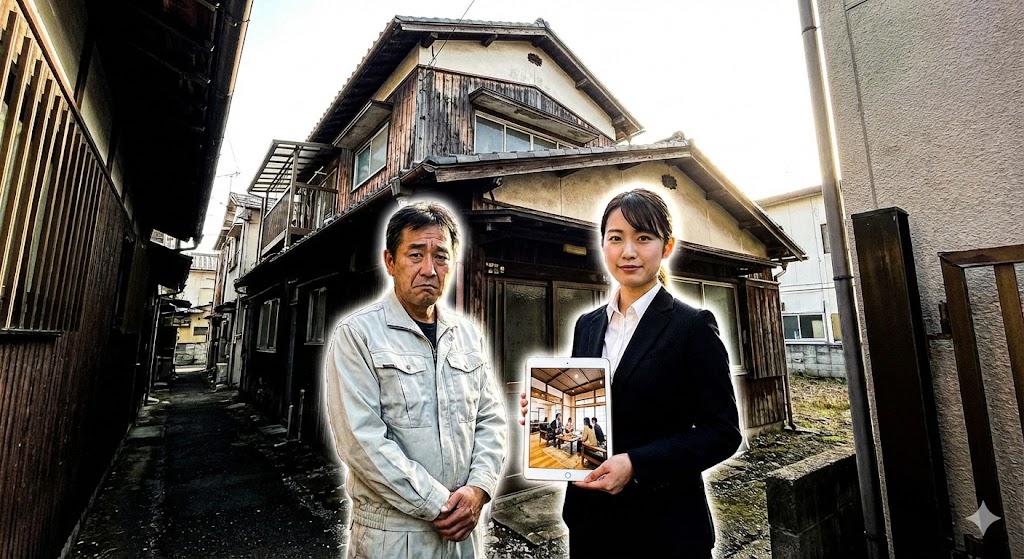
Browse any real estate listing site and you’ll occasionally spot a detached house or row house priced absurdly below market value. Most of the time, these come with a “cannot be rebuilt” condition attached. Why is it that such properties can’t obtain a ryokan business license?
The High Wall of “Road Access Obligations” Under the Building Standards Act
Whenever you construct a building—or carry out a major renovation—you must comply with the Building Standards Act. One of its rules is the road access requirement (Article 43): the building’s lot must front a road at least 4 meters wide for a length of at least 2 meters.
This rule exists for life-and-death reasons: it ensures fire trucks and ambulances can reach the property quickly during disasters like fires or earthquakes, and that residents have a safe evacuation route. Houses tucked at the end of narrow alleys, or those accessible only by crossing someone else’s land, fail to meet this requirement. Once such a building is torn down, no new structure can ever be built on that lot again.
Current Regulations Bare Their Teeth During a “Change of Use”
You might think, “Why not just renovate the existing old house into a hotel without rebuilding it?”
However, if you want to operate a typical detached house as a hotel or simple lodging facility under the Ryokan Business Act, you need to go through a **”change of use”** procedure—converting the building’s designated purpose from “residence” to “hotel/inn.”
When you file the confirmation application for this change of use with the local government, the building is required to comply with the *current* Building Standards Act. In other words, even a house that was legally built (or tacitly permitted) decades ago will be scrutinized against today’s strict road access requirements at the moment of the use-change application—and that’s exactly where it gets branded “non-compliant.” This is why obtaining a ryokan business license for a road-access-deficient property is essentially hopeless.
The Savior: How the Private Lodging Business Act (Minpaku Act) Works
“If the ryokan business license is off the table, does that mean this property is destined to sit vacant and decay forever?”
For owners feeling this despair, a ray of hope came in 2018 with the enactment of the **Private Lodging Business Act (commonly known as the “Minpaku Act”)**.
No “Change of Use” Required—You Can Operate While It Remains a Residence
The biggest advantage of the Minpaku Act—and the core of this insider trick—is that **you can lodge paying guests while the building’s official use remains “residential.”**
Because you’re not converting the property to “hotel/inn” use as you would under the Ryokan Business Act, you avoid the rigorous compliance review (including clearing the road access requirement) that a change of use under the Building Standards Act would trigger.
In other words, on paper the building remains simply “a house for people to live in,” with travelers merely staying there “temporarily.” This means that even a non-rebuildable, problem-laden old house can legally start operating as a vacation rental just by filing a notification with the prefectural governor.
Note: The “Fire Service Act” Hurdle Still Remains
Even though you can clear the Building Standards Act wall, you still have to clear the Fire Service Act wall.
Even under the Minpaku Act, fire safety equipment to protect guests’ lives is mandatory. You’ll need to install automatic fire alarms (in many cases, systems designed for small specified facilities are sufficient depending on scale), evacuation guide lights, and fire-retardant items such as flame-resistant curtains and carpets.
Because fire trucks often struggle to access properties tucked away in narrow alleys with road access issues, fire departments may impose particularly strict requirements regarding initial fire suppression and evacuation guidance equipment. You’ll need to budget accordingly for this.
The Hybrid Strategy for Overcoming the New Law’s “180-Day Cap”
So now we know that a property with road access issues can become a legal vacation rental via the Minpaku Act. But a new obstacle appears here: the Minpaku Act’s signature restriction of a **”maximum of 180 operating days per year.”**
Being able to operate for only half the year might make you worry that it will take too long to recoup your investment. But apply the following strategy, and the property can actually become an even higher-yield asset.
“Vacation Rental” During Peak Season, “Monthly Rental” During the Off-Season
The technique known as “hybrid operation” makes the most of the 180-day cap.
During peak seasons when inbound demand surges and nightly rates climb (cherry blossom season in spring, autumn foliage season, year-end/New Year, and long holiday weekends), you operate the property as a “minpaku” charging tens of thousands of yen per night, using up your allotted operating days.
Then, during the off-season—or once you’ve reached your day limit—you switch to leasing the property by the month as a “monthly rental (fixed-term lease).” Because monthly rentals are structured as standard lease agreements, they don’t count toward the 180-day cap. This way, the property never sits idle throughout the year and keeps generating income continuously.
“Overwhelmingly Low Acquisition Cost” Drives Up Yield
Why can you turn a profit even with only 180 days of vacation rental operation? The answer is that the property’s acquisition cost is unusually low.
Non-rebuildable properties with road access issues are frequently listed at half the market price, or even less. Because the initial investment is kept extremely low, even operating at full capacity for only half the year lets you recoup your investment (achieving a high ROI) far faster than you could by building a brand-new hotel.
The High-Value Content of an “Old Japanese House Experience”
To foreign tourists, an old Japanese row house or traditional home tucked away in a narrow alley isn’t “an inconvenient shack”—it’s “an authentic Japan experience straight out of the anime and movies they grew up watching.”
By preserving the atmosphere of a traditional Japanese house—the scent of tatami mats, the engawa veranda, the sliding doors—while renovating only the plumbing (toilet, shower) and bedding to a modern, spotless standard, you create a compelling contrast. This gap captivates inbound guests and makes it possible to command premium prices, such as “whole-house rental at ¥50,000 per night.”
3 Points to Watch When Converting a Road-Access-Deficient Property into a Vacation Rental
Insider trick or not, you need to give careful consideration to the risks unique to problem properties tucked away in back alleys.
1. Measures to Prevent Trouble with Neighbors
In row houses and dense residential areas, everyday noise and voices carry easily to neighboring homes. Guests rolling suitcases at night or throwing a noisy gathering can trigger neighbor complaints—and potentially deal a fatal blow in the form of a suspended license.
Beyond hardware measures like soundproofing sheets, it’s essential to thoroughly communicate house rules—such as “keep quiet after 9 PM”—in multiple languages, and to have a management company that can respond immediately whenever trouble arises.
2. Factor in Delivery and Cleaning Costs
Properties located down alleys inaccessible to vehicles require extra labor for carrying in renovation materials and, on an ongoing basis, for hauling in linens (sheets and towels) during daily cleaning.
Since cleaning staff will need to walk farther than usual, cleaning costs may run higher than typical. Make sure to budget a bit extra for these running costs at the business planning stage.
3. The Difficulty of an Exit Strategy (Resale)
Even though you can achieve high yields, the “cannot be rebuilt” label will inevitably follow the property when you eventually try to sell (exit).
Since standard mortgages aren’t an option for buyers, you’ll need to find a cash buyer. For this reason, your investment plan should be premised on a long-term outlook: rather than chasing capital gains from resale, you aim to fully recoup your investment through years of rental income (income gain) instead.
Summary: Change Your Perspective, and a Problem Property Becomes a Hidden Treasure
If you’re stuck in the conventional wisdom of the real estate industry, an old house with road access issues looks like nothing more than a “liability property.” But by combining legal knowledge with operational know-how, you can generate substantial profits from a property nobody else even glanced at twice.
- Properties with road access issues can’t become hotels—the change-of-use wall under the Ryokan Business Act blocks the way.
- Filing a notification under the Minpaku Act (Private Lodging Business Act) lets you legally turn the property into accommodation while it remains classified as a residence.
- A bargain acquisition price combined with hybrid operation alongside monthly rentals delivers high yields.
What inbound travelers are looking for isn’t just gleaming, brand-new buildings. The everyday scenery of Japan, quietly nestled in a back alley, is precisely what offers them the most memorable entertainment of all.
From Navigating Complex Regulations to High-Profit Operations—Leave It All to Stay Buddy
“I’ve found an old house I could buy cheap, but I’m not sure if it can really be registered under the Minpaku Act.”
“I want an expert to give me an upfront estimate of how much fire safety equipment will cost.”
“I want to fully outsource a hybrid vacation rental/monthly rental operation—everything from marketing to cleaning.”
Whatever your concern, leave it all to us.
We at Stay Buddy Inc. are a team of professionals specializing in minpaku management and real estate utilization, focused exclusively on Osaka City.
We’ve successfully led numerous highly challenging “problem property revival” projects to completion.
- Legal compliance and fire safety equipment assessments before property acquisition, conducted with our partner architects and administrative scriveners
- Renovation direction that blends “traditional Japanese house × modern” style to capture inbound travelers’ hearts
- Seamless hybrid operation management that offsets the new law’s 180-day cap by combining it with monthly rental marketing
- 24/7/365 guest support and rigorous cleaning management to proactively prevent the neighbor disputes common in densely built areas
We’ll clear the legal hurdles and transform your valuable asset (or the diamond in the rough you’re about to acquire) into a “hidden treasure” that generates maximum profit.
If you’ve ever thought, “Isn’t there something I can do with this property?”—feel free to start with a free property assessment and business consultation from Stay Buddy.