Leave Your Minpaku Management to the Experts
100% Free Online ConsultationWill New Ventures Into Hospitality Fail? The Fork in the Road Between Companies That Succeed and Those That Withdraw
With the curtain now closed on the Osaka-Kansai Expo, a truly national event, the city of Osaka is entering a new phase. Now that the feverish accommodation demand that could be called an “Expo boom” has settled down, some business leaders are voicing caution, asking, “Isn’t it too late to enter the hospitality industry now?” or “Won’t oversupply lead to failure?”
But let us cut to the conclusion.
Now, in the aftermath of the Expo, is in fact the ideal moment to enter the hospitality business in the truest sense—and a highly promising business opportunity is waiting to be seized.
Why? Because while low-quality operators who jumped in to ride a temporary boom are being weeded out, allowing the market to normalize, Osaka’s fundamental drawing power—driven by the entrenched weak yen and the planned opening of an IR (Integrated Resort)—continues to trend steadily upward.
In this article, we’ll explain the decisive differences between companies that “keep succeeding” in the post-Expo Osaka hospitality market and those that are “forced to withdraw” within just a few years—covering concrete failure factors and success strategies along the way.
Why Hospitality Remains a “Growth Industry” in Post-Expo Osaka
There’s no need to worry about “the party being over.” A calm look at the data and market environment makes it clear that Osaka’s accommodation demand is structurally strong.
The “Qualitative Shift” in Inbound Demand and the Rise of Repeat Visitors
The Expo served as a massive billboard, broadcasting the name “OSAKA” to the entire world. Foreign tourists who visited Osaka for the first time because of the Expo have since fallen in love with its food culture, convenience, and unique character—and are now returning as repeat visitors.
Moreover, with the weak yen now firmly established, Japan has cemented its position as “the country in the world offering the highest-quality experiences at the best value.” This is not a short-term trend—it forms the foundation for Japan’s transformation into a tourism-driven nation over the coming decades.
Laying the Groundwork for the Next Catalyst: the IR (Integrated Resort)
Even with the Expo over, Osaka still holds a trump card: the IR (an integrated resort including a casino) planned for the Bay Area.
Once the IR opens, an entirely new customer base—including high-net-worth travelers—will flow in from around the world. Business demand, centered on MICE (international conferences and exhibitions), also remains solid. Osaka has fully transformed from “a city people pass through” into “a city people stay in.”
[Common Traits of Failure] Three Traps That Companies Withdrawing From the Market Fall Into
The market may be promising, but not everyone wins. Companies that end up withdrawing tend to share a common “misalignment of understanding” from the earliest stages of entry.
1. Treating It as an Extension of “Real Estate Investment” (Yield Obsession)
This is the most common cause of failure: entering the market with the same mindset as apartment management, fixated solely on a “yield of X%.”
Hospitality doesn’t end once you provide a room. It’s a bundle of hands-on, day-to-day operations—daily cleaning, restocking supplies, guest support, review management. Treat these purely as “costs” to be cut to the bone, and cleaning quality drops, reviews decline, and bookings dry up unless you cut prices too, ultimately collapsing your profitability. It’s essential to recognize that hospitality is not an “investment” but a “service business” that sells effort and care.
2. Cookie-Cutter Hotels That Are Merely “Sort of Nice”
These are facilities built on the naive assumption that “if it’s new and clean, it’ll fill up”—with no concept behind them whatsoever.
Now that supply has increased, guests are actively searching for “a reason to stay.” Rooms with no distinguishing features get buried in the vast listings of booking sites (OTAs) and dragged into price wars. Properties that haven’t decided “who” they’re serving or “what experience” they’re offering end up burning through advertising budgets without turning a profit.
3. Lax Legal Compliance and Risk Management
Hospitality is a heavily regulated industry. Underestimating the Hotel Business Act or Fire Service Act—operating without proper licensing on the assumption “we won’t get caught,” or skipping required fire safety equipment—represents a fatal compliance risk for any company.
Cases of businesses being forced to suspend operations due to neighbor complaints reported to authorities, after neglecting to address community friction, are also unfortunately common. Legal compliance is the fundamental prerequisite for staying in business.
[Common Traits of Success] Three Strategies Practiced by Companies That Keep Winning
On the other hand, companies from other industries that continue to generate high profits after entering this market rigorously apply the following three strategies.
1. A “Sharp Concept” That Targets a Single Niche
Successful companies don’t try to please everyone. They narrow their target ruthlessly—for example, “inbound three-generation families” or “long-term-stay digital nomads.”
- Specialized for large groups: Spacious rooms with three or more bedrooms, filling the gap left by hotels’ limited connecting-room inventory.
- Specialized for experience: Theater rooms, private saunas, Japanese-modern interiors—spaces where the stay itself becomes entertainment. When the target is clear, there’s no waste in interior design or equipment investment, and guests who resonate with the concept respond with passionate support in the form of glowing reviews, often saying, “This is exactly the kind of place I was looking for!”
2. Data-Driven “Revenue Management” (Pricing Strategy)
Profit in hospitality is determined by “rate × occupancy.” Successful companies entrust this rate-setting to AI systems and pricing specialists.
They analyze data—competitor pricing nearby, local events (concerts, sporting events), seasonal factors, and flight booking trends—and adjust prices day by day (dynamic pricing).
On high-demand days, they raise prices aggressively to maximize profit; on slower days, they lower prices to maintain occupancy. This “art of pricing” is precisely what separates the revenue of professionals from that of amateurs.
3. Outsourcing Operations “to the Professionals”
They abandon the notion that “doing it in-house is cheaper,” and thoroughly embrace the principle of “leave it to the specialists.”
Highly specialized tasks requiring round-the-clock responsiveness—guest acquisition, cleaning, guest support—are outsourced to professional management companies.
They understand that even after paying a commission, leveraging professional expertise ultimately leads to more positive reviews, reduced risk of trouble, and a higher overall profit margin.
The Critical Importance of “Choosing the Right Partner”
For any company about to launch a hospitality business, the first and biggest fork in the road is **”who you choose to partner with.”**
Checking Legal Compliance Before Acquiring a Property
Many companies that end up failing consult a management company or architect only after they’ve already purchased (or leased) a property. But by then, it’s too late.
“Can this location actually obtain a Hotel Business Act license?”
“How much will fire safety equipment installation cost?”
“Is a change-of-use application even feasible?”
If these questions aren’t answered before signing a contract, an investment of tens of millions of yen could be at risk of going to waste. Successful companies bring in experts from the business-planning stage onward, and only acquire properties that are legally clear and offer real prospects of success.
Balancing Running Costs With Quality
When choosing a management company, it’s risky to select based on “lowest commission fee” alone. Operators with extremely low fees often make up the difference by skimping on cleaning or linen costs—or by delivering low-quality service, such as slow guest response or sloppy cleaning.
You should judge based on “the quality of the partner,” not “the cost.” Do they have concrete measures for improving reviews? Will they respond quickly when problems arise? Walking hand-in-hand with a trustworthy partner is the key to building a business with real staying power.
Conclusion: Post-Expo Osaka Is Becoming a Market Where Only the “Genuine” Survive
Now that the Expo festivities have ended, Osaka’s hospitality market has shifted from a “bonus period where anyone could profit” into a “mature market where only truly capable operators earn appropriate returns.”
- Abandon the “real estate investment” mindset and engage with guests as a genuine “service business.”
- Narrow your target audience and create a distinctive experiential value (concept) that no one else offers.
- Prioritize legal compliance above all, and optimize your operations with professional support.
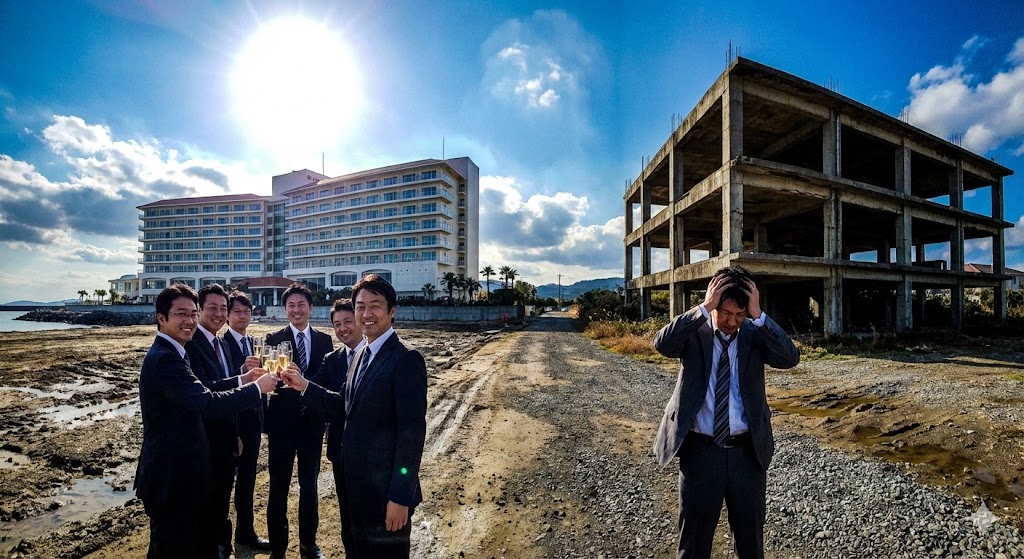
Whether you become a company that withdraws, or one that succeeds and builds a new pillar of business, 90% of that outcome is decided by the “preparation” and “partner selection” you make before launching.
Build Your Business With Confidence—Choose Stay Buddy for Your Corporate Entry Into Hospitality
“We’re considering hospitality as a new business venture, but we don’t know where to start.”
“We want to make use of our idle corporate real estate, but we need someone to assess whether we can obtain a Hotel Business Act license.”
“We want end-to-end support—from property selection through operations—so we don’t fail.”
Whatever your concern, leave it all to us.
We are Stay Buddy Co., Ltd., a team of hospitality consulting and management specialists focused exclusively on the Osaka City market.
We have guided numerous corporate clients to successful market entry.
- Winning concept design and business planning grounded in area-based market research
- Legal compliance surveys and smooth application support for navigating complex Hotel Business Act licensing
- Interior direction tailored to capture inbound demand, and guest-acquisition strategies that command premium rates
- Full-service management including 24/7/365 multilingual guest support and hotel-grade cleaning standards
Don’t just “give it a try”—launch with the intent to win.
Stay Buddy is your partner in guiding your new business venture onto a successful trajectory. Please feel free to start with a free feasibility assessment and personal consultation.