Leave Your Minpaku Management to Us
100% Free Online ConsultationWhy Isn’t Your Building Profitable? 5 Factors Undermining Your Property’s Earning Potential
“I own a building in a prime location, but barely any money is left in my pocket.”
“It’s taking more than six months to find a new tenant after the last one moved out.”
“Repair costs and property taxes keep piling up, and my real yield keeps shrinking.”
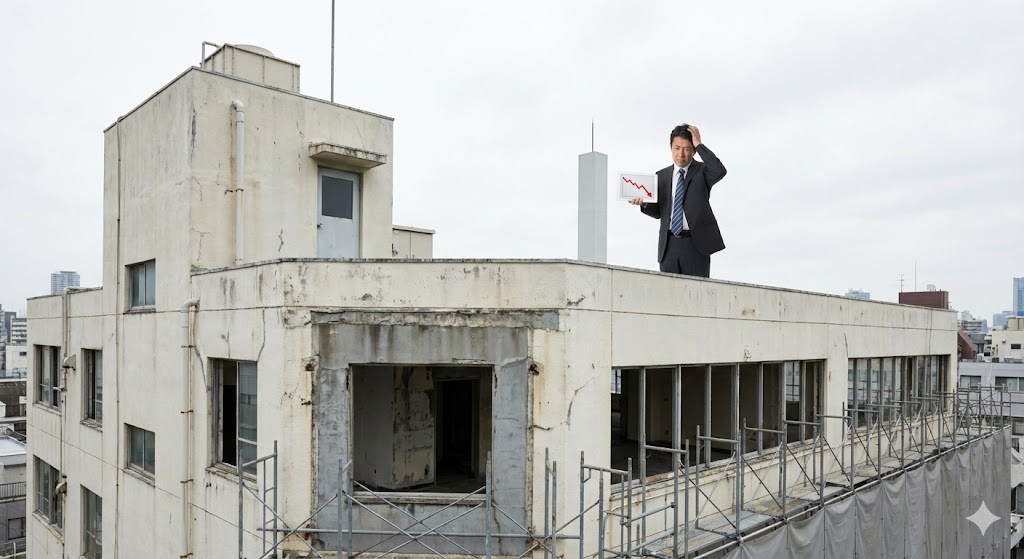
If you’re wrestling with concerns like these, it’s not simply “bad economic conditions” or the fact that “the building is old.” In most cases, poor building performance stems from a “structural flaw” that owners fall into without even realizing it.
Let’s get straight to the conclusion of this article.
The biggest factor dragging down your building’s profitability is clinging to an “outdated rental model” that no longer matches what the market wants—while failing to recognize the true earning potential of your land and building. Even a property that’s unpopular as an office or residence has real potential to transform into a “high-yield asset” simply by changing its use.
In this article, we’ll dissect the “5 factors quietly eating away at building profitability” that many owners overlook, and offer concrete perspectives for breaking free from losses and low returns.
Factor 1: A “Tenant Recruitment Strategy” Out of Sync with Market Needs
The most fundamental issue—yet one that goes unaddressed in countless buildings—is a “target mismatch.”
The Decline and Shift in “Office Demand”
There was a time when “close to the station” guaranteed you’d fill an office space. But with the spread of remote work and companies’ growing focus on cost-cutting, demand for office space has plummeted—especially in small and mid-sized older buildings. And yet, are you still charging the same rent, keeping the same outdated interior (no raised flooring, aging HVAC), and passively waiting, hoping “someone will eventually take it”?
A Passive “Wait-and-See” Approach That Relies on Brokers
Simply handing off information to a local real estate agent and calling it a day is another factor dragging down profitability. Today’s tenants scrutinize properties online. No appealing photos, doesn’t show up in search filters, gives off a dark impression during viewings—no matter how long you wait, quality tenants simply won’t materialize under these conditions. The market has completely shifted from an era of waiting and hoping someone will rent, to one that demands the creative planning to make people actually *want* to rent.
Factor 2: “Poor Management” and a “Deteriorating First Impression” That Erode Asset Value
For many buildings where “even lowering the rent doesn’t fill vacancies,” the reason becomes obvious the moment you set foot on site: sloppy management.
Deterioration of the Entrance and Common Areas
When a prospective tenant comes to view the property, the first things they see are the entrance, the mailboxes, and the elevator hall.
- Flyers scattered around the mailboxes
- Dim or burnt-out entrance lighting
- Stains on the common hallway carpet
- Squat-style toilets, or outdated units without a washlet
This kind of “lived-in” shabbiness and dated feel severely damages the impression prospective tenants form of what life there would be like. They immediately conclude “if management can’t even keep this up, they probably won’t respond quickly to problems either”—and cross the property off their list on the spot.
“You Get What You Pay For” with Cheap Cleaning
Are you cutting cleaning frequency or hiring bargain-basement contractors just to save on expenses? A building’s cleanliness is the lifeline for maintaining rent levels. Nobody pays high rent for a dirty building. Cutting cleaning costs is a classic misstep that ultimately puts downward pressure on rent and drags down overall profitability.
Factor 3: Neglected “Dead Space” That Generates Zero Revenue
In building management, holding onto space that generates no income—dead space—is a direct opportunity loss.
Untapped Rooftops, Basements, and Signage Space
- Rooftop: Leasing space for cell phone base station antennas, or renting it out as a rooftop bar.
- Basement: Leasing it as storage space, or leveraging its soundproofing for studio demand.
- Exterior walls / signage: Selling the space for digital signage or advertising.
Are these spaces sitting completely unused, “just there” and nothing more? Older buildings in particular often have spacious rooftops or basements that couldn’t be built under today’s building codes—making them potentially rare and highly valuable revenue sources.
Unused Floor-Area Ratio
Even if rebuilding or expanding the structure isn’t feasible, it’s worth checking whether your current building has fully utilized its allowable floor-area ratio. If there’s unused capacity, you may be able to raise your per-tsubo rental unit price by adding a loft through interior renovation, or by subdividing floors for smaller-unit leasing.
Factor 4: A Fixed “Vendor Selection” Process and Costs That Have Stayed Stubbornly High
A building’s profitability (NOI) comes down to “revenue minus expenses.” When it’s difficult to grow revenue, reviewing expenses offers an immediate fix—yet this too is often treated as untouchable territory.
The Hidden Cost of “Longtime Relationships”
Elevator maintenance, fire safety inspections, cleaning, electrical safety management—are you still using the same vendors for these tasks simply because “we’ve worked with them since my predecessor’s time,” without ever getting comparative quotes?
Thanks to technological progress, management cost benchmarks have actually fallen in some areas. What’s more, it’s not uncommon for owners’ lack of attention to be exploited—resulting in unnecessary repair proposals or inflated management fees. Failing to review pricing and bring it in line with fair market rates is essentially throwing profit straight into the trash.
Factor 5: The Biggest Culprit—Rigid Thinking About “Use” (Purpose)
And here we arrive at the single most fundamental factor undermining building profitability: the fixed mindset that “this building is an office building” or “this is a residential apartment building.”
A Mismatch Between “Location” and “Use”
For example, if you’re operating an aging office or a single-occupant apartment building in an area close to entertainment districts like Minami or Kita in Osaka, you may effectively be keeping a “goose that lays golden eggs” locked in a cage—alive, but never allowed to produce.
In areas with heavy tourist traffic, while the per-tsubo rate as an office might top out around ¥8,000, converting the same space into lodging (minpaku or a hotel) could generate ¥20,000 or more per tsubo.
The Cost of Missing Out on Inbound Tourism Demand
Right now, demand for lodging in Osaka is booming. Yet if you continue operating at low rent simply because of existing lease agreements or the “hassle of changing the building’s designated use,” that’s a genuine opportunity loss—profit you should have earned but didn’t.
Even an old building without an elevator can turn that into a positive as lodging—framed as “retro charm” or a “hidden gem” experience. Refusing to change the building’s use is, in fact, the biggest risk of all.
Conclusion: Moving Building Management From “Scrap and Build” to “Renovation and Conversion”
The reason a building isn’t profitable isn’t the building itself—it’s delayed management decisions.
- Abandon the “wait-and-see” mindset and renovate to match your target audience.
- Raise the quality of management and strengthen the building’s first impression (its brand power).
- And above all, boldly change the building’s “use” to match demand in the area.
Especially for small and mid-sized older buildings, “conversion to lodging facilities” delivers the single greatest boost to profitability. The moment to shift from anxious management—plagued by vacancies and fearing repair costs—toward proactive, offense-minded management is now.
Turn Your Building Into a “High-Yield Hotel”—Let Stay Buddy Revitalize It
“My building is riddled with vacancies, and I can barely scrape together enough to cover property taxes.”
“I want to convert my office building into a hotel, but I have no idea about the legal procedures or costs involved.”
“I’m looking for a professional partner who can handle everything from renovation to operations, all under one roof.”
Whatever your concern, leave it entirely to us.
We at Stay Buddy Co., Ltd. are a team of professionals specializing in building revitalization and lodging operations within the city of Osaka.
We’re not just a management company. We offer:
- Planning and conversion proposals that transform low-yield buildings into high-return lodging facilities
- Thorough support and cost management for use-change and fire-code compliance work, handled through our partner architects
- Target-focused interior design and customer acquisition strategy tailored to each area’s unique characteristics
- Hotel-standard cleaning and 24/7, 365-day operational management, eliminating any burden on the owner
Before you give up and assume “it’s just too old to save,” let us assess your building’s true value.
Turn that dormant asset into the top-earning building in the area. Get started with a free property assessment and profit simulation—reach out to us today.