Leave Your Minpaku Management to the Experts
100% Free Online ConsultationWorried About Neighbor Trouble? Key Precautions and Solutions When Converting a Vacant Home Into a Guest Accommodation
For owners of vacant properties in Osaka City, converting a building into guest accommodation (minpaku or a simple lodging facility) is a highly effective way to boost its asset value. However, when considering this kind of use, the concern most owners worry about above all else is “trouble with the neighbors.”
“What if guests make noise in the middle of the night and we get complaints?”
“What if trash-disposal rules aren’t followed and it becomes a problem with the neighborhood association?”
“Will nearby residents feel uneasy about unfamiliar foreign guests coming and going?”
Let’s start with the conclusion of this article.
Trouble arising from vacant-home operations can be prevented before it happens with three key measures: “thorough advance explanation to neighbors,” “real-time monitoring using IT tools,” and “a management system that can respond instantly in an emergency.”
We’ll walk you through concrete strategies for turning local residents’ anxiety into peace of mind, so you can generate stable income while coexisting harmoniously with the community.
What “Neighbor Trouble” Actually Looks Like in Accommodation Operations
To prevent trouble, you first need to understand what actually causes complaints. Ninety percent of the issues in minpaku operations boil down to the following three points.
1. Nighttime Noise Complaints
The most common issue is complaints about guests’ voices, footsteps, or the sound of suitcase wheels rolling across floors. Especially in Osaka’s older, wooden-house neighborhoods, nighttime conversation carries much farther than you’d expect. Guests may see their stay as “a special trip,” but for neighbors, it’s simply “everyday life”—and that gap in perspective needs to be addressed directly.
2. Trash-Disposal Etiquette Violations
Trouble also arises when guests dump trash at household collection points without authorization, or leave it unsorted. Osaka City enforces strict trash-disposal rules, and improper disposal can quickly escalate into a major issue with the neighborhood association, severely damaging the property’s reputation.
3. Fears About Trespassing and Privacy
Some residents worry about guests getting lost and wandering onto a neighboring property by mistake, or simply feel uneasy seeing unfamiliar foreign visitors walking past their homes at night. These anxieties stem from the uncertainty of “not knowing who’s actually staying there.”
Legally Required “Neighbor Notification” Is the First Step to Success
When starting a special zone minpaku or simple lodging business in Osaka City, local ordinances require advance explanations to nearby residents. This isn’t just a bureaucratic formality—it’s the single most critical ritual that determines whether your operation succeeds or fails.
Sincere Advance Notification Turns Neighbors Into Allies
Carefully explain your operational plan to residents in the surrounding area (typically within a roughly 20-meter radius of the property). The key here is not to talk only about the benefits. You need to concretely present what measures you’ll take against noise and trash issues, and who will take responsibility if trouble occurs.
Clearly Displaying Emergency Contact Information
Distributing a 24-hour contact number to neighbors—with a clear message of “if anything happens, call this number right away”—dramatically eases residents’ concerns. It’s essential that owners or the management company act as a buffer, preventing direct confrontations between guests and residents when complaints arise.
Using IT and Operational Systems to Prevent Guests From Becoming “Troublemakers”
Once you’ve gained the neighbors’ understanding, the next step is putting systems in place to actually prevent trouble from occurring. In modern minpaku operations, technology is a powerful ally.
1. Installing Noise Sensors (Such as Minut)
Install devices that monitor indoor sound levels in real time and automatically notify the host when decibel levels exceed a set threshold for a sustained period. The moment guests start getting loud, you can send a message like, “Noise has been detected. Please keep it down to avoid disturbing the neighbors”—defusing the situation before a complaint ever comes in.
2. Using Smart Locks and Security Cameras
Install a security camera at the entrance (outdoors only, with privacy in mind) to monitor for occupancy beyond the reserved headcount or suspicious movement at night. Smart locks also eliminate the hassle of in-person key handoffs while accurately logging who entered and when.
3. Multilingual House Rules and Video-Based Guidance
Clearly state trash-disposal procedures and nighttime quiet hours in multiple languages (English, Chinese, Korean) in check-in guides and posted signage. By supplementing text with videos demonstrating trash sorting, or using icons to flag nighttime noise rules, you can get the message across even across language and cultural barriers.
If Trouble Does Occur: A Pro’s Guide to First Response
No matter how thoroughly you prepare, it’s impossible to prevent 100% of incidents. What matters most is how quickly you respond after something happens.
On-Site Response Within 30 Minutes
When a noise complaint comes in, it’s risky to handle it only through phone calls or messages. Especially at night, having management staff arrive on-site within 30 minutes to an hour and directly address the issue shows neighbors the utmost sincerity and respect.
Immediate Trash Collection
If trash is dumped in an inappropriate location, have a system in place to collect it immediately rather than waiting until the next day’s cleanup. The longer it’s left sitting, the angrier neighbors become. Building trust—so residents know “the manager of this property responds right away”—is the key to long-term success.
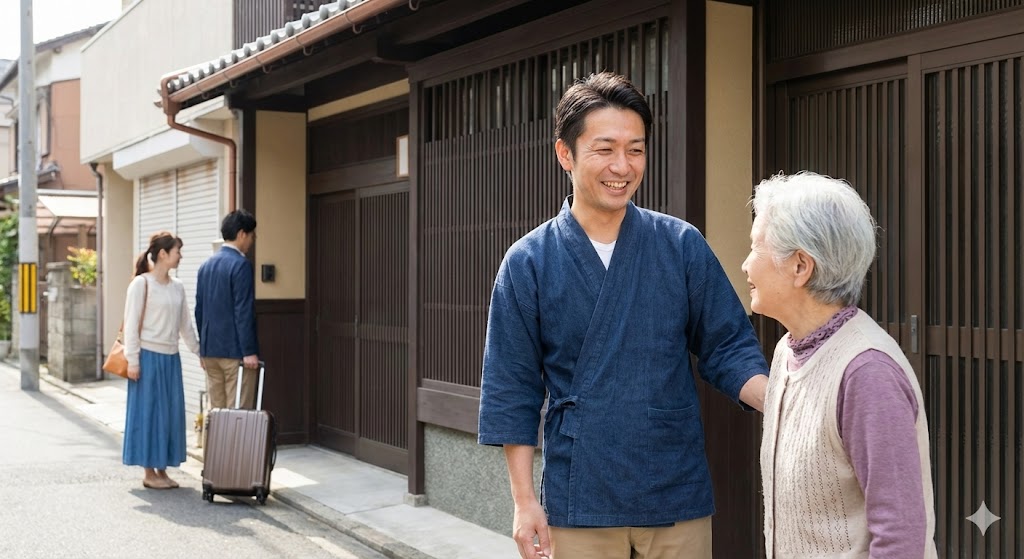
Building an Accommodation That Coexists With—and Is Loved by—the Community
Converting a vacant home into guest accommodation has the potential to do more than just boost the owner’s income—it can also help revitalize the local community.
Giving Back to the Local Economy
Hand out maps of nearby restaurants and shopping streets to guests, encouraging them to spend money locally. Building good relationships with nearby shop owners creates a mutually supportive network—they might guide a lost guest back to your property, or alert you if they notice anything suspicious.
Maintaining the Building’s Appearance
A neglected vacant home makes a neighborhood look run-down, but a well-maintained accommodation brightens it up. Through regular cleaning and upkeep of any greenery, keep the property looking pristine at all times, so residents come to see it and think, “I’m glad that old vacant house was cleaned up and turned into such a nice place to stay.”
Conclusion: With the Right Management System, a Vacant Home Can Become Your Strongest Asset
Giving up on utilizing your vacant property out of fear of neighbor trouble would be a real shame.
- Provide sincere, thorough advance notification to neighbors, in line with the law.
- Monitor the property 24/7 using IT tools such as noise sensors and smart locks.
- Secure a management and cleaning team that can respond instantly in an emergency.
With these three pillars in place, you can minimize the risk of trouble to an absolute minimum while continuing to generate strong income from your vacant property. Turning local residents into “understanding partners” rather than “adversaries” through careful, considerate operations—this is truly the essence of success in minpaku management in Osaka.
Stay Buddy Delivers Trouble-Free, Worry-Free, High-Income Operations
“I want to turn my vacant home into a minpaku, but I’m hesitant because the neighbors seem strict.”
“Handling noise and trash complaints on my own is reaching its physical and emotional limit.”
“I want to leave everything—from neighbor explanations to day-to-day guest management—to the professionals.”
If any of these concerns sound familiar, we’d love for you to talk to us.
Stay Buddy Inc. is a team of professionals specializing in minpaku management and hospitality operations across Osaka City.
We’re not just another management agency.
- Thorough, reliable neighbor-notification services backed by deep knowledge of Osaka City ordinances
- 24/7/365 real-time monitoring using noise sensors and smart locks
- Osaka-based on-the-ground mobility that lets us rush to the site immediately if any complaint arises
- Rigorous trash management and high-quality cleaning that protects your standing with local residents
So that you, the owner, can relax and simply enjoy the returns, we work on the front lines to nip potential trouble in the bud.
Let us help turn your vacant property into a high-income asset that’s loved by the community. Get in touch today for a free property assessment and personal consultation.