Leave Your Vacation Rental Management to Us
Free Online Consultation10 Things You Can Do to Avoid Complaints from Neighbors When Running a Vacation Rental
There’s one business risk that can force your vacation rental to shut down overnight—and it isn’t a poor OTA rating or declining profitability. It’s **”complaints from neighbors.”**
No matter how popular your property is or how much revenue it generates, if your relationship with the local community breaks down, continuing to operate your rental in that location becomes extremely difficult.
Let’s start with the conclusion of this article.
The key to preventing neighbor complaints is holding a genuine sense of ownership as “a member of that local community,” anticipating the concerns and frustrations residents might have, and going above and beyond with thorough consideration and communication.
In this article, we’ll thoroughly walk you through 10 concrete measures you can start implementing today to ensure your vacation rental becomes a welcomed presence in the community, rather than a source of trouble.
Why Neighbor Disputes Can Shake the Very Foundation of Your Business
The main sources of resident dissatisfaction typically boil down to “noise,” “garbage disposal,” “violations of shared-space etiquette,” and “vague anxiety about strangers frequently coming and going.” When these small frustrations pile up, they can suddenly erupt into a serious situation.
- For condominiums: Complaints get reported to the management association and become a board issue. In the worst case, the management bylaws may be revised, banning vacation rental operations not just for your unit but for the entire building.
- Reports to authorities: Complaints filed with the health department or police can result in administrative guidance or even prevent the renewal of your operating license.
- Host burnout: Above all, the daily weight of neighbors’ watchful eyes and direct complaints can severely wear down a host’s mental well-being, sapping the very motivation needed to keep the business going.
[Start Today] 10 Measures to Prevent Neighbor Complaints Before They Happen
To avoid these worst-case scenarios, be thorough about implementing the following 10 measures.
《Preparation & Relationship-Building》
1. [Most Important] Always Greet Your Neighbors Before Opening for Business
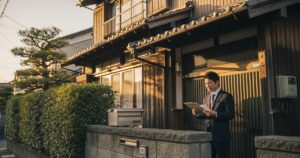
This is the foundation of everything. Before starting operations, make sure to visit in person at least the neighbors on both sides and above/below (for condominiums), or several nearby households (for standalone houses). During your visit, be sure to clearly communicate the following four points:
- ① A brief self-introduction
- ② The fact that you are operating a licensed vacation rental at this location, with government approval
- ③ Your commitment to thorough guest management so as not to cause any inconvenience
- ④ An emergency contact number (such as your own mobile number) in case anything happens. This small extra effort turns residents’ anxiety into reassurance and builds the foundation of trust.
2. For Condominiums, Make the “Management Association/Building Manager” Your Strongest Ally
Instead of being adversarial, it’s important to build a cooperative relationship. Before starting operations, formally report to the management association and reconfirm rules regarding garbage disposal locations and use of common areas. Also, make a habit of greeting and chatting with the building manager regularly to maintain good communication. They can be your property’s biggest advocate and strongest ally.
3. For Standalone Houses, Actively Get Involved with Your “Neighborhood Association”
Fulfilling your responsibilities as a member of the community builds trust. If possible, join your local neighborhood association and actively participate in community events and cleanup activities. This transforms you from an “unknown business operator” into “the familiar Mr./Ms. So-and-So.”
4. Prepare a “Perfect Check-In Guide” So Guests Never Get Lost
Travelers with suitcases wandering around in front of the building or in shared spaces for extended periods creates significant anxiety for residents. Create a foolproof access guide—using photos and videos to cover everything from the station to the door of the room—so that absolutely anyone can find their way without confusion, and send it to guests in advance.
《Rules & Systems》
5. Establish Strict House Rules Regarding “Noise” and Obtain Guest Agreement
Noise is the number one cause of complaints. Clearly state specific and strict rules in multiple languages—such as “Parties, gatherings, and loud conversations are strictly prohibited after 10 PM,” “Please refrain from talking on the balcony,” and “Violations will result in a penalty fee of ¥XX and immediate eviction”—and set up a process to obtain guest agreement at the time of booking.
6. Illustrate the “Garbage Disposal” Rules Perfectly
Japan’s complex garbage sorting system, along with collection schedules that vary by day and time, is nearly impossible for foreign travelers to understand. Improperly disposed garbage can instantly lead to complaints.
- Set up sorting bins inside the room: Provide multiple bins labeled with illustrations and multilingual text, such as “Burnable,” “Cans,” “Bottles,” and “PET Bottles.”
- Illustrate the rules clearly: Create a guide using photos and illustrations that shows collection days, locations, and specific sorting examples at a glance, and post it inside the room.
7. Enforce Manners in Shared Spaces (Hallways, Elevators)
Repeatedly remind guests of manners such as “Please refrain from talking on the phone or having loud conversations in shared spaces” and “Please be mindful of suitcase wheel noise when moving late at night or early in the morning,” through both house rules and posted notices inside the room.
8. Accurately Collect Guest Registration Information to Clarify Identity
Beyond legal compliance, having accurate records of all guests’ names and passport information is crucial for fulfilling your accountability to residents—proving that you’re not housing unidentified, suspicious individuals should anything ever go wrong.
《Technology & Physical Measures》
9. [The Ultimate Weapon] Install a “Noise Sensor”
This is an extremely effective technology for preventing excessive noise from parties and similar disturbances before they escalate. By installing a noise sensor (such as Minut) inside the room, you’ll receive an automatic notification on your smartphone whenever noise levels exceed a set threshold for a sustained period. This allows you to remotely alert guests before neighbors ever need to file a complaint.
10. Properly Display the “Vacation Rental Notice Sign” on the Front Door
Display the sign required under laws such as the Private Lodging Business Act in a clearly visible spot on the front door, exactly as regulated. This serves as proof of transparency—showing that you’re not secretly running an illegal operation, but a properly licensed business under government oversight—which helps ease residents’ vague sense of unease.
What If You Do Receive a Complaint? Sincere Initial Response Is Everything
No matter how many precautions you take, complaints can’t always be reduced to zero. If you do receive one, make sure to follow this response protocol:
- Sincere apology and active listening: Start without making excuses. Apologize with something like, “We’re truly sorry for the inconvenience this has caused,” and listen carefully to everything the resident has to say.
- Swift fact-checking and response: Rush to the property immediately or contact the guest right away to confirm the facts and address the issue.
- Report back on the resolution: After resolving the issue, be sure to visit the complaining resident again to report what was done—for example, “We’ve issued a strict warning to the guest and will implement XX as a preventive measure going forward.” This sincere follow-through is the key to repairing the relationship.
Conclusion: Being a “Good Neighbor” Is the Best Complaint Prevention Strategy
Success in vacation rental management can’t be measured by occupancy rates and profitability alone. True success means having your business accepted by the local community and being able to sustain it over the long term.
To achieve that, you as the host must first become a “good neighbor” in that community. Imagine, respect, and consider the feelings of residents. That steady, sincere attitude is the best complaint prevention strategy—one that beats even the most expensive soundproofing equipment.
Let Us Professionals Handle That “Neighborhood Relationship” for You
“I know greeting the neighbors is important, but I don’t know what to say…”
“I don’t have confidence I can handle a late-night noise complaint on my own.”
“I’m too busy with my main job—there’s no way I can participate in neighborhood association activities.”
We completely understand these concerns. Especially if you’re managing multiple properties or living far away from your rental, keeping up the kind of detailed neighbor relations described in this article is no small feat.
We at Stay Buddy, a vacation rental management company, don’t just handle online booking management. We take on the role of **”good neighbor in the community”** on behalf of our property owners.
From courteous greetings before operations begin to ongoing, positive communication with management associations and neighborhood groups, we place great importance on building trust with the local community. And in the rare event that a complaint does arise, our 24/7, 365-day emergency response team will rush to the scene promptly and resolve the issue in good faith—without troubling the property owner at all.
We take on the “neighborhood relations” aspect—the part that causes you the most stress and requires the most care—entirely as professionals.
Whether you’re just starting your vacation rental journey or feeling uneasy about your current operations, please reach out to us to talk about running a rental business that’s loved by the community and built to last.