Leave Your Vacation Rental Management to the Experts
Free Online ConsultationShould You Avoid Fire-Sale Vacation Rental Properties? 5 Key Points to Check Before Buying
You’ve seen them on real estate sites—properties listed at prices well below market value, boasting phrases like “Minpaku license already secured!” or “High yield, currently operating!” At first glance, these might look like once-in-a-lifetime opportunities.
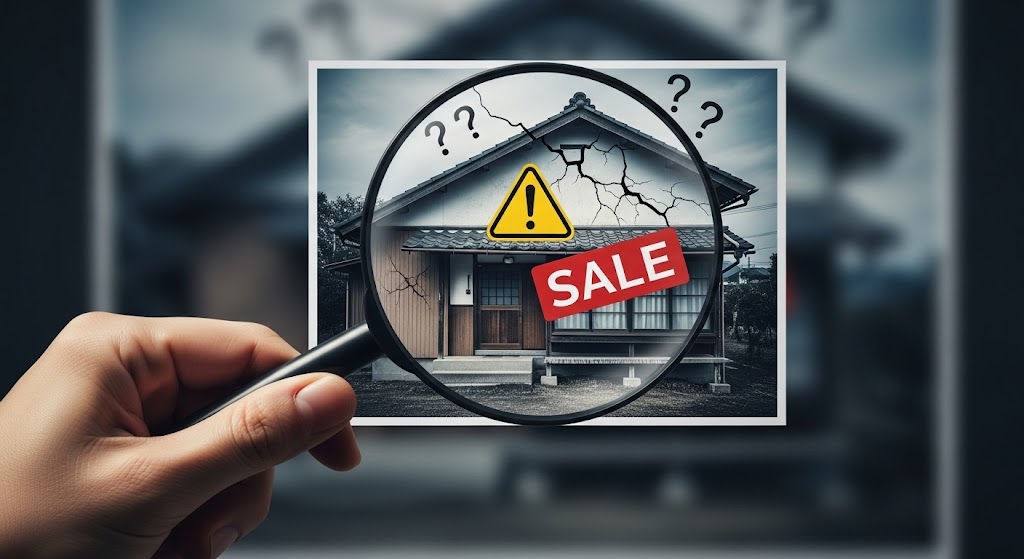
But before you jump on that tempting price tag, take a moment to pause and ask yourself: why exactly is this property being sold off so cheaply?
Let’s get straight to the point of this article.
Most fire-sale vacation rental properties are likely “traps”—hiding serious problems that match or even exceed how cheap they are. That said, on rare occasions, a genuine “hidden gem” does exist, where the previous owner simply failed at running the business rather than the property itself being flawed.
In this article, we’ll walk you through five critical checkpoints to help you calmly determine whether a property is truly a “trap” or a “treasure.”
Why Do “Fire-Sale” Vacation Rentals Exist in the Market? — What’s Behind the Low Price
In real estate, every price has a reason behind it. When it comes to actively operating minpaku properties being sold at bargain prices, there are typically four scenarios at play.
- Reason 1: Regulatory Barriers: Strict local ordinances (supplementary regulations) may severely limit annual operations—for example, allowing operation only on weekends, or prohibiting weekday stays near schools—resulting in extremely poor profitability.
- Reason 2: Serious Operational Flaws: Relations with neighbors may have deteriorated irreparably due to noise or garbage disposal issues, or the property may have accumulated devastating OTA (booking platform) reviews from past mismanagement, leading to zero new bookings.
- Reason 3: Physical Building Issues: The property itself may harbor “hidden defects” requiring substantial repair costs—things like water leaks, termite damage, severely deteriorated plumbing, or the need for major reinforcement work due to outdated earthquake-resistance standards.
- Reason 4: Previous Owner’s Lack of Knowledge or Experience: Despite having none of the major issues above, the previous owner simply lacked the operational know-how or marketing skills, resulting in ongoing losses and eventual withdrawal from the business.
Of these four scenarios, only “Reason 4” represents a property genuinely worth considering as an investment. In all other cases, you’re highly likely to inherit the exact same problems—and suffer the consequences yourself.
[Final Pre-Purchase Checklist] Five Hidden Traps in Fire-Sale Properties and How to Spot Them
Don’t let an attractive price cloud your judgment. Check the following five points calmly and thoroughly.
Checkpoint 1: [Regulations] Can This Property Really Operate 365 Days a Year?
- The Trap: Taking a real estate listing’s claim of “Minpaku license already obtained!” at face value.
- How to Spot It: First, confirm whether the license in question falls under the “Private Lodging Business Act” (limited to 180 days of operation per year) or the “Hotel Business Act” (simple lodging category, with no day-count restrictions). This distinction dramatically affects profitability. Second, even if the property holds a Hotel Business Act license, don’t let your guard down. For instance, in Osaka City, local ordinances restrict weekday stays within 100 meters of school grounds—these kinds of municipality-specific regulations are common. It’s essential to contact the relevant local government department (such as the public health center) directly and confirm exactly which regulations apply to that specific property.
Checkpoint 2: [Operating History] Are Past Reviews and Revenue Records Being Disclosed?
- The Trap: Taking the seller’s optimistic claims—like “high occupancy!” or “projected yield of X%!”—at face value.
- How to Spot It: First, request the URL of the actual OTA listing page (such as Airbnb) covering the past one to two years. Review the guest feedback yourself—comments about cleanliness, location, host responsiveness—and check the frequency of reviews, which serves as a useful proxy for actual occupancy rates. Second, demand disclosure of at least one full year of actual financial data, clearly itemizing revenue, property management fees, cleaning costs, utility bills, and consumables. Any property whose owner is reluctant or unwilling to share this information is almost certainly hiding something.
Checkpoint 3: [Neighborhood Relations] Is There Any History of Conflict with Nearby Residents?
- The Trap: Focusing so much on the property’s interior and yield that you neglect to check the surrounding environment.
- How to Spot It: Ask the real estate agent or seller directly whether there’s been any history of noise or garbage-related complaints from neighbors. Also, be sure to visit the site multiple times, at different days and hours. A property that seems perfectly quiet on a weekday afternoon can feel entirely different at night or on weekends. If possible, introduce yourself to the neighbors on either side—something like, “I’m considering moving in (or starting a business) here soon”—and gauge their reaction. This can reveal a lot about the surrounding atmosphere.
Checkpoint 4: [Building Condition] Are There Any Hidden Defects?
- The Trap: Being reassured by a phrase like “recently renovated, in beautiful condition” and skipping a professional inspection altogether.
- How to Spot It: Especially for older properties, always commission a third-party home inspection before finalizing your decision to buy. Yes, it costs money—but skipping this step is never worth the risk. A professional’s trained eye can catch hidden defects invisible to amateurs: signs of past water leaks, termite damage, structural tilting, or deteriorating plumbing. Repair costs discovered after purchase can far exceed the price of an inspection.
Checkpoint 5: [Handover Terms] Will Everything Needed for Operations Actually Be Transferred?
- The Trap: Assuming that simply acquiring ownership of the property means you can immediately continue operating under the same conditions.
- How to Spot It: Carefully review the contract terms to clarify exactly what will and won’t be included in the handover.
- OTA Accounts: Confirm whether the existing OTA account—complete with its accumulated review history—can be transferred to you. If it can’t, you’ll be starting from zero reviews, which will significantly hurt your ability to attract guests.
- Furniture and Appliances: Check whether furniture, appliances, and linens are included in the sale price, and confirm their overall condition.
- Operational Know-How: Whether information about cleaning vendors and various operational manuals will be passed along is also crucial for a smooth transition.
What to Keep in Mind If You’ve Found a True Hidden Gem
Suppose you’ve gone through all five checkpoints above and confirmed that a property is genuinely underpriced purely due to the previous owner’s lack of operational skill—not any deeper problem. That’s a real opportunity worth pursuing.
Even so, don’t forget that you’ll still need additional investment to revive the property. Budget in advance for costs such as renovating outdated interiors, hiring a professional photographer to showcase the property’s true appeal, and marketing the space under a fresh new concept—all of these should be built into your business plan from the start.
Conclusion: There’s Always a Reason Behind a Low Price—See Through It with a Professional Eye
A fire-sale vacation rental property is a high-risk, high-reward investment. Behind that attractive price tag, there’s almost always some hidden “reason” at play.
The key to success lies in not being swayed by the surface-level appeal of a low price, and instead objectively evaluating the property’s true worth—its profitability and potential risks—with a calm, professional eye. If you skip that effort and expense, your minpaku investment may well be doomed before it even begins.
Is That “Hidden Gem” Really as Good as It Seems?
“I understand the five checkpoints now, but investigating all of this on my own feels like an impossibly high hurdle…”
“Real estate agents only tell you the good parts. Isn’t there someone neutral who could give me honest advice?”
These concerns are completely understandable. Complex, region-specific regulations, invisible structural defects, and hard-to-detect neighborhood disputes—these are exactly the kinds of “traps” that only a professional eye can reliably catch.
At Stay Buddy Inc., we don’t just manage vacation rental properties day in and day out—we’re also professionals who evaluate properties from a real estate investment perspective.
We do more than simply handle property management on your behalf. As a neutral third party, we conduct rigorous, data-driven revenue simulations for any property you’re considering, along with comprehensive due diligence covering everything from regulatory compliance to building condition and neighborhood risk factors.
Before you sign on that property you think is a “hidden gem,” let our professional team give you a second opinion. It’s the smartest way to protect your valuable investment from an irreversible mistake. Feel free to reach out to us anytime—we’d love to help.