Leave Your Vacation Rental Management to Us
Completely Free Online ConsultationWhen you hear “vacation rental with an ocean view,” it’s a location everyone dreams of, isn’t it? A sweeping ocean view stretching beyond the window, the sound of waves, the scent of sea air… For guests looking to escape the hustle and bustle of city life and relax, it should offer the ultimate extraordinary experience. In fact, vacation rentals near the sea tend to leverage their scenery to achieve high occupancy rates and premium pricing.
However, did you know that this very charming “scent of the sea” can actually become a major pitfall in vacation rental management? Many hosts face situations where this often-overlooked “odor” issue leads to guest complaints and low ratings.
“Is the sea smell really that big of a problem?”
“How should I manage a property near the ocean?”
“I’d hate for such a stunning view to be undermined by a bad smell…”
Some of you may have thought exactly this. The sea smell directly affects how guests experience and perceive your property, significantly influencing impressions of cleanliness and comfort. This article focuses on the “sea smell” issue commonly faced when operating vacation rentals with ocean views, exploring its causes, practical countermeasures, and management techniques to maximize your property’s appeal.
- Why does the sea smell become a pitfall for vacation rentals?
- Main causes and mechanisms behind the sea smell
- 5 sea smell countermeasures to keep guests comfortable
- Salt damage prevention and cleaning tips
- Management techniques to maximize the appeal of ocean-view vacation rentals
Read on to learn how to avoid the “pitfall” of the sea smell and transform your vacation rental into an unforgettable stay that delights all five senses.
Why Does the Sea Smell Become a Pitfall for Vacation Rentals?
An ocean-view vacation rental may seem to have a huge advantage simply from its scenery, but the “sea smell” can unexpectedly diminish guest satisfaction.
1. Individual Differences in Perceiving Smells
When people hear “sea smell,” many might imagine a pleasant, briny ocean scent. However, how people perceive smells varies greatly from person to person. What smells pleasant to one person might come across to another as fishy or unpleasant. This is especially true for guests who don’t normally live near the ocean—they’re likely to notice the smell more strongly, which can quickly lead to discomfort.
2. Impact on Perceived Cleanliness
When the sea smell is strong, guests may develop a negative impression regarding cleanliness, thinking things like “maybe this room isn’t clean” or “perhaps ventilation is poor.” No matter how thoroughly you clean the interior, if an odor lingers, guests may still perceive the space as unhygienic. This is a serious issue, as it directly lowers ratings on “cleanliness”—one of the most heavily weighted factors in vacation rental reviews.
3. Directly Leads to Guest Complaints and Low Ratings
Odor is one of the elements guests most directly mention in complaints and reviews. Comments like “the room smelled bad” or “the fishy smell made it hard to relax” can significantly discourage future bookings. Since smell is something photos simply can’t convey, guests often experience a jarring “gap” between expectation and reality upon arrival—which easily breeds dissatisfaction.
4. Odor Absorption into Furniture and Fixtures
The sea smell easily seeps into fabric items indoors—curtains, sofas, carpets, and bedding—and once absorbed, it’s difficult to remove. Wallpaper can also absorb odors over time, potentially diminishing the property’s value in the long run.
Main Causes and Mechanisms Behind the Sea Smell
Understanding the primary causes and mechanisms behind the sea smell appearing indoors in vacation rentals will help you develop effective countermeasures.
1. Odor Compounds Carried Directly from the Sea
The most direct cause is odor compounds carried in on the sea breeze. The smell of the ocean comes from a mixture of organic compounds—hydrogen sulfide, ammonia, trimethylamine, and others—produced by decomposing seaweed, plankton, and microorganisms. These drift through the air and enter the room whenever windows are left open.
2. Crystallized “Salt Residue” from Dried Seawater
Sea breezes carry tiny particles of seawater. These settle onto indoor furniture, walls, and floors, and as the moisture evaporates, salt and other organic residues remain behind. **The drying process of this “salt residue” (shioke) can generate a distinctive odor.** This buildup tends to accumulate especially in environments with poor ventilation where humidity lingers.
3. Humidity and Mold Growth
Areas near the ocean generally tend toward higher humidity. In humid environments, mold and bacteria grow more readily. Mold not only emits its own distinctive odor but can also combine with the sea smell to create an even more unpleasant “musty sea smell.” Locations prone to trapped moisture—such as inside air conditioners, bathrooms, and closets—require particular attention.
4. “Sea Smell” Brought In by Guests
Another contributing factor is guests bringing seawater, sand, or mud into the room via flip-flops, swimwear, damp towels, and beach gear. As these items dry, they release the sea smell directly into the indoor space. If these odor sources are overlooked during cleaning, they can cause discomfort for the next guest.
Leave Your Vacation Rental Management to Us
Completely Free Online Consultation5 Sea Smell Countermeasures to Keep Guests Comfortable
Here are five practical methods to effectively combat the sea smell and provide guests with a comfortable stay.
1. Thorough Ventilation and Air Purifier Use
The fundamental odor countermeasure is **”ventilation.”** Preventing sea smell compounds from lingering indoors is essential.
- Regular ventilation: Beyond just after guest checkout, thoroughly ventilate by opening windows during cleaning and, if possible, on a daily basis. Pay extra attention to spaces where air tends to stagnate (closets, storage areas, etc.).
- Utilize exhaust fans: Keep bathroom and kitchen exhaust fans running continuously, or encourage guests to run them periodically during their stay.
- Install air purifiers: Place high-performance air purifiers in the living room and bedroom. Models with deodorizing functions are particularly effective. Running them 24/7 helps continuously circulate and purify the air.
- Use dehumidifiers: As a countermeasure against coastal humidity, install dehumidifiers to keep indoor humidity at an appropriate level. Lower humidity helps suppress odor formation and mold growth.
2. Introduce Powerful Deodorizers and Deodorizing Equipment
Bring in deodorizers and deodorizing equipment that can break down and eliminate the compounds causing the odor.
- Commercial-grade deodorizers: When off-the-shelf deodorant sprays aren’t enough, use professional-strength deodorizers during cleaning, spraying them thoroughly onto fabric items like curtains and sofas.
- Ozone generators: These offer powerful deodorizing effects in a short time, but they must be used only when no one is present, and thorough ventilation is required afterward. Consider limiting use to cleaning sessions or guest turnover periods.
- Deodorizing machines: Units that can run continuously are effective at breaking down and removing odors at their source.
3. Thorough Management of Fabric Items and Material Selection
Fabric items that easily absorb odors require special attention.
- Frequent washing and replacement: Consider washing and replacing curtains, sofa covers, cushion covers, bed linens, and towels more frequently than a standard laundry cycle. Pay particular attention to materials that readily absorb the sea smell.
- Material selection: Choosing curtains and sofa covers made from materials with low moisture absorption and odor retention (such as synthetic fibers like polyester) is one effective approach. For linens, opt for quick-drying materials or those treated with odor-resistant and antibacterial finishes.
- Choosing air fresheners wisely: Air fresheners that merely mask odors can actually backfire. Choose deodorizers that break down the compounds causing the smell at their source. If using fragrance products, unscented or lightly scented options are recommended.
4. Request Guest Cooperation and Provide Clear Guidance
Encourage guests to help with odor prevention through thoughtful measures.
- “Items brought from the beach” rules: Clearly state specific rules in your house rules or check-in guide—for example, drying wet swimwear and towels in the bathroom, thoroughly brushing sand off shoes at the entrance, and storing beach gear in a designated spot.
- Encourage ventilation: Post messages inside the property encouraging guests to ventilate regularly during their stay, and ask for their cooperation.
- Guidance on air purifier use: Provide clear instructions on how to use the air purifier and encourage guests to actively use it.
5. Regular Professional Cleaning and Maintenance
If the above measures aren’t enough, or if you want even more thorough results, consider bringing in professional help.
- House cleaning services: Request thorough cleaning of walls, ceilings, and air conditioner interiors—areas that are difficult to address with regular cleaning.
- Air conditioner cleaning: Mold and odor-causing substances can accumulate inside air conditioning units. Have professionals perform disassembly cleaning on a regular basis.
- Professional deodorizing services: Using specialized services that eliminate deeply embedded odors at their root can also be highly effective.
Salt Damage Prevention and Cleaning Tips
For ocean-view vacation rentals, “salt damage” is another important concern alongside the sea smell. Salt damage accelerates deterioration of buildings and equipment, impacting long-term operating costs.
1. Regular Water Rinsing of Exterior Walls and Windows
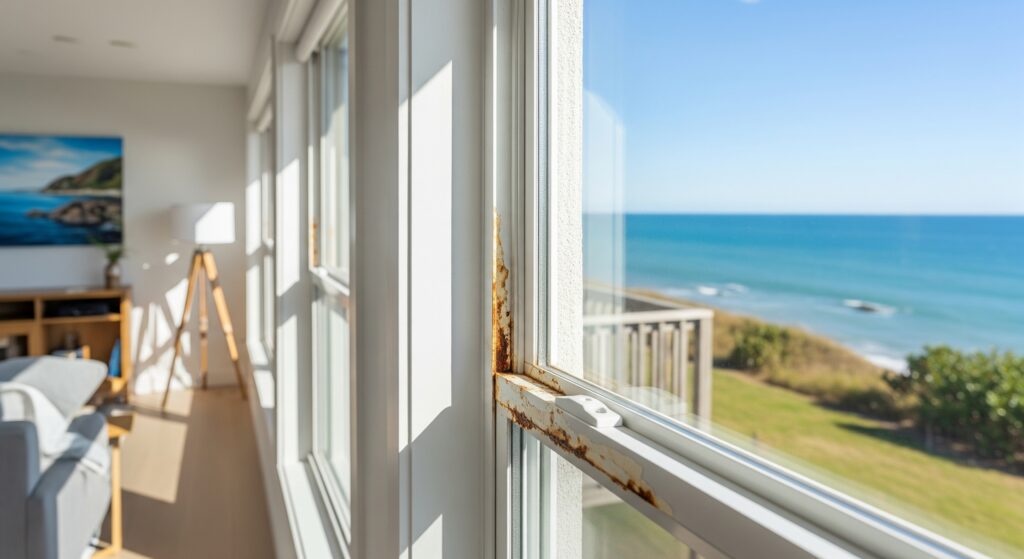
Salt carried in sea breezes clings to exterior walls, windows, and entrance doors, causing rust, deterioration, and dirt buildup.
- Regular rinsing: Rinse regularly with fresh water to wash away salt. Be especially thorough after windy days or right after rain.
- Window sash cleaning: Salt and sand tend to accumulate in window sash grooves, so clean these frequently.
2. Rust Prevention for Metal Components
Metal parts exposed to outdoor air are highly susceptible to salt-induced rust.
- Material selection: Where possible, choose rust-resistant building materials and fixtures made of stainless steel or aluminum.
- Rust-prevention spray: Regularly apply rust-prevention spray to metal components such as gates, railings, outdoor AC units, and exterior lighting.
- Paint touch-ups: Peeling paint can cause rust, so repair it promptly.
3. Protecting the Air Conditioner’s Outdoor Unit
Air conditioner outdoor units are particularly vulnerable to salt damage.
- Rust-resistant coating: Choose an outdoor unit that comes with rust-resistant coating already applied, or apply additional rust-prevention treatment.
- Protective covers: If the unit is installed where it’s directly exposed to sea breezes, consider installing a dedicated protective cover.
4. Caring for Indoor Appliances and Furniture
Salt intrusion into the interior can’t be prevented entirely.
- Regular wipe-downs: Wipe appliances and metal furniture regularly with a damp cloth to remove salt buildup.
- Moisture control: In areas prone to trapped moisture (closets, storage spaces, etc.), place plenty of dehumidifying agents to prevent deterioration from mold and salt.
Management Techniques to Maximize the Appeal of Ocean-View Vacation Rentals
Once you’ve tackled the “sea smell” challenge, an ocean-view vacation rental becomes a powerful asset. Let’s look at management techniques to make the most of that appeal.
1. Professional Photography and Accurate Information
Showcase your stunning ocean view to its fullest with high-quality photos taken by a professional photographer.
- Vary the time of day: Capture the changing scenery at sunset, sunrise, and during the day’s blue waters, and feature these in your listing.
- Highlight nearby activities: Provide information about beachside activities like swimming, fishing, surfing, and cruising to build guest excitement.
- Honest disclosure: Regarding the sea smell, consider framing it positively—such as “enjoy the natural scent of the sea breeze”—while avoiding overemphasis, and indirectly convey that you’ve taken measures to address it.
2. Beachside Amenities and Services
Offering experiences unique to a beachside vacation rental boosts guest satisfaction.
- Beach gear rentals: Free loans of beach chairs, umbrellas, beach towels, floats, and sand toy sets are always appreciated.
- Fishing gear rental: If there’s a fishing spot nearby, offering basic fishing gear for rent can attract a new customer segment.
- Outdoor shower installation: An outdoor shower for rinsing off sand and saltwater is extremely helpful for guests.
- BBQ facilities: A space and equipment for barbecuing with an ocean view offers guests a truly special experience.
3. A Thoughtful Message to Guests About the Sea Smell
Adding a small, considerate message about the sea smell during check-in or in your in-room information guide can also be effective.
- “Our property faces the beautiful ocean, so you may notice a pleasant sea breeze scent. We keep ventilation and air purifiers running continuously to ensure your comfort.”
- “Since we’re located near the ocean, we recommend keeping the exhaust fan running at all times. If anything concerns you during your stay, please don’t hesitate to reach out.”
A simple message like this reassures guests that “the host has thought this through,” making it more likely that any concerns about smell will turn into a friendly inquiry rather than a complaint.
Summary
An “ocean-view vacation rental” is a powerful asset that captivates guests with stunning scenery. However, lurking beneath this appeal is the often-overlooked pitfall of the “sea smell.” Understanding the individual differences in how people perceive odors, the impact on perceived cleanliness, and the direct risk of complaints and low ratings—and taking appropriate countermeasures—is the key to successfully operating an ocean-view vacation rental.
As for sea smell countermeasures, remember to focus on:
- Thorough ventilation and air purifier use
- Introducing powerful deodorizers and deodorizing equipment
- Thorough management of fabric items and material selection
- Requesting guest cooperation and providing clear guidance
- Regular professional cleaning and maintenance
Implementing these measures will help minimize odors and maintain a comfortable indoor environment. Additionally, don’t forget salt damage prevention measures to protect your building and equipment from deterioration (regular water rinsing of exterior walls and windows, rust prevention for metal components, protecting the AC outdoor unit, etc.).
To make the most of your ocean-view vacation rental’s appeal, it’s essential to showcase the scenery with professional photography, offer beachside-exclusive amenities and services, and add thoughtful messaging to guests about the sea smell.
By overcoming the sea smell challenge and delivering an unforgettable stay that delights all five senses, your vacation rental will become a place guests remember fondly—leading to strong reviews and steady occupancy rates for the long term.
For Ocean-View Vacation Rental Management Consultations, Turn to Stay Buddy
“I want to start a vacation rental with an ocean-view property, but I’m worried about sea smell and salt damage countermeasures.”
“My existing beachside vacation rental is struggling with odor and equipment deterioration.”
“I want to know marketing strategies and management know-how that maximize a stunning view.”
Do any of these concerns about ocean-view vacation rental operation and management sound familiar?
At Stay Buddy Inc., our specialized team offers comprehensive support for your vacation rental operation—from branding that leverages the unique characteristics of ocean-view properties, to effective proposals for odor and salt damage countermeasures, streamlined cleaning and maintenance, and management know-how to earn top ratings from guests.
Let’s work together to overcome these challenges and build a vacation rental operation that maximizes profits by leveraging your incredible location as a strength. Feel free to reach out to us anytime.