For those of you considering entering the minpaku business in Osaka City, which areas are catching your eye? While the bustling city center packed with tourists is certainly appealing, a major opportunity to build a stable revenue stream is actually waiting to be discovered in Nishiyodogawa Ward, Osaka City, through the strategic use of the Special Zone Minpaku system.
“What kind of place is Nishiyodogawa Ward, exactly?”
“Is there actually demand for minpaku there?”
“How exactly should I go about using the Special Zone Minpaku system?”
You may have found yourself asking these questions. As tourism demand across Osaka City rapidly recovers, and with major events on the horizon—the 2025 Osaka-Kansai Expo and the 2029 Osaka IR (Integrated Resort)—demand for accommodation has reached unprecedented heights [1, 2, 3]. This supply shortage is creating an extremely favorable market environment for the minpaku business [1, 3].
In this article, we’ll take a deep dive into the unique appeal of Nishiyodogawa Ward and its minpaku demand, along with concrete strategies and application tips for making the most of the “Special Zone Minpaku” system to bring your minpaku business to success.
- The current state of Osaka City’s minpaku market as a whole and Nishiyodogawa Ward’s potential
- An analysis of Nishiyodogawa Ward’s geographic characteristics and minpaku demand demographics
- Why Special Zone Minpaku is drawing attention in Nishiyodogawa Ward right now (benefits and profitability)
- The concrete process and required documents for Special Zone Minpaku applications in Osaka City
- Key considerations and strategies for succeeding with Special Zone Minpaku in Nishiyodogawa Ward
Use this information as a reference to launch your minpaku business in Nishiyodogawa Ward and build a stable pillar of income.
The Current State of Osaka City’s Minpaku Market and Nishiyodogawa Ward’s Potential
Let’s first take a look at the current state of Osaka City’s minpaku market as a whole, and the kind of potential Nishiyodogawa Ward holds within it.
1. The Current State and Future Outlook of Osaka City’s Minpaku Market
The number of foreign tourists visiting Osaka Prefecture is rapidly increasing, reaching an estimated 14.64 million in 2024—an all-time high [4]. While occupancy rates temporarily dropped to as low as 20-30% due to the impact of COVID-19, they have since rebounded sharply to 70-80%, with average room rates rising approximately 30% compared to pre-pandemic levels [1, 3]. This clearly demonstrates that current accommodation demand is outstripping supply, meaning an extremely favorable market environment has formed for newcomers to the minpaku business [1, 3].
This demand-supply imbalance is expected to continue and even accelerate going forward. In particular, the 2025 Osaka-Kansai Expo is projected to draw approximately 28.2 million visitors (including roughly 3.5 million inbound tourists) [1, 3, 5], which works out to an average of over 150,000 visitors to Osaka per day during the event [1]. As a result, accommodation demand within Osaka City is expected to reach unprecedented levels [1, 3, 6]. Some forecasts even suggest that existing hotel supply alone will be unable to fully absorb demand during the Expo period [1, 3], meaning minpaku will play a crucial role in filling this accommodation gap. Special Zone Minpaku in particular—with no cap on annual operating days—is positioned to make the most of this surge in demand, creating an extremely favorable market environment with high expected occupancy rates and profitability [7, 8, 3].
Beyond this short-term surge in demand, the minpaku market also has a solid foundation for medium- to long-term growth. Osaka Prefecture has set a target of 20 million inbound foreign tourists by 2030, with per-visitor spending also on the rise [9]. Additionally, the Osaka IR (Integrated Resort) is scheduled to open in 2029, with projections estimating approximately 19.87 million annual visitors (13.58 million domestic and 6.29 million inbound) by its third year of operation [1, 3]. These large-scale developments and targets indicate that Osaka’s rising tourism demand isn’t simply a temporary boom, but part of a sustained upward trend. This means the minpaku business isn’t just an attractive option for short-term speculation—it’s also a compelling choice for long-term investment that can generate stable cash flow.
2. Nishiyodogawa Ward’s Geographic Characteristics and Transportation Access
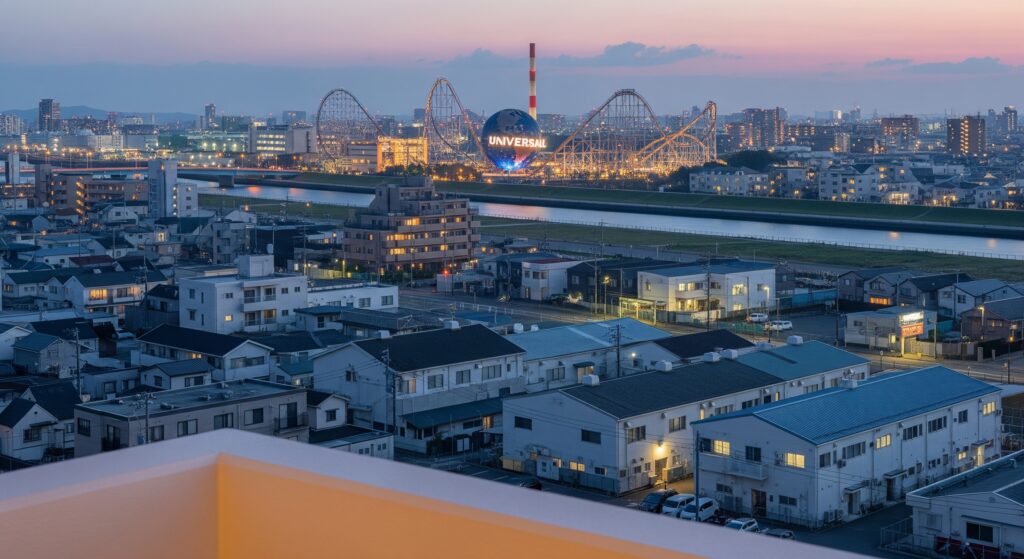
Nishiyodogawa Ward is located in the northwestern part of Osaka City, with terrain that runs along the Yodo River [10]. Geographically, it’s characterized by the Kanzaki River to the north and Osaka Bay to the west [10]. Being surrounded by rivers and sea gives the area an open, spacious feel that’s perfect for enjoying walks and runs [10].
In terms of transportation, Nishiyodogawa Ward offers easy access not only within Osaka City but also to areas like Kobe and Nara [10]. The ward is served by the JR Tozai Line (Mikuni Nakajima Station, Kajima Station) and the JR Kobe Line (Tsukamoto Station) [11], along with an extensive bus network [10]. Access to Osaka Station, Noda-Hanshin Station, and Hankyu Juso Station is also convenient, and it’s worth considering nearby bus stops based on your lifestyle needs [10]. With multiple Hanshin Expressway interchanges, access by car is also excellent [11].
3. Minpaku Demand Demographics and Competition in Nishiyodogawa Ward
Given these geographic characteristics and transportation access, the minpaku demand in Nishiyodogawa Ward is expected to primarily come from business travelers, remote workers, and foreign or domestic tourists looking to escape the hustle and bustle of the city center [12, 13]. Long-stay properties that capitalize on the area’s relaxed atmosphere and reasonable pricing could prove especially attractive [12].
Tourist attractions within the ward include the Ezaki Memorial Hall, which chronicles the history of Glico [14], and Yodogawa Riverside Park Nishinakajima District, where visitors can enjoy BBQ [14]. During summer, the Yodogawa Fireworks Festival also takes place, with several hidden viewing spots located within Nishiyodogawa Ward [15]. These attractions are likely to appeal to families and visitors attending specific events.
As for competition, reference nightly rates for minpaku properties in Nishiyodogawa Ward range widely from ¥15,460 to over ¥160,000 [16]. In particular, detached houses and maisonette-style properties that accommodate large groups can command premium pricing [16]. On Airbnb, listings with minimum nightly rates starting from as low as ¥1,460 also exist [17], suggesting a wide mix of price points across the market. This diversity in pricing indicates there’s room for differentiation by tailoring property types and pricing to specific target demographics (e.g., large groups, families, mid-to-long-term stayers). Rather than getting caught up in a simple price war, it’s important to clearly define your property’s unique features (size, amenities, atmosphere) and align them with the needs of your target audience.
Why Special Zone Minpaku Is Drawing Attention in Nishiyodogawa Ward Right Now (Benefits and Profitability)
The reason Special Zone Minpaku is attracting attention in Nishiyodogawa Ward lies in the numerous benefits this system offers, along with the high profitability it enables.
Key Benefits of Special Zone Minpaku:
- No Limit on Annual Operating Days: The biggest advantage of Special Zone Minpaku is that there’s no cap on the number of days you can operate per year [7, 8, 18, 19, 20, 21, 22]. This stands in stark contrast to the Private Lodging Business Act (the “new minpaku law”), which limits operations to 180 days per year [18, 21, 22]. Year-round operation means you can pursue maximum revenue potential [7, 8, 3]. Beyond capitalizing on short-term surges like the Expo, this allows for stable revenue generation throughout the year—including off-peak seasons—leading to shorter investment payback periods and higher returns on investment.
- Minimum Stay Requirement: Special Zone Minpaku requires a minimum stay of 2 nights, 3 days [8, 18, 19, 20, 21, 22]. While this condition may cause you to miss out on single-night guests, it also reduces the frequency of cleaning and check-in/check-out tasks, improving operational efficiency. This aligns well with Nishiyodogawa Ward’s tendency to attract mid-to-long-term stays, contributing to more stable operations [12].
- Flexibility in Management Outsourcing: Even when operating an unhosted property, Special Zone Minpaku has no special rules regarding outsourcing management duties [8, 21]. This differs from the Private Lodging Business Act, which mandates outsourcing to a management company for unhosted properties—meaning owners can handle emergency response and cleaning themselves if they choose.
- Flexibility in Zoning: Special Zone Minpaku can, in some cases, operate in exclusively residential zones where hotel-style operations under the Hotel Business Act would be difficult [19, 20]. In Osaka City, Special Zone Minpaku can be conducted in Category 2 Residential Zones, Quasi-Residential Zones, Neighborhood Commercial Zones, Commercial Zones, Quasi-Industrial Zones, and Category 1 Residential Zones (with floor area restrictions) [18, 20, 23, 22]. This zoning flexibility expands your options when searching for properties, opening up the possibility of running a minpaku business in areas with a more pleasant living environment. This can help reduce the risk of conflicts with neighbors while offering guests a more comfortable stay. Confirming zoning classification is one of the most critical steps early in your business planning process, and it’s essential to actively use official tools like “Map Navi Osaka” to obtain accurate information [24, 23, 25, 26].
- Government Support: Within National Strategic Special Zones, robust administrative support is available, including subsidy programs to help cover costs like fire safety equipment installation [27, 28, 29, 30, 31, 32]. Taking advantage of these subsidies can help reduce upfront investment and enable more efficient business development.
- Profitability: The absence of operating day restrictions, combined with operating in an area with high tourism demand, creates a significant advantage for attracting guests and ensures strong profitability [7, 8, 3, 27]. The roughly 30% increase in room rates since the pandemic, along with the current demand-exceeding-supply situation, shows that conditions are ripe for high profitability [1, 3].
Taken together, these benefits make Special Zone Minpaku a powerful option for maximizing revenue and achieving stable operations in the minpaku business—particularly in Nishiyodogawa Ward, Osaka City.
Comparison Table: Special Zone Minpaku vs. Other Minpaku Systems
When considering entering the minpaku business, it’s essential to understand the differences between the multiple legal frameworks that exist, each with its own set of regulations. The comparison table below concisely outlines the key features of Special Zone Minpaku, the Private Lodging Business Act (“new minpaku law”), and the Hotel Business Act, giving operators the information they need to choose the system best suited to their business strategy.
| Item | Special Zone Minpaku (National Strategic Special Zone Foreign Visitor Accommodation Business) | Private Lodging Business Act (“New Minpaku Law”) | Hotel Business Act (e.g., Simple Lodging Business) |
|---|---|---|---|
| Legal Basis | National Strategic Special Zone Act | Private Lodging Business Act | Hotel Business Act |
| Max Annual Operating Days | No limit [7, 8, 18, 19, 20, 21, 22] | Within 180 days per year [18, 21, 22] | No limit |
| Minimum Stay | 2 nights, 3 days or more [8, 18, 19, 20, 21, 22] | 1 night, 2 days or more [21] | No limit |
| Management Outsourcing Obligation | No special rules for unhosted operations [8, 21] | Unhosted operations require outsourcing to a registered management business [23, 33, 21] | Generally requires an on-site manager |
| Zoning Restrictions | Permitted in Category 2 Residential, Quasi-Residential, Neighborhood Commercial, Commercial, Quasi-Industrial, and Category 1 Residential zones (with floor area rules). Not permitted in exclusively residential or exclusively industrial zones, etc. [18, 19, 20, 23, 22] | Can operate nationwide outside industrial zones (may vary by municipality). If operating in an exclusively residential zone, the property must front a road at least 4m wide [18, 20, 23, 22] | Restrictions apply based on zoning (generally not permitted in exclusively residential zones) [18, 19, 20, 23, 22] |
| Obligation to Explain to Neighbors | Required [8, 18, 19, 20, 34, 6, 32, 35, 21, 36, 37] | Also required for schools, childcare facilities, etc. within 100m [18, 23] | Depends on municipality [35] |
| Key Facility Requirements | Rooms of 25㎡ or more, kitchen/bathroom/toilet/washbasin facilities, bedding, cooking utensils, cleaning equipment, etc. [38, 19, 20, 23, 39, 36] | At least 3.3㎡ per guest [23, 33] | Room floor area (7㎡ for Japanese-style, 9㎡ or more for Western-style), ventilation, natural light, lighting, moisture control, drainage, bathing facilities, guest registry, etc. [40] |
This comparison table simplifies the complex regulatory landscape of the minpaku business, allowing operators to see key differences between systems at a glance and choose the framework best suited to their business strategy. In particular, it clarifies items that directly affect business profitability and operational structure—such as operating days, zoning, and management outsourcing obligations—enabling you to efficiently determine which system best fits your property’s characteristics and business strategy (e.g., aiming for full year-round operation, wanting to operate as a hosted property, or wishing to open in a specific area). This helps reduce the risk of building a business plan based on faulty assumptions and supports more reliable business development.
Osaka City Special Zone Minpaku: Room Structure and Facility Requirements
To operate Special Zone Minpaku in Osaka City, you’ll need to satisfy specific requirements regarding the structure and facilities of your rooms. These requirements are set out under the Enforcement Order of the National Strategic Special Zone Act as well as Osaka City’s own regulations, and require careful verification when selecting or renovating a property.
| Item | Requirement | Osaka City’s Additional Requirements |
|---|---|---|
| Room Floor Area | Must be 25 square meters or more. If applying with multiple rooms, each room must individually be 25㎡ or more [18, 19, 23, 41] | – |
| Entrances and Windows | Must be lockable [38, 19] | – |
| Boundaries Between Rooms, Hallways, etc. | Must be walled construction, excluding entrances and windows [38, 19, 39] | – |
| Facilities (Basic) | Must have adequate ventilation, natural light, lighting, moisture control, drainage, heating, and cooling facilities [38, 19, 39] | – |
| Plumbing Facilities | Must have kitchen, bathroom, toilet, and washbasin facilities [38, 19, 23, 39] | Kitchen and washbasin must be separately provided, with running water facilities that can supply tap water or other water suitable for drinking [38, 19, 23, 39] |
| Cooking Equipment | Must have tools or equipment necessary for cooking [38, 19, 39] | Must include heating appliances such as a microwave or stovetop [38, 19, 39] |
| Cleaning Equipment | Must have tools necessary for cleaning [38, 19, 39] | Must have a vacuum cleaner, cleaning cloths, and trash bins [38, 19, 39] |
| Bedding & Furniture | Must have bedding, a table, chairs, and storage furniture [38, 19, 39] | It’s preferable that futon and pillow covers be of a design that allows for easy removal [38] |
This detailed list clearly presents the specific facility requirements that can be hard to picture from legal text alone, making it highly practical for operators when planning property selection or renovations. Having a clear picture of the required facilities allows you to more accurately estimate the scope and cost of renovation work, improving the precision of your business plan. It also serves as a concrete guide when preparing the “drawings clarifying the structural facilities” required at the time of application, and when preparing for on-site inspections—streamlining your preparation process. In particular, by including Osaka City’s own additional requirements, this list helps reduce the risk of overlooking region-specific requirements and helps prevent regulatory violations before they happen.
The Specific Process and Required Documents for Special Zone Minpaku Applications
The certification application process for Special Zone Minpaku involves multiple steps and a substantial number of documents. Following the correct procedures carefully will help ensure a smooth path to certification.
1. A Critical Step Before Applying: Preliminary Consultation with the Health Center, Fire Department, and Building Division
The most important and essential first step when starting the Special Zone Minpaku certification application process is a preliminary consultation with the relevant health center, fire department, and—if necessary—building division [1, 42, 32, 43, 35, 44, 45]. This step functions as a crucial risk-avoidance measure, preventing major rework later and unexpected additional investment. In particular, requirements related to fire safety equipment and building codes are deeply tied to a property’s structure, and making changes after the fact can require significant time and expense.
During the preliminary consultation, you’ll explain your business plan in concrete terms—covering the property you’ve selected, safety measures, and the operational structure you plan to build [48, 43]. Bringing drawings such as elevation and floor plans to the consultation allows you to accurately convey your specific situation to the government officials and receive precise advice. This is essential for making early determinations about the fundamentals of your business—whether the property can meet Special Zone Minpaku requirements, what renovations might be needed, and roughly how much they’ll cost.
Since health center consultation windows are expected to be busy, it’s strongly recommended that you always call ahead to make an appointment before visiting [32, 44, 45]. Consultations without a reservation may not be accepted, so be careful [32, 45]. Professionals such as administrative scriveners (gyoseishoshi) can handle these preliminary consultations on your behalf and help smooth negotiations with the authorities [49, 40, 46, 50, 6, 44, 41, 45]. This is a major advantage for operators with limited time or specialized knowledge, and it helps streamline the application process. Thorough preliminary consultation reduces the risk of regulatory non-compliance, improves the accuracy of renovation cost estimates, and ultimately leads to a smoother application process.
2. The Process for Obtaining a Fire Code Compliance Certificate and Key Fire Safety Equipment Requirements
While Special Zone Minpaku relaxes certain parts of the Hotel Business Act, fire code requirements are not relaxed and remain strict [8, 43, 41]. A copy of the fire code compliance certificate is a required attachment when applying for Special Zone Minpaku certification [32, 21, 41, 45]—without this document, your application will not be accepted.
To obtain a fire code compliance certificate, you must first submit an application for the certificate to your local fire department [35, 44]. The fire department will then conduct an on-site inspection of your facility [1, 35, 44, 21] to confirm that the installed fire safety equipment meets requirements. The business operator must be present for this inspection [1, 35, 44].
Key fire safety equipment requirements include the following:
- Automatic Fire Alarm System: Fire safety equipment such as fire alarms and exit signs is generally required [1, 40]. In particular, automatic fire alarm systems designed for small specific-use facilities can be installed in minpaku properties with a total floor area of 300㎡ or less [47, 50]. Heat detectors are required in kitchens and washrooms, while smoke detectors are required elsewhere [47, 50].
- Fire Extinguishers: For a detached-house minpaku with a total floor area of 50㎡ or more, fire extinguishers must be installed on each floor [47, 50]. If the property qualifies as an “openable floor” (having openings suitable for evacuation), the threshold may be relaxed to 150㎡ or more—but installation is still recommended given the relatively low effort involved [47, 50].
- Flame-Resistant Items: Minpaku properties are required to use flame-resistant carpeting (2㎡ or larger) and curtains [49, 47, 50, 31, 45]. Fire inspections will strictly check not only fire safety equipment but also the use of flame-resistant items [49, 50].
- Evacuation Route Maps: To ensure guest safety, evacuation route maps must be posted in minpaku bedrooms [49, 47, 50, 23, 31, 39, 33].
- Fire Prevention Manager: If the building’s total capacity is 30 or more people, a fire prevention manager must be appointed [8, 49, 50, 45]. Outsourcing this role to a specialized company is recommended, as it allows fire prevention duties (such as fire drills and equipment maintenance) to be carried out properly [49, 50].
- Electrical Fire Alarm: Buildings with lath-and-mortar construction and a contracted current of 50A or more, or a total floor area of 150㎡ or more, are required to install an electrical fire alarm [49, 50].
- Exit Signs: In some cases, exit signs may not be required if certain conditions are met—such as a clear line of sight to the main evacuation exit from every part of the room, the ability to reach a safe location without passing within 3m of a window or door, posted evacuation route maps, and installed emergency lighting [47, 31]. For apartment-style buildings, if the minpaku unit’s floor area is 100㎡ or less, emergency lighting or portable lighting equipment alone may be sufficient in some cases [47].
Fire code compliance is one of the biggest hurdles in the minpaku application process, and installing equipment can be costly. This is especially true for row houses (nagaya) and apartment-style buildings, where the impact—and cost—can extend to the entire building. However, taking advantage of certain exceptions (such as exemptions from fire equipment requirements or exit sign requirements when the minpaku portion is under 50㎡ [47, 31]) can help keep costs down. For this reason, holding preliminary discussions with the fire department [47, 31, 35] and working with professionals like administrative scriveners and fire equipment specialists are key to avoiding unnecessary investment and achieving compliance efficiently. Professionals are familiar with ways to avoid major equipment investments by leveraging specific conditions or equipment types—such as installing an “automatic fire alarm system for small specific-use facilities” [49, 50] or qualifying for relaxed fire extinguisher requirements through “openable floor” classification [49, 50]—and this knowledge contributes to a more efficient application process.
3. Neighbor Explanation Meetings: Scope, Content, and the Importance of Preventing Trouble
In Osaka City, holding an explanation meeting for neighboring residents is mandatory before applying for Special Zone Minpaku certification [18, 38, 19, 20, 23, 34, 6, 32, 21, 36, 37, 45, 53]. This meeting is far more than a box to check—it’s one of the most critical factors determining the long-term viability of your minpaku business. Noise and garbage issues can lead to complaints and reports from residents, and in the worst case, result in administrative guidance or a forced shutdown [28, 12].
The scope of neighbors who must be informed is as follows:
- If the minpaku facility is in a “multi-unit residential building” or “row house (nagaya),” all residents of that building must be informed [49, 6].
- All residents of buildings on land adjacent to the minpaku property’s site must be informed [49, 20, 6].
- If the minpaku facility faces a park, road, or vacant lot, all residents of buildings on land within 10 meters of the property’s site must be informed [49, 20, 6].
The content that must be explained covers a wide range of information, including:
- The facility’s name and location [34, 6, 36]
- The type of minpaku operation (i.e., that it’s Special Zone Minpaku) and the management structure [34, 6]
- Waste disposal methods (that minpaku garbage is classified as commercial waste, along with proper sorting and disposal methods) [18, 54, 23, 44, 36, 53]
- Noise prevention measures (preventing noise at night, posting notices inside the property, enforcement of house rules) [40, 46, 54, 23, 28, 33, 16, 53]
- Emergency response procedures (fire, accidents, etc.) and emergency contact information [54, 34, 6, 53]
- A point of contact for complaints [34, 6, 36, 45, 53]
- Warnings regarding smoking and fire safety [54, 34]
To prevent trouble after you begin operating, you’re strongly encouraged to explain things sincerely and make an effort to gain understanding from neighboring residents [38, 55, 54, 27, 28, 6, 39, 35, 53]. While you can technically proceed with the application process even without residents’ consent [6], creating a written agreement to document conditions and promises can be an effective way to avoid trouble down the road [6, 53]. For residents who don’t attend the explanation meeting, consider following up by distributing meeting minutes or visiting them individually [6, 53].
This upfront explanation to neighbors and ongoing consideration for them reduces the risk of trouble and improves the stability and sustainability of your business by earning understanding and cooperation from the local community. Strict enforcement of house rules [28], clear emergency contact procedures [53], and regular communication with the community [55, 27] are all essential to maintaining good relationships—and should be viewed not as a one-time event, but as an ongoing effort at “community coexistence.”
4. Establishing a Waste Disposal System and Notifying the Environmental Bureau
Garbage generated by minpaku operations is treated differently from regular household waste—it’s classified as “commercial waste” [18, 23, 44, 36, 45]. This means it won’t be collected through the city’s regular collection service, and certified operators are responsible for arranging proper disposal.
Specifically, you’ll need to contract with a licensed waste disposal company to handle the collection, transport, and disposal of your garbage [35, 44, 45]. This requires clearly defining your disposal methods and storage location in advance, and signing a contract with your chosen contractor [44]. After signing the contract, you must submit a notification to Osaka City’s Environmental Bureau, General Waste Guidance Division [35, 44, 45].
Waste disposal isn’t just a routine task—it’s a legal obligation, and one of the leading causes of neighbor disputes [54, 53]. Improper handling can lead to administrative guidance or penalties, and can significantly damage your minpaku business’s brand image. Contracting with the right provider and clearly communicating disposal procedures are essential not only for legal compliance but also for earning trust from the local community. It’s also critical to thoroughly explain garbage disposal rules to guests [23], and multilingual signage is recommended for properties that host a lot of international guests [36, 45].
5. Certification Application and On-Site Inspection with the Health Center
Once you’ve completed all preparations for your minpaku operation, it’s time to submit your certification application. You’ll submit a complete set of required documents to the relevant health center (Osaka City Health Center, Environmental Health Inspection Division, Hotel Business Guidance Group) [32, 43, 35, 44, 41, 45].
The application fee is ¥10,500 if an on-site inspection is conducted, or ¥2,500 if it is not [32, 45]. However, some sources cite a fee of ¥21,200 [52, 21], so it’s important to confirm the exact amount in advance.
After submitting your certification application documents, the health center and fire department will conduct an on-site inspection of your facility to confirm equipment [1, 35, 44, 21]. The business operator must be present for this inspection [1, 35, 44], and inspectors will check not only equipment but also your operational structure. If no issues are found during the inspection, you’ll receive notification of your certification, and you’ll be officially ready to launch your minpaku business [1, 35].
Preparing the application documents is a wide-ranging task that requires accuracy [32, 43, 41, 45]. Any errors or omissions can delay the review process and push back your opening date. Especially for corporate applications, you’ll need articles of incorporation and a certificate of registered matters, and for individual applications, a copy of your residence certificate—plus structural facility drawings, records of neighbor explanations, fire code compliance certificates, and other specialized documents that require broad knowledge and careful preparation [32, 43, 21, 41, 45]. The difference in application fees based on whether an on-site inspection is conducted reflects differences in the administrative burden—and smooth execution of the on-site inspection requires thorough advance preparation and close coordination with the authorities. This leads to faster certification. Careful preparation of application documents and thorough preliminary consultation both contribute to a smooth review process and quicker certification.
Special Zone Minpaku Application: Required Documents Checklist
Applying for Special Zone Minpaku certification requires submitting a wide range of documents. The checklist below serves as a guide to comprehensively confirm what’s needed for your application and ensure nothing is missing. Even a single missing document can result in your application being rejected or significantly delayed, so careful preparation is essential [32, 41, 45].
| Category | Document Name | Notes |
|---|---|---|
| Application Form | National Strategic Special Zone Foreign Visitor Accommodation Business Specific Certification Application | Use the designated format [32, 21, 45] |
| Applicant Information | Articles of incorporation (or founding documents) and certificate of registered matters (for corporations) | Also attach a list of officers, etc. [32, 43, 21, 41, 45] |
| Copy of residence certificate (for individuals) | [32, 43, 21, 41, 45] | |
| Property Information | Drawings clarifying the facility’s structure and equipment | Includes floor plans for each room, floor area, location of plumbing facilities, etc. [32, 43, 21, 41, 45] |
| Vicinity map | A map showing the surrounding area of the facility [6, 32, 45] | |
| Legal Rights | Lease agreement and any associated terms and conditions | [32, 37, 45] |
| For rental properties: copies of all lease agreements related to the facility, plus a written document proving the owner and landlord have consented to the property’s use for this business | [32, 36, 45] | |
| For condominium units: a document proving the operation does not violate the building’s management rules | [20, 32, 45] | |
| Neighbor Relations | Records of the method used to explain the business to nearby residents (including materials used in the explanation) | [38, 34, 6, 32, 36, 45, 53] |
| The system in place for appropriately handling complaints and inquiries from nearby residents, and how this system is communicated to them | Should include an overview of the facility’s structural equipment and the services provided to guests during their stay [32, 45] | |
| Safety & Hygiene | Copy of the fire code compliance certificate | Issued by the relevant fire department [32, 43, 21, 41, 45] |
| Copy of water quality test results (if water used is not tap water) | [32, 43, 41, 45] | |
| Operational | Instructions for using the facility, to be placed inside the room | Prepared in Japanese and applicable foreign languages [32, 36, 45] |
| Guest registry format | Must include length of stay, name, address, occupation, nationality, passport number, contact information, and verification records [38, 39, 43, 36, 41, 45] |
This checklist ensures thorough preparation and serves as a compass to help operators prepare all necessary documents without missing anything. By keeping track of the status of each document, you can move through the entire application process efficiently and minimize rework. Even if you hire a professional like an administrative scrivener to handle the application on your behalf, sharing this checklist with them will streamline the exchange of information and materials, improving the quality of collaboration. It also serves as a reference point for confirming whether each document meets the legally required standards, helping improve the quality of your application and increase the likelihood of successful certification.
Key Considerations and Strategies for Succeeding with Special Zone Minpaku in Nishiyodogawa Ward
To succeed with a Special Zone Minpaku business in Nishiyodogawa Ward and maximize your revenue, you’ll need more than just legal operation of your property—strategic management is essential.
1. Unique Challenges and Solutions for Row House (Nagaya) Minpaku Properties
A nagaya (row house) is a type of multi-unit residential building where multiple units are constructed within a single structure, sharing walls with neighboring units—but unlike apartment buildings, these units don’t share common areas like entrances, hallways, or stairwells, and each unit’s entrance faces directly onto the street [18, 24]. Unlike multi-unit housing (such as apartments or condominiums), nagaya don’t fall under the “special-use building” category defined by the Building Standards Act, and are instead treated similarly to standard detached houses—meaning fire prevention and evacuation regulations tend to be relatively relaxed [24, 2, 38]. However, when using a nagaya for minpaku purposes, it’s essential to understand the unique challenges and solutions specific to this property type.
Constraints Under the Building Standards Act:
Connected row houses are often treated as a single building, which means a change of use may be required when converting one into a minpaku property [40, 46]. In this case, it’s particularly important to confirm whether the fire resistance performance of the “partition wall” between adjacent units meets Building Standards Act requirements [40, 46, 47]. While Osaka Prefecture’s ordinance states that minpaku is permitted “in all areas within urbanization areas except exclusively industrial zones” [40], you must always consult with the building division beforehand regarding the specific structure of your property and whether a change of use is required.
Application of Fire Code Regulations:
Nagaya typically aren’t required to have fire safety equipment installed, similar to standard detached houses—but when operating as Special Zone Minpaku or a welfare facility, new fire safety equipment installation becomes necessary [2, 38, 51, 27]. Since fire code requirements may end up applying to the entire building, it’s recommended to strengthen fire prevention measures with adjacent units (such as installing flame-resistant curtains or fire doors) [40, 46].
That said, several exceptions exist for nagaya properties. If the total floor area used for minpaku purposes is under 50㎡, it’s treated similarly to converting part of a regular residence into minpaku, and fire safety equipment such as automatic fire alarm systems may be exempted (requiring only self-installed residential fire alarms and fire extinguishers) [52, 47, 50]. However, be aware that if another operator begins minpaku operations in a different unit of the same nagaya, the entire building may become subject to automatic fire alarm system requirements—so it’s important to watch for future changes [52, 50].
There’s also an exception available when the nagaya’s total floor area is under 1,000㎡, each unit’s entrance faces a road suitable for evacuation, there are no shared areas like stairwells or hallways between units, and ownership or management rights are separately divided by unit—in which case fire safety equipment only needs to be installed in the minpaku portion (though evacuation guide lights, etc. must still be installed in the other nagaya sections) [19, 51]. When converting a partition wall to quasi-fire-resistant construction, prior consultation with the fire department is essential—proceeding with construction without consulting them first risks having to redo the work, so be sure to involve a professional to confirm requirements [47, 31].
While nagaya properties benefit from more relaxed Building Standards Act and fire code regulations compared to multi-unit housing [24, 2, 38], using them for minpaku creates the complex situation of triggering new fire safety equipment obligations [2, 38, 51, 27]. In particular, the fire resistance performance of the “partition wall” between adjacent units [40, 46, 47] and the risk of fire code requirements extending to the entire building [40, 46, 31] are unique and complex challenges specific to nagaya properties—proceeding without detailed prior confirmation and consultation with professionals could result in unexpectedly high renovation costs. However, since the exception for “minpaku floor area under 50㎡” [52, 47, 50] and the “nagaya exception” [19, 51] can significantly reduce initial investment for nagaya properties, checking whether these exceptions apply should be your top priority for risk avoidance and cost optimization.
Management Rules and Relationships with Neighbors:
Since connected row houses share walls and roofs, relationships with nearby residents are extremely important [40, 46]. If a management association exists, you’ll need to confirm whether minpaku operations are permitted [40, 46, 19, 52, 45]. If the walls between adjacent units are thin, noise from guests can easily become an issue—so it’s important to post notices inside the unit (such as reminders to “please keep noise to a minimum”), thoroughly explain house rules to guests in advance, and strengthen soundproofing measures as needed [40, 46, 28]. Since residents of nagaya properties often have close-knit relationships with one another, letting them know about your minpaku plans in advance is key to avoiding trouble [40, 46].
2. Confirming Zoning Classification and Using “Map Navi Osaka”
When operating a minpaku business within Osaka City, it’s essential to understand the zoning regulations set out under the City Planning Act and Building Standards Act, and to confirm whether your property is located in an area where operation is permitted [18, 19, 20, 23, 22]. Confirming zoning classification is the single most important step early in your business planning process—it’s the dividing line between success and failure for your business. If you acquire a property in an unsuitable zone, minpaku operation may not be possible at all, wasting your investment—so obtaining accurate information is absolutely essential [18, 19, 20, 23, 22].
Zones where Special Zone Minpaku is permitted include:
- Category 2 Residential Zones
- Quasi-Residential Zones
- Neighborhood Commercial Zones
- Commercial Zones
- Quasi-Industrial Zones
- Category 1 Residential Zones (with floor area restrictions)
On the other hand, Special Zone Minpaku cannot be operated in exclusively residential zones or exclusively industrial zones, etc. [18, 19, 20, 23, 22].
To confirm your property’s zoning classification, Osaka City’s map information site “Map Navi Osaka” is a convenient resource [24, 23, 25, 26]. While this tool is useful as a reference, it’s recommended that you conduct a final verification of the official city planning designation using the “public viewing documents” available at the “City Planning Information Corner” on the 7th floor of Osaka City Hall’s main building, in the City Planning Division of the Planning and Coordination Bureau [24, 25, 26]. Since zoning classification also affects the surrounding environment (commercial facilities, residences, factories, etc.) and future development plans, it plays a deep role in long-term business planning as well.
3. Confirming Management Rules for Condominiums and Multi-Unit Housing
When planning to operate minpaku in a condominium or multi-unit residential building, confirming the building’s management rules is an even more critical step than confirming zoning compliance [40, 18, 46, 19, 52, 20, 45]. Since management rules are legally binding, operating minpaku in violation of them constitutes an illegal act that could lead to forced eviction or claims for damages [45]. Even if the zoning classification permits minpaku, some management rules may prohibit it outright—so prior confirmation is absolutely essential [40, 18, 46, 19, 52, 20, 45].
Even if the management rules state something like “for residential use only,” it may still be possible to apply for Special Zone Minpaku certification if you obtain a letter of consent from the management association authorizing minpaku use [19, 20]. However, if such consent can’t be obtained, or if the management rules explicitly state “minpaku not permitted,” your application will not be approved, and you’ll need to consider a different property [19, 20, 36].
This step highlights the importance of not just reading the rules, but actively engaging in dialogue with the management association. Through transparent communication, it’s essential to address any concerns about minpaku operation and work toward gaining understanding and approval. Confirming and obtaining approval for management rules directly supports legal compliance and helps avoid community disputes—ultimately contributing to stable, long-term business operations.
4. Thorough Neighbor Dispute Prevention and Emergency Response Systems
One of the biggest concerns in operating a minpaku business is trouble with neighbors caused by issues like noise, garbage disposal, smoking or fire safety negligence, and unauthorized occupants [40, 46, 54, 28]. Such issues can lead to complaints and reports from residents, and in the worst case, result in administrative guidance or a forced shutdown—directly threatening the sustainability of your business [28].
Specific measures for preventing trouble before it happens include:
- Thorough House Rules: Post notices inside the unit (such as reminders to “please keep noise to a minimum”) and thoroughly explain house rules to guests in advance [40, 46, 23, 28, 33]. Using pouches or in-room messaging as deterrents is also effective and can dramatically reduce the occurrence of trouble [28].
- Noise Mitigation: Consider measuring nighttime noise levels and strengthening soundproofing measures as needed [40, 46].
- Clear Waste Disposal Procedures: Clearly define waste disposal methods and storage locations, and explain proper sorting and disposal to guests [18, 23, 44, 36]. Since minpaku garbage is treated as commercial waste, you must inform guests of this fact and have them dispose of it using the designated method [18, 23, 44].
- Establishing an Emergency Response System: It’s critically important to explain emergency response procedures and contact information (for fires, accidents, etc.) to nearby residents in advance and keep them informed [54, 34, 6, 53], and to ensure thorough completion of guest registry entries as well [38, 39, 43, 36, 41, 45]. This allows you to build a system capable of responding quickly in the event of an emergency, easing residents’ concerns.
- Setting Up a Complaint Response Window: You must establish a clear point of contact for handling complaints and inquiries from nearby residents quickly and appropriately, and define how this contact information will be communicated [34, 6, 36, 45, 53].
These measures aren’t simply about fulfilling an obligation—they’re among the most critical factors determining the “sustainability” of your minpaku business. By providing thorough explanations in advance, presenting concrete solutions to address concerns, and building trust with the community, you can prevent future trouble and ensure the stable operation of your business. Strict enforcement of house rules [28], clear emergency contact procedures [53], and regular communication with the community [55, 27] are all essential for maintaining good relationships—and should be treated not as a one-time event, but as an ongoing effort at “community coexistence.”
5. Operational Strategies for Maximizing Revenue
To succeed with a Special Zone Minpaku business in Nishiyodogawa Ward and maximize your revenue, you’ll need more than just legal operation of your property—strategic management is essential.
- Targeting and Property Differentiation: Taking Nishiyodogawa Ward’s geographic characteristics and transportation access into account, it’s important to differentiate your property to appeal to specific demand segments. For example, you could target business travelers (leveraging good access to Shin-Osaka Station and Umeda), or long-term stayers, families, and event attendees (leveraging the area’s natural surroundings of rivers and sea)—clearly defining your target audience and tailoring your property’s size, facilities, and amenities accordingly [10, 12, 14]. Offering large-group accommodation or home-like comfort that hotels struggle to provide can help you establish a competitive edge [56, 16].
- Optimizing Pricing Strategy: Introduce dynamic pricing that responds to seasonal fluctuations, events, and shifts in demand to maximize revenue [1, 56, 28]. In particular, during high-demand periods like the Expo, setting appropriately optimized nightly rates can lead to a substantial increase in revenue [1, 3, 56].
- Leveraging Multiple Customer Acquisition Channels: Beyond major online travel agencies (OTAs), combining direct bookings through your own website and social media, along with partnerships with local tourism information sites, can help improve occupancy rates [27, 28, 44].
- Improving Guest Experience and Managing Reviews: Maintaining high cleanliness standards, providing prompt and courteous guest communication, and offering thorough multilingual support all boost guest satisfaction and lead to positive reviews [23, 27, 28, 44, 36, 45]. Since reviews have a major impact on attracting new customers, it’s important to actively manage them and use them to drive improvement. In particular, cleaning issues and dissatisfaction with guest service are major causes of lower review scores, so strengthening your operational structure is essential [28, 44].
- Actively Utilizing Subsidy Programs: Osaka Prefecture offers subsidies of up to ¥400,000 for Special Zone Minpaku facilities under its environmental improvement promotion program, covering things like fire safety equipment installation, multilingual support, and Wi-Fi setup [27, 28, 29, 30, 31, 32]. Actively taking advantage of these public support and subsidy programs can help reduce initial investment and operating costs, enabling more efficient business development [55, 27]. However, note that you must wait until you receive official notification of grant approval before beginning work funded by the subsidy [29].
These strategic approaches go beyond simple legal compliance—they’re essential for boosting your competitiveness in the minpaku business in Nishiyodogawa Ward and ensuring long-term financial health.
Conclusion and Recommendations
Given the current market conditions and future tourism trends, Special Zone Minpaku in Nishiyodogawa Ward, Osaka City presents an extremely promising investment opportunity. The rapid recovery in foreign tourist numbers across Osaka City, along with major upcoming events like the 2025 Osaka-Kansai Expo and the 2029 Osaka IR, will further accelerate the current supply shortage in accommodation—bringing high occupancy rates and profitability to the minpaku business.
Nishiyodogawa Ward boasts excellent transportation access to Shin-Osaka Station and Umeda, combined with a unique natural environment surrounded by rivers and sea [10, 11, 12]—making it an ideal destination for specific demand segments such as business travelers, long-term stayers, and families who want convenience while avoiding the hustle and bustle of the city center [12].
The Special Zone Minpaku system offers the major advantage of having no cap on annual operating days, enabling maximum revenue potential [7, 8, 3]. The ability to operate in certain residential zones, along with the availability of government subsidy programs, further enhances the appeal of entering this business [18, 19, 20, 23, 27].
However, to make the most of this opportunity, it’s essential to pay careful attention to the following points and proceed strategically:
- Thorough Preparation and Legal Compliance:
- Close Coordination with Government Agencies: Preliminary consultation with the health center, fire department, and building division is essential for confirming a property’s suitability, identifying the scope of necessary renovations, and avoiding unexpected costs [1, 32, 43, 35, 44, 45]. Fire code requirements in particular are strict, but understanding the exceptions specific to nagaya properties and working with professionals can help you avoid unnecessary equipment investment [52, 47, 50].
- Confirming Zoning and Management Rules: Early in the property selection process, always confirm that the zoning classification permits Special Zone Minpaku operation, and—for condominiums or multi-unit residential buildings—that the management rules don’t prohibit minpaku [18, 19, 20, 23]. These are the most important elements in establishing a solid legal foundation for your business.
- Accurate Preparation of Required Documents: The wide range of documents required for certification means that even one missing or incorrect item can delay the review process [32, 41, 45]. Using a checklist and preparing documents accurately and comprehensively will help ensure faster certification.
- Building Good Relationships with Neighbors:
- Thorough Preliminary Explanation Meetings: The neighbor explanation meeting required in Osaka City isn’t merely a formality—it’s a critical process that determines the long-term viability of your business [18, 38, 19, 20, 23, 34, 6, 32, 36, 37, 45, 53]. Presenting concrete measures to address concerns about noise and waste disposal, and sincerely seeking understanding, is essential for preventing future trouble and earning trust from the community [54, 28, 53].
- Ongoing Communication: Maintaining good relationships is recommended through strict enforcement of house rules [28], clear emergency contact procedures [53], and participation in local community events as needed—treating this as an ongoing effort at community coexistence [55, 27].
- Strategic Operations for Maximizing Revenue:
- Differentiation Tailored to Your Target Audience: Leverage Nishiyodogawa Ward’s unique characteristics to establish a property concept that caters to audiences seeking a balance between city access and natural surroundings, or that specializes in specific needs such as large groups or long-term stays, to differentiate your business [10, 12, 14].
- Optimizing Pricing Strategy and Acquisition Channels: Maximize occupancy and profitability by combining flexible pricing that responds to demand fluctuations with a diverse mix of online and offline customer acquisition channels [1, 56, 27, 28, 44].
- Delivering a High-Quality Guest Experience: Cleanliness, prompt guest service, and multilingual support all contribute to positive reviews, helping attract repeat guests and new customers alike [23, 27, 28, 44, 36, 45].
With proper preparation and strategic operations, a Special Zone Minpaku business in Nishiyodogawa Ward has the potential for major success, backed by Osaka’s growing tourism demand.
For Support Launching or Operating Special Zone Minpaku in Nishiyodogawa Ward, Osaka City, Turn to Stay Buddy
“I want to start a Special Zone Minpaku business in Nishiyodogawa Ward, but I’m not sure where to begin.”
“I’m anxious about the complicated application process and interpreting fire code regulations.”
“I want comprehensive support—from property selection to marketing and day-to-day operations.”
Do any of these concerns about launching or operating a minpaku business in Nishiyodogawa Ward, Osaka City sound familiar?
At Stay Buddy Co., Ltd., our specialized team offers comprehensive support for your minpaku business—from confirming zoning classification and management rules, to helping you obtain a fire code compliance certificate, supporting your neighbor explanation meetings, and developing multifaceted marketing strategies through day-to-day operational management.
Why not partner with us to unlock Nishiyodogawa Ward’s full potential and build a minpaku operation that’s both legally compliant and financially stable? Feel free to reach out to us for a consultation anytime.