What Is the Neighborhood Explanation Meeting Required for Special Zone Minpaku in Osaka?
If you’re considering starting a minpaku business, you may have wondered: “I want to use Osaka’s Special Zone Minpaku system, but is it true that I need to hold an explanation meeting for local residents?” To operate a Special Zone Minpaku in Osaka Prefecture or Osaka City, you must meet certain requirements set out by local ordinances—and among these, the neighborhood explanation meeting is positioned as an especially important step.
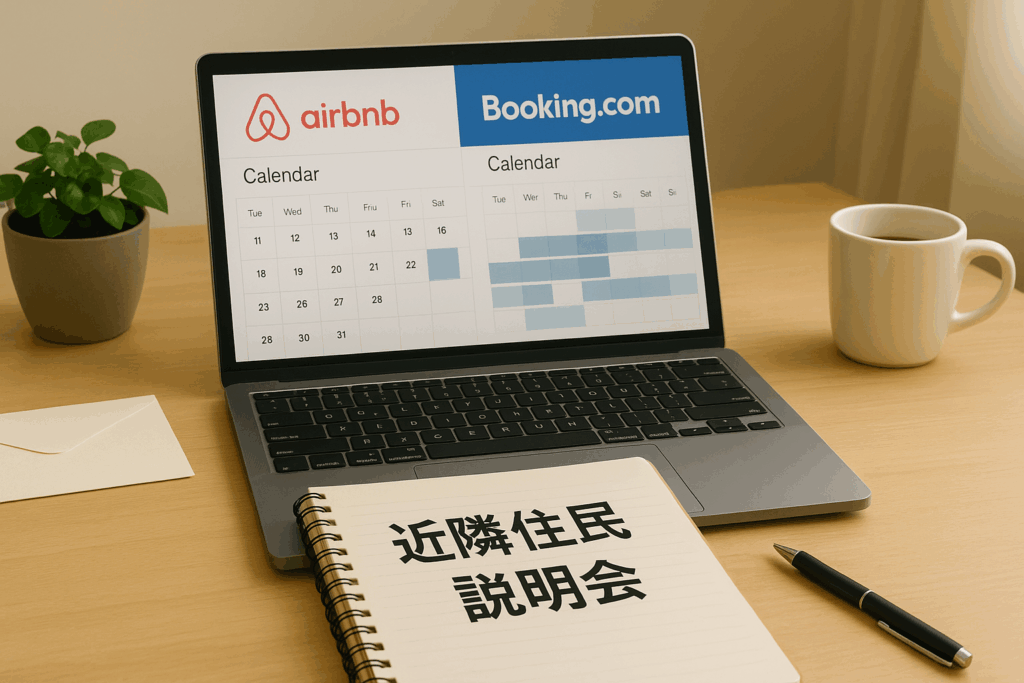
Even if you’ve carefully prepared your property’s location and facilities, starting operations without gaining the understanding of surrounding residents significantly increases the risk of complaints and disputes. Furthermore, if trouble arises after the fact, it could directly lead to your listing being suspended on OTAs (Airbnb, Booking.com, Expedia, etc.) and a decline in revenue. To keep your minpaku operation stable over the long term, it’s essential to properly understand the neighborhood explanation meeting procedure.
This article explains the basics of the neighborhood explanation meeting required for Special Zone Minpaku in Osaka, the actual procedures involved, points to watch out for, and tips for running the meeting smoothly. We hope this will be helpful both for those planning to start a Special Zone Minpaku business in Osaka and for those who already own a minpaku property and want to review the administrative process.
Overview of Osaka’s Special Zone Minpaku and the Neighborhood Explanation Meeting
Special Zone Minpaku is a system that allows residential properties to be used as lodging facilities under special approval, with certain relaxations to the Hotel Business Act, in areas designated as National Strategic Special Zones—such as Osaka Prefecture and Osaka City. It operates under approval standards that differ from the standard Hotel Business Act or the Private Lodging Business Act (the “Minpaku New Law”), and once certain conditions are met, operators can run their business with relatively greater flexibility.
However, Special Zone Minpaku status doesn’t mean you can do anything you want.
Operators must follow the ordinances and guidelines set by each local government and give thorough consideration to the impact on the surrounding environment, as well as safety and hygiene concerns. In particular, when starting a Special Zone Minpaku business in Osaka City or Osaka Prefecture, holding a “neighborhood explanation meeting” to explain your plans to local residents and foster harmony with the community is often a mandatory requirement.
Why Is a Neighborhood Explanation Meeting Necessary?
Since minpaku involves opening up part of a residential area as lodging accommodations, it brings a major change for local residents: an increase in the flow of new people coming and going. Many residents have concerns about issues such as noise, garbage disposal, and public safety.
This is why local ordinances require operators to concretely explain, through a neighborhood explanation meeting, how the minpaku will be operated and what consideration will be given to surrounding residents, in order to gain their understanding. If the meeting goes smoothly and a good relationship with residents is maintained, the likelihood of trouble occurring after opening can be greatly reduced.
On the other hand, starting operations without holding an explanation meeting could be considered an ordinance violation, potentially resulting in the revocation of your permit—and consequently making it impossible to continue operating the property. Taking a long-term view, providing proper explanations to residents is an unavoidable step.
Steps for the Neighborhood Explanation Meeting
In local governments such as Osaka City and Osaka Prefecture, the explanation meeting is generally required to follow a process along the lines below. Be sure to check the official government website or the relevant department for the latest information as you proceed.
Confirming the Scope of Coverage
Typically, the meeting must be open to residents living within a certain distance of the property, or to other households within the same apartment building. Check Osaka City’s guidelines in advance to determine the area that applies to your property.
Setting the Date, Time, and Venue
It’s common to rent a community center or meeting hall near the property and hold the meeting on a weekday evening or weekend, when residents are more likely to be able to attend. Prepare several candidate dates to accommodate the schedules of local residents.
Distributing Notices and Flyers
Distribute flyers summarizing the date, time, location, and agenda of the meeting (an overview of the minpaku plan, operating policies, etc.) to the target residents, either by hand delivery or by mail. If you’re concerned the information may not get through effectively, consider reaching out to residents directly as well.
Running the Meeting
- Introduction of the minpaku operator or management company
- Basic information such as the property’s location, size, and planned opening date
- Rules guests must follow (noise prevention measures, garbage disposal methods, etc.)
- Q&A session with residents
Preparing and Submitting a Report on the Meeting Results
You’ll need to prepare a report summarizing the opinions raised during the meeting and the measures you plan to take in response, and submit it to the local government. Be sure to check the designated document format according to the rules of Osaka City or Osaka Prefecture.
Key Points to Keep in Mind During the Meeting
- Concrete Measures for Noise and Garbage Issues
Clearly present your countermeasures for the points that concern local residents the most, such as nighttime noise and garbage disposal timing. Providing specific operational details—such as a contact point for noise complaints and thorough enforcement of collection days and sorting rules—will help put residents’ minds at ease. - Security Measures and Management of Shared Spaces
For apartment buildings, managing shared spaces such as entrances and hallways is crucial. Explain the presence of security cameras, auto-lock systems, and similar measures, and emphasize the systems in place to prevent unauthorized entry and noise-related trouble. - Communication Systems
It’s important to clearly establish a means of contact for residents to raise concerns or questions. Make sure residents are informed about 24-hour management support services and emergency contact information for the owner. - Robust Language Support
Since Osaka attracts many guests from overseas, explaining your multilingual support system can help ease residents’ concerns. For guests who don’t speak Japanese, be sure to establish procedures in advance, such as using translation services or social media, to handle communication. - Prioritizing Dialogue with Residents
Completing Special Zone Minpaku administrative procedures isn’t the only thing that matters—building a relationship of trust with local residents is key in practice. Rather than simply speaking one-way, it’s important to listen to residents’ opinions during the meeting and reflect them in your operational plan wherever possible.
Tips for a Successful Neighborhood Explanation Meeting
To get your Special Zone Minpaku business in Osaka off to a smooth start, keep the following points in mind.
- Prepare Thoroughly
Prepare flyers, slides, and a Q&A list in advance so that your explanation on the day goes smoothly. Insufficient preparation can heighten residents’ anxiety and lead to mistrust. - Respond Politely and Sincerely
During the Q&A session, if there’s something you don’t know, it’s perfectly fine to say honestly, “Let me look into that and get back to you.” Following up properly after checking creates a more sincere impression than giving a half-hearted answer. - Actively Participate in Community Activities
Don’t let your engagement end with the explanation meeting—showing your face at neighborhood association events and local functions helps build residents’ trust. If you’re aiming to operate over the long term, it’s important to strengthen your ties with the surrounding community.
Summary
When operating a Special Zone Minpaku in Osaka, the neighborhood explanation meeting isn’t merely a “formal obligation”—it’s an essential step for building good relationships with the community. By clearly presenting your countermeasures for the issues residents care about most, such as noise and public safety, and resolving their questions and concerns, you can significantly reduce the risk of trouble after opening.
Gaining the community’s understanding through a well-conducted explanation meeting also makes it easier to earn positive reviews on OTAs like Airbnb and Booking.com, and it helps you build a “community-rooted minpaku brand” that’s less vulnerable to external factors such as algorithm changes.
Osaka is one of Japan’s leading tourist cities, and as inbound demand continues to grow, interest in Special Zone Minpaku is likely to keep rising as well. To achieve stable, long-term minpaku operations, be sure to properly complete the neighborhood explanation meeting and maintain smooth communication with residents.
For Inquiries About Special Zone Minpaku, Contact Stay Buddy Inc.
If you’re interested in starting a Special Zone Minpaku business in Osaka but feel uncertain about the neighborhood explanation meeting or administrative procedures, please feel free to consult with Stay Buddy Inc.
We provide detailed support across a wide range of areas, including document preparation and meeting preparation and facilitation, helping you achieve a smooth minpaku launch without the hassle. We’re also happy to help with operational know-how and guest acquisition challenges, so please don’t hesitate to reach out.