Leave Your Minpaku Management to Us
Free Online ConsultationOne of the biggest challenges in running a minpaku is figuring out how to boost guest satisfaction in ways that lead to repeat visits and positive word of mouth. A clean room, a comfortable bed, and well-stocked amenities are just the baseline these days—more and more owners and hosts are looking for ways to stand out by offering something truly unique that guests can’t find elsewhere.
That said, standing out doesn’t necessarily require major renovations or high-end appliances. In fact, it’s often the small touches—the little moments of thoughtfulness—that leave the deepest impression on guests. Today, we’d like to introduce one such idea: gifting guests local, region-specific sweets.
By offering treats that reflect local food culture and tradition, you can give guests a genuine sense of “something you can only experience here,” which can significantly elevate the overall appeal of your property. That said, there are important points to keep in mind, such as allergies and storage requirements. In this article, we’ll take a deep dive into the benefits of incorporating regional sweets into your minpaku operation, along with practical implementation steps and key precautions.
1. The Benefits of Local Regional Sweets
1-1. “Only Here” Experiences Boost Reviews
Beyond price and location, guests often choose minpaku accommodations because they want “a local experience unlike a hotel” or “a chance to connect with the culture of the area.” To meet that desire, offering a signature local sweet as a small welcome gift or souvenir can be remarkably effective.
A region-exclusive confection, a specialty from a long-established Japanese sweets shop, or a treat made with local produce—unexpected discoveries like these tend to stick in guests’ memories. As a result, you’re more likely to see positive comments in reviews and on booking platforms, such as “They gave us a local treat” or “The sweets were delicious—it really made our stay special.”
1-2. Subtly Promoting the Charm of the Local Area
If a local treat sparks a guest’s curiosity—”Where is this shop?” or “What ingredients do they use?”—it may naturally lead them to explore nearby tourist spots and shopping streets. By pointing guests toward long-established shops steeped in local food culture and history, you help them enjoy a travel experience that feels far more immersed in the community.
This can also open the door to partnerships between minpaku owners and local shops. For example, arranging wholesale pricing for a specific product, or attaching discount coupons to the sweets, can create a mutually beneficial relationship as part of broader community revitalization efforts.
1-3. Excellent Cost Performance
One of the biggest appeals of the “sweets gift” strategy is that you can highlight your area’s local flavor and boost guest satisfaction without any major capital investment in high-end appliances or furniture. The per-unit cost of these treats is generally quite low, and buying in bulk can make this an even more affordable option.
If spending around 500 yen per group can result in a 0.5 to 1 point increase in your property’s rating, the return on investment is remarkably strong. Of course, choosing something that looks too cheap can backfire, so it’s important to strike the right balance between quality and price.
2. Tips for Choosing the Right Sweets
2-1. Choose Traditional or Signature Sweets Beloved by Locals
To give guests a genuine sense of “something you can only experience here,” it’s effective to choose sweets with deep local history or limited-edition treats from famous shops. Whether it’s Japanese confections, Western-style sweets, or jams and baked goods made with local fruit, the options are endless—but the fact that a treat has been beloved by locals for generations adds a storytelling element that boosts guest satisfaction all on its own.
When a sweet carries the pride and tradition of a region, guests often feel a sense of excitement the moment they pick it up—wondering what it tastes like—and this curiosity can lead them to research its background or even visit the actual shop during their stay.
2-2. Choose Sweets That Are Easy to Store and Manage
Whether your property caters to long-term stays of 30 days or more, or short stays of one to two nights, will affect how you should choose your sweets. If you plan to hand them over upon guest arrival, it’s best to choose products with a reasonable shelf life that hold up well at room temperature. Fresh confections or items requiring refrigeration tend to complicate operations, since they need to be timed closely with check-in.
Just like with disposable slippers, if your goal is to boost guest satisfaction while minimizing effort and cost, individually wrapped, long-lasting baked goods or small packets of local rice crackers are much easier to manage.
2-3. Consider Allergies and Religious Dietary Restrictions
Depending on a guest’s nationality, religion, or allergies, you’ll want to be mindful of animal-derived ingredients (such as milk or eggs), nuts, and shellfish. With a growing number of guests seeking gluten-free, vegetarian, or halal-friendly options, it’s a good idea to choose products with clear, easy-to-understand ingredient labeling whenever possible.
While it may be difficult to accommodate every possible request, checking the ingredient list and being ready to note, “This product contains XX,” when a potential allergen is present can go a long way toward avoiding trouble down the road.
3. Smart Gifting Methods and Presentation Ideas
3-1. Welcome Sweets at Check-In
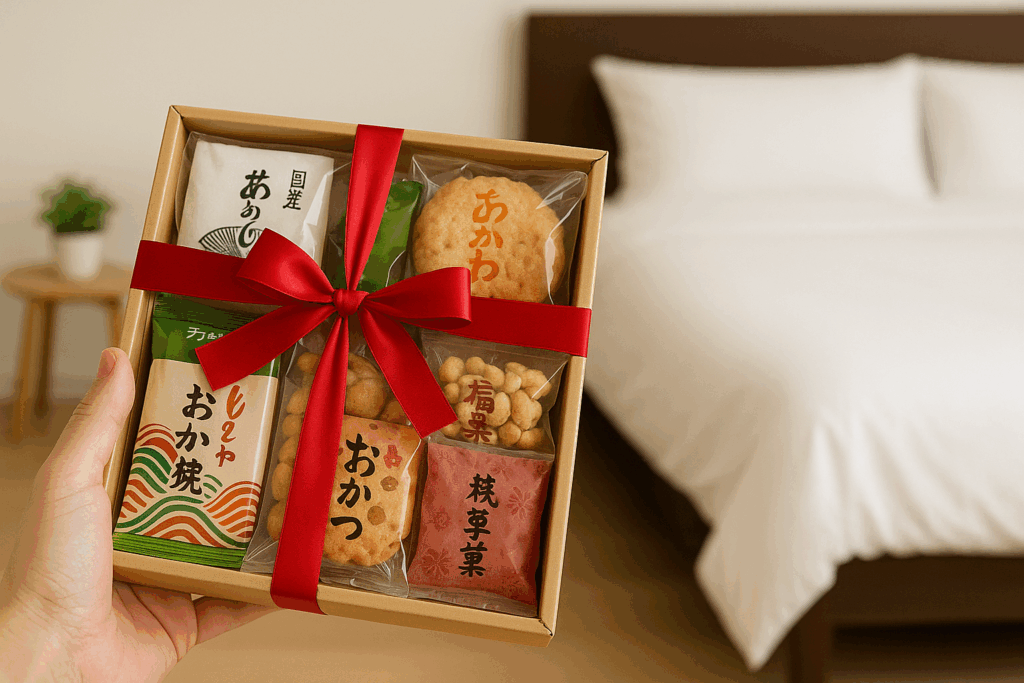
The most basic approach is to hand the sweets to guests directly at check-in, or simply leave them on a table or by the entrance with a note saying “Please help yourself.” Even this small gesture can be a pleasant surprise, giving guests something to relax and enjoy right after arriving. For properties where the host doesn’t meet guests in person, it’s a good idea to set up a clear, easy-to-find spot for the treats and include a short message for an even better first impression.
3-2. Pair Sweets With a Local Guide
Beyond just the sweets themselves, you could include a pamphlet with the story behind the treat and shop details, along with a mini guide to nearby attractions. For example, sharing information like “This sweet is made by a long-established shop founded in [year], and their main store is just a 10-minute walk from here” might inspire guests to want to visit in person.
This kind of extra touch can spark a deeper desire to explore local culture, ultimately enhancing guest satisfaction and encouraging more positive reviews.
3-3. Wrapping and Messages That Create a Sense of Occasion
Simply leaving out the sweets is good, but adding a bit of simple wrapping or a handwritten message card can make a world of difference to the impact on your guest. A note like “Welcome to [location]” or “Have a sweet stay!” signed with the owner’s or host’s name adds a personal, hospitable touch that guests will remember.
If you have the time and resources, tailoring the design to the season or a special event (like Christmas or Halloween) is another great way to add a thoughtful touch that will win guests over.
Leave Your Minpaku Management to Us
Free Online Consultation4. Drawbacks, Risks, and Points to Watch Out For
4-1. Allergies and Religious Restrictions
As mentioned earlier, it’s important to keep guest diversity in mind. If a treat contains an ingredient a guest can’t eat, there’s always a risk—however small—that they might accidentally consume it and experience a reaction. Beyond choosing products with clear ingredient and allergy labeling, it’s wise to frame the treat as **entirely optional, leaving it up to each guest whether to try it or not.**
4-2. Added Costs
Sweets range widely in price, and the per-group treat cost can add up to a meaningful expense over time. Choosing something too cheap can leave a “budget” impression, while going too high-end can quickly push costs beyond what’s sustainable. To find the right balance, it’s worth exploring bulk purchase discounts or wholesale sourcing options.
You might also consider adjusting your pricing structure to offset the cost—for example, folding it slightly into your nightly rate, or including sweets only as part of a premium plan—to help maintain a healthy profit balance.
4-3. Temperature and Storage Challenges
Especially with fresh confections or Japanese sweets that have a short shelf life, managing refrigeration and expiration dates can become a real burden. If your property doesn’t have a fridge available, or if it’s hard to time delivery with check-in, it’s much easier to stick with baked goods or other items that store well at room temperature. Since heat and humidity can cause spoilage in summer, it’s also worth adjusting your sweets lineup seasonally to keep things fresh and safe.
5. Implementation Ideas to Maximize the Guest Experience
5-1. Processed Goods Made From Local Fruits and Vegetables
Baked goods, jams, and dried fruits made from local produce tend to have a longer shelf life while still showcasing a strong sense of regional character. Many of these products come vacuum-sealed or individually portioned, making them easy to manage and offer to guests.
5-2. Seasonal, Limited-Edition Selections
Rotating your selection by season is another effective approach. Sakura mochi or cherry blossom-flavored sweets in spring, chilled jellies or ice pop-style treats in summer, and chestnut- or sweet potato-based confections in autumn—creating a sense of the season can heighten the vacation feeling for your guests. These kinds of touches also tend to perform well on social media, adding an extra layer of buzz.
5-3. Collaborative Events and Special Plans
Teaming up with a nearby long-established sweets shop to create an original, custom-packaged treat is another interesting idea worth exploring. If a treat is only available through your property or a specific plan, it adds a sense of “rarity” that can encourage repeat stays and word-of-mouth buzz.
You might also consider offering a special sweets set or tasting ticket exclusively to guests who book longer stays or higher-priced plans—an effective way to add value that matches your different price tiers.
6. Conclusion: Local Sweets Can Turn Guests Into Returning Visitors
What shapes a minpaku’s reputation and repeat bookings isn’t always about grand, over-the-top gestures. More often, it’s the small moments of thoughtfulness and the chance to experience genuine local color throughout a stay that leave the deepest impression on guests. Gifting local, region-specific sweets is a perfect example of just how effective this strategy can be.
When guests get to enjoy a treat they feel is “something you can only find here,” “unusual,” or simply “delicious,” their overall impression at checkout is bound to improve. They may even visit the actual shop while sightseeing, or bring some home as a souvenir for family and friends—helping to support the local economy in the process.
That said, it’s essential to carefully consider factors like allergies, storage requirements, and cost management when selecting the right products. Why not try incorporating flexible ideas—adjusting your offerings based on the season or your guest demographic—to create a truly “one-of-a-kind” sweets experience for your guests?
Contact Stay Buddy Inc. to Boost Your Minpaku’s Guest Satisfaction
If you’re an owner or management company looking to boost guest satisfaction by offering local, region-specific sweets at your minpaku property, we’d love to hear from you at Stay Buddy Inc.
Drawing on our extensive track record, we offer comprehensive support—from selecting the ideal local sweets and developing sourcing channels, to coordinating with cleaning staff and aligning with your terms of service. This is a great opportunity to gain the know-how needed to elevate the guest experience while making the most of your local area’s unique charm. Feel free to reach out to Stay Buddy Inc.—we look forward to hearing from you!