Leave Your Vacation Rental Management to the Experts
100% Free Online ConsultationA Guide to Ryokan Business License Timelines and Costs: How Requirements Vary by Prefecture and Health Center
How long does it take to get a ryokan business license? The answer depends heavily on which health center you apply through and the condition of your property. In the best-case scenario, it can take just one to two months—but when multiple complicating factors line up, the process can drag on for six months or more. Costs, too, can range from a few hundred thousand yen to several million yen once you factor in not just the application fee but also facility renovations, fire safety equipment, and floor plan preparation. In this article, we break down the process of obtaining a license under the Ryokan Business Act, drawing on Stay Buddy’s hands-on experience managing these applications in the field.
Understanding License Categories Under the Ryokan Business Act
Under the Ryokan Business Act (Act No. 138 of 1948), business licenses fall into three categories: “Ryokan/Hotel Business,” “Simple Lodging Business,” and “Boarding House Business.” Most minpachi (vacation rental) operators who pursue this route end up obtaining a “Simple Lodging Business” license. Unlike registration under the Private Lodging Business Act (the so-called “new minpaku law”), a license under the Ryokan Business Act comes with no cap on the number of days you can operate, allowing you to run your business year-round.
Licenses are issued through the health center of the relevant prefecture, or of a government-designated or core city. Even within the same “Simple Lodging” category, the specific health center handling your case can differ in what it emphasizes during review, the format of required documents, and the timing of inspections. Before you even begin, consulting with your local health center is an essential first step—skipping it almost always leads to costly rework down the line.
The Standard Application Process and Timeline for Each Step
Preliminary Consultation and Confirming Your Property’s Legal Eligibility
Before you start preparing your application documents, you’ll need to consult with your local health center and confirm your property’s zoning status under the Building Standards Act. “Simple Lodging” businesses are subject to zoning restrictions, and as a rule, they cannot operate in areas designated as Category 1 Low-Rise Exclusive Residential Zones. If your building is still officially classified for “residential” use, you’ll first need to go through a change-of-use procedure (under Article 87 of the Building Standards Act). This confirmation process alone can take one to two months, which can significantly affect your overall timeline.
Installing and Confirming Fire Safety Equipment
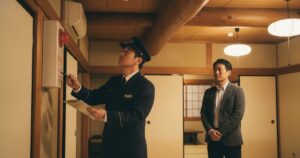
Under the Fire Service Act, you’ll be required to install equipment such as automatic fire alarms, emergency lighting, and fire extinguishers. If your existing building needs retrofitting, the process—from initial consultation with the fire department through installation and final fire inspection—typically takes about one to three months, depending on the location and size of the building. Since a fire inspection certificate is required for the health center’s review, delays in the fire safety process often become the biggest bottleneck in the overall application.
Submitting Documents to the Health Center and Undergoing Review
Once you submit your application to the health center, the process—covering document review, on-site inspection, and issuance of the license—usually takes about one to two months, though it can stretch beyond three months if there are issues with your documents or if you apply during a busy period. Commonly required documents include the business license application, a floor plan of the facility, a certified copy of the building’s registration, the fire inspection certificate, and (if using well water) water quality test results. Since document formats vary by health center, submitting forms designed for a different jurisdiction will almost certainly get your application sent back.
Why Requirements Differ by Prefecture and Health Center
Variation in review times generally comes down to three factors. First is how busy the health center’s staff happen to be—review times tend to slow down around fiscal year-end or during periods when infectious disease response takes priority. Second, health centers in urban areas with a high volume of applications tend to face longer backlogs. Third, some municipalities apply their own additional standards on top of national requirements. Tokyo, for example, has prefectural ordinances that add extra facility standards beyond the national baseline, which means more items to check during review.
In our own work at Stay Buddy, we’ve repeatedly seen cases where, even for the same “Simple Lodging” application, different health centers ask for completely different additions to the floor plan. In one case, the staff member handling our client’s application changed midway through the process, and the new reviewer requested a different set of additional documents—adding nearly a month to the timeline. Because of experiences like this, it’s now standard practice for our team to keep detailed notes during preliminary consultations, recording the staff member’s name and exactly what was discussed.
A Rough Guide to Licensing Costs
Application Fee (Prefectural Revenue Stamps)
The application fee paid to the health center varies by prefecture. For Simple Lodging licenses, the fee typically falls somewhere in the range of ¥10,000–¥30,000, though it can vary further depending on the municipality. Be sure to confirm the current fee directly with the health center where you’re applying.
Fire Safety Equipment Installation Costs
The cost of retrofitting fire safety equipment into an existing building varies widely depending on the size and structure of the building and the type of equipment required. A simple installation in a small standalone house might run just a few tens of thousands of yen, but a full-scale automatic fire alarm system installation can easily exceed several hundred thousand yen. We recommend getting a preliminary consultation and rough estimate from the fire department before finalizing your plans.
Architectural and Floor Plan Costs, Plus Change-of-Use Procedures
If you hire an architect to prepare your floor plan, expect to pay somewhere in the range of tens of thousands to over a hundred thousand yen. If a change-of-use application is also required, that comes with additional design and application costs from the architect, plus a separate confirmation application fee. Depending on the project, total costs including the change-of-use process can run into the hundreds of thousands of yen.
Practical Tips to Avoid Wasting Time on Your Application
The single biggest time-waster is moving forward before you’ve confirmed everything. We’ve seen multiple cases where a client installed fire safety equipment first and only afterward consulted the health center, only to discover that the layout needed to change—forcing them to redo part of the installation. Completing preliminary consultations with both the fire department and the health center, and confirming that their requirements align, before starting any construction work ultimately saves you time in the long run.
It’s also worth considering hiring a gyoseishoshi (administrative scrivener) to prepare your application documents. While this comes at a cost, it significantly reduces the risk of your application being sent back. Fees vary depending on the scope of work and region, but document preparation alone typically runs somewhere in the tens of thousands to over a hundred thousand yen. Even if you handle the application yourself, it’s worth asking the health center for a checklist in advance, and inquiring whether they’d be willing to review your documents informally before you submit them.
Free Consultation with Stay Buddy Inc.
Stay Buddy specializes in vacation rental and ryokan business management services. We support clients from the initial license application all the way through day-to-day operations after obtaining a license—cleaning, guest communication, revenue management, and more, all under one roof. Even a simple consultation about the licensing process can give you valuable insight into planning your overall operation.
Whether you’re not sure which license is right for your property, you’re stuck partway through an application you’ve already started, or you’d like to think through your post-licensing operations together with us, please don’t hesitate to reach out—no matter where you are in the process. The right approach depends on your property’s location, structure, and intended use, so we’ll tailor our advice to your specific situation.
Your first consultation is completely free. Feel free to contact us through our inquiry form or by phone—one of our on-the-ground team members will be happy to assist you directly.