Leave Your Minpaku Management to the Experts
100% Free Online ConsultationIdentity Verification for Foreign Guests at Minpaku Properties: The Legal Basis Differs Depending on the Law
When hosting foreign guests at a minpaku property, verifying their identity isn’t just a good idea—it’s a legal requirement. That said, the specific law behind this obligation, and the exact verification method required, depends on how your property is operated. Whether you’re running under a notification-based license per the Private Lodging Business Act (the “Minpaku Act”) or an approval-based license under the Ryokan Business Act changes what you’re required to do. Drawing on real on-the-ground experience, this article breaks down what each law actually requires and what to watch out for in day-to-day operations.
Identity Verification Requirements for Foreign Guests Under the Ryokan Business Act
Article 6 of the Ryokan Business Act requires operators to create and retain a guest registry. For foreign guests, this means recording their name, nationality, passport number, and address, which requires actually checking their passport. The Japan Tourism Agency’s guidelines also treat passport verification and recordkeeping as the standard practice here.
Guest registries must be kept on file for three years. Health centers and police may also request these records in connection with the Infectious Diseases Act or immigration control laws. While there’s no ministerial ordinance dictating the exact format of the registry, missing any required data field can trigger administrative guidance or correction orders.
Identity Verification Requirements for Foreign Guests Under the Private Lodging Business Act (Minpaku Act)
Under Article 8 of the Private Lodging Business Act, operators are obligated to record guests’ names, addresses, occupations, and similar information. For foreign guests, this effectively requires passport verification. As with the Ryokan Business Act, recording the passport number and nationality is required, and verification can be done either in person or remotely, via a photo sent online.
For properties using unstaffed operations or self-check-in, it’s common practice to have guests send a photo of their passport in advance through a messaging app or booking platform, then retain that as a record. That said, real problems do come up—images too low-resolution to read the passport number, or guests mistakenly sending a different type of ID entirely—so designing a solid verification workflow really matters.
A Real Verification Issue We Encountered on Site, and How We Handled It
At one property we manage, a foreign guest sent us a residence card instead of their passport. A residence card isn’t a passport, but it is an official document that confirms the holder’s name, nationality, and residence status. In this case, while the Private Lodging Business Act’s baseline expectation is passport verification, we judged that the residence card sufficiently confirmed the guest’s nationality, name, and residency status—meaning we had effectively established their identity in practice. We recorded the residence card details and separately requested the guest’s passport number as well.
Gaps between the letter of the law and real-world practice are inevitable. If individual owners make these judgment calls on an ad-hoc basis, they can end up unable to explain their reasoning if a regulatory inspection occurs. Having a clear, pre-established manual for exactly what to record for each type of verification document is essential in day-to-day operations.
Organizing Verification Methods by Approach
In-Person Verification at Check-In
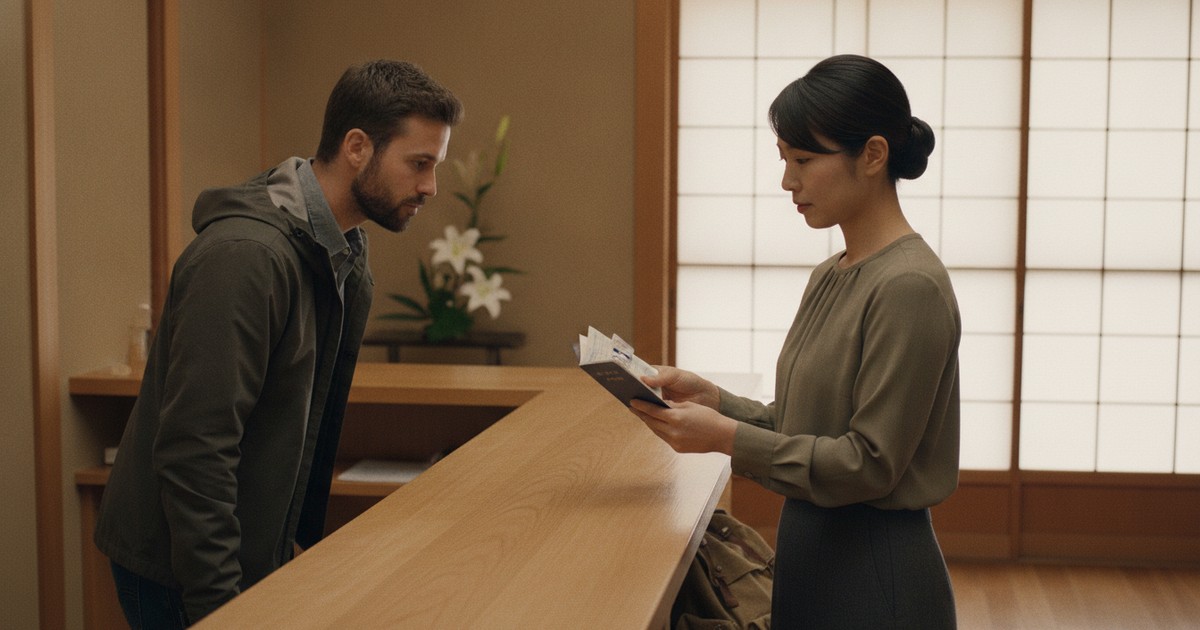
This involves checking the passport directly at the front desk or during key handover, then recording it in the registry on the spot. This is the most reliable method, but it comes with labor costs and time commitments. In tourist areas or during peak seasons, where late-night check-ins are common, you’ll need to plan staffing accordingly.
Online Pre-Check-In Verification (Remote)
This method involves asking guests to send a photo of their passport before check-in, then recording and retaining it. Under the Japan Tourism Agency’s interpretation of the Private Lodging Business Act, remote passport verification is permitted. You’ll need to establish clear standards in advance for image quality and how records are stored (retention period and storage medium). If you’re storing data in the cloud, you’ll also need safeguards against information leaks.
How This Relates to Identity Verification Features on Minpaku Platforms
OTAs like Airbnb have their own built-in identity verification features, but these do not substitute for the guest registry requirements under the Ryokan Business Act or the Private Lodging Business Act. Even if a guest has been verified on the platform, operators still need to independently create and retain a registry that includes the passport number and nationality. Quite a few owners misunderstand this point.
Comparing Identity Verification Requirements: Ryokan Business Act vs. the Minpaku Act
| Item | Ryokan Business Act | Private Lodging Business Act (Minpaku Act) |
|---|---|---|
| Legal Basis | Article 6 (Guest Registry) | Article 8 (Guest Information Obligation) |
| Required Info for Foreign Guests | Name, nationality, passport number, address | Name, address, occupation, etc. + passport verification |
| Registry Retention Period | 3 years | Not explicitly specified by law (3 years is the standard practice) |
| Remote Verification Allowed? | Permitted under certain conditions | Permitted per Japan Tourism Agency guidelines |
Get a Free Consultation with Stay Buddy Inc.
The best way to design your identity verification workflow for foreign guests depends on your booking system, how your property is operated, and which law applies to you. Questions like “which documents should I keep, and how?” or “can I stay compliant while running an unstaffed operation?” are best answered by someone with real, hands-on operational experience.
Stay Buddy Inc. provides minpaku management services for properties operating under either the Ryokan Business Act or the Private Lodging Business Act. We offer support grounded in real operational practice, from building your identity verification workflow to managing your guest registry system and supporting your license application.
Whether you’re just starting out as a minpaku owner or you’re already up and running but unsure whether you’re fully compliant, we encourage you to take advantage of our free consultation. We’ll ask about your property’s situation and propose concrete solutions tailored to you.
You can reach us via our web form or by phone. We welcome inquiries regardless of your property’s location or size.