Leave Your Vacation Rental Management to the Experts
Free Online ConsultationSimple Lodging Is One of Four Categories Under the Hotel Business Law—Understanding the Facility Standards and Where It Fits
Simple lodging, the Hotel Business Law, and facility standards—these three terms represent a wall that every owner looking to launch a vacation rental as a business inevitably runs into. The Hotel Business Law (Act No. 138 of 1948) divides lodging services into three categories: “hotel and ryokan business,” “simple lodging business,” and “boarding house business” (there were four categories before the 2018 legal reform). Most vacation rental properties obtain a license under the “simple lodging business” category. This is a completely separate legal framework from the Private Lodging Business Act (the “minpaku law,” enforced in 2018), and one key practical difference is that the Hotel Business Law sets no cap on annual operating days—unlike the minpaku law, which limits operations to 180 days per year.
How the Hotel Business Law Defines Simple Lodging
Article 2, Paragraph 3 of the Hotel Business Law defines simple lodging business as “a business that provides lodging for a fee at a facility primarily structured and equipped for shared use of sleeping areas by multiple people.” This category covers a wide range of formats, from dormitory-style guesthouses to whole-unit rented apartments used as vacation rentals. Unlike hotel and ryokan operations, simple lodging does not require a washbasin in every guest room, making it a category many municipalities favor for converting ordinary residential properties into lodging facilities.
Facility Standards for Simple Lodging—A Two-Tier System of National Law and Local Ordinances
Facility standards operate on a two-tier structure: the Enforcement Order of the Hotel Business Law sets a nationwide baseline, while individual prefectures and designated cities add their own requirements on top through local ordinances. Since the standards required differ depending on which municipality you’re applying to, it’s essential to consult with the local health center in advance.
Guest Room Floor Area
Article 1 of the Enforcement Order of the Hotel Business Law requires a total guest room floor area of at least 33 square meters (if capacity is set below 10 guests, this can be calculated at 3.3 square meters per guest). That said, some municipalities attach their own additional conditions to this calculation method. In practice, deciding “how many guests to set as capacity” is the first design decision that determines whether you can clear the floor area requirement.
Ventilation, Lighting, Moisture Control, and Drainage
Standards for ventilation, natural lighting, moisture control, and drainage are all listed in Article 1 of the Enforcement Order of the Hotel Business Law, and you’ll also need to confirm consistency with Building Standards Act requirements. When converting an existing building, it’s not uncommon for ventilation volume to fall short of the local ordinance’s threshold, requiring the retrofit of mechanical ventilation systems. In projects Stay Buddy has handled, we’ve encountered older detached houses where the effective window opening area didn’t meet the standard, requiring window renovation work before the application could proceed. Costs vary widely depending on the situation—from tens of thousands to hundreds of thousands of yen—which is why an on-site inspection beforehand is a step you simply can’t skip.
Fire Safety Equipment
Under the Fire Service Act and local fire prevention ordinances, you’ll be required to install automatic fire alarms, emergency exit lights, fire extinguishers, and similar equipment. If the project involves a change of building use (from residential to lodging), prior consultation with the fire department is mandatory, and equipment costs can range from several hundred thousand yen upward depending on the building’s size and existing systems. Since the health center won’t issue its license until the fire inspection is complete, this is the process you should build the most schedule buffer around.
Front Desk Requirements
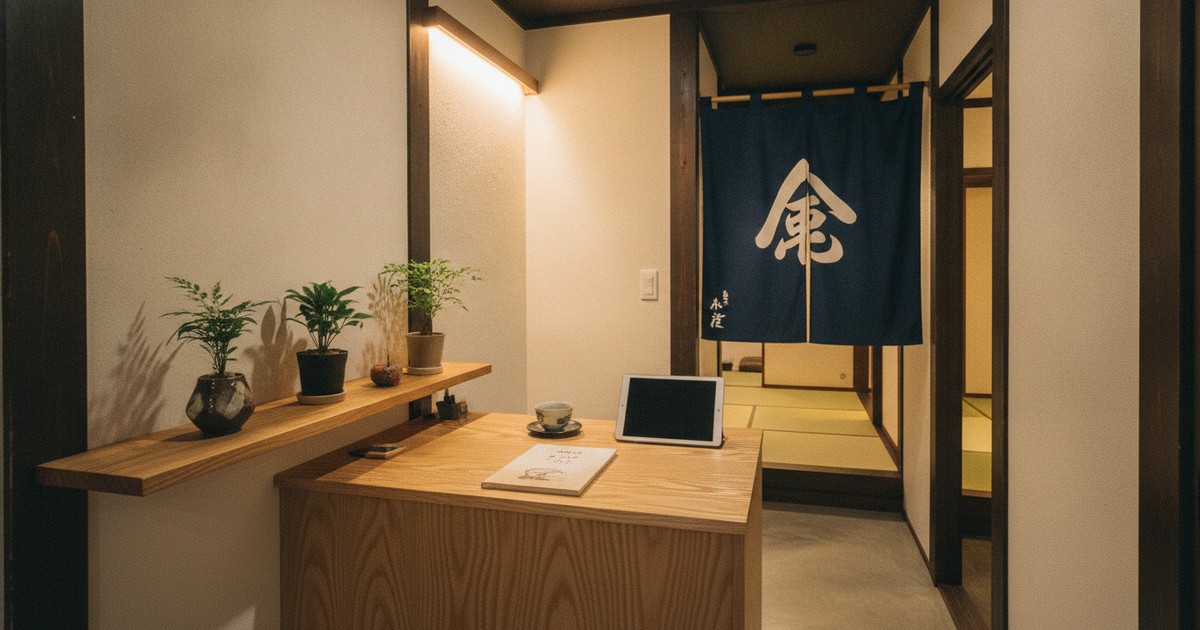
The 2018 amendment to the Hotel Business Law relaxed the requirement for a physical front desk, allowing ICT-based contactless check-in under certain conditions. However, interpretation of what constitutes “necessary measures” varies by municipality—some accept a combination of smart locks and security cameras, while others impose additional requirements.
Ballpark Costs for Obtaining a License
Costs vary significantly depending on the property’s condition, the municipality, and whether you use an application agent. Here’s a breakdown of how to think about each cost category.
Administrative Fees
These are set by prefectural and designated city ordinances, typically ranging from around ¥15,000 to ¥22,000, though the exact amount varies by municipality. Check the published materials from your local health center before applying.
Facility Renovation Costs
Centered mainly around the ventilation and fire safety upgrades mentioned above, these costs can range from several hundred thousand yen to over a million yen, depending on the property’s current condition. Newer properties or those previously used as lodging facilities tend to keep these costs lower.
Administrative Scrivener and Application Agent Fees
Fees for hiring a certified administrative scrivener (gyoseishoshi) typically range from around ¥50,000 to ¥200,000, depending on the region and scope of work. Projects requiring coordination across multiple laws—the Hotel Business Law, Fire Service Act, Building Standards Act, and zoning confirmation—tend to run toward the higher end.
Choosing Between the Hotel Business Law and the Private Lodging Business Act (Minpaku Law)
Whether to operate under the Hotel Business Law (as simple lodging) or the minpaku law comes down to your planned annual occupancy and the property’s zoning designation. The minpaku law has a lower bar for entry—a simple notification rather than a license—but caps operations at 180 days a year, which structurally limits your revenue ceiling. Simple lodging under the Hotel Business Law requires a higher upfront investment in facilities and a tougher licensing process, but it opens the door to operating 365 days a year. Depending on location and season, in tourist areas with high peak-season occupancy, obtaining a Hotel Business Law license can make a substantial difference to medium- to long-term revenue. On the other hand, in residential areas where neighbor consent may be difficult to secure, zoning restrictions can sometimes make it impossible to obtain a Hotel Business Law license at all—so checking the zoning designation first is the natural starting point for this decision.
Free Consultation with Stay Buddy Inc.
Stay Buddy is a company with hands-on, on-the-ground experience managing vacation rental and hotel-licensed properties. We provide end-to-end support tailored to each property’s situation—from organizing the license application process and pre-checking fire safety equipment, to handling cleaning and check-in operations once you’re up and running. We often hear from owners who aren’t sure which license type suits their property, or who want a second chance after a failed application.
We offer free consultations where we give you straightforward, on-the-ground advice on costs, timelines, and the documents you’ll need. Feel free to reach out anytime through our contact form or by phone. If you let us know your property’s location and current condition in advance, we can dive into specifics from our very first conversation.
Getting your hotel business license isn’t the finish line—it’s the starting point for running a sustainable operation. At Stay Buddy, our proposals look beyond the license itself, toward maximizing your occupancy once you’re operational. Start with a consultation—we’d love to hear from you.