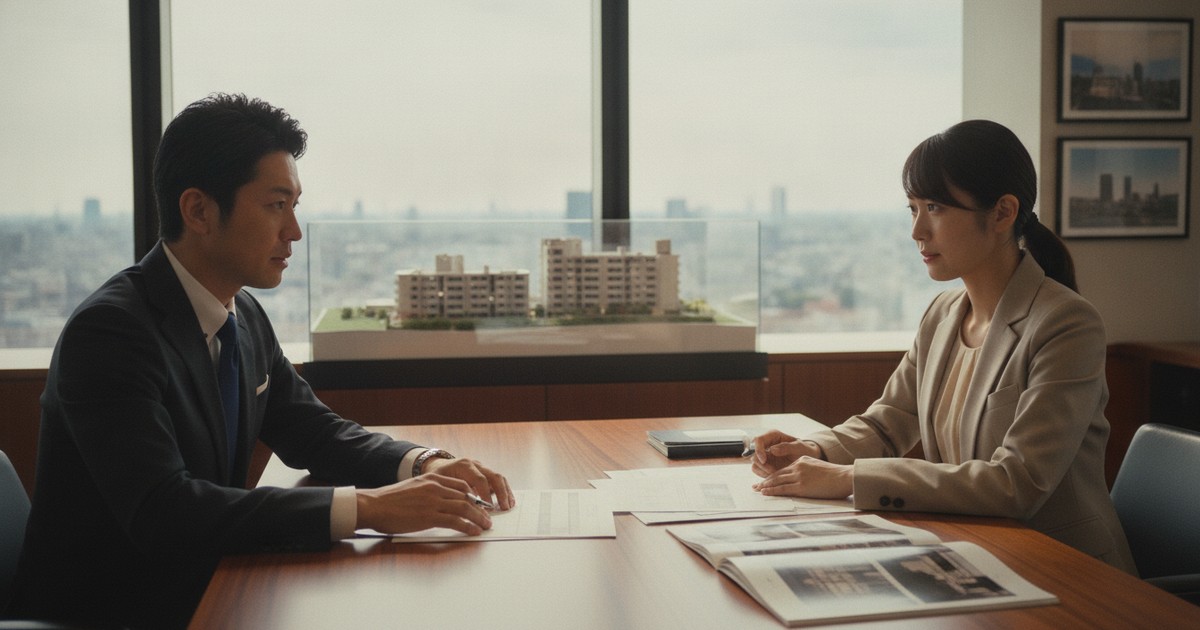
Leave Your Vacation Rental Management to the Experts
Free Online ConsultationWhether you need a Japanese company for rental ownership and operation depends less on a single rule and more on which licence path you choose, how your income is taxed, and who is actually accountable when something goes wrong at 11 pm on a Saturday. Many overseas owners we work with arrive at this question after already purchasing a property; getting the structure right before you sign anything is considerably cheaper than unpicking it afterwards.
The Licence Determines the Structure, Not the Other Way Around
There are two primary routes for short-term rental in Japan. The first is registration under the Housing Accommodation Business Act (the Minpaku Law), which caps operating nights at 180 per calendar year nationally and requires a registered manager physically reachable within roughly one hour of the property. The second is a full ryokan business licence under the Hotel Business Act, which removes the 180-day cap but demands compliance with the Fire Service Act (sprinklers, emergency lighting, fire doors at certain scales), zoning approval, and in most cases a dedicated manager on record.
Neither licence legally requires you to operate through a Japanese company. A non-resident individual can hold a minpaku registration in their own name. However, the practical barriers — a Japanese address for correspondence, a local management contact, fire inspection sign-offs, local government notifications in Japanese — mean that operating without a Japanese entity or a contracted Japanese operator is close to impossible from overseas.
Osaka is worth addressing directly. As of 29 May 2026, Osaka City has permanently ended new applications under the national strategic special zone (tokku minpaku) framework. Existing certified facilities continue under their certification, but no new tokku minpaku can be started in Osaka City. Anyone opening a new property there now must use the standard Minpaku Law registration or obtain a ryokan licence — both of which carry their own location and zoning constraints within the city.
Japanese Company Rental Ownership: When a Legal Entity Actually Makes Sense
Setting up a Japanese gōdō kaisha (合同会社) or kabushiki kaisha (株式会社) adds cost and administrative overhead — incorporation fees, annual residence tax on the entity, accountancy, and in some cases a statutory auditor. For a single property grossing under roughly ¥5–8 million annually, those fixed costs often outweigh the tax advantages.
The calculation shifts when you hold multiple properties, plan to reinvest Japanese rental income into further acquisitions, or want cleaner separation between personal liability and operational liability. A Japanese entity can contract directly with suppliers, hold a bank account, and appear on licences — which simplifies everything from cleaning vendor invoices to local government correspondence.
Tax treatment is the other driver. Under Japan’s tax code, non-resident individuals receiving rental income from Japanese real estate are subject to withholding tax — typically at 20.42% on gross rents unless a tax treaty applies — and must file a non-resident income tax return if net income exceeds the basic deduction threshold. A Japanese entity pays corporate tax on profits rather than withholding on gross, which can be structurally more efficient at higher revenue levels. Your accountant in Japan (a registered zeirishi) and your home-country adviser need to consider this together, because double taxation relief varies significantly by treaty.
What We Actually Handle as Your Operator on the Ground
The abstract question of corporate structure becomes very concrete at about 10:30 on a Sunday night when a neighbour calls the local ward office to complain about noise from a property we manage in Kyoto. The ward office does not contact the overseas owner — they contact the registered local management contact, which is us. We spoke with the guests, confirmed they were within reasonable limits, and followed up with the neighbour directly the next morning with a written note. That interaction was logged, because in Japan repeat complaints from the same neighbour can trigger a licence review. The overseas owner knew about it by Monday morning via our report, but the decision about how to handle it in real time was ours to make.
This is what genuine operation looks like. A management company that merely forwards complaints has not solved the problem; they have just delayed it. For overseas owners who cannot physically appear, the quality of that on-the-ground judgement is the most important variable in whether a licence stays intact.
Day-to-day, the work includes coordinating cleaning turnovers between check-out and check-in (typically a two-to-three hour window; we carry buffer time in the schedule because a late check-out from the previous guest compresses that hard), managing linen vendors, responding to guest queries in both Japanese and English, and handling OTA (online travel agency) calendar management to comply with the 180-day cap where applicable. For ryokan licences, that cap does not apply, but the documentation burden — guest ledgers, identity verification under the Hotel Business Act — increases.
Non-Resident Tax, Currency, and Getting Paid
Revenue from Japanese short-term rentals is paid in yen. If you are remitting to a foreign bank account, you will encounter exchange rate risk, international transfer fees, and in some cases delays from Japanese banks’ compliance screening on outbound transfers. We pay owners in JPY into a Japanese account where possible, or arrange monthly transfers with a fixed exchange date so you can hedge if that matters to your planning.
On the tax side, if you are registered as a non-resident landlord, the party paying rent to you — whether that is a management company or a platform — may be required to withhold at source. The Japan Tourism Agency provides guidance on this, but the application varies depending on whether you hold property personally or through an entity, and whether your home country has a tax treaty with Japan. Filing a Japanese tax return as a non-resident is possible and sometimes necessary; engaging a zeirishi with experience in non-resident landlord returns is not optional if you want to do this correctly.
Consumption tax (currently 10%) applies to management fees and most service fees you pay to Japanese contractors. It also applies to your rental revenue if your taxable sales exceed ¥10 million in a base period — a threshold most single-property owners will not approach, but one that matters if you are scaling.
Supervising a Management Company You Cannot Meet
Operating from overseas means you are trusting a company you may never see in person with your licence, your guests, and your revenue. These are the questions that actually reveal whether an operator is accountable or merely present:
- Who holds the registered management contact role under the Minpaku Law, and what happens to that registration if we end the relationship?
- How are guest identity documents verified and stored in compliance with the Hotel Business Act?
- What is your response protocol for a noise complaint or police visit, and how quickly will I be informed?
- Can you show me the last three months of cleaning turnovers — who cleaned, what time they arrived, what time they finished?
- How do you track remaining operating days against the 180-day cap, and can I see that in real time?
Management fees in Japan’s short-term rental sector typically range from around 10–25% of gross revenue, depending on the scope of services, property type, location, and how much of the operational work the company actually performs versus subcontracts. A company charging toward the lower end of that range may be excluding cleaning coordination, linen, or licensing support — read the contract. A company charging toward the upper end should be demonstrably handling everything, including regulatory correspondence.
The Practical Starting Point
If you own one property and are deciding whether to operate as an individual non-resident or through a Japanese entity, the honest answer is: start by confirming which licence your property qualifies for, then model the tax position with a Japanese zeirishi before assuming a company structure is necessary. For most single-property overseas owners, a contracted Japanese operator under a clear management agreement gives you the legal presence and operational cover you need without the overhead of maintaining a separate legal entity.
If you are holding multiple properties or expect to add more, revisiting the entity question at that point — with actual revenue figures — is more productive than setting up a structure speculatively at the outset.
Stay Buddy manages properties across Japan on behalf of overseas owners, handling licensing, operations, and owner reporting directly. If you want to understand what the right structure looks like for a specific property, get in touch and we will give you a straight answer based on where it is and what you are trying to do with it.
Leave Your Vacation Rental Management to the Experts
Free Online ConsultationShuhei Makigi
Representative Director, Stay Buddy Co., Ltd.
Registered Housing Accommodation Management Business — Ministry of Land, Infrastructure, Transport and Tourism No. F03862. Stay Buddy operates short-term rentals and licensed hotels across Japan, supporting overseas investors with compliant, high-performing properties.
Written by the Stay Buddy Japan team. This content was produced with AI assistance and reviewed for accuracy.