[Osaka] Ride the Redevelopment Wave: How to Skyrocket the Profitability of Your Building
The Umekita urban development, the planned opening of the Naniwa-suji Line, and the Integrated Resort (IR) project along the bay area.
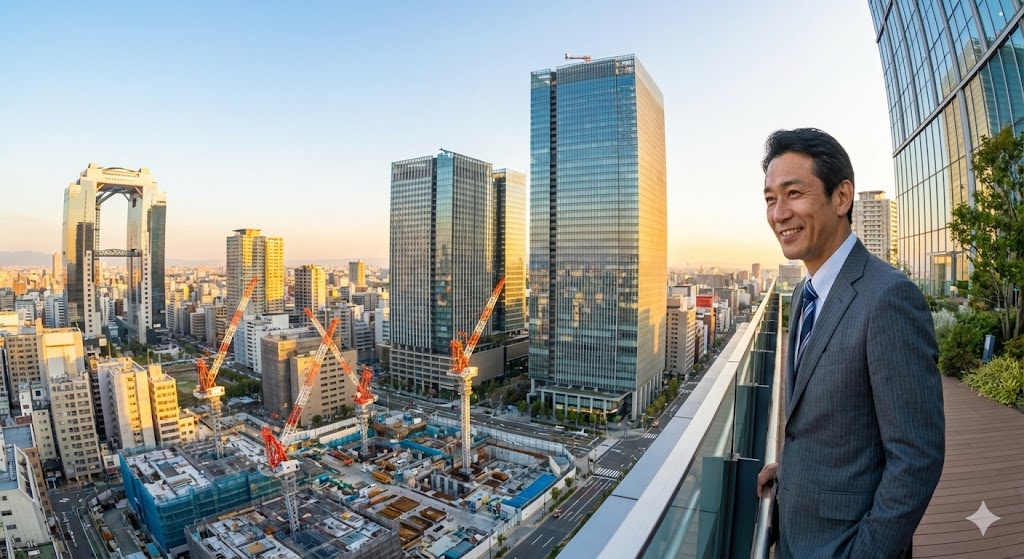
Osaka is currently in the midst of a redevelopment boom of unprecedented scale. The city’s landscape is transforming, and attention from both domestic and international audiences is surging. For owners of buildings within Osaka City, this is an unparalleled opportunity to boost asset value.
However, a word of caution is in order here.
Owners who assume, “The value of my building will rise on its own just because the area is being redeveloped,” and take no action, actually run a high risk of seeing their profits decline and being left behind by the times.
Let us state the conclusion of this article upfront.
The path to survival for small and mid-sized buildings near redevelopment areas is not to compete head-on with the “state-of-the-art offices” supplied by major developers. The only way to dramatically boost profitability is to flexibly convert your building’s use—from “office” to “accommodation facility (hotel/minpaku)” or “experience-based retail”—to match the changing city, and directly capture the new wave of people (especially inbound tourists) that redevelopment generates.
In this article, we’ll break down Osaka’s rapidly changing real estate market and explain the building management strategies you need to maximize the benefits of redevelopment.
The “Light and Shadow” of Osaka’s Redevelopment
Redevelopment raises the overall potential of an area, but it doesn’t benefit every building equally. Clear winners and losers emerge.
Rising Property Taxes Due to Higher Land Prices
As redevelopment progresses, the surrounding roadside land prices and official land valuations rise. While this is welcome news in terms of increased asset value, it also means a heavier burden of “property tax and city planning tax.”
If tenant rents remain unchanged from before, your net operating income (NOI) will shrink by exactly the amount your taxes have increased. The phenomenon of “my take-home profit dropped even though I did nothing” is happening across many redevelopment areas.
Tenant Exodus Due to the “Spec Gap”
Redeveloped buildings in areas like Umekita Phase 2 (Grand Green Osaka) and the Namba/Shinsaibashi districts feature the latest earthquake resistance, environmental performance, and sophisticated office floors.
Well-funded, high-quality tenants will relocate from old, cramped mixed-use buildings to these new structures. As a result, only tenants seeking “cheap rent” remain in older buildings, dragging owners into a “negative spiral” of rent-cutting competition.
An Explosive Surge in Accommodation and Tourism Demand
On the other hand, the greatest benefit of redevelopment is the “increase in visiting population.”
Not just business travelers, but tourists and event attendees are flocking to Osaka in droves. However, major hotel chains alone cannot absorb this demand. This is exactly where small and mid-sized building owners can find their “winning opportunity.”
Winning Strategy 1: A Bold Shift from Office to “Accommodation Facility”
As office demand gets absorbed by large-scale buildings through redevelopment, “accommodation” is the field where small and mid-sized buildings should compete.
Abandon the “Per-Tsubo Rate” Mindset
Office rents have a ceiling. But by converting to a hotel or minpaku, there’s no upper limit on your earning potential.
For example, a 20-tsubo floor rented as office space might cap out at ¥200,000 a month. But turn it into a “suite-style minpaku” that sleeps up to 10 guests, and you can book it out even at ¥50,000–¥80,000 per night. Monthly revenue that’s 3 to 5 times higher than office rent is far from unusual.
Target “Inbound Group Travelers”
Foreign tourists visiting redevelopment areas tend to prefer longer stays with family or groups of friends. Yet most standard hotels only offer cramped rooms designed for two guests.
By knocking through an entire floor of your building to create a spacious living area with multiple bedrooms, you can dominate a “blue ocean” market with no real competition. Even an old building without an elevator can become popular under a concept like “a hidden hotel accessible only by stairs.”
Winning Strategy 2: Maximize the “Street-Level Retail Value” of Your 1st and 2nd Floors
When redevelopment shifts pedestrian flow, back streets that were once overlooked can transform into the new main thoroughfare.
Renovating from Office Spec to “Retail Spec”
If you’re currently renting out your 1st or 2nd floor as an office or storage space, that’s a huge missed opportunity.
Renovate with a glass-fronted facade facing the street, and switch to a “retail spec” (shell handover, compatible with heavy food service, etc.) that can accommodate restaurants and retail shops.
In areas with increased foot traffic, retail rents can jump to 1.5 to 2 times higher than office rents. Demand for cafés and bars, in particular, surges around redevelopment areas.
Differentiate with “Set-Up Offices”
If you can’t obtain accommodation permits for upper floors, converting to a “set-up office” is an effective alternative.
Offices pre-equipped with interior fittings and furniture are popular among startups looking to minimize initial costs, and companies wanting short-term rentals for specific projects. Add value with a “hidden hideout” vibe or creative interior design that large, polished corporate offices simply can’t replicate—turning your building’s age into an asset rather than a liability.
Success Stories: Osaka Building Owners Who Rode the Redevelopment Wave
Here are real-world examples of owners in Osaka City who took proactive steps and successfully improved their profitability.
Case A: A 45-Year-Old Building in the Kita Area (Walking Distance from Osaka Station)
[Before]
A 4-story building with no elevator. The 1st floor housed a restaurant, but floors 2 through 4 remained vacant office space. With deterioration and even roof leaks, the owner was considering demolition.
[Action]
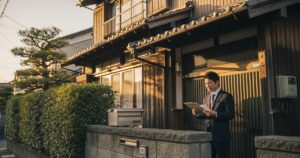
Anticipating the inbound tourism boost from the Umekita development, the owner converted floors 2 through 4 into a “whole-building-style minpaku.” Each floor was renovated with a distinct theme, such as “Japanese modern” or “industrial.”
[After]
The appeal of the interior design more than compensated for the inconvenience of stair access, becoming a hit with Western backpackers and families. The property achieved roughly 4 times the rental income it earned as office space, generating solid profit even after covering renovation costs.
Case B: A Narrow “Pencil Building” in the Minami Area (Near Namba)
[Before]
A tiny building with just 10 tsubo per floor. Frequent tenant turnover meant brokerage fees and restoration costs ate away any potential profit.
[Action]
The owner converted the entire building into an unmanned “smart hotel.” A check-in tablet was installed on the 1st floor, with operations fully outsourced to a management company.
[After]
Management hassles dropped to zero, with the owner simply checking revenue remotely. The property also captured late-night demand in Minami, maintaining an average annual occupancy rate of 90%.
What You Should Do “Now” to Benefit from Redevelopment
Waiting until redevelopment is complete and the city has fully transformed is too late. Right now, while construction is still underway, is the ideal time to prepare.
1. Research the Impact of New Stations and Lines, Such as the Naniwa-suji Line
Check on future changes to the transportation network, such as the Naniwa-suji Line, scheduled to open in 2031. A location that seems inconvenient today could become “close to the station” in just a few years. Plan your major renovations or use conversions to align with this timeline.
2. Confirm Whether You Have a “Certificate of Completion Inspection”
When converting building use, the process becomes much more difficult without the original “certificate of completion inspection” issued at construction. If you don’t have one on hand, start preparing now—obtain a “certificate of ledger records” from the local government office, or ask an architect to conduct a legal compliance survey. Without this, even the best ideas can’t be put into practice.
3. Reevaluate Your Partners
A management company that simply “posts a vacancy sign when a unit opens up” cannot keep pace with Osaka’s rapidly shifting market.
Finding a partner who has insight into the area’s redevelopment plans and expertise in conversion and inbound tourism marketing is the fastest route to success.
Conclusion: Don’t Fear Change—”Update” Your Building
Osaka is evolving at an unprecedented pace. What’s demanded of building owners in this environment isn’t “staying the same”—it’s “changing along with the city.”
- Anticipate the decline in office demand and shift toward accommodation and tourism demand.
- Transition to a high-profit business model (high-value operations) that can withstand rising property taxes.
- Turn the drawbacks of an aging building into “character” through renovation and creative planning.
Don’t give up just because “it’s an old building.” Your building has the potential to shine even brighter as part of Osaka’s new landscape.
For Building Utilization and Conversion in Redevelopment Areas, Trust Stay Buddy
“I want a legal survey to see whether my building can be converted into an accommodation facility.”
“I’d like to see a renovation cost estimate and a revenue simulation after the conversion.”
“I’m looking for a professional who can handle everything—not just construction, but marketing, cleaning, and operations after opening.”
Whatever your concern, leave it all to us.
We are Stay Buddy Co., Ltd., a team of professionals specializing in building revitalization and accommodation business operations within Osaka City.
We have deep, firsthand knowledge of Osaka’s redevelopment landscape.
- Proposals for the “most profitable use” (minpaku, hotel, or retail) tailored to each area’s characteristics
- Full support for complex use-conversion procedures and legal compliance renovations, backed by our partner architects and administrative scriveners
- Interior designs that appeal to inbound travelers, plus multilingual operations for high occupancy rates
- Hotel-standard cleaning and maintenance to preserve your building’s asset value over the long term
Ride the wave, or get swept under.
Stay Buddy will transform your valuable asset into a “high-profit building” that rides the wave of the times. Get started with a free property assessment and utilization consultation—we’re ready to help whenever you’re ready.