Leave Your Vacation Rental Management to Us
Free Online Consultation3 Key Points to Keep in Mind When Recommending Restaurants to Your Vacation Rental Guests
When running a vacation rental, making guests feel that “staying here was truly worth it” depends on more than just a comfortable, clean property—it hinges on the host’s thoughtful hospitality. One key aspect of that hospitality is sharing information about great local restaurants.
“I’d love to recommend some good spots, but is there anything I need to watch out for?”
“Since I’m going to the trouble of recommending places, I want guests to actually enjoy them…”
“Could this lead to any problems?”
If any of these thoughts have crossed your mind, you’re not alone. Restaurant recommendations can greatly boost a guest’s overall trip satisfaction, but depending on how the information is shared, they can also lead to unexpected trouble.
In this article, we’ll walk through three important points hosts should keep in mind when providing restaurant information to guests. By keeping these tips in mind, you can offer guests an outstanding dining experience, minimize risk, and increase your chances of earning glowing reviews. Please read through to the end for helpful insights.
Why Should You Provide Restaurant Information to Guests?
Before diving in, let’s revisit why sharing restaurant recommendations matters so much for vacation rental hosts.
1. Boosting Guest Satisfaction and Creating a Sense of “Something Special”
Most guests hope to enjoy delicious meals during their travels. However, it can be tough to find truly authentic “local favorites” or “hidden gems” using guidebooks or online searches alone.
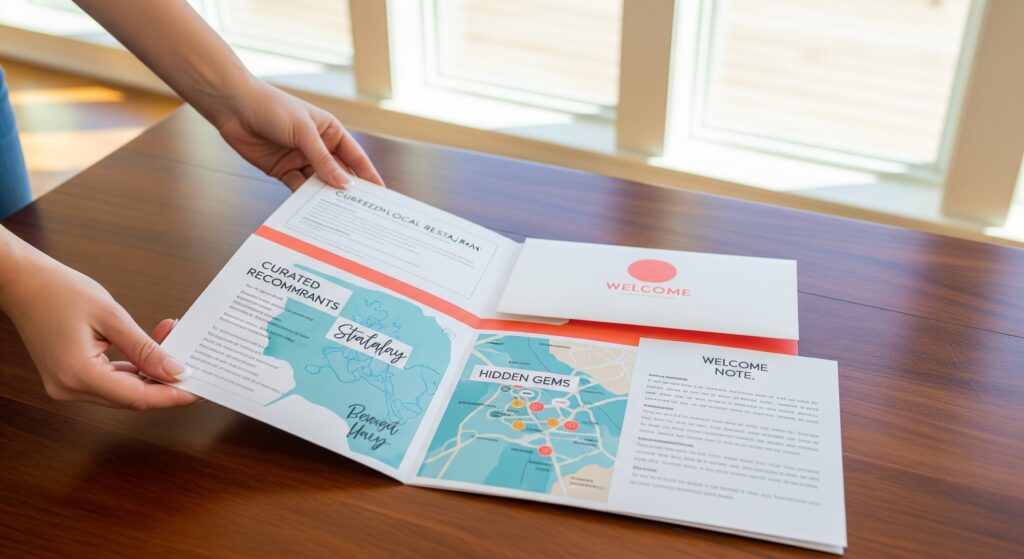
When hosts share carefully curated restaurant recommendations, guests get the special feeling of accessing **”insider knowledge only locals would know.”** This significantly enhances their overall trip satisfaction. It elevates your role beyond simply providing accommodation—it becomes a true act of hospitality that enriches the guest’s entire journey.
2. Contributing to Positive Reviews and Word of Mouth
Specific experiences like “The restaurant my host recommended was amazing!” tend to translate directly into glowing reviews and positive word of mouth. Dining experiences, in particular, tend to leave a lasting impression and can be a powerful factor influencing future guests’ booking decisions.
3. Supporting and Partnering with the Local Community
Introducing local restaurants also helps stimulate the local economy. Building good relationships with neighborhood eateries could even open doors to future collaborations—such as special discounts or exclusive menus for your guests.
Leave Your Vacation Rental Management to Us
Free Online Consultation3 Key Points to Keep in Mind When Sharing Restaurant Information with Guests
While sharing restaurant recommendations can delight your guests, overlooking a few key considerations can actually lead to trouble or dissatisfaction instead.
Point 1: Inaccurate or Outdated Information
If the restaurant information you provide is outdated or incorrect, guests won’t just feel inconvenienced—they may also lose trust in you as a host.
- Examples of Potential Problems:
- The restaurant has closed or relocated: Guests make the trip only to find the place no longer exists.
- Business hours or closing days have changed: Guests arrive to find the restaurant closed, or open for shorter hours than expected.
- Reservations are required but this isn’t mentioned: After waiting in line, guests discover they can’t be seated without a reservation.
- Menu or prices have changed significantly: Guests are disappointed when costs don’t match their expectations or budget.
- Access details are incorrect: Guests get lost and waste valuable time.
- Solution: Always Verify You Have the Latest Information
- Regularly update information: Check and update business hours, closing days, contact details, menus, reservation requirements, and access directions for each recommended restaurant at least once every six months. Whenever possible, visit the restaurant yourself to confirm the latest details firsthand.
- Prioritize official sources: Rely on trustworthy sources such as the restaurant’s official website, social media accounts, or a direct phone call to confirm details.
- Note the “as of” date: When sharing information with guests, include a note such as, “This information is accurate as of [date]. Please confirm business hours and reservation availability before visiting.” This encourages guests to double-check details themselves and helps prevent misunderstandings.
- Set up a system for updates: Establish a process to quickly update guest-facing materials (such as a digital guidebook) whenever restaurant details change.
Point 2: Personal “Recommendations” That Don’t Match Guest Preferences
A restaurant you personally find “absolutely delicious” might not appeal to every guest’s taste, or it might fall short of their expectations. Food preferences are highly personal, and a host’s subjective recommendation won’t necessarily resonate with every guest.
- Examples of Potential Problems:
- Guests feel disappointed: “I went because the host recommended it, but it wasn’t good at all.”
- Guests lose trust in the host: “The prices were high, but the experience didn’t live up to expectations.”
- Recommending unsuitable options to guests with food allergies or religious dietary restrictions.
- Solution: Offer Diverse Options with Objective Details
- A wide range of genres: Recommend a variety of restaurant types—Japanese cuisine, Italian, cafés, izakayas, ramen shops, and more. It’s also helpful to cover a range of price points, from budget-friendly lunches to slightly upscale dinners.
- Include objective details:
- “Cuisine type: [genre]”
- “Average budget: Lunch from ¥XX, Dinner from ¥XX”
- “Typical clientele: families, couples, business travelers, etc.”
- “Features: counter seating only, private rooms available, terrace seating, reservation required, family-friendly, English-friendly menu available, wheelchair accessible, etc.”
- “Host’s note: our top menu picks, the restaurant’s atmosphere, etc.” Including these objective details empowers guests to choose based on their own preferences and needs.
- Consider allergies and dietary restrictions: Ask guests in advance about any allergies or dietary needs so you can be ready to recommend suitable options. It’s also a good idea to encourage guests to verify allergen information themselves when they visit a restaurant.
Point 3: Personal Interests or Steering Guests Toward Specific Establishments
As a vacation rental host, you should strictly avoid recommending restaurants based on personal interests—such as receiving referral commissions or promoting a friend’s business. Similarly, aggressively steering guests toward specific establishments can undermine fairness and create problems.
- Examples of Potential Problems:
- Guests may become suspicious, thinking, “Is the host trying to promote their own business?” or “Is there some hidden motive here?”
- If problems arise at a recommended restaurant, the host may be indirectly held responsible, or guests may direct their complaints at the host.
- Such practices could violate vacation rental regulations or platform policies (e.g., rules against inappropriate commercial activity).
- Solution: Keep Recommendations Purely Informational
- Provide balanced information: Avoid overly favoring particular restaurants. Instead, offer guests multiple fair options tailored to their needs.
- Back up recommendations with objective evidence: When making a recommendation, include supporting facts such as, “A beloved local spot for years,” “Highly rated on [review site],” or “Popular among international visitors.”
- Clarify guest responsibility: When sharing information, clearly state a disclaimer such as, “Visiting any recommended restaurant is at your own discretion and responsibility.”
- Never accept payment for referrals: Absolutely avoid accepting any form of compensation, such as referral fees, from restaurants. This preserves fairness and protects guest trust from being compromised.
Leave Your Vacation Rental Management to Us
Free Online ConsultationTips for Sharing Restaurant Information That Guests Will Love
With these key points in mind, here are some practical tips for sharing restaurant recommendations that will truly delight your guests.
1. Make the Most of a Digital Guidebook
While printed guidebooks have their place, a digital guidebook that guests can easily browse on their smartphones is incredibly convenient.
- Always up to date: Since information can be updated easily, you can ensure guests always see the latest restaurant details.
- Map integration: By linking to map apps like Google Maps, guests can navigate to restaurants without getting lost.
- Photos and videos: Include plenty of photos showcasing the restaurant’s atmosphere and dishes to visually convey their appeal.
- Multilingual support: If you host many international guests, be sure to provide information in multiple languages.
2. Curate Recommendations to Match Your Property’s Concept
Tailor the restaurants you recommend to match your property’s concept and target guest demographic.
- Examples:
- For family-friendly rentals: restaurants that welcome children or offer private rooms.
- For inbound tourism: izakayas popular with international visitors, or restaurants offering authentic Japanese dining experiences.
- For business travelers: quiet restaurants with private rooms, or cafés with power outlets and Wi-Fi.
3. Add Personality with a “Host’s Note”
Beyond objective facts, adding a brief “host’s note” sharing your own experience or favorite highlights can bring warmth and personality to your recommendations.
- “My personal favorite is [restaurant name]! The [dish name] is absolutely amazing.”
- “This spot has a relaxed atmosphere—perfect for a leisurely meal.”
- “This popular restaurant tends to book up on weekends, so I’d recommend reserving ahead.”
4. Include Links to Review Sites and Social Media
Adding links to review platforms like Tabelog, Retty, or Google Maps reviews, as well as the restaurant’s official social media accounts, gives guests a way to explore further and leaves a considerate impression.
For Vacation Rental Marketing and Operations Consulting, Turn to Stay Buddy
“I’d like specific advice on how to share restaurant information that guests will love.”
“I want to learn hospitality strategies that will boost my rental’s appeal to potential guests.”
“I’d appreciate help creating an effective digital guidebook.”
“I want to increase positive reviews and build a stable, successful operation.”
Do any of these concerns about vacation rental marketing or operations sound familiar?
At Stay Buddy Inc., our expert team offers comprehensive support for your vacation rental business—from developing hospitality strategies that boost guest satisfaction, to uncovering local attractions and optimizing how you share them, to crafting effective listings and unlocking the secrets to earning top-rated reviews.
Let’s work together to create a vacation rental experience that delights guests while driving stable, sustainable income. Feel free to reach out to us anytime for a consultation.