Leave your vacation rental management to us
100% Free Online ConsultationVacant Homes in the Countryside Are Treasure Chests: Business Strategies Worth Watching
What comes to mind when you hear the phrase “vacant house in the countryside”?
“Far from the train station.” “The building is old.” “There’s nothing you can do with it.” You might picture a “negative asset”—something that only saddles its owner with property taxes and maintenance burdens.
But that conventional wisdom is changing—dramatically.
Let’s cut straight to the conclusion of this article.
Rural vacant homes—long dismissed as “worthless” by urban logic—are exactly the properties that, when combined with today’s emerging needs, can be transformed into one-of-a-kind treasure chests. A remarkable business opportunity is unfolding right now.
In this article, we’ll walk you through attention-grabbing business strategies that turn your vacant home’s “inconvenience” and “age” into genuine value—and real revenue—along with the secrets to making them succeed.
Why Are Rural Vacant Homes in Demand Right Now?
1. A Shift in Values: From “Owning Things” to “Having Experiences”
Today’s travelers and consumers increasingly find greater value in “experiences” unique to a place than in “things” like luxury hotels or branded goods. The beautiful natural surroundings, tranquility, and the sense of “story” that old buildings carry make rural vacant homes the perfect stage for meeting this demand for experience-driven consumption.
2. Diversifying Needs: A Longing for the “Extraordinary” and “Analog” Connection
People worn out by city life and digitally saturated communication are craving both a truly relaxing “escape from the ordinary” and genuine, face-to-face “analog” connection. Rural vacant homes are rare places that can offer both at once.
3. Strong Government Support
The ever-growing number of vacant homes is a serious concern for national and local governments alike. As a result, numerous non-repayable subsidy programs are available to support the renovation and business use of vacant properties. Taking advantage of this public support significantly lowers the risk of initial investment, creating a favorable environment for launching a new business.
[Handpicked] 5 Business Ideas to Turn a Rural Vacant Home into a Treasure Chest
1. [The Classic and Most Powerful Option] Whole-House Vacation Rental (Minpaku / Licensed Inn)
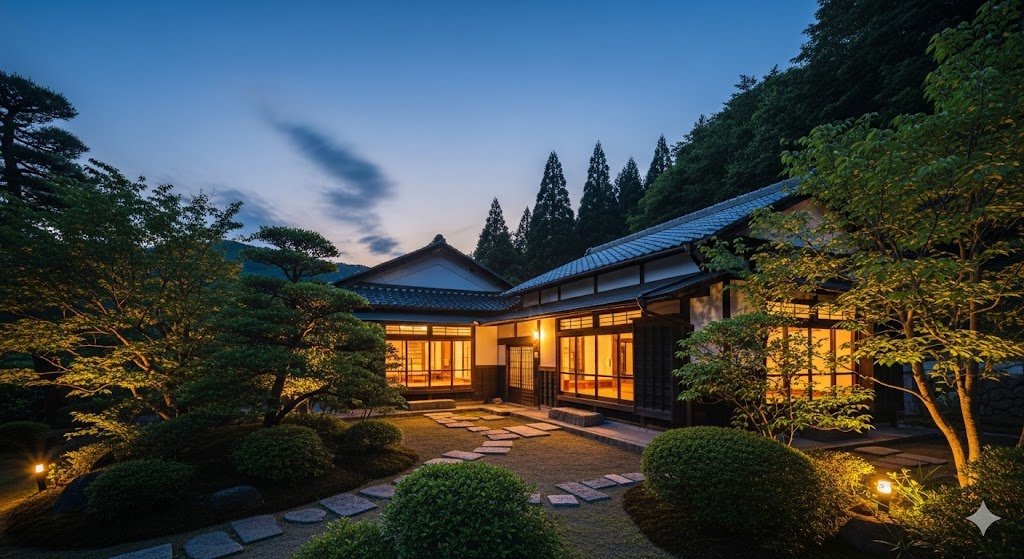
- The Idea: Renovate the vacant house and rent it out in its entirety as a lodging facility. The distinctive atmosphere of an old Japanese farmhouse (kominka) is especially popular among inbound travelers and domestic families and groups.
- Keys to Profitability:
- Obtain a Hotel Business License (Simple Lodging): Under the Minpaku Law, operations are capped at 180 days per year—making it difficult to recoup your investment. Aiming from the start for a license under the Hotel Business Act, which allows for year-round, 365-day operation, is key to ensuring the venture’s profitability.
- Sell the “Experience”: Beyond just providing a place to stay, incorporating experience-based content unique to the property—like an irori hearth, a goemon-buro bath, firewood splitting, or farming activities—can dramatically raise your nightly rate.
- Blend Old and New: Preserve as much of the old house’s “character”—exposed beams, timber posts—as possible, while thoroughly upgrading comfort features like plumbing (bath, toilet) and bedroom insulation with the latest fixtures. This contrast is what leads to high guest satisfaction.
2. [Connecting with the Community] Community Café / Restaurant
- The Idea: Make the most of an old farmhouse’s calm atmosphere and beautiful garden views by transforming it into a café or restaurant. Rather than simply serving as a place to eat, it can also serve as a “community hub” where local residents and visitors mingle.
- Keys to Profitability:
- A “Only Available Here” Menu Built on Local Ingredients: Develop a menu that reflects the local terroir—featuring fresh vegetables sourced directly from local farmers and reimagined regional dishes.
- Design the Space Itself: Treat the space as a “product” in its own right—create seating that showcases the garden view, use tableware crafted by local artisans, and so on. These touches are what bring guests back. (Note: A food service license from the public health center is required.)
3. [A New Way of Working] Coworking Space / Satellite Office
- The Idea: Meet the demand from freelancers who want to escape the hustle of the city and focus on work surrounded by nature, as well as companies looking for satellite office space.
- Keys to Profitability:
- Balance “Focus” with “Relaxation”: High-speed Wi-Fi and ample power outlets are must-have business infrastructure, but beyond that, design “breathing room”—like a veranda or garden—where people can unwind. An environment that sparks creativity, something a city office can’t offer, is where the real value lies.
- Combine Functions: Offer long-term stay plans as a “workation facility” that also includes lodging, helping to stabilize revenue.
4. [Targeting a Niche] Hobby-Focused Spaces (e.g., Studios, Ateliers)
- The Idea: Take advantage of a vacant house’s spaciousness or soundproofing (or its location far from other homes) to create a specialized space for people with a particular hobby or passion.
- Keys to Profitability:
- Sharpen the Concept: Invest in equipment that deeply resonates with enthusiasts—a music studio where you can play at full volume, a photo studio bathed in natural light, a pottery atelier that makes use of an earthen floor, or a garage house where people can work on motorcycles and bicycles.
- Monetize by the Hour: By listing your space on platforms like Space Market, you can generate revenue efficiently by renting it out on an hourly basis.
5. [A Gateway to Relocation] Share House / Trial Relocation Housing
- The Idea: Renovate a vacant house with multiple rooms and offer it as “trial” housing for young people and creatives interested in relocating to the area, allowing them to stay for a set period before committing.
- Keys to Profitability:
- The Value of Community: This isn’t just cheap housing—the key is designing an inviting “shared living room” where residents can connect with one another and with local residents.
- Partner with Local Government: Many municipalities are actively promoting relocation. By partnering with local government and hosting “trial relocation tours,” you can secure steady guest bookings along with public credibility for your business.
Essential for Success: 3 Things to Prepare Before You Start
1. Thorough Research on Financing and Subsidies
Renovating an old farmhouse can cost far more than you’d expect (particularly for earthquake resistance, insulation, and plumbing). Success hinges on carefully drafting a business plan, securing financing from institutions like the Japan Finance Corporation, and fully leveraging any **vacant-house renovation subsidies** offered by national or local governments.
2. Building a Team of Experts
Reviving a vacant house isn’t something you can do alone. Building an early partnership with trustworthy professionals is essential to success—an architect who understands the local characteristics and has a proven track record renovating old farmhouses, a gyoseishoshi (administrative scrivener) well-versed in licensing requirements like the Hotel Business Act, and a skilled local construction contractor.
3. [Most Important] Coexisting and Thriving with the Local Community
A business in the countryside simply cannot succeed without a good relationship with the local community.
- Introduce Yourself and Explain Early On: From the planning stage, make an effort to politely greet the neighborhood association leader and nearby residents, and explain your business plans to earn their understanding.
- Commit to Becoming Part of the Community: Take part actively in local festivals and cleanup activities, and be the “good neighbor” yourself first. This is the best insurance against future trouble over things like noise or trash disposal.
Conclusion: A Rural Vacant Home Is a Treasure Chest Waiting for Your Ideas
Rural vacant homes have long been written off as “inconvenient,” “old,” and “useless.” But it’s precisely that inconvenience and age that can become something modern people are willing to pay for—genuine value.
What kind of potential does your vacant house hold?
No one but you—armed with your own ideas and passion—can unlock that treasure chest.
Let Our Professionals Help You Open That Treasure Chest
“I’ve got an idea. But how do I turn it into a concrete business plan?”
“Applying for subsidies or getting a hotel business license sounds complicated…”
“I want to know objectively which approach carries the lowest risk and the highest return.”
Whatever your concern, we’d love for you to reach out to us.
Stay Buddy Co., Ltd. is more than just a vacation rental management company. We’re real estate utilization professionals who unlock the full potential of dormant properties and turn them into profitable businesses.
Here’s what we do:
- ① We thoroughly analyze your vacant home’s unique character alongside the market needs in your area, then propose the most profitable business ideas—whether that’s a vacation rental, a mixed-use facility, or something else—based on real data.
- ② We translate that vision into a rigorous, precise business plan capable of convincing even financial institutions, and support you through securing subsidies and financing.
- ③ From obtaining complex licenses (such as under the Hotel Business Act) to designing the space and driving customer acquisition once operations begin, we walk alongside you through every step of turning your vacant house into a revenue-generating asset—all under one roof.
Turning your vision into sustainable revenue.
Why not map out that concrete path together with us? We’d love to hear more about the untapped potential your vacant home holds.