To maximize minpaku revenue in Biei Town, it’s essential to understand both the area’s unique demand characteristics and the correct legal framework. As one of Hokkaido’s premier tourist destinations, Biei Town draws travelers from Japan and abroad with attractions like the Patchwork Road and Blue Pond, and demand for accommodation has been steadily rising year after year. This article breaks down the revenue potential of minpaku in Biei Town by property type, while also covering the legal distinctions between the Ryokan Business Law, the Minpaku Act (Private Lodging Business Act), and Special Zone Minpaku, along with the steps to open a property and the operational risks you should know about.
For anyone considering starting a minpaku business, the biggest questions are usually “which licensing system should I apply under?” and “how much can I realistically earn?” Biei Town is rich in tourism resources, but it’s also an area with unique rural constraints and significant seasonal fluctuations. Making decisions based on accurate information is the key to running a highly cost-effective minpaku operation.
Area Overview and Demand Data Shaping Minpaku Revenue in Biei Town
Located in Kamikawa District, Hokkaido, Biei Town is a core tourist destination within the Furano-Asahikawa region and enjoys strong name recognition. The area is dotted with scenic spots that showcase its rural landscapes, making it popular not only with domestic travelers but also with inbound visitors from across Asia, Europe, and the Americas. Biei Town welcomes over one million tourists annually, with demand peaking during the summer (July–August) and winter (January–February) seasons.
Typical nightly rates run around ¥4,000–8,000 per person at guesthouses and minpaku properties, while private, whole-house rentals such as detached homes or traditional farmhouses can command ¥20,000–50,000 per night for the entire property. Since the number of hotel and ryokan rooms in the town is limited, availability often becomes tight during peak season—creating solid potential demand that minpaku properties are well-positioned to absorb. That said, occupancy drops sharply during the off-season (around November and March), so designing a revenue plan that accounts for the full year is essential.
Revenue Projections by Property Type
When starting a minpaku business in Biei Town, initial investment, occupancy rates, and average nightly rates vary significantly depending on the type of property. Below, we outline projected revenue for three representative property types. Please note that these figures are estimates only and will vary depending on the property’s condition, location, and management style.
Occupancy rate here refers to the percentage of nights per year that a property is actually booked. Keep in mind that properties operating under the Minpaku Act are capped at 180 rental days per year, which places a ceiling on revenue potential compared to properties licensed under the Ryokan Business Law.
Condos and Apartments
Condo and apartment properties within Biei Town are less common than in Asahikawa City, and in some cases it can be difficult to even acquire a suitable property. Even so, running a minpaku operation out of an existing rental unit is an option that helps keep initial investment relatively low. For a 1LDK to 2LDK unit, a realistic nightly rate would be around ¥15,000–25,000. Assuming an 80% occupancy rate during peak season and 20% during the off-season, annual occupancy averages out to roughly 45–50% (within the 180-day cap under the Minpaku Act), putting estimated annual revenue in the range of ¥1 million to ¥1.8 million.
Initial setup costs—covering interior finishes, furniture, and appliances—typically run around ¥500,000 to ¥1 million. If you use a management company or minpaku operation agency, expect to pay fees of roughly 10–30% of revenue (varying by company and scope of service). Factoring in monthly cleaning and supply costs, it’s realistic to expect net take-home revenue of around 40–60% of gross sales.
Detached Houses
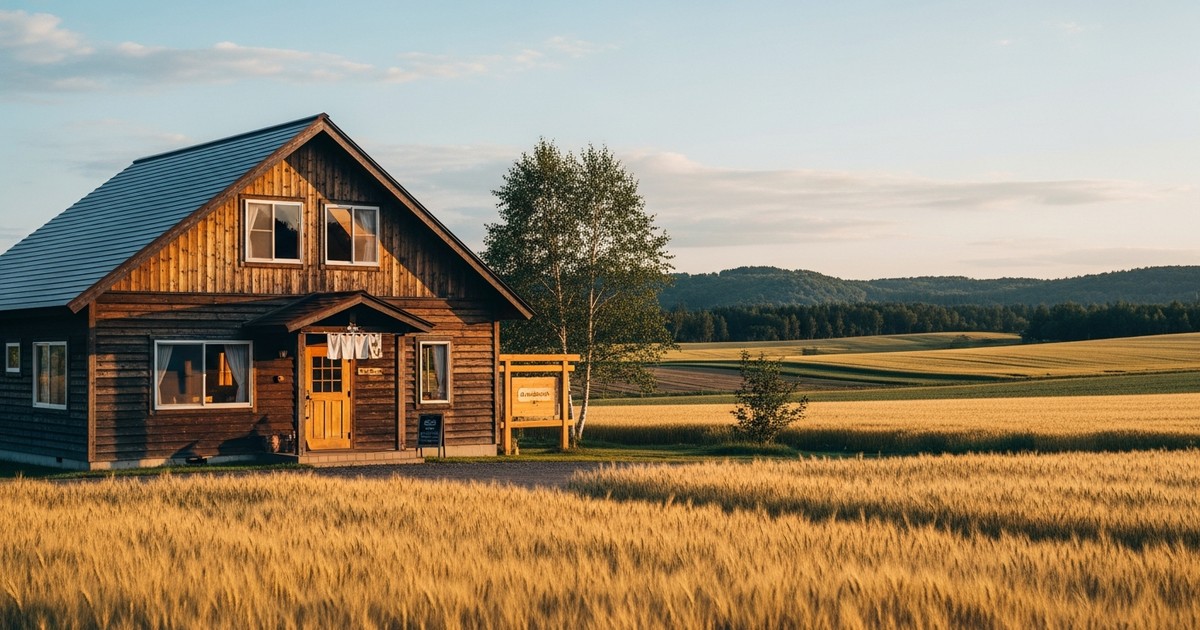
Detached houses represent the mainstay of minpaku in Biei Town. Standalone homes scattered throughout the rural landscape blend naturally with their surroundings, making them a great fit for travelers seeking an immersive, “away from the everyday” experience. Operated as whole-house rentals, nightly rates during peak periods (July, August, and the New Year holidays) can reach ¥30,000–60,000. With an annual occupancy rate of 40–55% (or up to 365 days if licensed under the Ryokan Business Law), estimated annual revenue comes to roughly ¥2 million to ¥4 million.
Initial investment—including property acquisition (if purchasing) or renovation costs, plus furniture, appliances, and equipment—often falls in the ¥2 million to ¥5 million range. You’ll also need to budget for Hokkaido-specific infrastructure needs such as parking and snow removal. Still, with proper pricing and a solid base of positive reviews, this remains a realistic model for recouping your investment within 3–5 years.
Traditional Farmhouses and Rural Guesthouses
Biei Town is home to a number of older farmhouses and converted barns now used as guest accommodations. These traditional-style properties offer something unique that other property types can’t—an authentic taste of local rural life—which makes it easier to justify premium pricing. Nightly rates for the whole property can reach ¥40,000–80,000, and pairing a stay with experience programs (such as farming or cooking workshops) can push rates even higher. Occupancy tends to run lower than detached houses (roughly 30–45% annually), but the higher price point more than compensates, making annual revenue of ¥2 million to ¥5 million entirely achievable.
The main challenge is the scale of initial renovation costs. Seismic reinforcement, insulation work, and plumbing/bathroom upgrades combined can run ¥3 million to ¥8 million or more. However, Hokkaido and the Kamikawa region offer subsidy and grant programs related to agritourism promotion, so it’s worth checking with Biei Town’s local government office or looking into MAFF’s (Ministry of Agriculture, Forestry and Fisheries) agritourism promotion initiatives in advance.
Understanding the Differences Between the Ryokan Business Law, the Minpaku Act, and Special Zone Minpaku
There are three main legal frameworks you need to understand before operating a minpaku business: a license under the Ryokan Business Law (Ryokangyo-ho), a notification under the Private Lodging Business Act (the “Minpaku Act”), and certification as Special Zone Minpaku under the National Strategic Special Zones Act. Each differs in its governing law, cap on operating days, facility requirements, and application authority.
A license under the Ryokan Business Law (as a simple lodging business) has no cap on annual operating days, meaning you can run at full capacity 365 days a year—its biggest advantage. On the other hand, facility standards are strict (covering requirements such as natural lighting, ventilation, and front desk installation), and fire safety equipment is mandatory. Applications go through the prefectural health center; in Hokkaido, this means the Health and Environment Department of the relevant regional promotion bureau. The Minpaku Act, by contrast, operates on a notification system with a lower barrier to entry, but caps operation at 180 days per year, which limits maximum revenue potential. Condo properties may also run into restrictions imposed by building management regulations. Special Zone Minpaku is only available in areas officially designated as National Strategic Special Zones—whether Biei Town falls within a designated zone should be confirmed directly with the local municipality or the Cabinet Office, as designations can change.
Which framework applies to a specific property in Biei Town depends on a combination of factors—building structure, zoning, management regulations, and surrounding environment—and must be judged on a case-by-case basis. If you’re uncertain about the legal requirements, we strongly recommend consulting a licensed administrative scrivener (gyoseishoshi) or reaching out directly to the Biei Town office or the Kamikawa General Subprefectural Bureau.
Key Considerations When Opening a Minpaku in Biei Town
The first step toward opening is confirming your property’s legal eligibility and deciding which licensing framework to pursue. A notification under the Minpaku Act must be filed with the prefectural governor (or the delegated municipal authority), after which you’ll receive a registration number as a licensed housing accommodation business operator. Applying for a license under the Ryokan Business Law begins with a preliminary consultation at the health center, followed by submission of floor plans, an on-site inspection, and issuance of the license—expect this process to take roughly 2–4 months. You’ll also need to file a notification with the fire department and, if applicable, submit a building confirmation application in parallel.
Initial costs mainly consist of administrative fees for notifications and applications (for Ryokan Business Law licenses, this typically ranges from tens of thousands to over a hundred thousand yen depending on the municipality), along with spending on equipment, furniture, linens, and cleaning supplies. As for relations with neighbors, explaining your plans to nearby residents before opening and posting clearly visible signage with contact information will go a long way toward smooth, trouble-free operation. This is especially true in rural areas, where building relationships with the local community is key to sustainable, long-term success. Preparing house rules for guests (covering trash disposal, noise, parking etiquette, etc.) in Japanese, English, and Chinese will also directly help prevent disputes.
Risks You’ll Face During Operation—and How to Address Them
The biggest risk facing minpaku operators in Biei Town is seasonal fluctuation. Demand concentrates heavily during the summer peak (July–August) and the winter tourist season (January–February), while occupancy drops sharply during the spring thaw (March–April) and the autumn off-season (November). To smooth out these swings, it helps to list on multiple OTAs (such as Airbnb and Booking.com) to maximize visibility, and to offer discounted rates or long-stay plans during the slower months.
To guard against revenue loss from last-minute cancellations, it’s practical to set a firm cancellation policy and choose “Strict” or “Moderate” settings on OTA platforms. Winter also brings a higher risk of Hokkaido-specific issues—snow removal, freezing pipes, heating system failures—so it’s wise to budget around 5–10% of annual revenue for equipment maintenance. It’s also worth considering minpaku-specific liability insurance to cover guest-related incidents such as noise complaints, property damage, or no-shows. Airbnb’s Host Guarantee program alone has limited coverage, so pairing it with a dedicated minpaku insurance policy from a domestic insurer offers greater peace of mind.
Talk to Stay Buddy About Opening or Improving Your Minpaku in Biei Town
Stay Buddy Inc. is a specialist company supporting minpaku and ryokan business launches and operations across Japan, including Hokkaido. Drawing on extensive experience, we can guide you through the demand characteristics and legal procedures unique to tourist destinations like Biei Town. Whether you’re not sure which licensing framework to apply under, want a revenue simulation, or need help finding the right property, we’re here to support you every step of the way.
Choosing the right licensing framework and getting your initial setup right has an enormous impact on long-term profitability. Starting off in the wrong direction can mean redoing your license application or reworking your facilities—costing you extra time and money. Consulting with experts early on is, in the end, the most cost-effective decision you can make.
Stay Buddy is currently offering free consultations for anyone considering opening a minpaku in Hokkaido, including the Biei Town area. From revenue simulations and support with legal applications to proposals for operational management plans, we’ll tailor our recommendations to your specific situation. Feel free to reach out through our contact form or by phone to get started.
Whether you’re looking to seriously grow your minpaku revenue in Biei Town or you already own a property and are exploring how best to use it, Stay Buddy is here to support you every step of the way. Let’s work together to create a guest experience that brings out the very best of this region.