The Big Picture: Converting an Old House or Vacant Property in Otaru into a Licensed Guesthouse (Simple Lodging)
Obtaining a hotel business license (simple lodging category) in Otaru and turning an old house or vacant property into a guest accommodation involves clearing several sequential steps: acquiring the property, designing and carrying out renovation work, completing administrative procedures, and building an operational structure after opening. The total cost varies significantly depending on the property’s condition and scale, but for a small simple lodging facility, an initial investment in the range of 5 million to 15 million yen is a reasonable benchmark. This article walks through the concrete steps and cost breakdown for obtaining a hotel business license in Otaru.
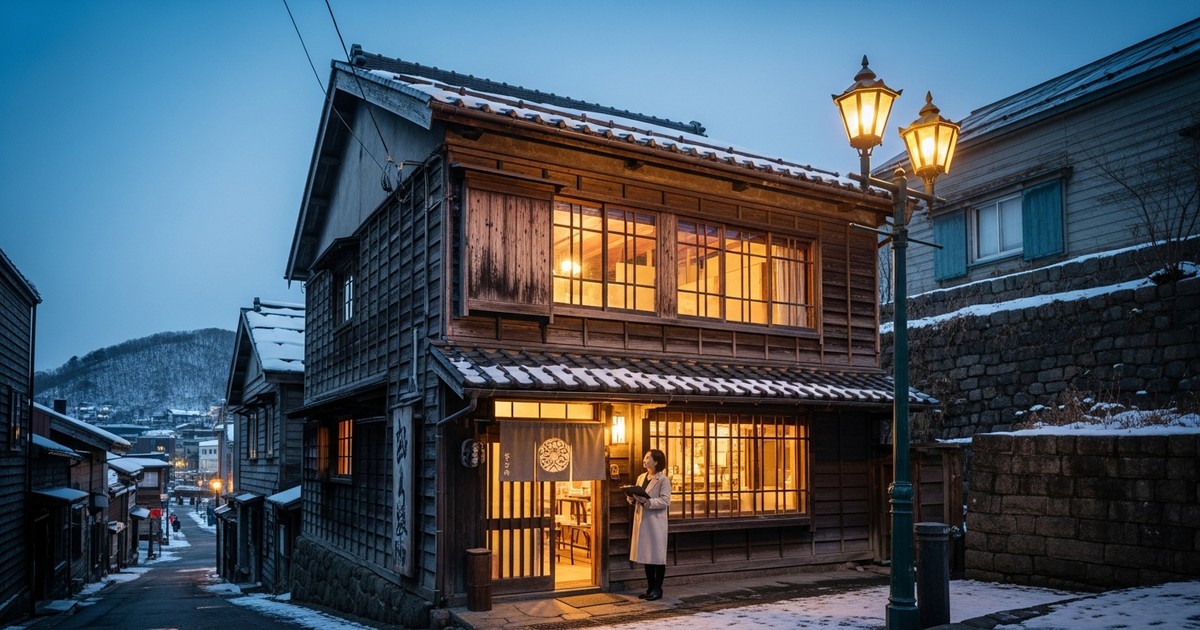
Otaru is well known as a town rich in historic buildings and old merchant houses, and its distinctive scenery—including the stone warehouses lining the canal—continues to draw visitors from Japan and abroad. Converting these old houses and vacant properties into guest accommodations is a growing trend, one that offers a way to address the local vacant-property problem while boosting tourism at the same time.
That said, because multiple laws—the Hotel Business Act, the Building Standards Act, the Fire Service Act, and others—intersect in this process, starting construction without proper preparation often leads to rework and unexpected costs. Following the steps below in order will help you keep both wasted cost and wasted time to a minimum.
Step 1: Selecting a Property and Checking the Zoning District
The first thing to check is whether the property sits in a zoning district where operating a hotel business is even permitted. Under Otaru City’s urban planning regulations, certain areas—such as Category 1 Low-Rise Exclusive Residential Districts and Exclusive Industrial Districts—prohibit hotel business operations. If you purchase or lease a property only to discover afterward that “you can’t run a business here,” every yen you’ve spent will have gone to waste. You can find out the zoning classification for a specific address by contacting Otaru City’s Urban Planning Division or Building Guidance Division.
Property acquisition costs vary depending on location and condition, but for old houses and vacant properties within Otaru City, purchase prices typically run from 1 million to 5 million yen, while monthly rent for leasing runs roughly 30,000 to 100,000 yen. Otaru City operates a “vacant house bank,” which sometimes lists properties at bargain prices. The Canal area and the streets around Sakaimachi-dori see high tourist demand, but property prices there tend to run higher as well—so it’s important to run your revenue projections first, work backward from an assumed occupancy rate, and set a ceiling on your acquisition budget before you start looking.
Step 2: Preliminary Consultations (Public Health Center, Fire Department, Building Guidance Division)
Once you’ve narrowed down a candidate property, hold a preliminary consultation with the Otaru City Public Health Center (Living Environment Division) before starting any design or construction work. By comparing the property’s floor plans against the structural and equipment standards for simple lodging under the Hotel Business Act (guest room floor area, ventilation, lighting, number of washrooms and bathrooms, etc.), you can pin down exactly what renovations will be needed. This consultation is free, though it’s usually by appointment, so call ahead to arrange a time.
At the same time, consult with the Otaru City Fire Department. A Certificate of Fire Service Law Compliance is a mandatory attachment to your hotel business license application, and if you don’t confirm the installation requirements for automatic fire alarm systems, evacuation guide lights, and fire extinguishers in advance, you risk having to carry out additional work after construction is already complete. Old houses are often built of wood, which can trigger stricter fire compartmentalization and interior finish restrictions, so it’s also worth consulting the Building Guidance Division in parallel to confirm whether a change-of-use procedure under the Building Standards Act is required (a confirmation application is needed if the floor area exceeds 100 square meters). Holding these three consultations together will help you settle on a clear direction for your renovation design.
Step 3: Design, Renovation Work, and Cost Breakdown
Design and Application Costs
Commissioning an architect for design work and preparing the various application documents typically costs around 300,000 to 800,000 yen. If a change-of-use confirmation application is required, expect to be at the higher end of that range. If you hire a gyoseishoshi (administrative scrivener) to handle the hotel business license application, that’s an additional 100,000 to 200,000 yen. You can file the application yourself, but if you’re not experienced with drafting floor plans or interpreting the relevant regulations, hiring a professional generally gets you there faster with less rework.
Construction and Interior Renovation Costs
Renovating an old house is the single largest expense in this process. For a small simple lodging facility (50–80 square meters of floor area, accommodating 6–10 guests), you can expect to pay roughly 3 million to 8 million yen to cover structural reinforcement, insulation upgrades, new plumbing and fixtures, and interior finishing. Because Otaru’s winters are severe, insulation work and heating equipment are essential—adding cost on top of what you’d typically see when renovating an old house in mainland Japan (Honshu). As concrete examples, replacing a window with double-glazing runs about 30,000 to 60,000 yen per window, and under-floor insulation costs roughly 5,000 to 8,000 yen per square meter.
Fire Safety Equipment Costs
Installing a new automatic fire alarm system costs roughly 300,000 to 800,000 yen, depending on the number of detectors and wiring distance. Evacuation guide lights run about 20,000 to 50,000 yen per unit, and fire extinguishers cost about 5,000 to 8,000 yen each. Since most residential properties have little to no fire safety equipment installed, plan on building this out from essentially zero. Follow the fire department’s guidance precisely, and after construction is complete, undergo a fire inspection to obtain the Certificate of Fire Service Law Compliance.
Furniture, Fixtures, and Bedding Costs
Budget roughly 300,000 to 800,000 yen for the full set of items guests will need: beds or futons, tables, lighting, towels, amenities, and kitchen equipment (if the unit includes a kitchen). Furnishing the space to highlight the character of the old house can help differentiate your property, and using secondhand or reused furniture is a good way to keep costs down. Bedding rental is also an option, letting you shift some of the upfront cost into an ongoing monthly expense instead.
Step 4: Applying for a Hotel Business License (Simple Lodging)
Once renovation work is complete, submit your hotel business license application to the Otaru City Public Health Center. The main documents required include an overview of the facility’s structure and equipment, floor plans for each level, a map of the surrounding area, the Certificate of Fire Service Law Compliance, a certificate of registered matters for the building, and—if you’re leasing—a letter of consent from the property owner. The application fee for simple lodging facilities is 22,000 yen, as set by Hokkaido prefectural ordinance.
After submitting your application, a Public Health Center staff member will conduct an on-site inspection of the facility. They’ll check that guest rooms total at least 33 square meters of floor area, that proper ventilation, natural light, and lighting are in place, and that washroom and bathroom (or shower) facilities are adequately sized for expected guest demand. If the inspection passes, your operating license will typically be issued within about 2 to 4 weeks of application. If it doesn’t pass, you’ll need to correct the noted deficiencies and undergo re-inspection—which is exactly why getting an accurate handle on the standards during the preliminary consultation stage is so important for avoiding rework.
Step 5: Pre-Opening Preparations and Notifications
OTA Registration and Marketing Preparation
Once you’ve obtained your operating license, register your property with OTAs (online travel agencies) such as Airbnb, Booking.com, and Rakuten Travel. Since the quality of your listing photos has a major impact on booking rates, investing in professional photography (roughly 30,000 to 50,000 yen) tends to pay for itself quickly. In Otaru’s case, highlighting the connection to the canal, the snowy scenery, and the retro townscape can help differentiate your listing from accommodations in other areas.
Tax Notifications and Business Registration
If you’re opening as a sole proprietor, submit a “Notification of Opening a Sole Proprietorship” to your local tax office. Filing a Blue Return Application at the same time makes you eligible for a special blue-return deduction of up to 650,000 yen. If you’re operating through a corporation, you’ll need to budget separately for incorporation costs (roughly 250,000 yen for a kabushiki-gaisha or about 100,000 yen for a godo-gaisha). Lodging businesses can be subject to bathing tax or accommodation tax depending on the municipality, but Otaru City has not, as of this writing, introduced its own accommodation tax—so check current requirements before proceeding.
Notifying Neighbors
Unlike the Private Lodging Business Act (the minpaku law), the Hotel Business Act doesn’t legally require you to notify neighboring residents in advance. In practice, though, we strongly recommend greeting your neighbors and explaining your house rules before opening, simply to head off potential conflicts. Complaints about noise or garbage disposal pose a direct risk to your ability to keep operating, and putting your rules in writing and sharing them ahead of time can dramatically reduce the likelihood of problems arising.
Step 6: Ongoing Operating Costs After Opening
Utilities and Communication Costs
Heating is one of the largest expense items in Otaru during winter. With kerosene or air-conditioner heating, costs during the December-to-March heating season alone can reach 30,000 to 60,000 yen per month. Across the full year, combined utility and communication (Wi-Fi) costs typically run about 20,000 to 80,000 yen per month.
Cleaning Costs
Cleaning is required after every guest checkout. Outsourcing to a cleaning company typically costs 5,000 to 10,000 yen per visit, depending on the size and scope of the job. Assuming 15 turnovers a month, that comes to a monthly cleaning cost of roughly 75,000 to 150,000 yen. Handling cleaning yourself can bring costs down, but if you’re managing the property remotely, outsourcing is usually the more practical choice.
Property Management Fees
If you outsource booking management, guest communication, cleaning coordination, and pricing to a property management company, expect to pay a fee of roughly 10% to 30% of revenue, depending on the company and the scope of services. On monthly revenue of 300,000 yen, that translates to a management fee of 45,000 to 75,000 yen. Self-management avoids this cost, but since you’ll need to handle multilingual guest communication and be available around the clock, outsourcing to professionals is often the more sensible choice if you’re running the property alongside a full-time job.
Tips for Keeping Hotel Business Costs Down in Otaru
The single biggest lever for controlling costs is identifying a “low-renovation-cost property” at the property-selection stage. Specifically, choosing a property with relatively new plumbing (kitchen, bathroom, toilet) can dramatically cut down on the equipment installation costs that tend to run highest. On the other hand, a property with serious deterioration in the roof or foundation can rack up several million yen in structural reinforcement costs alone—so we recommend having a home inspection (a building condition survey, costing roughly 50,000 to 100,000 yen) done before you purchase.
It’s also worth looking into subsidy and grant programs run by Otaru City and Hokkaido Prefecture. Subsidy programs aimed at promoting the reuse of vacant houses or boosting local tourism sometimes exist and can cover a portion of your renovation costs. Since application periods and eligibility conditions for these subsidies change from year to year, contact Otaru City’s Housing Policy Division or Commerce and Tourism Division directly to check the latest information. In addition, using a start-up loan from the Japan Finance Corporation can make it possible to open your business even with limited capital of your own. Loan amounts depend on the strength of your business plan, but simple lodging start-ups have received loans in the range of 3 million to 10 million yen.
Considering Opening a Hotel Business in Otaru? Talk to Stay Buddy Co., Ltd.
As we’ve outlined above, converting an old house or vacant property in Otaru into a simple lodging facility requires you to move accurately through many steps—from checking the zoning district, through design and construction, to administrative procedures and building an operational structure after opening. None of these steps is inherently difficult on its own, but without a solid grasp of how the various regulations interact and the region’s specific circumstances, it’s easy to end up spending far more time and money than necessary.
Stay Buddy Co., Ltd., a minpaku management company, offers one-stop support covering everything from advice on property selection to help obtaining a hotel business license and ongoing property management after you open. We provide comprehensive support from before opening through the operational phase, including accompanying you to preliminary consultations with local authorities, preparing revenue projections, optimizing your OTA listings, and handling multilingual guest communication.
If you’re considering opening a hotel business in Otaru, or if you’re interested in turning an old house or vacant property into a lodging business, please feel free to reach out to Stay Buddy Co., Ltd. We’ll propose a concrete plan tailored to your property’s condition and your budget.